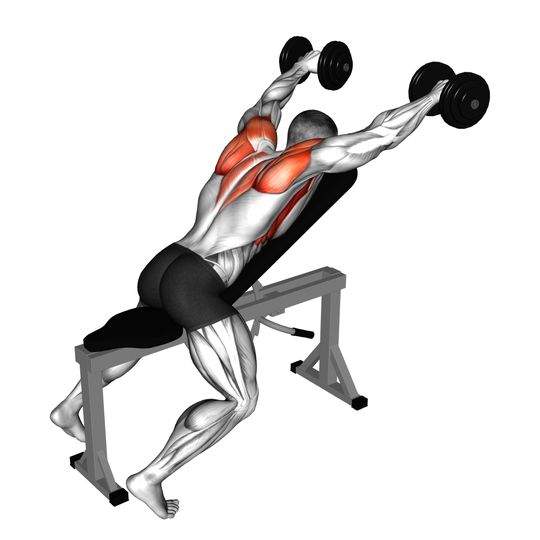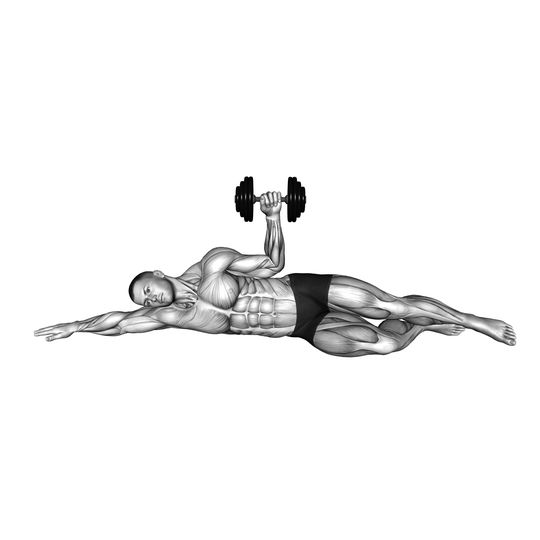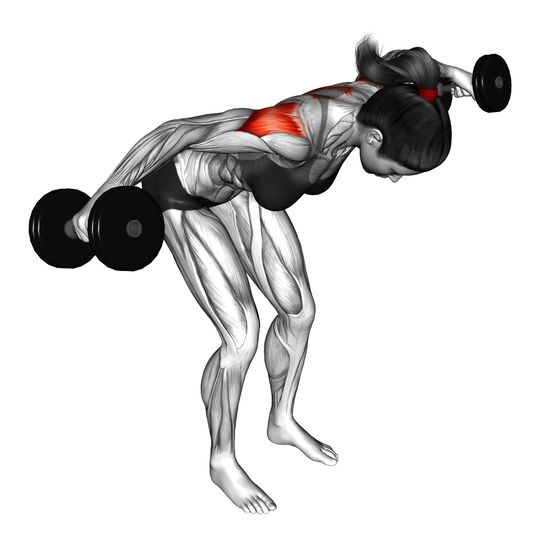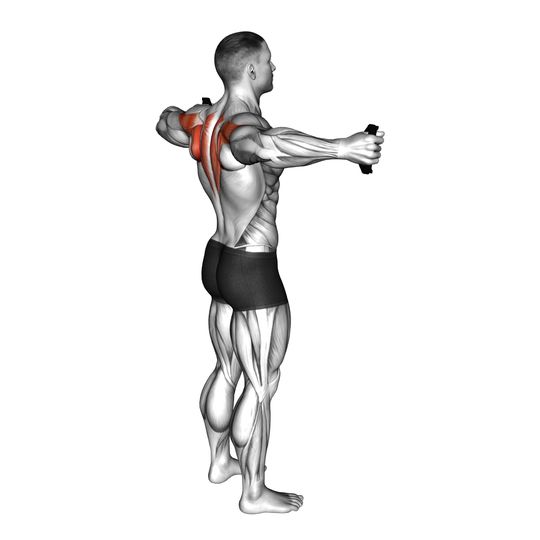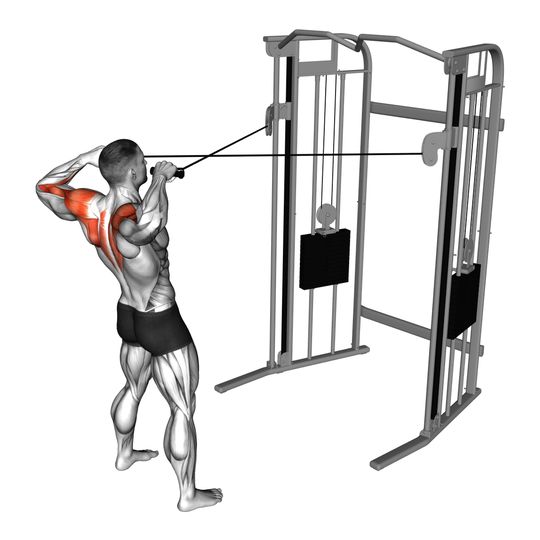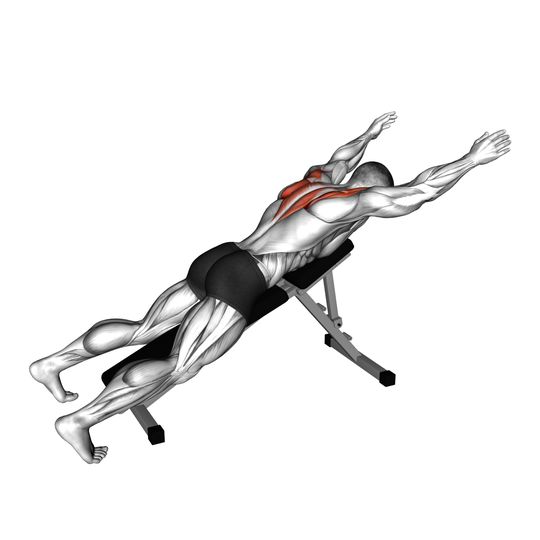


Lie face-down on an incline bench and lift dumbbells out to the sides in a lateral arc, emphasizing the rear deltoids and upper-back (scapular) muscles.
How to do the Dumbbell Reverse Fly#
- Set an incline bench to about 30–45° and lie chest-down with your torso pressed into the bench.
- Hold a dumbbell in each hand with your arms hanging toward the floor and a slight bend in the elbows.
- Pull your shoulder blades together and raise the weights out to the sides in a controlled, wide arc until your upper arms are about parallel to the floor.
- Pause briefly at the top while squeezing the posterior delts and upper back.
- Lower the dumbbells slowly back to the starting position and repeat for the desired reps.
Muscles worked#
The dumbbell reverse fly is a rear delt exercise. Lying chest down on an incline bench, the arms travel out to the sides against gravity and the posterior deltoid is the muscle that lifts them. It works hardest in the top third of the arc, where the dumbbells are level with the shoulders and the lever arm is longest, so that is where the pause belongs and where most people give up too early.
The rhomboids and mid traps pull the shoulder blades together as the arms rise, which is why the movement is felt between the blades as well as at the back of the shoulder. The external rotators of the rotator cuff help hold the arm in position, and the forearms grip. Because the chest rests on the bench, the lower back and hamstrings are not part of the picture, unlike the bent over version.
- Primary: Rear delts (Posterior Deltoid)
- Secondary: Upper back (Rhomboids & Middle Trapezius), Traps (Trapezius)
Common mistakes#
- Using body momentum or swinging the torso to lift the weights.
- Shrugging the shoulders instead of retracting the shoulder blades.
- Bending the elbows too much so the movement becomes a row.
- Allowing the wrists to bend instead of keeping them neutral.
Why it works#
The rear delts are small, weak in most lifters and hidden behind every pressing movement in a program. Direct work is the only way to get them to grow, and a chest supported fly is the cleanest direct work there is: the bench takes away the lower back, the arms stay long so the biceps cannot help, and the rear delt is the only thing left to move the weight.
Well developed rear delts change how the shoulder looks from the side and how it functions. They pull the head of the humerus back into a healthier resting position, balance out heavy bench and overhead pressing, and take pressure off the front of the joint. Ten minutes of light reverse flys a couple of times a week pays for itself in shoulder comfort alone.
Sets, reps and setup#
Three to four sets of 12-20 reps with 45-60 seconds of rest, two or three times a week. This is a light exercise; most lifters use 4-10 kg dumbbells and should treat any urge to go heavier with suspicion.
- Setup
- Set an incline bench at 30-45 degrees and lie chest down with your head off the top. Let the dumbbells hang straight down with a slight elbow bend and palms facing each other or the floor. Raise the arms out to the sides, leading with the elbows, until they are level with the shoulders, hold for a second, then lower slowly to a full stretch.
- Progression
- Add reps to 20 before adding weight, and add weight in the smallest jump your gym has. If the elbows start bending more as the set goes on, or the traps take over and the shoulders shrug toward the ears, the load is too high. Slowing the eccentric to three seconds is a better progression than a heavier dumbbell.
Variations#
- Dumbbell Chest Supported Reverse Fly The same movement on a dedicated pad or higher incline, which changes the arc slightly and the point of peak tension.
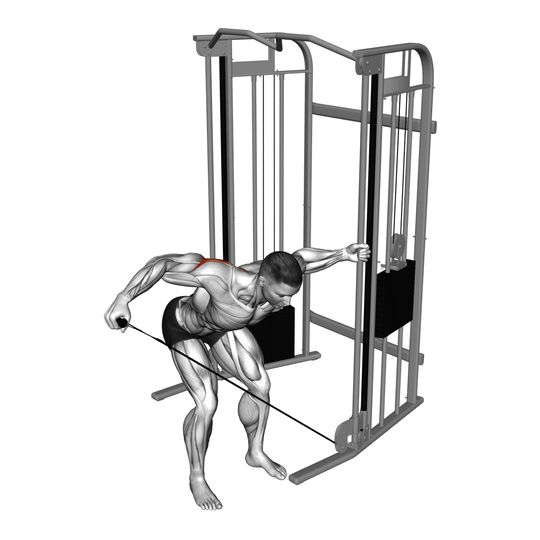
- Dumbbell Rear Delt Fly Performed bent over without a bench, adding lower back and hamstring involvement.
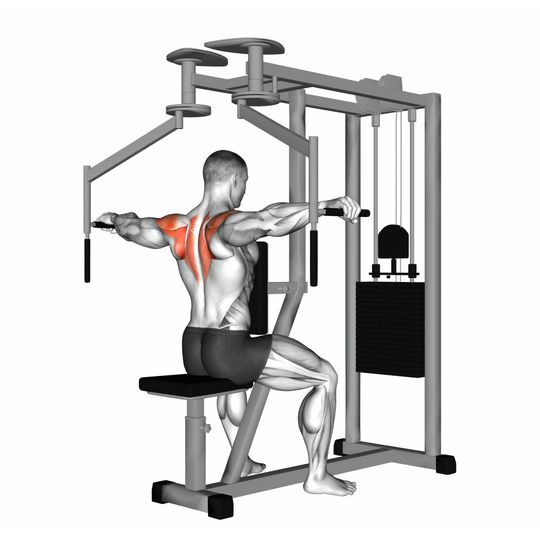
- Machine Reverse Fly Fixed path and constant tension, the easiest way to take rear delts to failure safely.
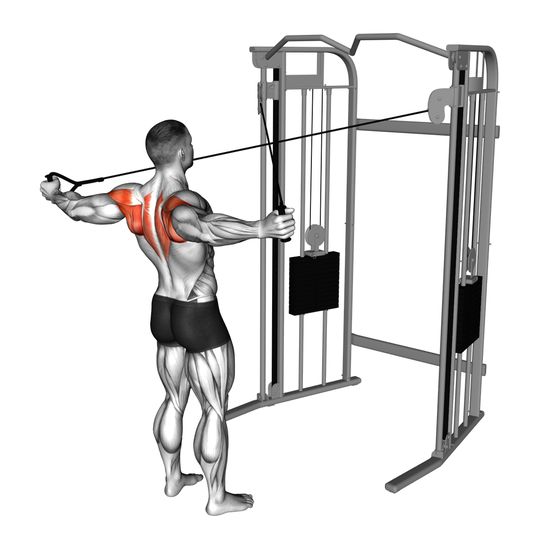
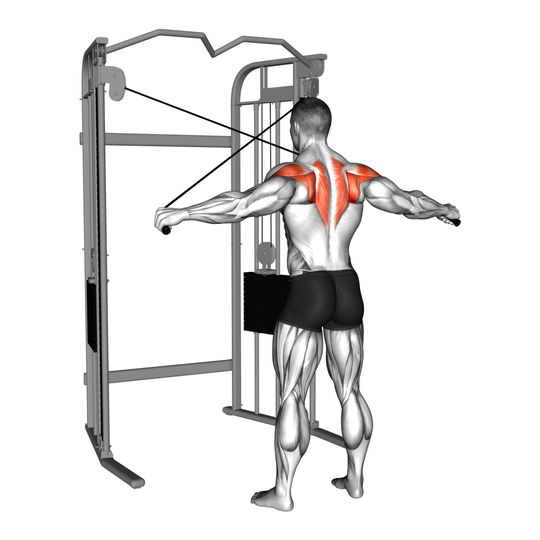
- Cable Reverse Fly Cables load the movement through the whole arc rather than mainly at the top.
- Face Pull Adds elbow bend and external rotation, so the rotator cuff joins the rear delts.
Dumbbell reverse fly vs face pull#
The reverse fly keeps the arms straight and moves them in a single plane, so the rear delts do the work more or less alone. If the goal is bigger rear delts, that isolation is the point and the reverse fly is the better choice.
The face pull bends the elbows and adds external rotation, pulling in the rotator cuff, mid back and upper traps. It is a better movement for shoulder health and for balancing heavy pressing, and it tolerates a bit more load. Running both in a week covers rear delt size and shoulder function without either exercise having to do a job it is not suited for.
Common questions#
What muscles does the dumbbell reverse fly work?
The rear delts lift the arms out to the sides, with the rhomboids and mid traps squeezing the shoulder blades together at the top. The rotator cuff stabilises the shoulder and the forearms hold the dumbbells. Chest support keeps the lower back out of it.
What are reverse flys good for?
Building the rear delts and upper back, which most programs neglect in favour of pressing. Stronger rear delts improve posture, pull the shoulders back into a healthier position and make the shoulder look rounder from the side.
How heavy should dumbbell reverse flys be?
Lighter than you think. Most people do well with 4-10 kg for sets of 12-20. The rear delt is a small muscle with a long lever against it; if the weight only moves with a shrug or a bent arm, drop down.
Should my palms face down or toward each other during reverse flys?
Either works. Palms facing each other with thumbs forward is comfortable for most shoulders and keeps the rear delt in a strong position. Turning the thumbs down slightly increases rear delt emphasis for some people but can irritate the front of the shoulder, so try both and keep whichever you feel most at the back of the shoulder.
Why do I feel reverse flys in my traps instead of my rear delts?
The shoulders are shrugging toward the ears as the arms rise, which recruits the upper traps. Keep the shoulder blades pulled down, lead with the elbows rather than the hands, lower the weight, and think about pulling the arms apart rather than up.