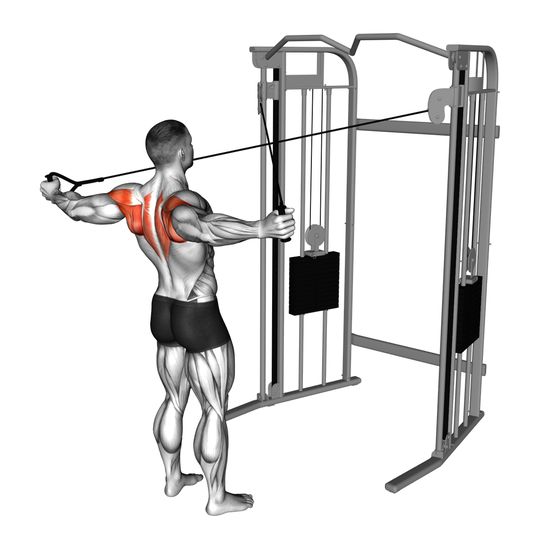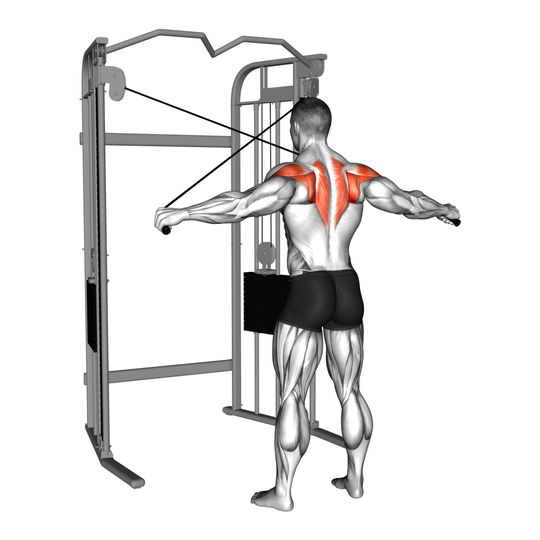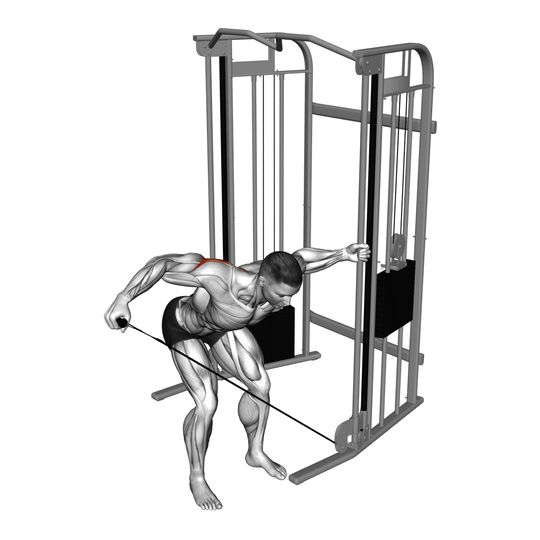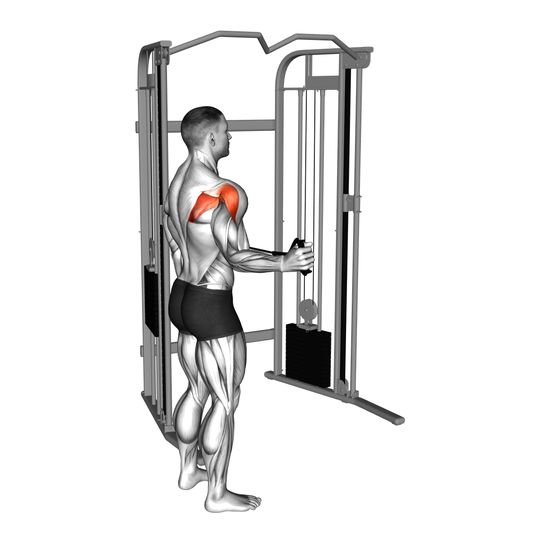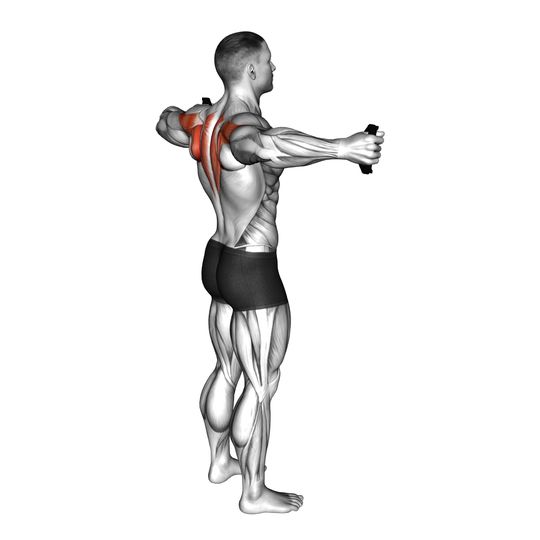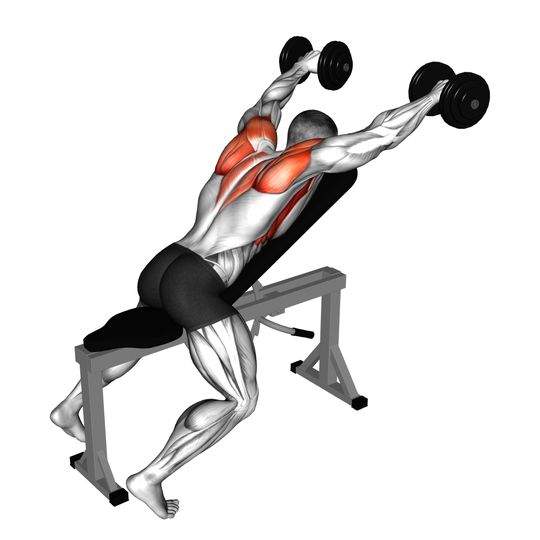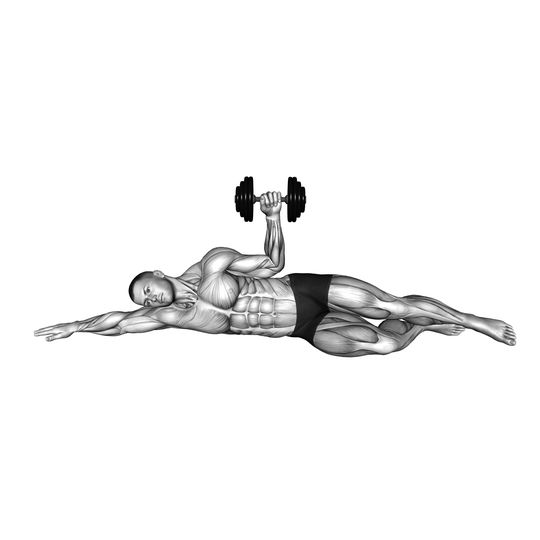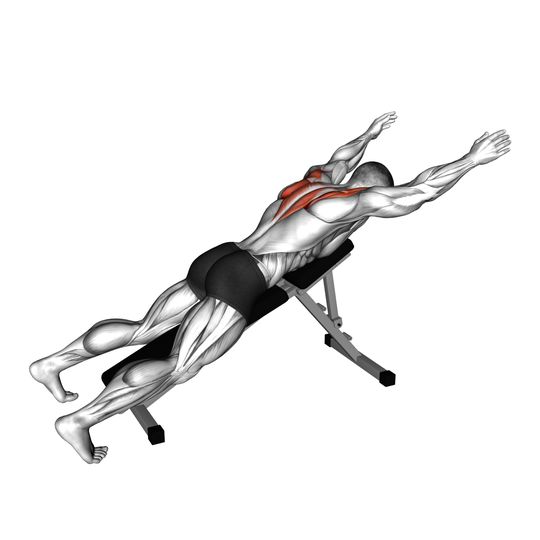


Pull cable handles toward your face with elbows held at shoulder height to work the shoulder muscles. Perform the movement with a controlled scapular squeeze.
How to do the Face Pull#
- Set a double handle on a high pulley and stand facing the machine with feet hip-width apart.
- Grasp the handles and extend your arms so the cables are taut at head/eye level.
- Lift your elbows so they are aligned with your shoulders and keep your upper arms wide.
- Pull the handles toward your face, leading with your elbows and drawing your shoulder blades together.
- Slowly release back to the starting position under control and repeat for the desired reps.
Muscles worked#
- Primary: Rear delts (Posterior Deltoid)
- Secondary: Upper back (Rhomboids & Middle Trapezius), Traps (Trapezius), Biceps (Biceps Brachii)
Common mistakes#
- Using excessive weight and swinging the torso.
- Allowing the elbows to drop below shoulder level.
- Pulling primarily with the hands instead of driving the elbows.
- Bending the wrists and letting them collapse during the pull.
Cannot do this one today?#
Machine taken, gym closed, or the movement just not agreeing with you? Here is what to run instead, and what each substitute changes.
9 best face pull alternatives →
Why it works#
The face pull is the rare exercise that trains two things at once: the rear delts pull the elbows back and out, and the external rotators finish the rep as the hands rotate up and away. Pressing volume builds the internal rotators and the front of the shoulder far faster than anything trains the back of it, and this movement covers both halves of that gap in one set.
It is also cheap to recover from. The loads are light, nothing compresses the spine, and the joint positions are comfortable, which means you can run it two or three times a week — often at the end of a session, or between sets of something heavy — without it costing you anything anywhere else in the program.
Sets, reps and setup#
Three to four sets of 15-20 reps with 45-60 seconds of rest, two or three times a week. This is a high-rep, low-load movement; heavy face pulls turn into upright rows and stop training what you wanted.
- Setup
- Rope attachment on a pulley at or slightly above eye height. Thumbs pointing back, elbows high, pull the rope apart toward your forehead and finish with your hands wide and rotated up, then let the arms straighten fully without leaning back.
- Progression
- Add reps up to twenty across all sets, then take one plate. If your traps start shrugging or your torso rocks backward, that is a load problem — cut the weight and slow the lowering phase down instead.
Variations#
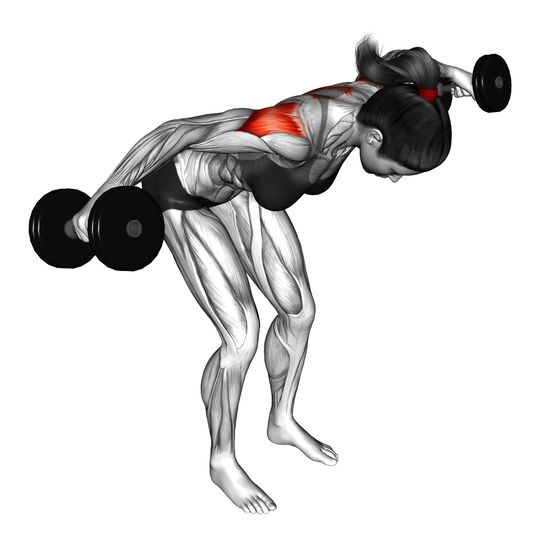
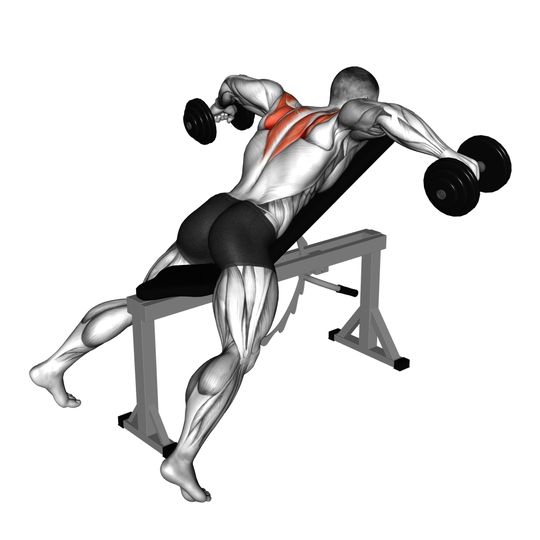
- Rear Delt Reverse Fly (Cable) Straight-arm cable work with no rotation, which isolates the rear delts more directly.
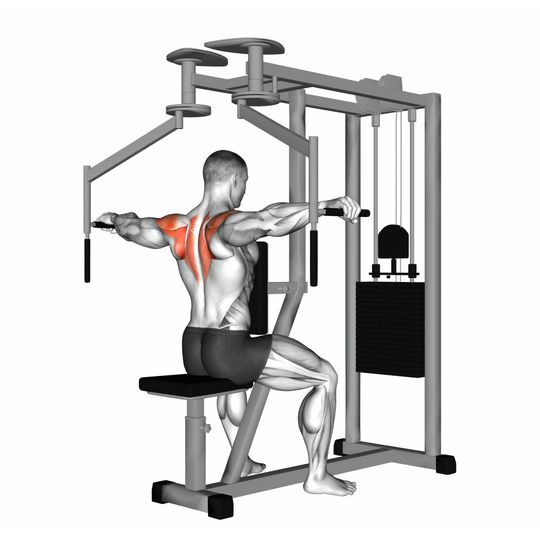
- Reverse Fly (Machine) Chest supported and the path fixed, so it is the easiest way to take rear delt work to failure.
- Reverse Fly Single Arm (Cable) One arm at a time, which allows more range behind the body than a rope with both hands.
- Seated Wide-Grip Row (Cable) The heavy version of the same upper-back pattern, with the elbows lower and the lats involved.
Face pull vs rear delt reverse fly#
The face pull adds external rotation and bends the elbows, which brings the rotator cuff and the upper back into the movement alongside the rear delts. That makes it the better choice if shoulder health, posture, or balancing a lot of pressing is the reason you are doing it.
The reverse fly keeps the arms straight and skips the rotation, so more of the work lands on the rear delts alone. If the goal is specifically to grow rear delts, that is the cleaner stimulus. Running one of each covers both jobs.
Common questions#
What muscles does the face pull work?
The rear delts are the main target, with the rhomboids and mid traps pulling the shoulder blades together and the external rotators of the cuff working at the end of the rep. The biceps and forearms assist on the grip.
How high should the cable be for face pulls?
At or slightly above eye height, so the rope pulls slightly downward into your face and the elbows can stay high. Setting it much higher turns the movement into a pulldown; much lower makes it a row.
How many sets and reps should I do?
Three to four sets of 15-20 reps with a light load, two to three times a week. Face pulls are about position and repetition, not weight on the stack.
Can I do face pulls every day?
Most lifters do not need to, but the movement is light enough that daily sets are tolerable if they are not taken to failure. Two or three focused sessions a week gives you the same benefit with less fuss.