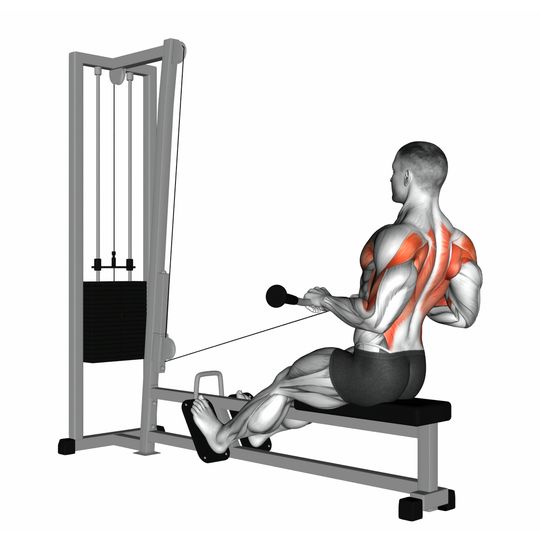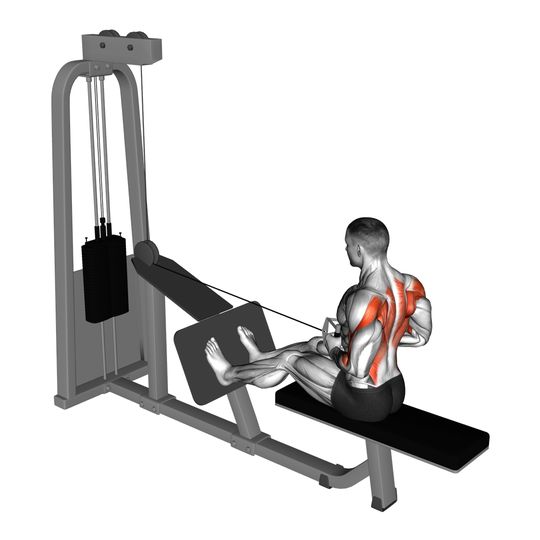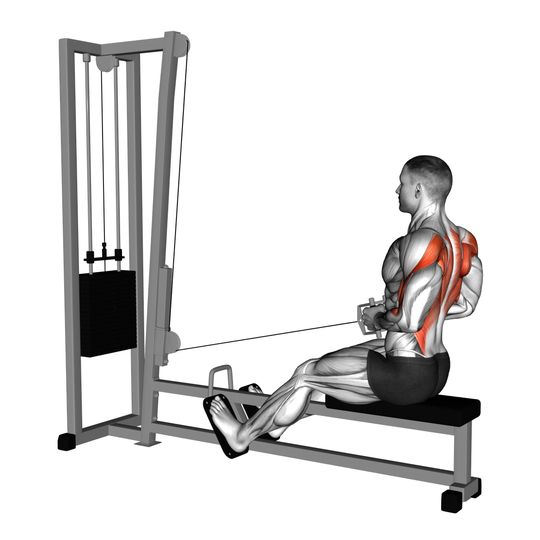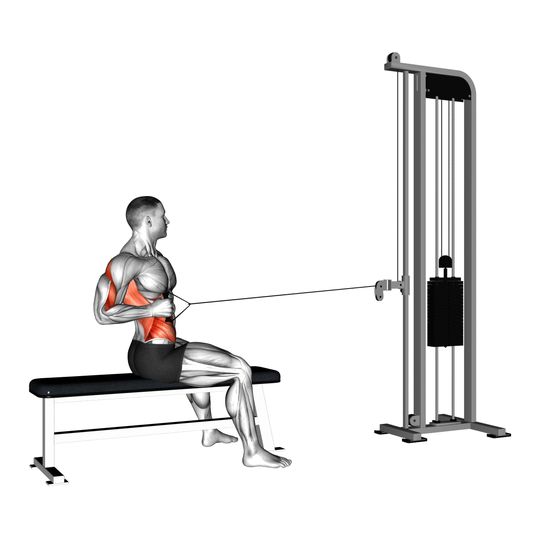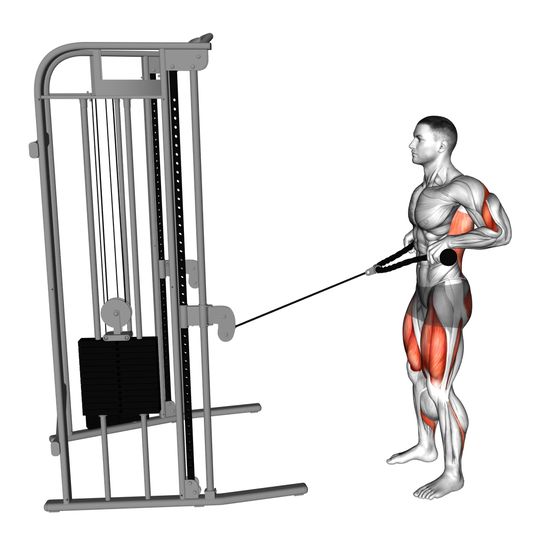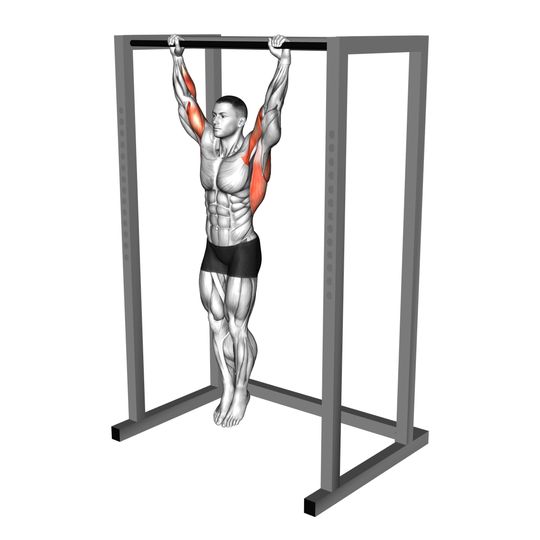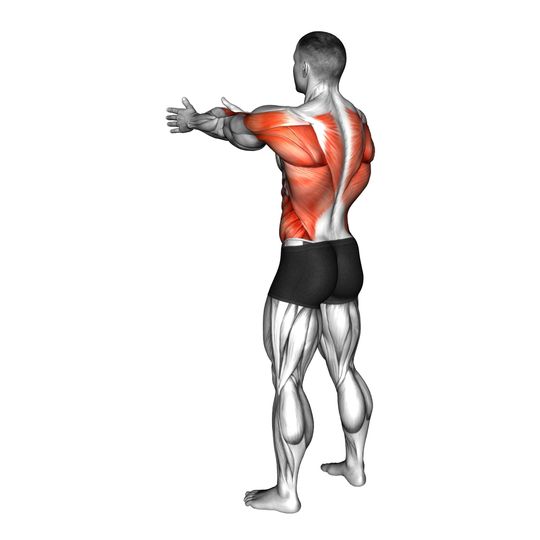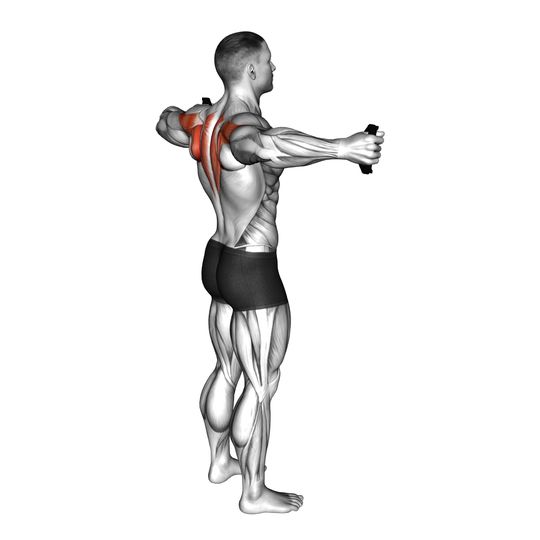


Perform a seated horizontal pull with a wide-grip cable attachment, emphasizing the upper back.
How to do the Wide Grip Seated Cable Row#
- Sit with your feet planted, grasp the wide bar with both hands, and sit tall with a neutral spine.
- Draw your shoulder blades together to initiate the movement and keep the torso still.
- Drive your elbows back and pull the bar to around your mid-torso, squeezing the upper-back muscles.
- Hold the contracted position briefly, then slowly extend your arms to return the bar under control.
Muscles worked#
- Primary: Upper back (Rhomboids & Middle Trapezius), Lats (Latissimus Dorsi)
- Secondary: Rear delts (Posterior Deltoid), Biceps (Biceps Brachii), Forearms (Forearm Flexors & Extensors (incl. Brachioradialis)), Traps (Trapezius)
Common mistakes#
- Using the arms to yank the bar instead of initiating with the shoulder blades.
- Rounding or collapsing the lower back during the pull.
- Leaning the torso back to generate momentum.
- Letting the shoulders roll forward at the end of the movement.
Why it works#
Grip width changes which part of your back does the work. A wide grip sends your elbows out to roughly forty-five degrees from your torso, and that path favours the rhomboids, mid traps and rear delts — the muscles that pull the shoulder blades together. A close or neutral grip keeps the elbows tucked and biases the lats instead. So this is the row you choose when you want thickness between the shoulder blades rather than width down the sides.
Doing it seated on a cable also removes the lower back as the limiting factor. Your torso is braced against the footplate rather than held in a hinge, so the set ends when your upper back gives out, and the constant cable tension lets you hold the contracted position for a second — which is exactly what a stubborn upper back needs.
Sets, reps and setup#
Three to four sets of 10-15 reps with 60-90 seconds of rest. Add a one-second pause at the point where the handle touches your torso; it is worth more here than another plate on the stack.
- Setup
- Feet on the plate with a soft knee bend, chest tall, hands wider than shoulder-width on a long bar. Pull toward the bottom of your chest with the elbows flaring out, squeeze the shoulder blades together, then let your arms straighten fully and your shoulder blades travel forward at the front.
- Progression
- Add reps from 10 to 15 across all sets, then move up one plate. What you should not add is torso lean — if you are rocking backward to move the stack, the upper back has stopped being the target.
Variations#
- Seated Row (Cable) The standard version with a narrower grip and tucked elbows, which shifts more of the work to the lats.
- Seated Cable Row - V Grip (Cable) A neutral close grip. The most lat-biased of the seated rows and usually the strongest position.
- Seated Cable Row - Bar Grip A straight bar that lets you set any width you like between wide and shoulder-width.
- Single Arm Cable Row One side at a time, which adds range at the front and exposes a weaker side quickly.
- Face Pull (Cable) Trains the same upper-back and rear delt region at a higher elbow position and with external rotation.
Wide grip vs close grip seated cable row#
Wide and high spreads the work across the rhomboids, mid traps and rear delts. It is the better choice for posture, for the look of a thick upper back, and as a counterweight to a program full of pressing.
Close and neutral, elbows tucked to the ribs, puts the lats in the strongest position and lets you use more weight. If your goal is back width and progressive loading, run that as your main row and use the wide grip as the second one.
Common questions#
What muscles does the wide grip seated row work?
The upper back does most of it — rhomboids and mid traps — along with the lats and rear delts. The biceps and forearms assist, and the abs brace against the pull.
Wide grip or narrow grip for back?
Wide with the elbows flared trains the upper back and rear delts more; narrow and neutral with the elbows tucked trains the lats more. Both belong in a program — the grip is how you pick the target, not a matter of one being correct.
How many sets and reps should I do?
Three to four sets of 10-15 reps with a brief squeeze at the contraction. Rows respond well to that rep range because the upper back is easy to rush through with heavy, short reps.
Why do I feel it in my biceps instead of my back?
Usually because the arms start the pull. Think about driving the elbows back and pulling the shoulder blades together first, keep the wrists neutral, and drop the weight until you can feel the mid back initiate the rep.