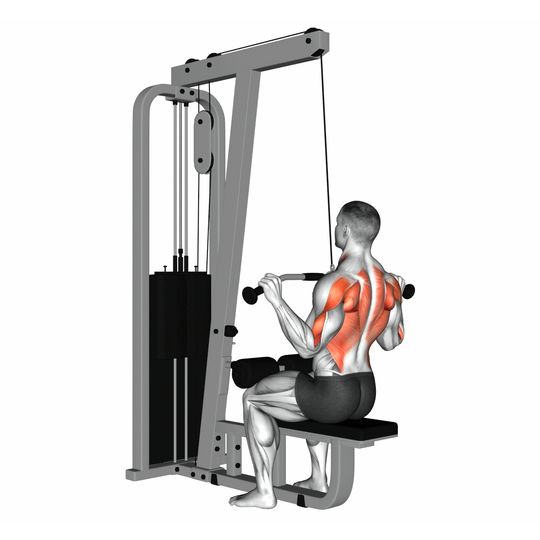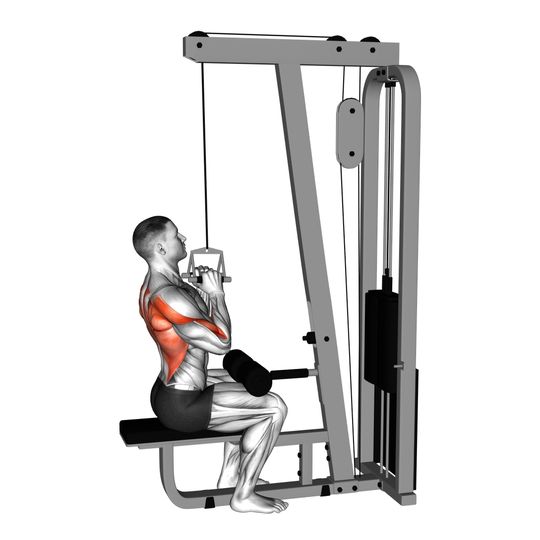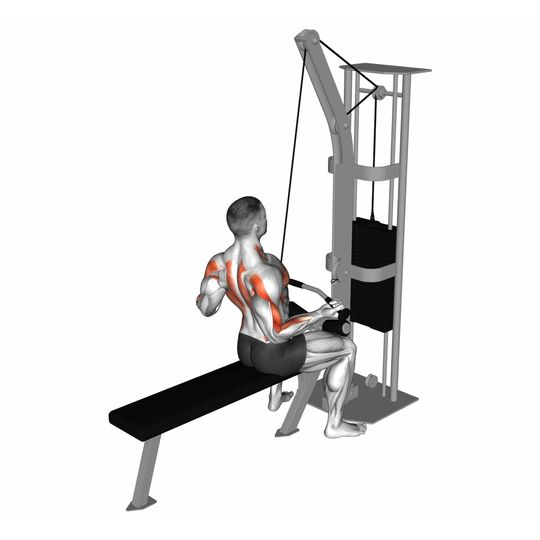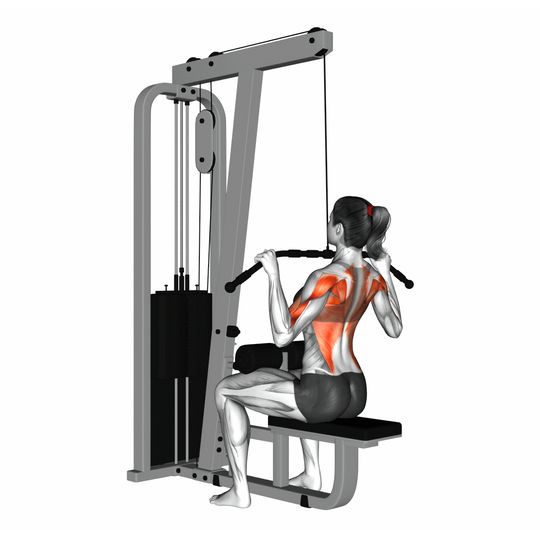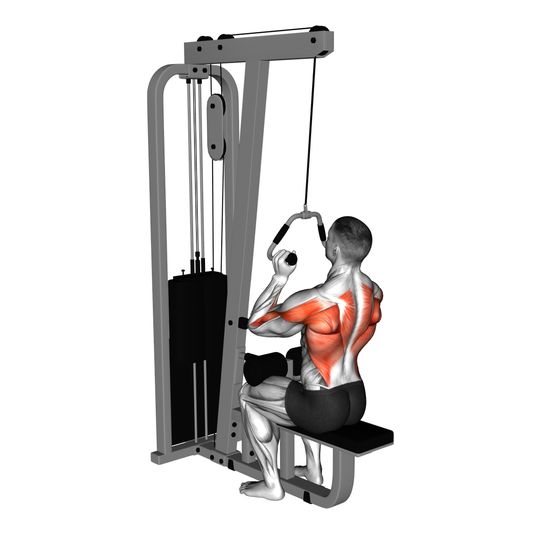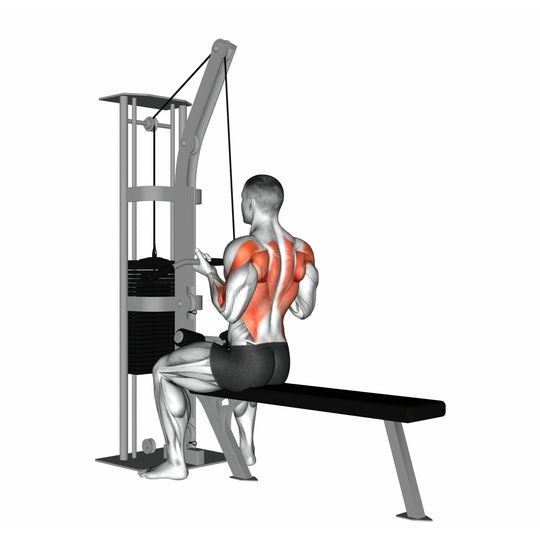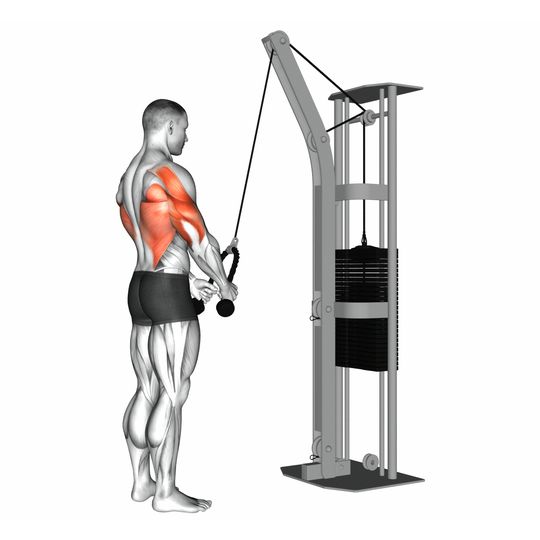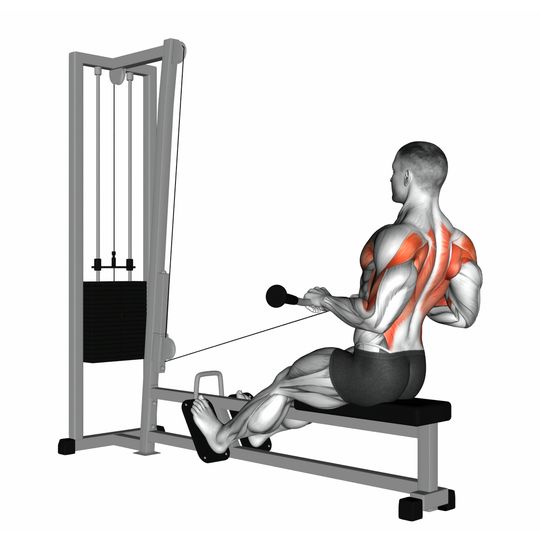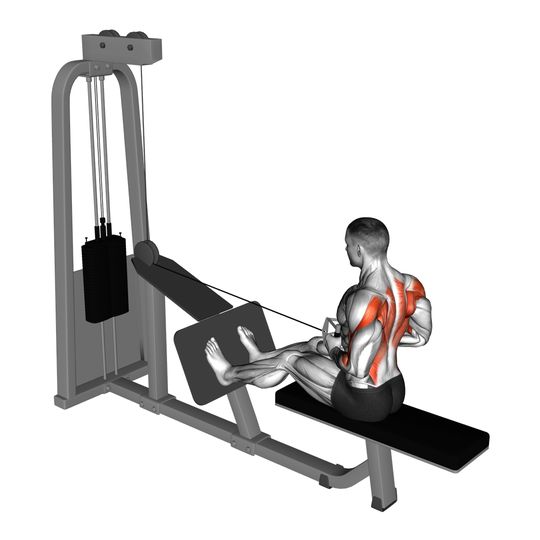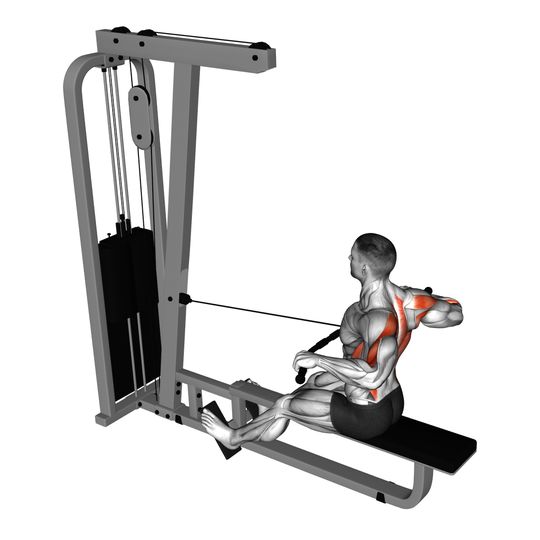


Perform a seated cable row by pulling a handle toward your mid-chest in a horizontal pulling motion that works the muscles of the back. Maintain an upright torso and control the return.
How to do the Seated Cable Row#
- Sit upright and take a secure two-handed grip on the handle with a neutral spine.
- Initiate the movement by driving your elbows straight back and drawing your shoulder blades together.
- Pull the handle until it reaches your mid-chest while keeping your chest lifted and torso stable.
- Hold the contracted position briefly, then extend your arms slowly to return to the start under control.
Muscles worked#
The seated cable row is a horizontal pull, and horizontal pulling is what builds back thickness. The lats bring the upper arms from in front of the body to the sides, while the rhomboids and the middle fibres of the trapezius pull the shoulder blades together as the handle reaches your torso. That final squeeze is the part most compound lifts never load properly, and it is where the muscle between the shoulder blades gets built.
The rear delts assist as the elbows travel back, and the biceps and forearms bend the elbows and hold the handle. The lower back works isometrically to keep the torso upright against the pull of the cable, and the hamstrings anchor you on the footplate. Done properly it feels like a stretch across the upper back at the start and a hard contraction between the shoulder blades at the finish, with the arms doing surprisingly little.
- Primary: Lats (Latissimus Dorsi), Upper back (Rhomboids & Middle Trapezius)
- Secondary: Biceps (Biceps Brachii), Rear delts (Posterior Deltoid), Forearms (Forearm Flexors & Extensors (incl. Brachioradialis))
Common mistakes#
- Leaning the torso back to generate momentum.
- Using the arms to yank the weight instead of retracting the shoulder blades.
- Letting the upper back round during the pull.
Cannot do this one today?#
Machine taken, gym closed, or the movement just not agreeing with you? Here is what to run instead, and what each substitute changes.
9 best seated cable row alternatives →
Why it works#
It trains the upper back with the torso supported by your own posture rather than a bent-over position, which means you can load it heavy and take it to failure without the lower back giving out first. Bent-over barbell rows demand a strong, tired-proof lower back; the cable row does not, so it is the horizontal pull most lifters can push hardest on and recover from most easily.
The cable also keeps tension constant through the whole rep, including the stretched position at the start where a dumbbell or barbell hangs slack. That makes it excellent for teaching scapular control, for balancing the volume of pressing in a program, and for improving the rounded-shoulder posture that comes from desk work. Handle choices let you bias the lats or the upper back without changing the machine.
Sets, reps and setup#
Three to four sets of 8-12 reps with 90 seconds of rest, twice a week. Heavier sets of 6-8 work if this is your main row; sets of 12-15 with a full pause at the chest are better as a second back exercise or for lifters chasing upper-back size specifically.
- Setup
- Sit tall with knees slightly bent and feet planted on the plate. Take the handle with arms straight and let the shoulder blades protract forward so you feel the stretch. Pull by driving the elbows straight back, keeping them close to the body, until the handle touches the lower ribs, and squeeze the shoulder blades together for a second. Return slowly and let the shoulders reach forward again without rounding the lower back.
- Progression
- Add a plate when you complete every set at the top of the rep range with the handle reaching the torso and no torso swing. If the stack runs out or form slips, add a two-second hold at the chest, slow the return to three seconds, or move to a single-arm version which allows more rotation and range.
Variations#
- Wide Grip Seated Cable Row A wide bar with the elbows flared, which shifts the work toward the upper back and rear delts.
- V Grip Seated Cable Row The classic close neutral handle, keeping the elbows tight and the lats heavily involved.
- Single Arm Cable Row One arm at a time with a longer range and slight torso rotation, good for fixing a weaker side.
- Seated Machine Row A chest-supported lever machine that removes any lower-back involvement so you can go to failure.
- Chest Supported T-Bar Row A heavy plate-loaded row with the torso pinned to a pad, usually allowing the most weight.
Seated cable row vs bent-over barbell row#
The seated cable row lets you focus entirely on the back. Your torso is upright and supported by the footplate, the cable keeps tension on the muscles through the whole range, and there is no lower-back fatigue to cut the set short. That makes it the more reliable choice for upper-back growth and the easier one to progress week to week.
The barbell row lets you move more total weight and trains the entire posterior chain at once, since the spinal erectors, glutes and hamstrings have to hold a bent-over position under load. It is the better strength builder and has more carryover to deadlifts, but its technique is harder and it costs more to recover from. Use the barbell row as a main lift on a strength program and the cable row as the volume tool that follows it.
Common questions#
What muscles does the seated cable row work?
The lats, rhomboids and middle traps are the main movers, with the rear delts assisting as the elbows travel back. The biceps and forearms bend the elbows and hold the handle, and the lower back works isometrically to keep the torso upright against the cable.
Is the seated cable row good for lats or upper back?
Both, and the handle decides the balance. A close neutral grip with the elbows tucked and pulled toward the hips is more lat; a wide grip with the elbows flared and pulled toward the chest is more rhomboid and rear delt. Most lifters get the best result from rotating between the two.
How many sets of seated cable rows should I do?
Three to four sets of 8-12 reps, twice a week, is enough for most programs. If it is your only horizontal pull, push toward four sets; if you also do barbell or dumbbell rows in the same week, two or three is plenty.
Should I lean forward on the seated cable row?
A small forward reach at the start, letting the shoulder blades slide forward while the lower back stays neutral, increases the stretch and is worth doing. Rocking the whole torso forward and back to generate momentum is not; it turns the exercise into a lower-back movement and means the weight is too heavy.
Where should I pull the handle to on a cable row?
To the lower ribs or upper abdomen with a close grip, and to the lower chest with a wide grip. Pulling too high with a close grip flares the elbows and shrugs the traps; pulling too low with a wide grip shortens the range for the upper back.