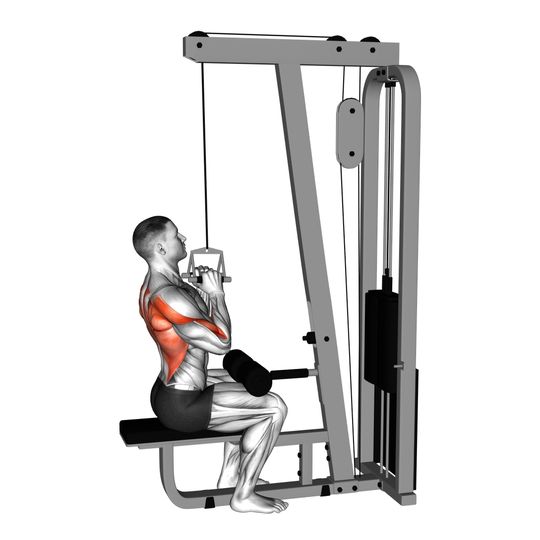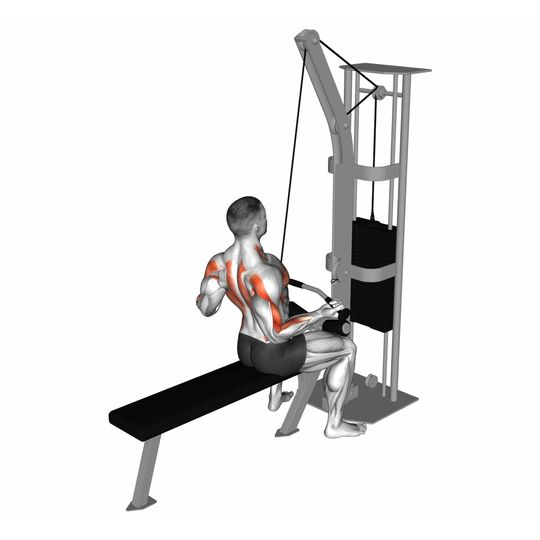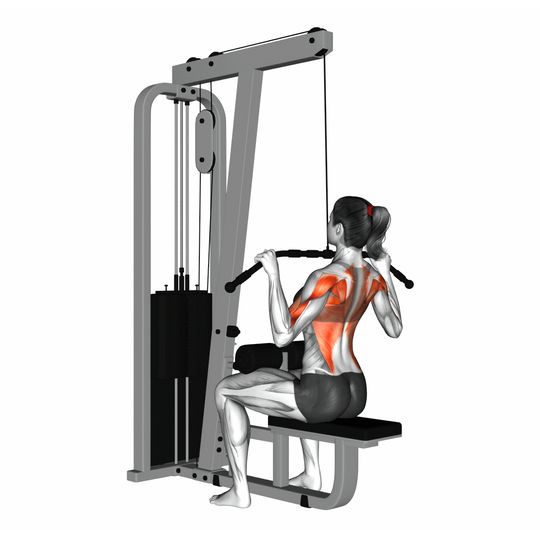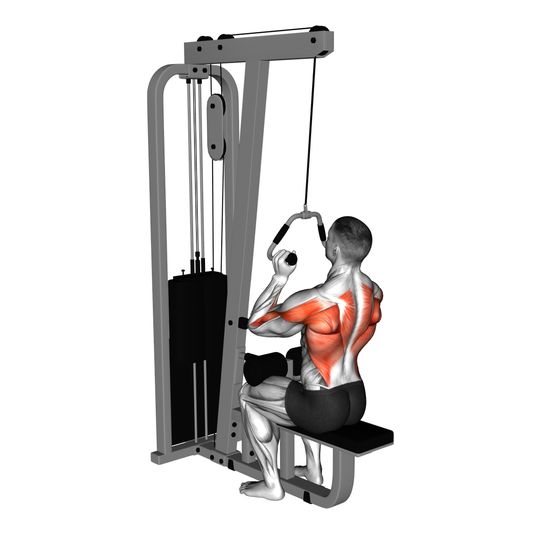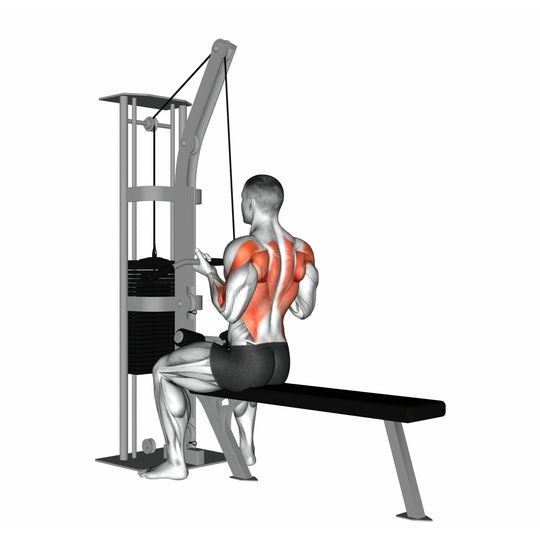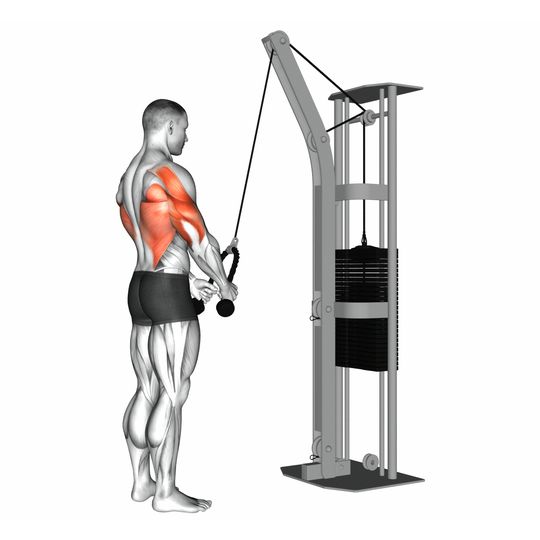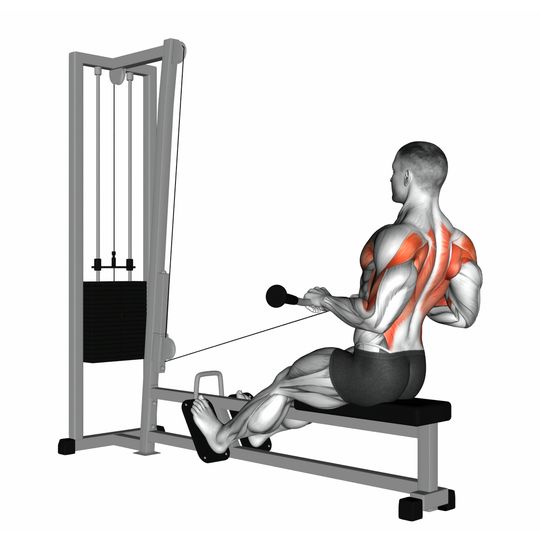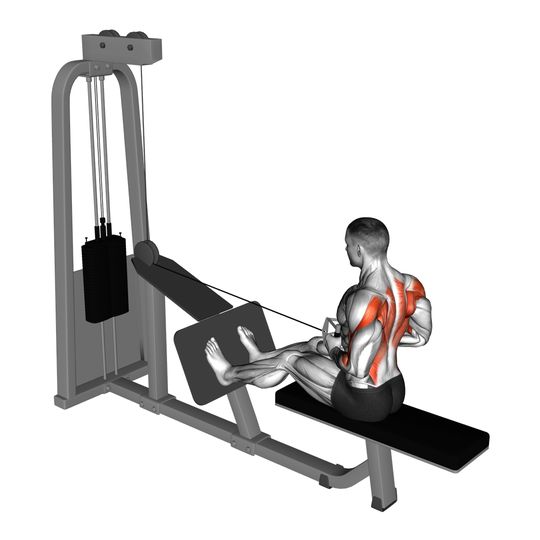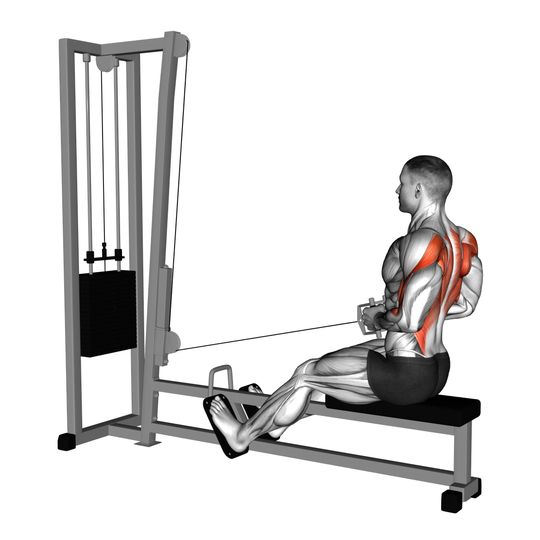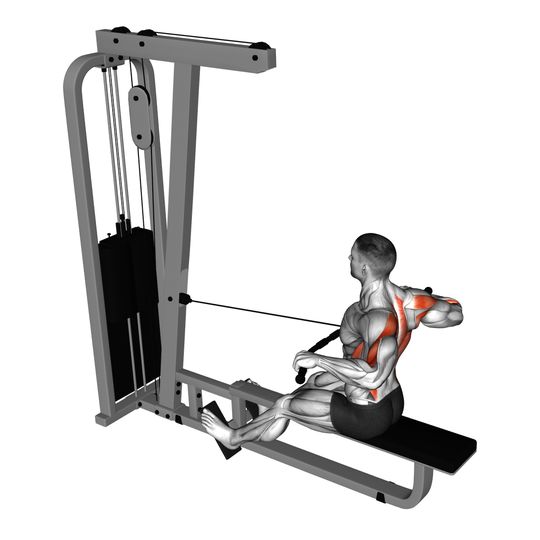


Pull a cable bar down toward the upper chest to work the latissimus dorsi and upper back muscles. The movement uses a controlled vertical pulling action from a seated position.
How to do the Lat Pulldown#
- Sit with your knees anchored under the pads, feet flat, and torso tall.
- Reach up and take an overhand grip on the bar slightly wider than shoulder-width.
- Retract your shoulder blades, then pull the bar down toward your upper chest while exhaling.
- Pause briefly at the bottom and contract the lats.
- Slowly extend your arms back to the start, feeling a controlled stretch in the lats.
Muscles worked#
The lat pulldown is built around the latissimus dorsi, the broad muscle that runs from the lower back up to the armpit. Pulling the bar down from overhead means bringing the upper arm from above the head to the side of the body, which is exactly the lats' job. Because you start with the arms fully extended overhead, the lats are stretched at the top of every rep and loaded through their whole length, which is why this movement builds back width.
The upper back — rhomboids, mid and lower traps — pulls the shoulder blades down and together as the bar approaches the chest, and the rear delts assist. The biceps and forearms bend the elbows and hold the bar, and they will take over if you pull with your hands rather than your elbows. Done well, it feels like a stretch under the armpits at the top and a squeeze along the sides of the back at the bottom.
- Primary: Lats (Latissimus Dorsi)
- Secondary: Biceps (Biceps Brachii), Forearms (Forearm Flexors & Extensors (incl. Brachioradialis)), Upper back (Rhomboids & Middle Trapezius), Rear delts (Posterior Deltoid)
Common mistakes#
- Leaning back excessively and turning the move into a row.
- Pulling the bar behind the neck instead of to the chest.
- Using momentum or jerking the torso to move the weight.
- Lowering the bar too quickly without control.
Cannot do this one today?#
Machine taken, gym closed, or the movement just not agreeing with you? Here is what to run instead, and what each substitute changes.
9 best lat pulldown alternatives →
Lat Pulldown vs other exercises#
Head-to-head breakdowns of muscles worked, loading, joint stress, and which one to pick for your goal.
Why it works#
It is the most adjustable vertical pull in the gym. Pull-ups are limited by your bodyweight, which is too heavy for most beginners and too light to progress for many advanced lifters. The pulldown lets you pick the exact load, take a set to failure safely, and change grips to shift emphasis, so it works as a first back exercise for a beginner and as high-volume lat work for someone who can already do twenty pull-ups.
It also teaches the pulling pattern that everything else on the back depends on. Learning to depress the shoulder blades, drive the elbows down and keep the torso still transfers directly to pull-ups, rows and even overhead pressing stability. The lats are one of the largest muscles in the upper body, and a wide back does more for how a physique looks than almost anything else.
Sets, reps and setup#
Three to four sets of 8-12 reps with 90 seconds of rest, twice a week. Heavier sets of 6-8 are fine as a main back movement if you do not do pull-ups; sets of 12-15 with a slow stretch at the top are better as a second back exercise or on a pump-focused day.
- Setup
- Thigh pads locked down so you cannot lift out of the seat. Grip slightly wider than shoulder-width, palms forward, thumbs over the bar. Lean back only a few degrees, chest up. Start the rep by pulling the shoulder blades down, then drive the elbows toward your hips until the bar touches the upper chest. Return slowly and let the shoulders rise fully at the top so the lats stretch.
- Progression
- Add a plate when you hit the top of the rep range on every set with the bar reaching the chest and no torso swing. When the stack or your grip stops you, add a two-second pause at the chest, slow the return to three seconds, or move to a single-arm version to increase the range. Weighted pull-ups are the natural next step once you can pull down roughly your bodyweight for eight.
Variations#
- Wide Grip Lat Pulldown Hands wider on the bar, which shortens the range but emphasises the upper lats and teres major.
- Close Grip Lat Pulldown A narrow overhand grip that lengthens the range and pulls the elbows closer to the body.
- Underhand Lat Pulldown Palms facing you, which brings the biceps in more and lets most people handle a bit more weight.
- Neutral Grip Lat Pulldown Parallel handles that are easiest on the shoulders and wrists while still hitting the lats hard.
- Single Arm Lat Pulldown One arm at a time for a longer range, more stretch, and a fix for a weaker side.
Lat pulldown vs pull-up#
The two movements train the same muscles through the same motion, and for lat growth the pulldown does the job just as well. Its advantages are practical: you choose the load exactly, you can take sets to failure without risk, and you can change grips and tempo easily. For beginners who cannot yet do pull-ups and for advanced lifters adding volume, it is the better tool.
The pull-up asks more of the core and the stabilising muscles because your body moves through space, and being able to lift your own bodyweight is a useful strength standard in its own right. If you can do eight or more clean pull-ups, make them your main vertical pull and use pulldowns for extra sets afterward. If you cannot, pull down until you can.
Common questions#
What muscles does the lat pulldown work?
The lats are the main target, with the rhomboids, mid and lower traps and rear delts working as the shoulder blades pull down and together. The biceps and forearms bend the elbows and hold the bar, and the teres major on the outside of the shoulder blade assists the lats.
How many sets of lat pulldowns should I do?
Three to four sets of 8-12 reps, twice a week, is enough for most lifters. If pulldowns are your only vertical pull, go up to four or five sets. If you also do pull-ups or rows in the same session, two or three sets is plenty.
Should I lean back on the lat pulldown?
A slight lean of ten to fifteen degrees is fine and helps the bar clear your face on the way to the chest. Leaning back further turns the movement into a row, shifts the work to the upper back and usually means the weight is too heavy.
Which grip is best for lat pulldowns?
A medium overhand grip, just wider than the shoulders, gives the best mix of range and lat involvement. Wide grips shorten the range and add little, underhand grips bring in more biceps, and neutral grips are the most comfortable for the shoulders. Rotate them over time rather than committing to one.
Why do I only feel lat pulldowns in my arms?
You are pulling with your hands instead of your elbows. Lighten the load, start each rep by pulling the shoulder blades down, and think about driving the elbows into your back pockets. A thumbless grip and a slower return usually put the tension back where it belongs.
Are lat pulldowns behind the neck a good idea?
No. Pulling behind the neck forces the shoulders into extreme external rotation under load and shortens the range for the lats, all for no extra benefit. Pull to the upper chest with a slight lean instead.