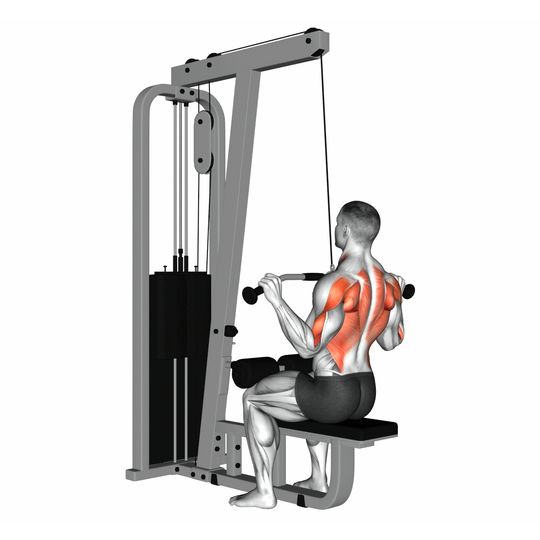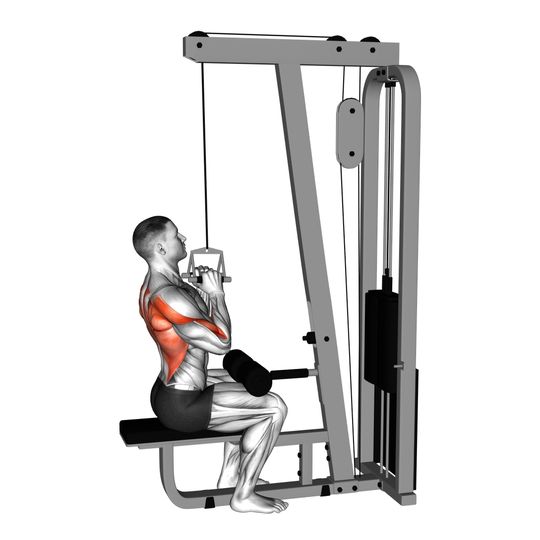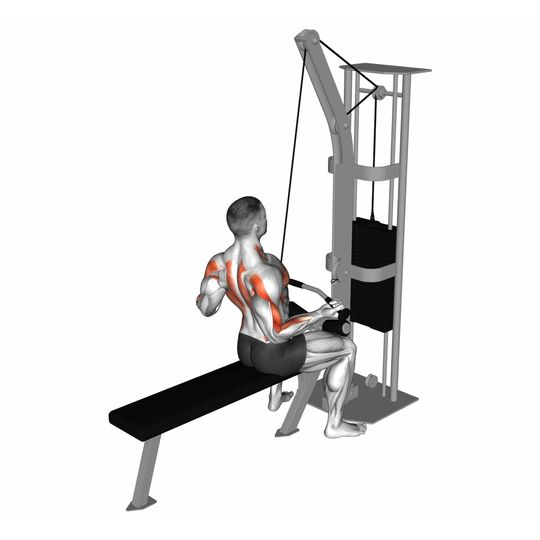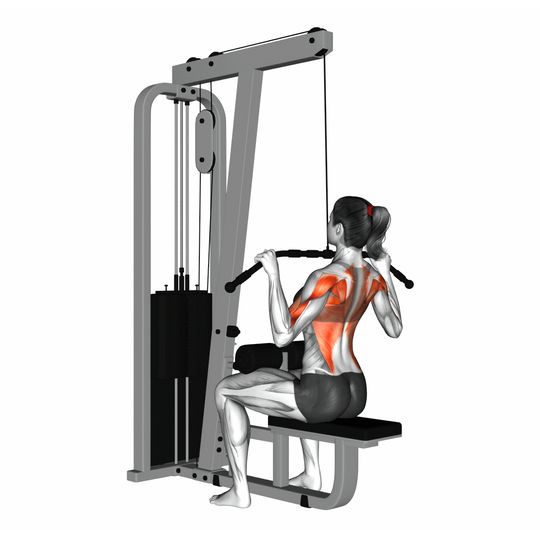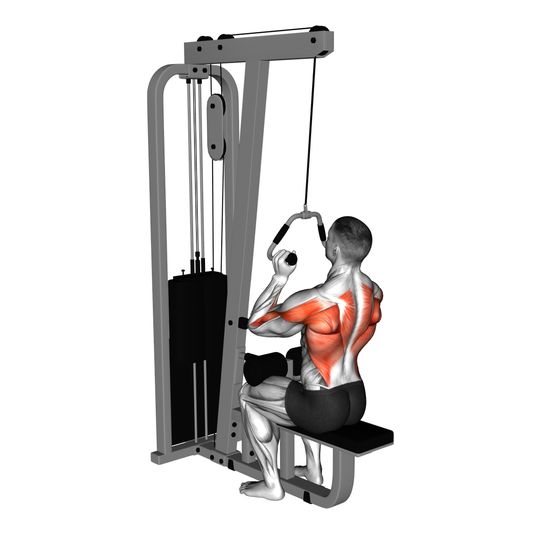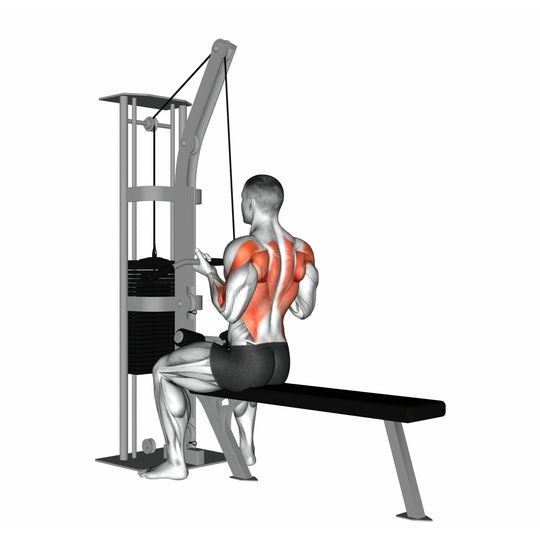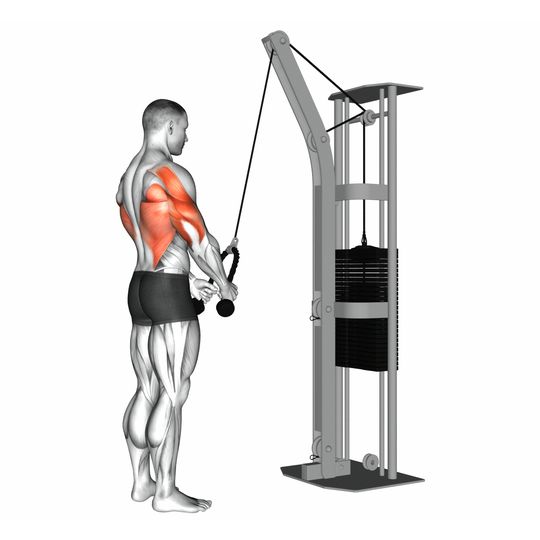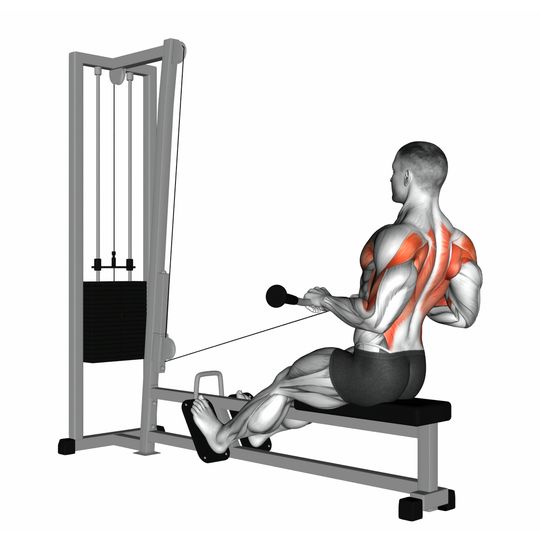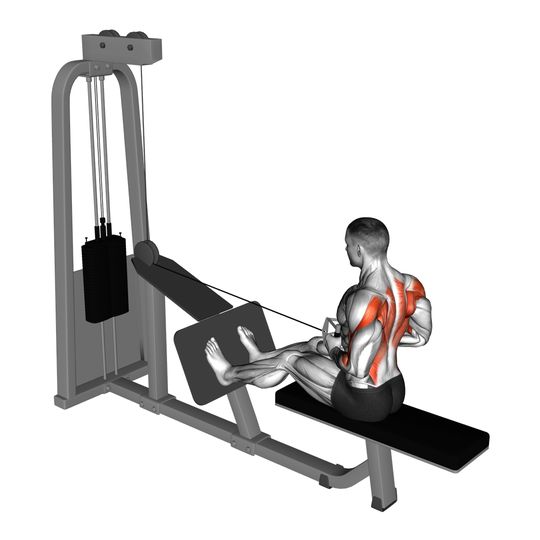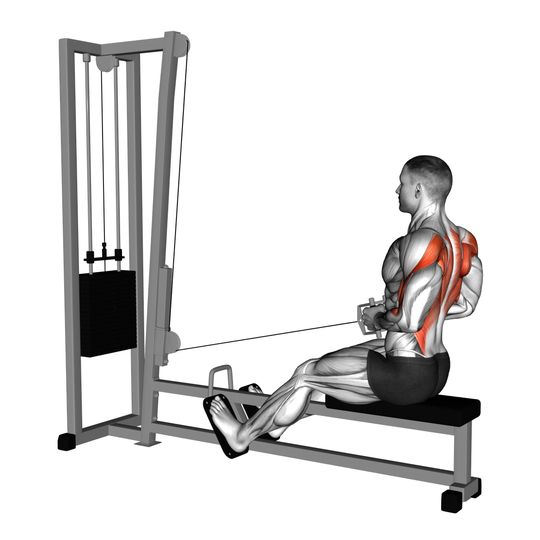


Perform a one-arm cable pulldown, pulling a single handle down toward the upper chest while emphasizing the latissimus dorsi. The movement is a controlled vertical pull from a seated, braced position.
How to do the Single Arm Lat Pulldown#
- Sit with your thighs secured under the knee pads and your feet flat for a stable base.
- Reach up and grasp the single cable handle with an overhand grip placed just outside shoulder width.
- Pull the handle down toward your upper chest by driving your elbow down and back, concentrating on contracting the lat on the working side.
- Pause briefly at the bottom to feel the muscle squeeze, then slowly return the handle to full arm extension with a controlled stretch in the lat.
- Complete the prescribed reps and then switch sides.
Muscles worked#
The single arm lat pulldown is about as direct as lat training gets. With one handle you can pull the elbow down and slightly behind the body, and let the torso lean a few degrees away from the working side, which lines the latissimus dorsi up perfectly with the cable. The lat is most active in the bottom third of the rep where the elbow drives toward the hip, so that is where the pause belongs.
The teres major and lower traps help pull the shoulder blade down, the rhomboids assist as it rotates, and the rear delt pulls the upper arm back. The biceps and forearms flex the elbow and hold the handle; on a fatigued arm they take over, which is why a neutral or underhand grip that lets the elbow stay tucked is best. The obliques on the non-working side brace to stop the trunk being pulled sideways.
- Primary: Lats (Latissimus Dorsi)
- Secondary: Biceps (Biceps Brachii), Forearms (Forearm Flexors & Extensors (incl. Brachioradialis)), Upper back (Rhomboids & Middle Trapezius), Rear delts (Posterior Deltoid)
Common mistakes#
- Leaning the torso back and using momentum to move the weight.
- Rotating the trunk instead of keeping the torso stable.
- Letting the forearm and biceps do most of the pulling.
- Returning too quickly and skipping the full stretch of the lat.
Why it works#
Most people have one lat that is stronger or simply easier to feel. On a two-handed pulldown the dominant side quietly does more work and the gap never closes. Working one arm at a time removes that option: each side gets the same reps, and the weaker side gets exposed on the first set, which is exactly the information you want before it turns into a visible asymmetry.
The single handle also allows a longer, more natural path. You can reach higher at the top for a bigger stretch, pull the elbow further back at the bottom, and add a slight side bend that lengthens then shortens the lat more than a fixed bar allows. It is one of the best exercises for teaching a lifter what a lat contraction actually feels like before moving to heavier bilateral pulls.
Sets, reps and setup#
Three to four sets of 10-15 reps per arm with about 60 seconds between arms. Alternate sides rather than doing all sets on one arm, so neither side rests much longer than the other. Twice a week on a pull or back day works well.
- Setup
- Sit facing the stack with your thighs under the pad and grab a single D handle with a neutral or underhand grip. Start with the arm long and the shoulder pulled up toward the ear, then drive the elbow down toward your hip while leaning slightly away from the working side. Squeeze for a full second at the bottom, then let the weight pull the arm back to a long stretch.
- Progression
- Add one rep per set weekly until you reach 15, then move up one plate on the stack and start again at 10. Always begin with the weaker arm and match its reps on the stronger side. If the stronger side has more in the tank, the imbalance is closing and that is a good sign.
Variations#
- Lat Pulldown Both arms on a wide bar, heavier loading and less range, the standard bilateral version.
- Neutral Grip Lat Pulldown Two-handed with the palms facing, the closest two-arm match to the elbow path of the single arm version.
- Single Arm Cable Row The horizontal equivalent, hitting the same lat with more mid back involvement.
- Iso-Lateral High Row A plate-loaded machine with independent arms that sits between a pulldown and a row in angle.
- Pull Up The bodyweight version of the vertical pull, with much heavier loading and no stack to adjust.
Single arm lat pulldown vs lat pulldown#
The two-handed lat pulldown lets you move more total weight, and its fixed bar makes it simple to progress by adding plates. It is the better choice as a primary strength movement for the back. The trade-off is that the bar limits the elbow path and lets a stronger side quietly dominate.
The single arm version moves less weight but gives each lat a longer range and forces both sides to do equal work. It is more time-consuming, so use it as a second exercise after your heavy pulls, or as the main pulldown for a block when you know one side is lagging.
Common questions#
What muscles does the single arm lat pulldown work?
The lats do most of the pulling, with the teres major, lower traps and rhomboids controlling the shoulder blade. The rear delt, biceps and forearms assist, and the obliques on the opposite side brace to stop the torso being pulled sideways.
Is the single arm lat pulldown better than the regular pulldown?
It is better for fixing imbalances and for feeling the lat through a full range. The two-handed pulldown is better for moving heavy weight and progressing simply. Most lifters benefit from having both in their program at different points.
Should I lean to the side during a single arm pulldown?
A small lean away from the working arm is useful because it lines the lat up with the cable and adds range at the bottom. Keep it to a few degrees. Twisting or pulling the whole torso down means the load is too heavy.
What grip should I use for single arm lat pulldowns?
A neutral grip on a D handle is the default because it lets the elbow travel toward the hip and keeps the wrist comfortable. Underhand adds a bit more biceps; overhand pulls the elbow out to the side and shifts some work toward the upper back.
How many reps should I do for single arm lat pulldowns?
Ten to fifteen per arm for three or four sets. The exercise is a range and control movement more than a strength test, so choose loads where the elbow still finishes low and the pause at the bottom is real on the last rep.