


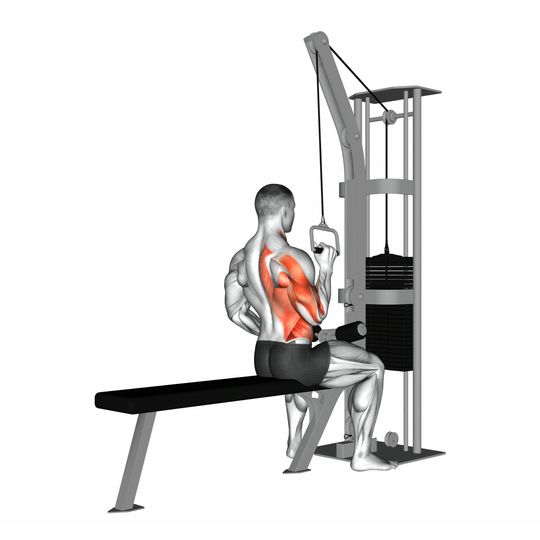
The lat pulldown is vertical pulling with the load anchored above you and your body fixed in place. That fixed body is the whole point: you can pick any weight, including one lighter than you, and the lats work through a long range without your grip or bodyweight deciding when the set ends.
Every replacement therefore answers one question — how do you keep pulling something down toward your torso? Bars flip the anchor and make your bodyweight the load. Bands restore the exact movement anywhere. Rows change the direction to horizontal and trade some lat stretch for far more upper-back work.
Every lat pulldown alternative, and what it changes#
1. Pull Up#
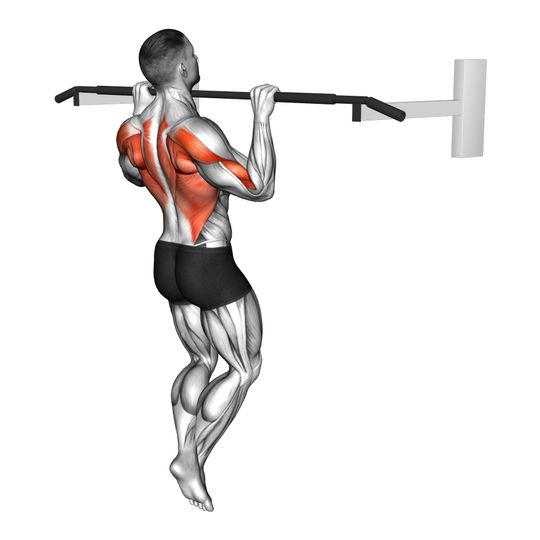
Pull-up barLatsUpper back
The same vertical pull with the anchor and the load swapped: you move, the bar does not. Identical muscles — lats first, upper back and biceps behind them — with more core involvement and more range at the top. The catch is that the weight is fixed at your bodyweight, which is either too much or too little for a long time.
2. Assisted Pull Up#
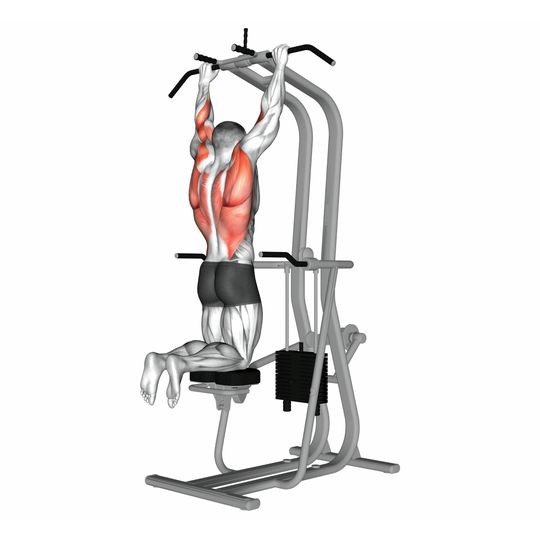
MachineLatsUpper back
The bridge between the two. An assisted pull-up machine subtracts weight in small increments, which gives you the pulldown’s adjustable loading with the pull-up’s movement. This is the substitute if the pulldown station is gone and full pull-ups are still out of reach.
3. Chin Up#
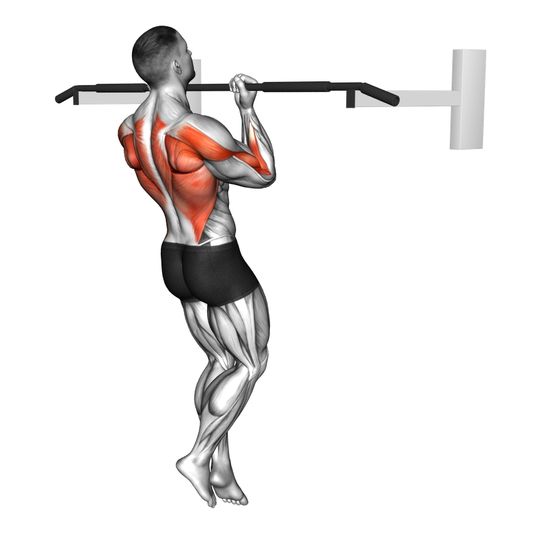
Pull-up barLatsBiceps
An underhand grip shortens the moment arm on the elbow and lets the biceps contribute more, so most people manage several more reps than they can on a pull-up. Same lats, more arm, and a slightly more comfortable shoulder position if overhead pulling bothers you.
4. Band Lat Pulldown#
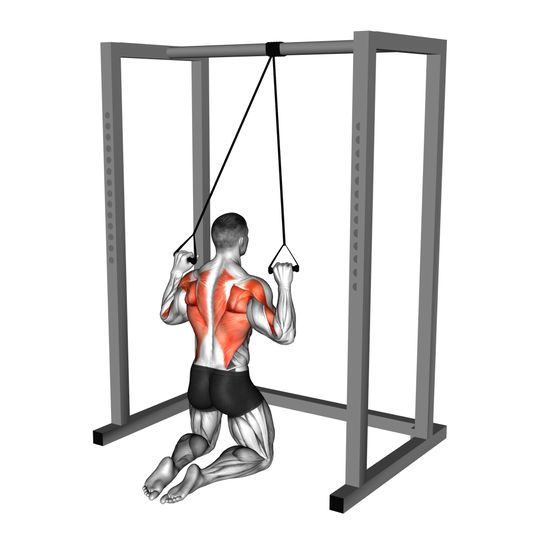
Resistance bandLats
The movement reproduced exactly with a band anchored overhead — same arc, same grip, same lat shortening. Tension rises as you pull rather than staying constant, so the bottom of the rep is where the work concentrates. The best true like-for-like when there is no gym.
5. Single Arm Lat Pulldown#
CableLats
One side at a time removes the bar, which lets the shoulder blade travel further and the lat shorten fully. Useful for evening out a side-to-side difference, and the free hand lets you feel whether the lat is actually doing the pulling instead of the arm.
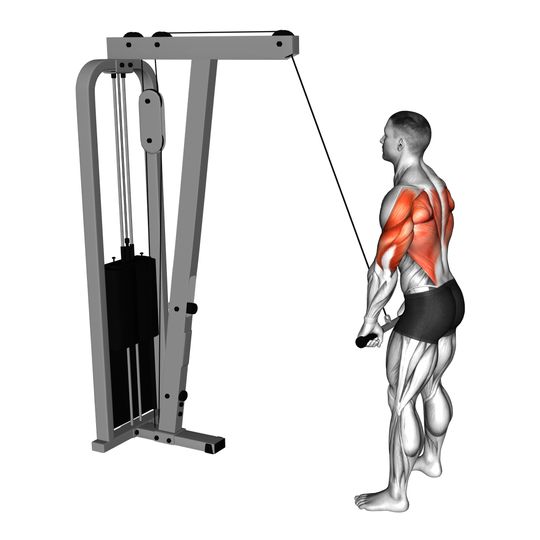
6. Straight Arm Pulldown#
CableLats
Keeping the elbows locked strips the biceps out of the equation, so the lat works purely through shoulder extension. Not a heavy movement, but it is the cleanest way to load the lat if elbow flexion is what usually fails first on your pulldowns.
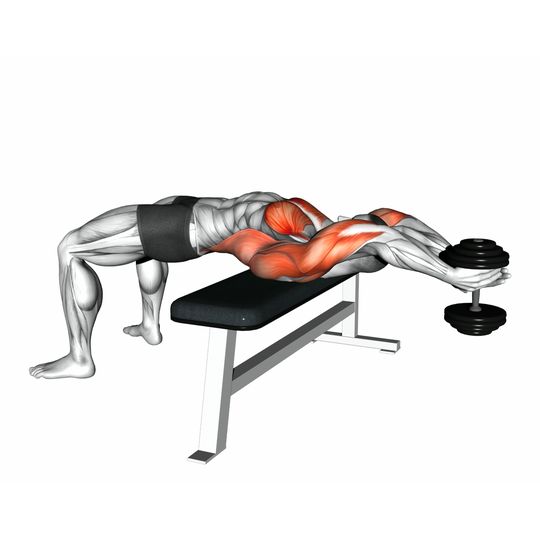
7. Dumbbell Pullover#
DumbbellBenchChestLats
Shoulder extension against a dumbbell on a bench — the same lat function as a straight-arm pulldown, with the deepest stretch of anything on this list. Needs one dumbbell and a bench, which makes it the home answer for direct lat work without a bar to hang from.
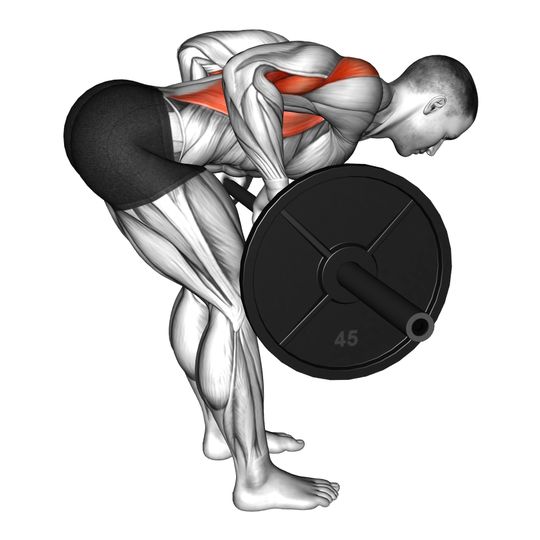
8. Barbell Bent Over Row#
BarbellUpper backLats
A horizontal pull rather than a vertical one, so it shifts emphasis toward the mid-back and rhomboids while still training the lats hard. Load it heavy and it covers most of what the pulldown gave you, plus the upper-back thickness the pulldown never did.
9. Inverted Row#
Other equipmentUpper backLats
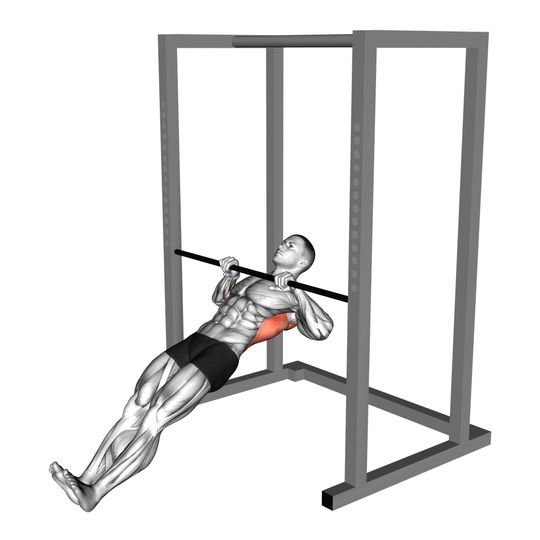
Bodyweight horizontal pulling under a bar or a table, with difficulty set by how high your feet are. It scales down further than a pull-up ever can, which makes it the reliable home option when hanging from a bar is not yet realistic.
How to choose, by what you have#
The same shortlist, filtered by the equipment actually in front of you. Each row names the one to start with.
At home, no equipment#
Start with Band Lat Pulldown
A band and a door anchor rebuild the movement almost exactly — kneel, anchor high, and pull to the collarbone. If you have a bar to hang from, alternate pull-up negatives with band pulldowns; if you have neither, inverted rows under a sturdy table cover the pull.
Dumbbells only#
Start with Dumbbell Pullover
Dumbbells cannot pull from overhead, so train the lat through shoulder extension instead. Pullovers on a bench give the lat its longest stretch, and single-arm dumbbell rows add the loaded pulling volume the pulldown used to supply.
Barbell and rack#
Start with Barbell Bent Over Row
With a barbell the honest replacement is horizontal. Bent-over rows load the lats and mid-back heavily in one movement; keep the torso closer to parallel and pull toward the hips to bias the lats rather than the traps.
Full gym#
Start with Assisted Pull Up
In a full gym, work down the vertical-pull list: assisted pull-up machine for adjustable loading, unassisted pull-ups or chin-ups when the weight is right, and a single-arm cable pulldown when you want more range than a straight bar allows.
Frequently asked questions#
What is the best lat pulldown alternative?
The pull-up, if your bodyweight suits the rep range you want, and an assisted pull-up machine if it does not. Both keep the vertical pulling pattern the pulldown exists for, and the assisted version restores the adjustable loading that makes the pulldown so easy to progress.
Are pull-ups better than lat pulldowns?
For building lats they are close to equivalent — the pattern and the muscles are the same. Pull-ups add core demand and full-body tension; pulldowns win on loading precision, because you can add five pounds at a time and train past the point where pull-ups get too easy or never get easy enough.
How can I train my lats at home without a pulldown machine?
Anchor a band above a door and do band lat pulldowns kneeling — it is the same arc and the same grip. Add dumbbell pullovers for the stretched position and inverted rows under a table for loaded pulling volume, and you have covered the pulldown completely.
Can rows replace lat pulldowns?
Partly. Rows train the lats hard, but they pull horizontally, so more of the work lands on the rhomboids and mid-traps and less on the lats in their stretched overhead position. Most lifters are better off keeping one of each rather than swapping one for the other permanently.
Does grip width change what a pulldown alternative trains?
Less than people claim. A wider grip slightly increases shoulder abduction and a narrower or underhand grip lets the elbows travel further back and the biceps help more. Both train the lats through most of their range — grip choice matters far less than whether you control the eccentric.