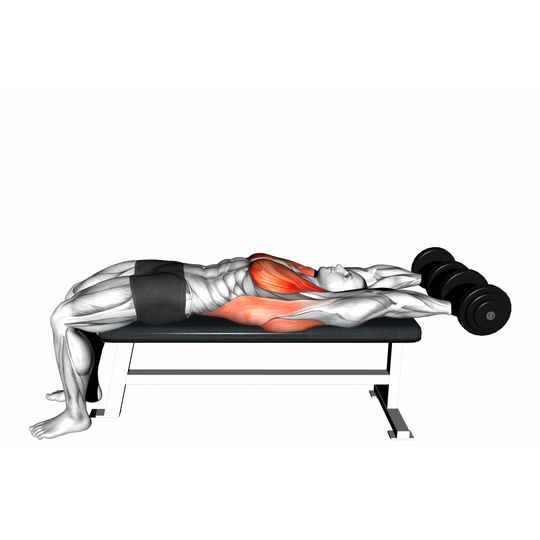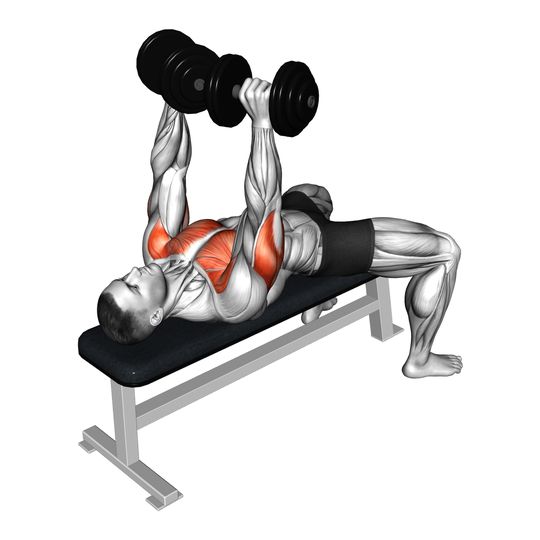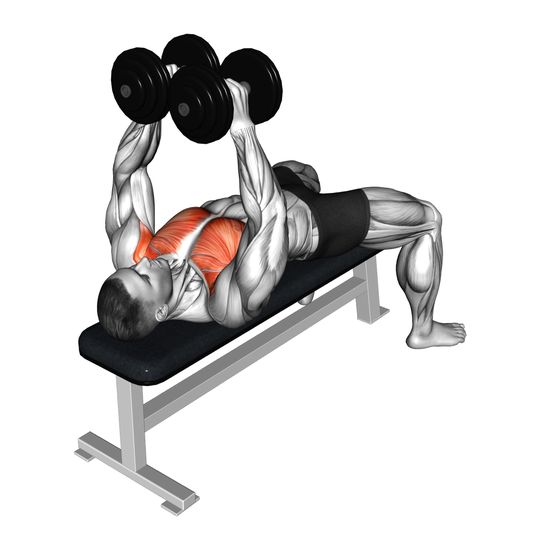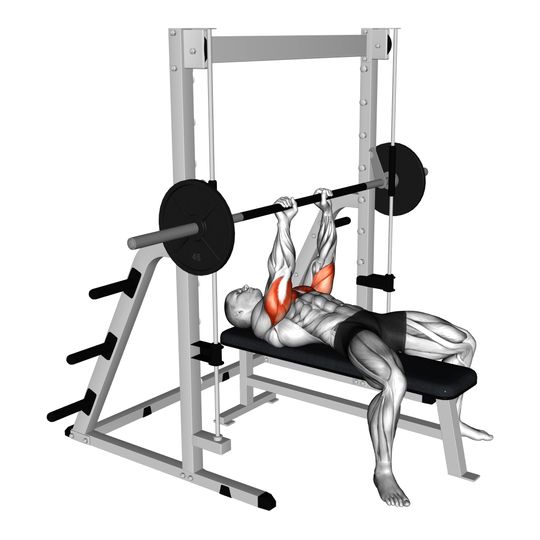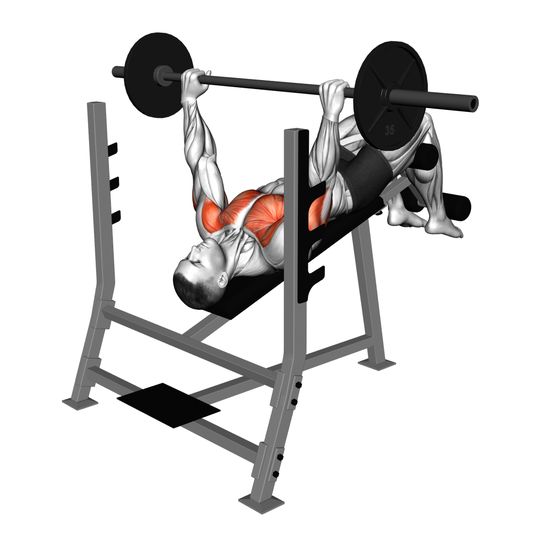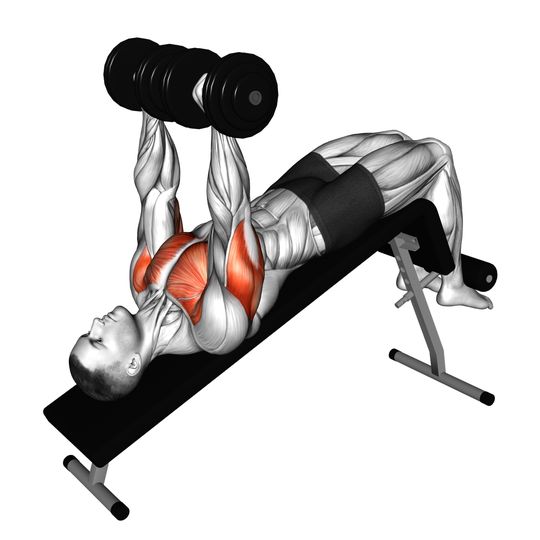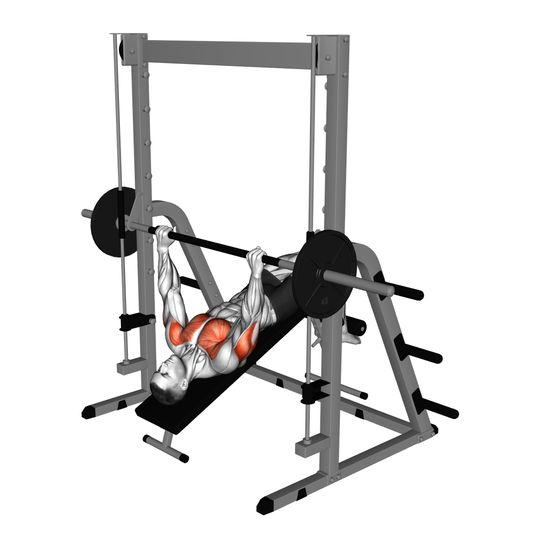


Lie with your upper back on a bench and move a single dumbbell in a controlled arc from over the chest to behind the head, primarily loading the chest muscles.
How to do the Dumbbell Pullover#
- Lie so your upper back rests on the bench and hold a dumbbell with both hands at one end, arms extended over the chest with a slight elbow bend.
- Keep your torso steady and hinge at the shoulders to lower the weight in a smooth, wide arc behind your head until you feel a stretch across the chest.
- Hold the bottom position briefly while maintaining the elbow angle and control of the weight.
- Reverse the path by drawing the dumbbell back over the chest to the start position while exhaling, keeping the motion slow and controlled.
Muscles worked#
The dumbbell pullover works the chest and lats together, which is rare. As the weight arcs behind your head, the pectoralis major and the lats both reach a long, stretched position, and both pull the arms back over the chest. Which one dominates depends on set-up: elbows bent and pointed at the ceiling with a slight arch in the upper back brings in the chest, straighter arms and a flatter torso puts more on the lats.
The long head of the triceps crosses the back of the shoulder joint, so it is stretched at the bottom and helps bring the arms forward, which is why heavy pullovers make the back of the arm sore. The serratus anterior and abs stop the ribcage flaring and the lower back arching as the weight goes behind you. The rear delts and rotator cuff keep the shoulder stable at end range.
Common mistakes#
- Lowering the weight too far and forcing an excessive shoulder stretch.
- Straightening the elbows fully and turning the move into an arm press.
- Using momentum to swing the dumbbell instead of controlling the arc.
- Allowing the lower back or torso to shift on the bench.
Why it works#
The pullover is one of the few exercises that loads the lats in a fully stretched position with the arms overhead, which pressing and rowing never do. That stretch is where the lats and chest respond most to loading, and the movement fills gaps in most programs: it hits the upper chest and lat insertion without pressing or elbow flexion, so it does not tire the triceps or biceps.
It also improves overhead mobility under load. The bottom of the rep takes the shoulder through the same range as an overhead press or a snatch, but with a light weight and the back supported. Lifters who feel tight pressing overhead often find a few weeks of controlled pullovers helps more than any stretch.
Sets, reps and setup#
Three sets of 10-15 reps with 60-90 seconds of rest, once or twice a week at the end of a chest or back session. Keep the weight moderate; the stretch at the bottom is where the injury risk sits, so use a two to three second lowering phase and treat it as a controlled movement, not a strength exercise.
- Setup
- Lie along a flat bench with your head near the end, feet flat, holding one dumbbell by the end with both palms under the inner plate. Start over the chest with the elbows slightly bent, lower in an arc behind the head until you feel a strong stretch in the lats and chest, keep the elbow angle fixed, and pull back to the start without letting the ribcage flare.
- Progression
- Add a rep per set to fifteen, then take the next dumbbell. If the lower back arches off the bench at the bottom, shorten the range or put your feet on the bench. Lying across the bench with the hips dropped increases the stretch but is harder on the lower back; add it only once the flat version is solid.
Variations#
- Machine Pullover Fixed arc with resistance through the full range, the easiest way to isolate the lats heavily.
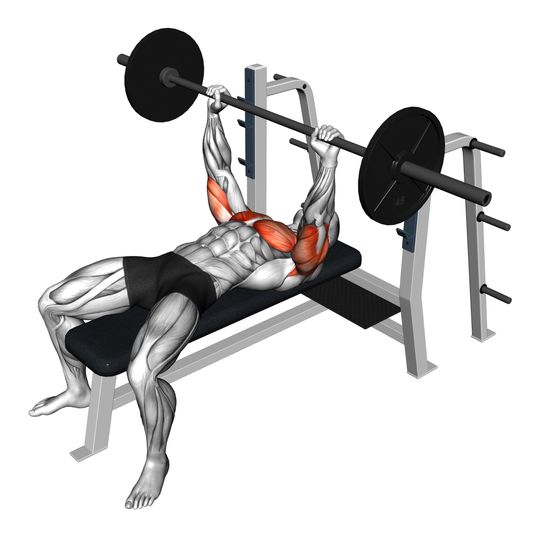
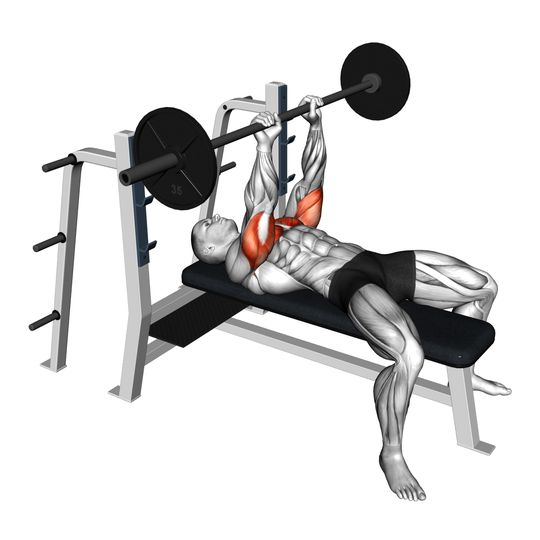
- Barbell Pullover Two hands on a bar, more weight but less freedom in the elbow angle.
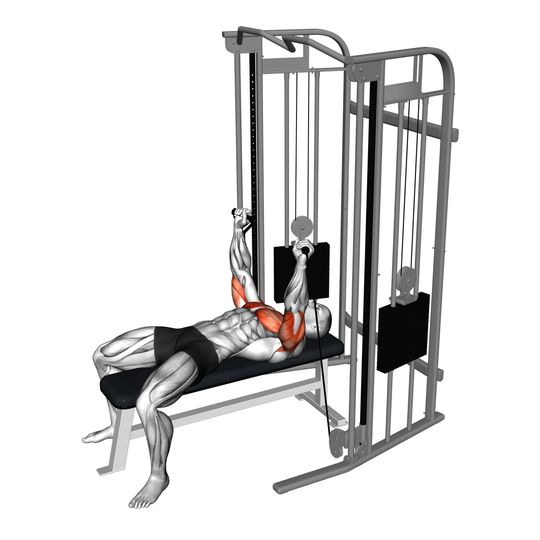
- Straight Arm Pulldown Standing cable version of the same arc, with tension throughout instead of only at the bottom.
- Dumbbell Chest Fly Stretches the chest sideways instead of overhead, with no lat involvement.
Dumbbell pullover vs straight arm pulldown#
Both take the arms from overhead to the hips with nearly straight elbows, so both load the lats through shoulder extension. The dumbbell pullover only resists you at the bottom of the arc, because once the weight is above the chest gravity stops fighting you, so the stretched position gets nearly all the work. The cable resists the whole way and lets you squeeze hard at the thighs.
If you want the stretch and the chest involvement, the dumbbell wins; if you want a lat exercise you can load and take to failure without worrying about your shoulders, use the cable. Lifters with limited overhead mobility should start with the cable and add the dumbbell pullover once the shoulder is comfortable with the range.
Common questions#
What muscles does the dumbbell pullover work?
The chest and lats share the work, with the long head of the triceps stretched and assisting. The serratus anterior and abs stabilise the ribcage, and the rear delts and rotator cuff protect the shoulder at the bottom.
Is the dumbbell pullover for chest or back?
Both, and you can bias it. Bent elbows, an arched upper back, and pulling toward the face works more chest. Straighter arms, a flatter torso, and driving the elbows toward the hips works more lats.
How heavy should a dumbbell pullover be?
Light enough to control a slow stretch at the bottom, usually 10-15 reps with a weight you could curl. Most people who hurt their shoulders on pullovers went too heavy.
Does the dumbbell pullover expand the ribcage?
No, that is old bodybuilding folklore; adult bone does not grow from stretching. What it does do is build the serratus, chest, and lats and improve overhead mobility, which can make the upper body look wider.