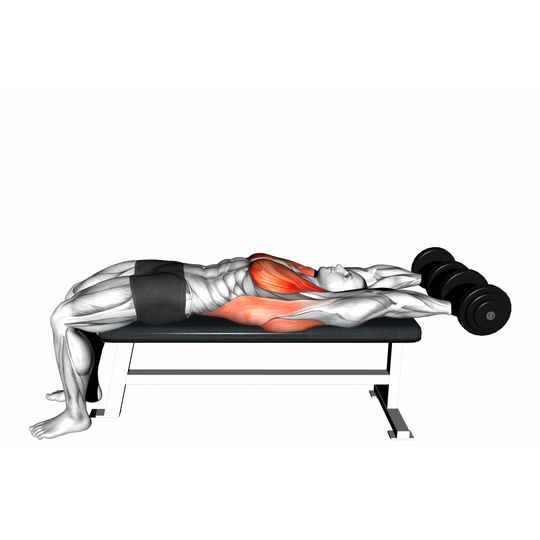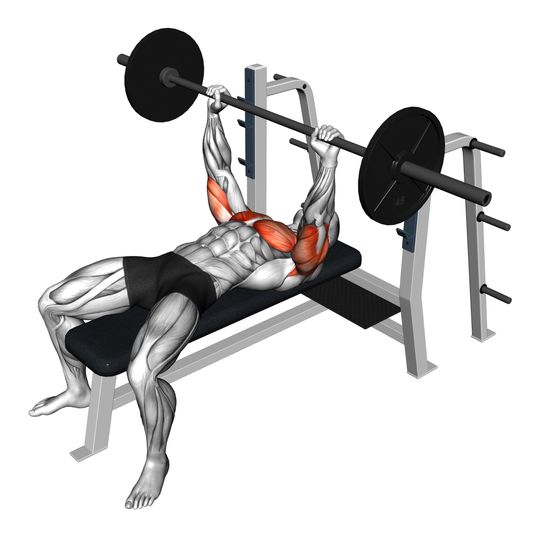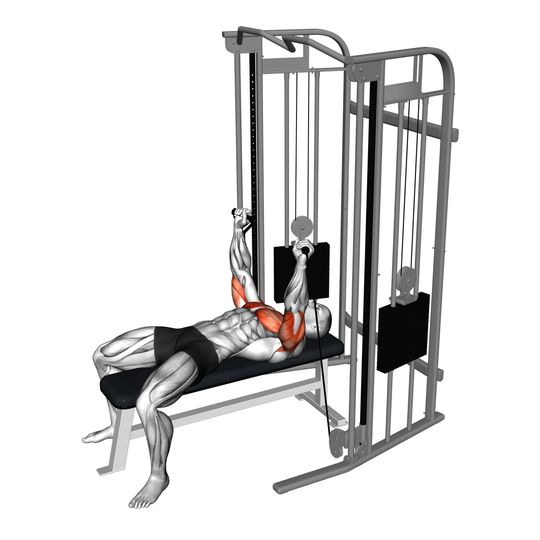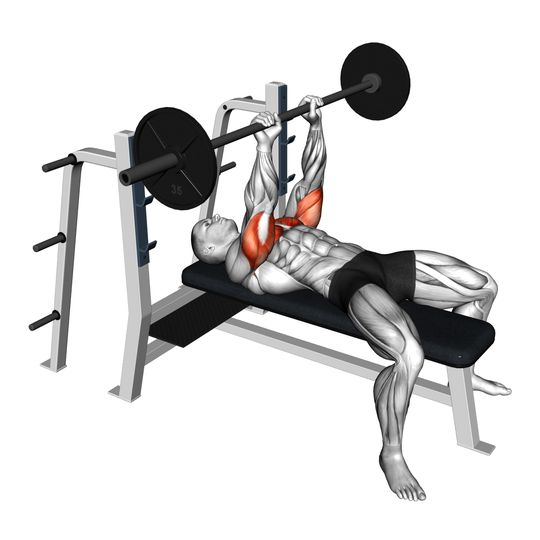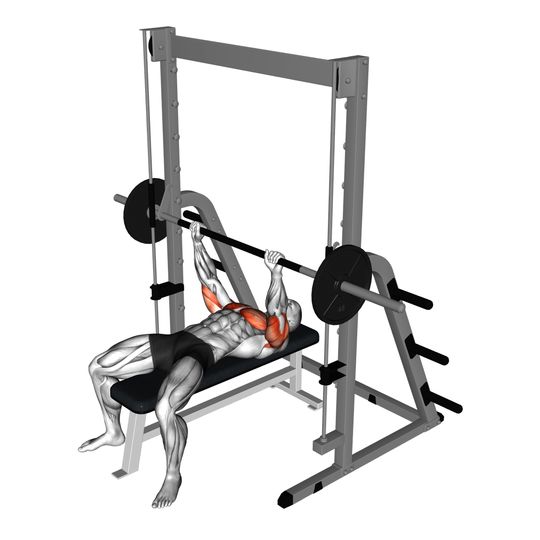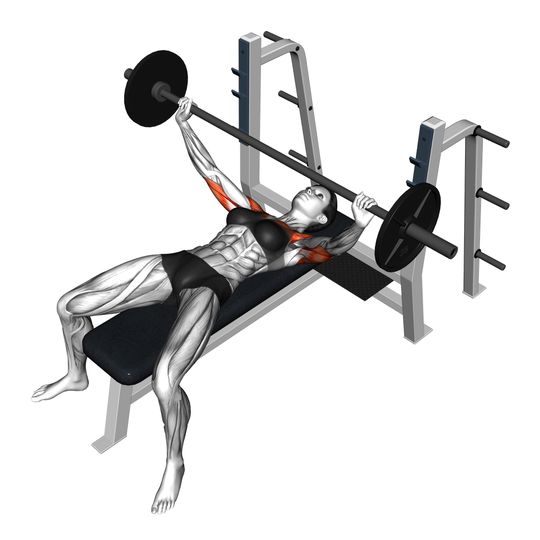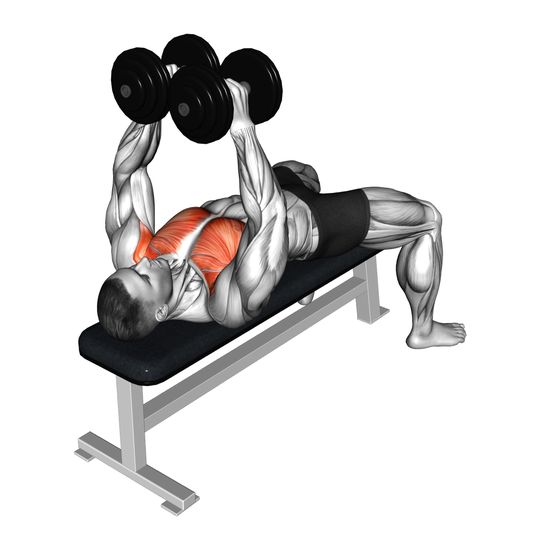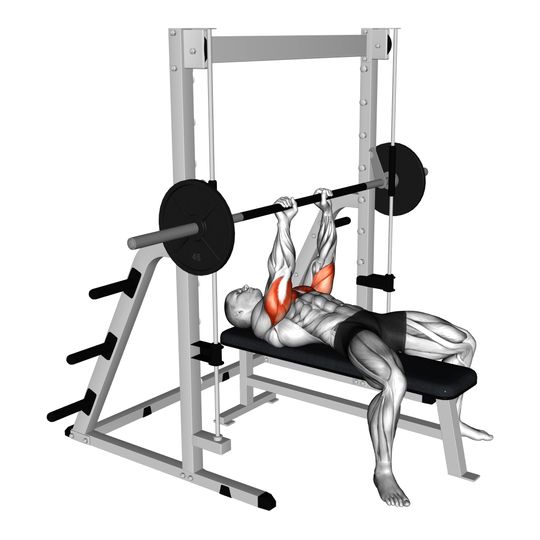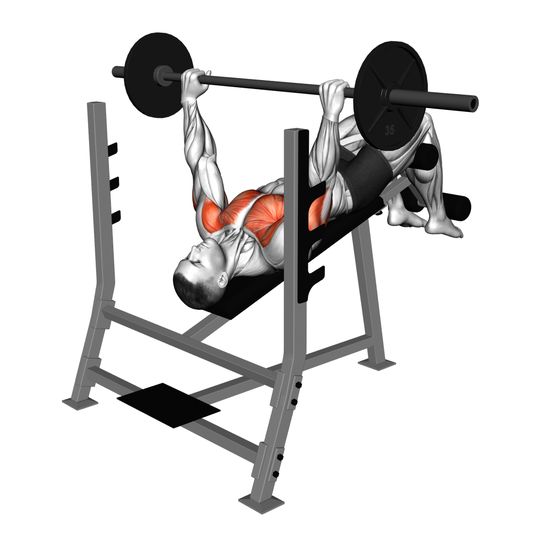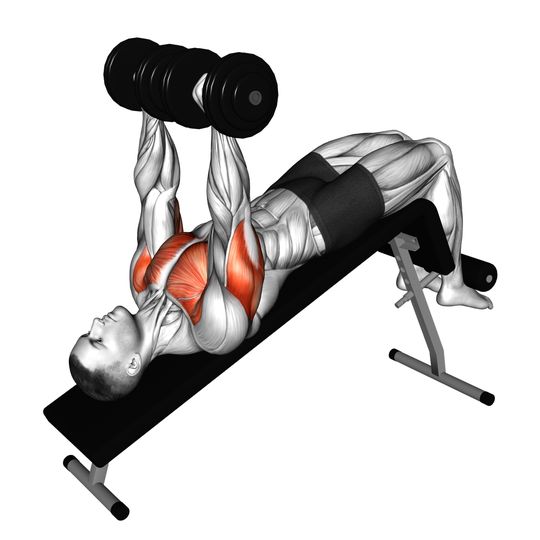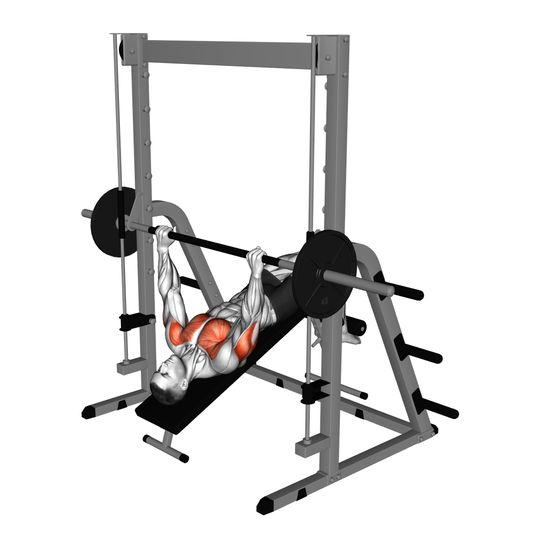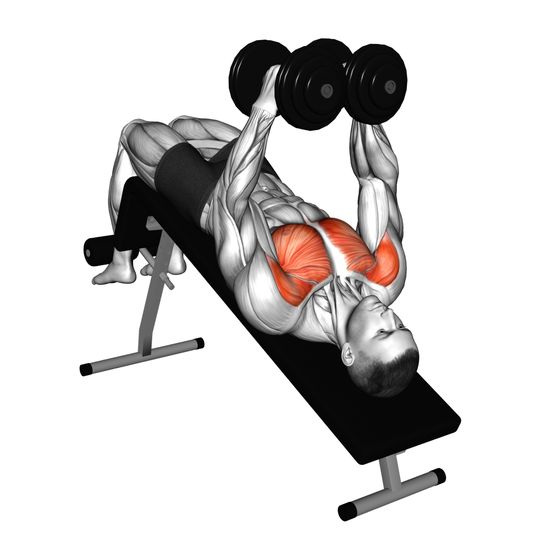


Lie back on a flat bench and press a dumbbell in each hand upward, extending the arms to work the chest (pectoralis major).
How to do the Dumbbell Bench Press#
- Start seated with the dumbbells resting on your thighs and feet steady on the floor.
- Guide the weights into position as you recline, using your legs to help lift each dumbbell onto chest level.
- Draw your shoulder blades together and down so your upper back is stable, keeping elbows angled roughly 45–90° from your torso.
- Exhale and press both dumbbells upward until your arms are near full extension.
- Inhale and lower the dumbbells under control to the middle of your chest, pause briefly, then repeat.
Muscles worked#
The dumbbell bench press is a chest exercise before anything else. The pectoralis major, both the upper and the larger sternal portion, brings the arms from a wide position at the bottom back over the chest, and because the dumbbells can travel lower and closer together than a barbell, the chest works through a longer range at both ends. The stretch at the bottom and the squeeze at the top are what the barbell version cannot give you.
The triceps straighten the elbows and the front delts help drive the weight off the chest. The rotator cuff and the muscles around the shoulder blades work far harder than in a barbell bench because each arm is balanced independently, which is why lifters press roughly 15-20 percent less total weight with dumbbells. The forearms hold the handles, and the core and legs stop the bench rocking.
- Primary: Chest (Pectoralis Major)
- Secondary: Triceps (Triceps Brachii), Front delts (Anterior Deltoid)
Common mistakes#
- Failing to pull the shoulder blades back and down.
- Flaring the elbows out too wide.
- Bouncing the dumbbells off the chest.
- Pressing unevenly with one arm leading the other.
Dumbbell Bench Press vs other exercises#
Head-to-head breakdowns of muscles worked, loading, joint stress, and which one to pick for your goal.
Why it works#
The dumbbell bench press builds the chest through a fuller range than any barbell press. The hands can drop below chest level at the bottom and come together at the top, so the pecs are stretched further and shortened harder on every rep. The independent arms also expose and correct the side-to-side differences a barbell hides, which is why so many stubborn bench plateaus give way after a block of dumbbell pressing.
It is also safer to fail. There is no bar to get pinned under, so a stalled rep gets lowered to the sides, and training close to failure without a spotter is realistic. The shoulder is free to rotate into its most comfortable angle, which is why many lifters with cranky shoulders on the barbell can press dumbbells pain-free.
Sets, reps and setup#
Three to four sets of 6-12 reps with two to three minutes of rest, once or twice a week, as your main press or right after the barbell bench. Sets of 8-12 are where it shines; below six the set-up eats into the reps and the balance demand makes heavy doubles inefficient. A two-second lowering with a brief stretch at the bottom adds a lot for little cost.
- Setup
- Sit on the end of the bench with the dumbbells on your thighs, then lie back and kick the weights up one at a time over your chest. Feet flat and pulling the floor, shoulder blades pinned back and down, slight arch. Lower to the sides of the chest with the elbows around 45 degrees from the torso, then press up and slightly in until the arms are locked and the weights nearly touch.
- Progression
- Add reps to the top of the range, then move up one dumbbell increment and drop back to the bottom. Because dumbbell jumps are large, stay at a weight for a few sessions and add a rep per set until the jump is manageable. If one side finishes later, let the weaker side dictate the reps for both.
Variations#
- Barbell Bench Press Both hands on one bar, heavier loads and easier progression but a shorter range.
- Incline Dumbbell Bench Press Bench at 30-45 degrees, shifting the emphasis onto the upper chest and front delts.
- Dumbbell Floor Press Elbows stop at the floor, removing the stretch and emphasising the triceps.
- Dumbbell Squeeze Press Dumbbells pressed together throughout, keeping the chest contracted for the whole rep.
Dumbbell bench press vs barbell bench press#
The barbell bench press is the better strength exercise. It is more stable, easier to load in small steps, can be spotted safely, and lets you press more total weight, which drives the adaptations that matter for a bigger bench number. If you compete or care about the number, the barbell is your main press.
The dumbbell bench press is arguably the better chest builder. The longer range, the freedom to bring the hands together at the top, and the extra stabiliser work all favour hypertrophy, and it is kinder to the shoulders. The right answer for most lifters is both: barbell for heavy sets, dumbbells for volume in the 8-12 range.
Common questions#
What muscles does the dumbbell bench press work?
The chest is the primary mover, with the triceps and front delts assisting the press. The rotator cuff and shoulder blade stabilisers work hard to balance each dumbbell, and the forearms hold the handles.
Is the dumbbell bench press better than the barbell bench press?
For chest growth, arguably yes, because of the longer range and the independent arms. For pressing strength and heavy loading, the barbell wins. Most good programs use both.
How much less can you dumbbell press than barbell?
Most lifters press roughly 15-20 percent less total weight with dumbbells, so a 100 kilo bencher usually handles around 40 kilos in each hand for the same reps. A much bigger gap points to poor stability or a large imbalance.
How low should you lower the dumbbells?
Until the upper arms are slightly below parallel with the floor and you feel a stretch across the chest, without the shoulders rolling forward. Going as deep as possible on every rep is where most shoulder complaints start.