

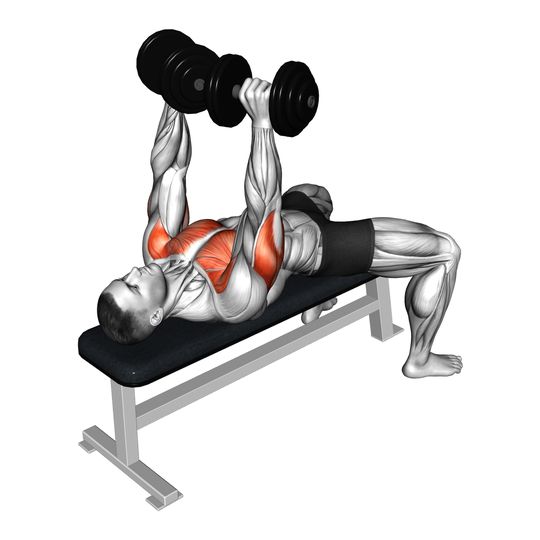
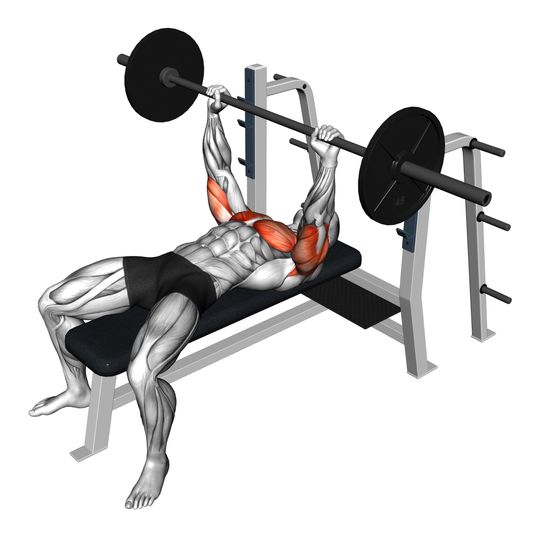
The barbell bench press is the strongest press you can do and the lift every chest program is measured against. The dumbbell bench press is the same movement split into two hands, which changes the range of motion, the stability demand, and how each side of the body is allowed to behave. Both build chest, and each does something the other cannot.
The barbell wins on load: the bar is easier to stabilise, the two arms help each other, and you can progress in small increments for years. Dumbbells win on range and on the ability to bring the hands together at the top, which loads the chest through a longer, more natural arc. This is how the trade-offs play out and how to use them.
| Factor | Dumbbell Bench Press | Barbell Bench Press |
|---|---|---|
| Range of motion | Longer — hands go below chest level | Stops when the bar touches the chest |
| Chest activation | Slightly higher per rep at equal effort | High, with more triceps and front delt |
| Load | Lower — about 80% of the bar total | Highest, easy to progress in 2.5 kg steps |
| Stability demand | High, each arm on its own | Lower, arms share the bar |
| Shoulder comfort | Usually better — free wrist and elbow path | Depends on grip and setup |
| Best for | Chest growth, fixing imbalances, shoulder-friendly pressing | Maximal strength, heavy progression, powerlifting |
Dumbbell Bench Press vs Barbell Bench Press: muscles worked#
Dumbbell Bench Press
- Primary: Chest
- Secondary: Triceps, Front delts
Barbell Bench Press
- Primary: Chest
- Secondary: Triceps, Front delts
Muscles worked#
Both presses train the chest, front delts, and triceps. Studies comparing them consistently show slightly higher pec activation with dumbbells at matched effort, because the hands can travel inward at the top and stretch further at the bottom — the pec is a muscle that adducts the arm, and the barbell cannot let the hands move toward each other.
The barbell shifts a little more work onto the triceps and front delts, partly because the fixed hand width turns the top of the rep into a lockout the triceps finish, and partly because you can load it heavier. That is not a drawback: it is why the barbell bench builds pressing strength that carries over to everything else.
Range of motion and stability#
A barbell rep ends when the bar touches your chest. A dumbbell rep can continue below that, because nothing is in the way, which stretches the pecs further and puts more of the rep in the range where growth is most strongly stimulated. Dumbbells also let the wrists rotate and the elbows find their own path, which is why so many lifters with cranky shoulders press dumbbells without pain.
The cost is stability. Each dumbbell has to be controlled independently, so the smaller stabilising muscles work harder and the total weight you can press drops — two 40 kg dumbbells feel much harder than an 80 kg bar. Getting heavy dumbbells into position is its own skill and often the limit on how heavy you can go.
Strength and progression#
The barbell is the better strength tool. Loading is precise, increments are small, and the two arms stabilise each other, so you can push heavier weight and keep adding to it for years. Every strength standard and every powerlifting meet uses the barbell for a reason.
Dumbbells progress in bigger jumps — most racks go up in 2 or 2.5 kg per hand, which is a 5 kg jump on a lift you can load less of. Progress through reps first, then weight, and expect the numbers to move in steps rather than a smooth line. The plus side is that a weaker arm cannot hide behind a stronger one, which makes dumbbells the fix for a lopsided bench.
How to use both#
Run the barbell bench as the main press when strength is the goal: 3–5 sets of 3–6, progressed in small increments. Follow it with dumbbells for 8–12 reps, often on an incline, to add chest volume through the longer range.
Run dumbbells as the main press when chest size is the goal, shoulders dislike the barbell, or there is no spotter. Many physique-focused lifters bench barbell in strength blocks and dumbbell in hypertrophy blocks. Over a training year, most people benefit from both.
The verdict#
The barbell bench press is better for strength: heavier loads, finer progression, and the lift everything else is measured against. If you want a bigger bench number, press the barbell.
The dumbbell bench press is at least as good for chest growth and often better, thanks to the longer range and the ability to bring the hands together, and it is the more shoulder-friendly option. If you want a bigger chest and do not care about the number, dumbbells are a complete answer — and the two together cover everything.
Frequently asked questions#
Is dumbbell bench press better than barbell for chest?
For chest activation per rep, slightly — the longer range and inward hand path load the pecs a little more. For total chest growth over a program, the two are close, because the barbell lets you use more weight. Most lifters get the best result from using both across the week.
How much should I dumbbell press compared to barbell?
Around 40 percent of your barbell bench per hand is typical — so an 80 kg bench usually pairs with about 30–32 kg dumbbells for the same reps. If your dumbbells are well below that, stability is the limit; if they are well above it, your barbell setup is probably weak.
Can I build a big chest with only dumbbells?
Yes. Dumbbell presses, incline presses, and flyes cover the chest completely, and the longer range of motion is an advantage. What you give up is the heaviest possible loading and the finest progression, which matter more for strength than for size.
Why does the dumbbell bench press hurt my shoulders less?
Because your hands are free. With a barbell the grip width fixes the elbow path and can force the shoulders into a position they dislike; with dumbbells the wrists rotate and the elbows find their own line, and you can stop the descent wherever your shoulders are comfortable. Many lifters keep the barbell for strength blocks and switch to dumbbells when the shoulders get cranky.
Should I do dumbbell or barbell bench first?
Do the one that matches your priority first, while you are fresh. Strength first means barbell first; chest size first means dumbbells first, or barbell for strength then dumbbells on an incline for volume. Either order works if the second press is trained in a higher rep range.