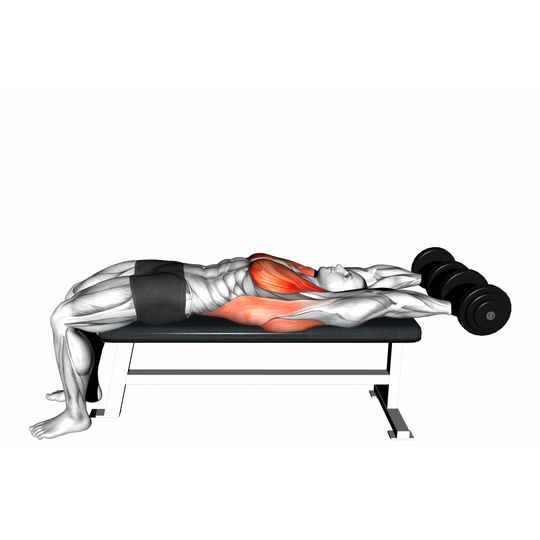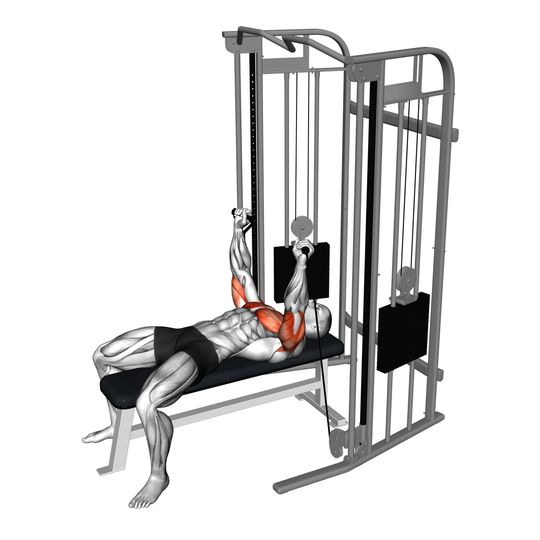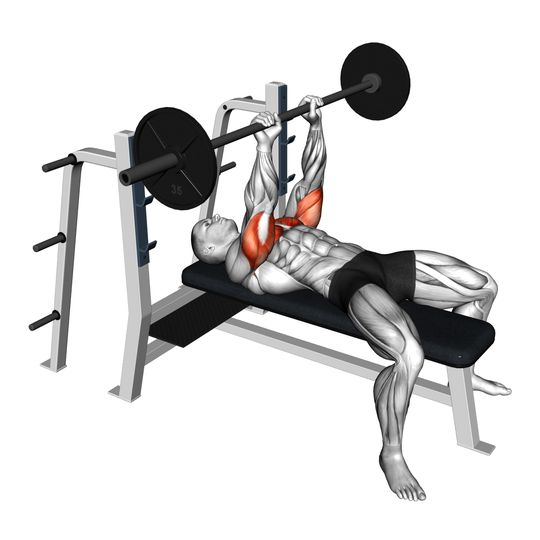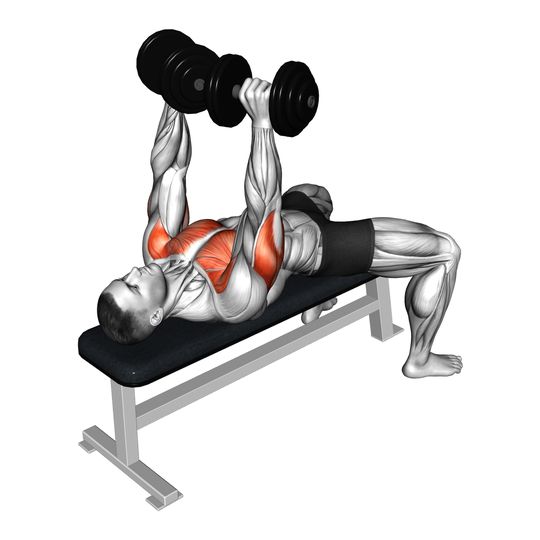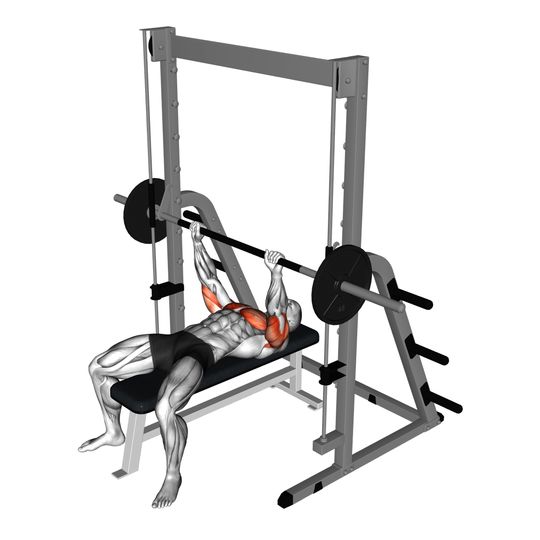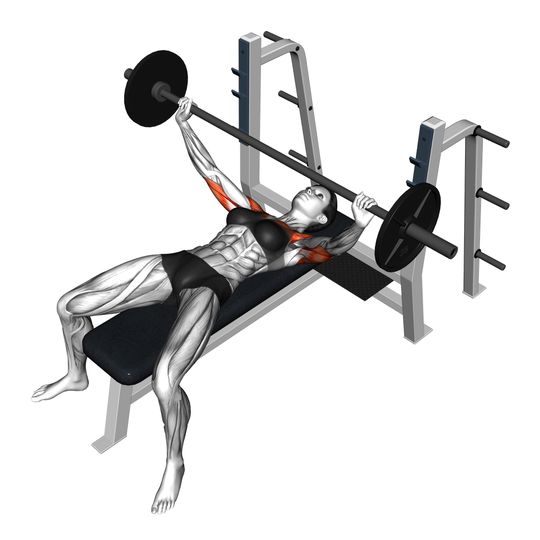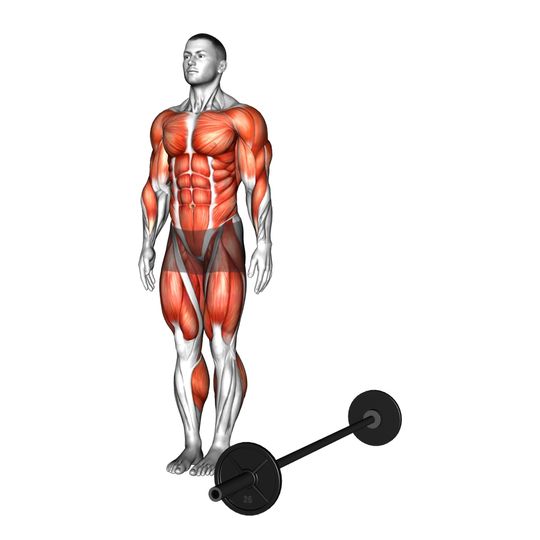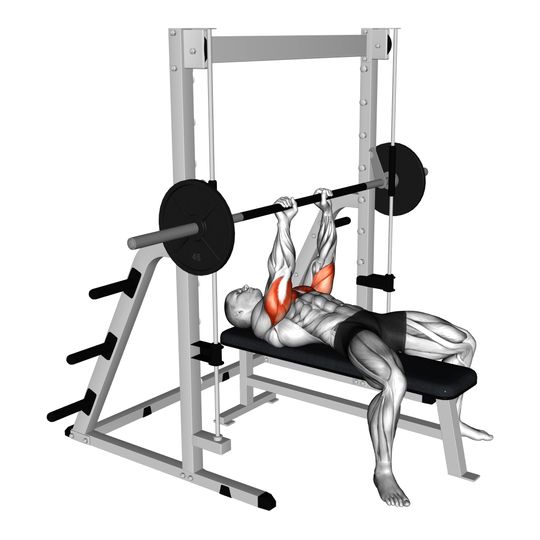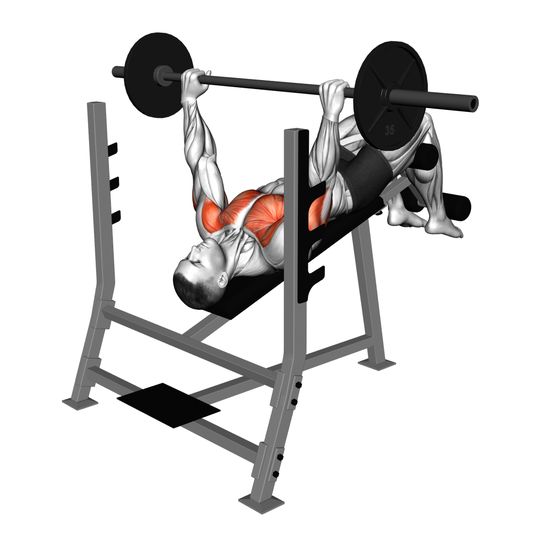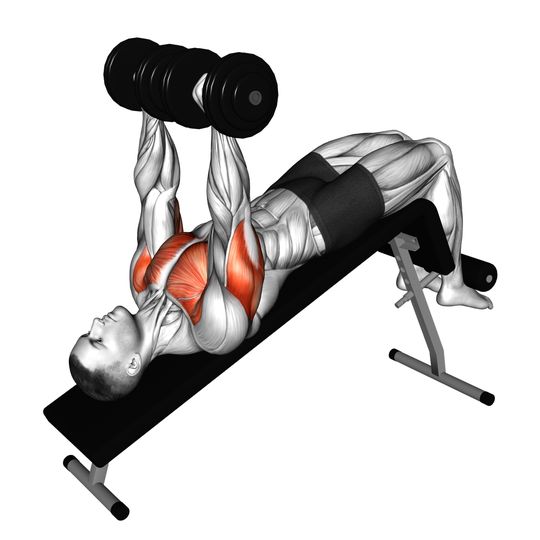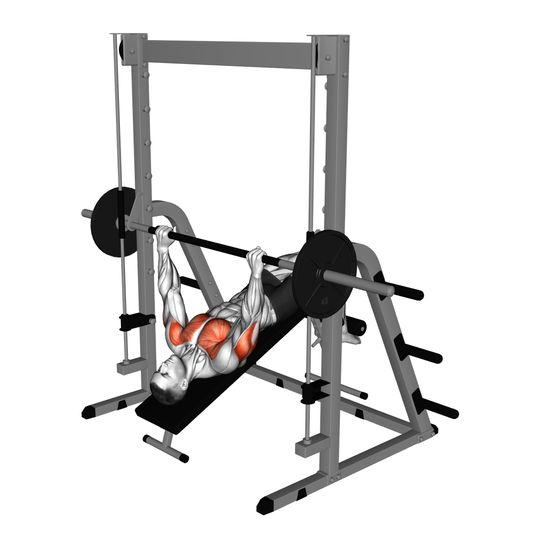


Press a loaded barbell from the chest to full arm extension, primarily working the pectoral muscles with assistance from the triceps and front deltoids.
How to do the Barbell Bench Press#
- Lie flat on a bench and grip the bar with an overhand, shoulder-width hold.
- Pull your shoulder blades back and down so your upper back feels stable and your elbows are not fully flared.
- Unrack the bar and position it directly over your chest with your arms locked out.
- Inhale and lower the bar in a controlled path to the middle of your chest, pausing briefly.
- Exhale and press the bar upward until your arms are straight while consciously contracting the chest.
Muscles worked#
- Primary: Chest (Pectoralis Major)
- Secondary: Triceps (Triceps Brachii), Front delts (Anterior Deltoid)
Common mistakes#
- Allowing the elbows to flare out excessively.
- Bouncing the bar off the chest instead of lowering with control.
- Losing shoulder-blade tension during the press.
- Using an overly wide grip that compromises shoulder stability.
How much should you bench press?#
What the average bench press actually is, and what counts as beginner, intermediate, advanced, or elite at your bodyweight — for men and women, in kg and lbs.
See bench press strength standards →
Barbell Bench Press vs other exercises#
Head-to-head breakdowns of muscles worked, loading, joint stress, and which one to pick for your goal.
Why it works#
The barbell bench press loads the chest, front delts and triceps harder than any other single upper-body movement, which is why it anchors most programs. Both hands are fixed to one bar, so you can press more weight than with dumbbells and add it back in 2.5 lb jumps.
It also trains the pecs through a deep stretch at the bottom of every rep, and strength built here carries over to overhead pressing, dips and push-ups.
Sets, reps and setup#
Three to four sets of 6-10 reps with 2-3 minutes of rest is the standard size prescription; for strength, run 3-5 sets of 3-5 reps. Twice a week suits most lifters.
- Setup
- Eyes under the bar, shoulder blades pulled back and down, feet planted. Grip about 1.5 times shoulder width and touch the bar to your lower chest with forearms vertical.
- Progression
- Add 2.5-5 lb once you hit the top of your rep range on every work set. If the bar stalls for weeks, cut 10 percent and build back up.
Variations#
- Incline Bench Press (Barbell) Bench raised to about 30 degrees to bias the upper chest, at roughly 20 percent less weight.
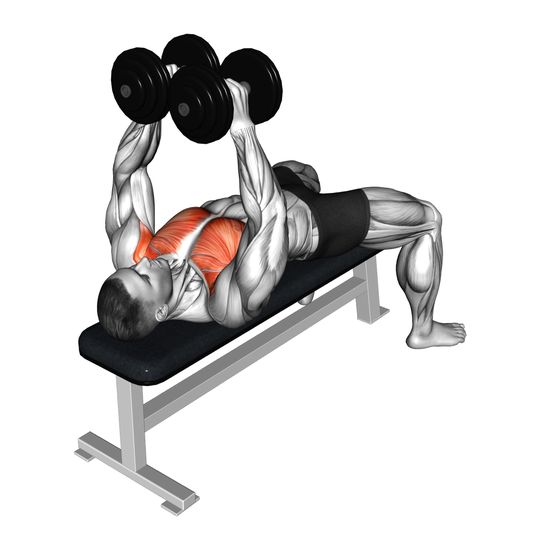
- Bench Press (Dumbbell) Each arm gets its own path and a deeper stretch, and you can bail without a spotter.
- Bench Press - Close Grip (Barbell) Hands inside shoulder width shift work to the triceps.
- Pause Bench Press (Barbell) A one-second pause on the chest kills the bounce and exposes weak positions.
Barbell vs dumbbell bench press#
Pick the barbell for maximum load and a strength number to chase, and dumbbells for chest stimulus per rep. The bar moves more weight and progresses in small, honest increments.
Dumbbells win on range of motion and shoulder comfort, and they expose side-to-side differences the bar hides. Run both: barbell first, dumbbells after.
Common questions#
How many sets and reps of bench press should I do?
Three to four sets of 6-10 reps for size, three to five sets of 3-5 for strength, stopping one to three reps short of failure.
Where should the bar touch on my chest?
At the lower chest, around nipple line or just below, so your forearms are vertical at the bottom. Touching higher forces the elbows to flare.
Does the flat bench press build the upper chest?
It trains the whole pec, but the upper fibers get less work than on an incline. EMG research suggests a bench angle near 30 degrees raises upper-chest activity, so add an incline press too.
What if I train alone without a spotter?
Bench inside a rack with the safety pins just below chest height, or switch to the dumbbell bench press or floor press.