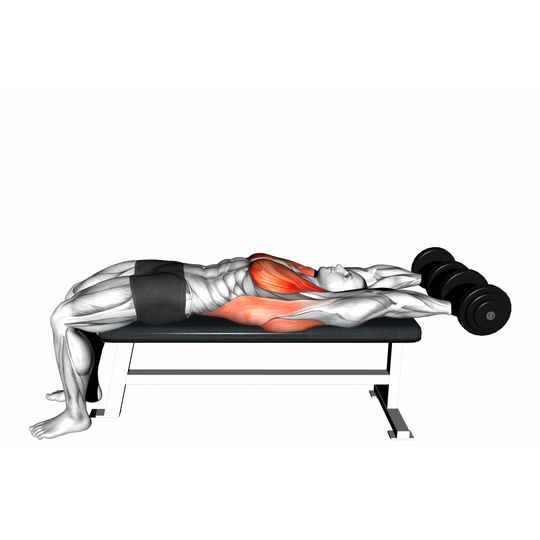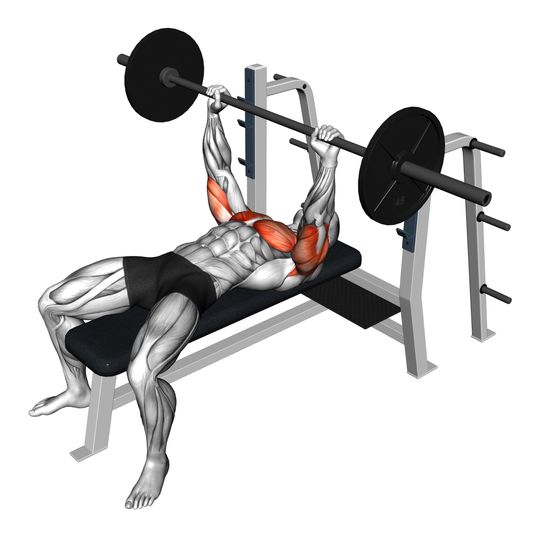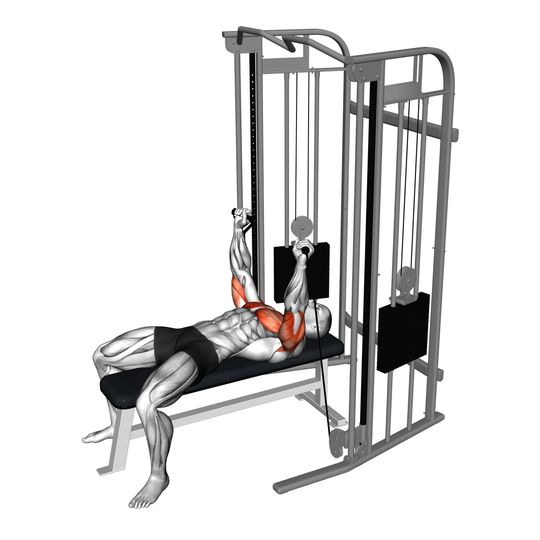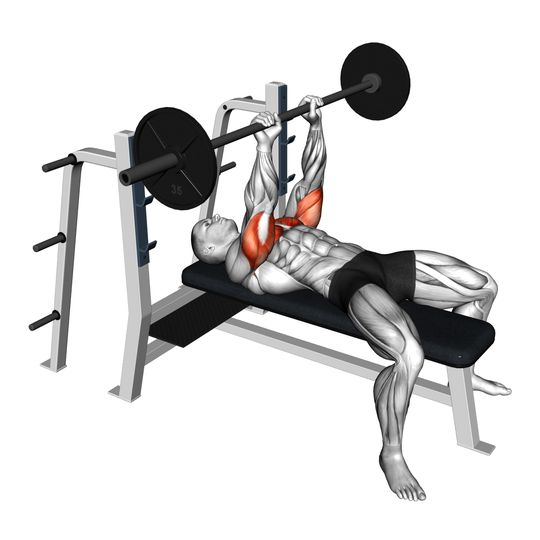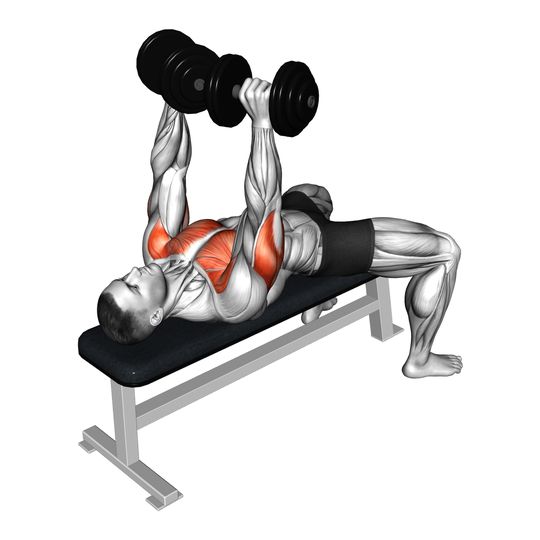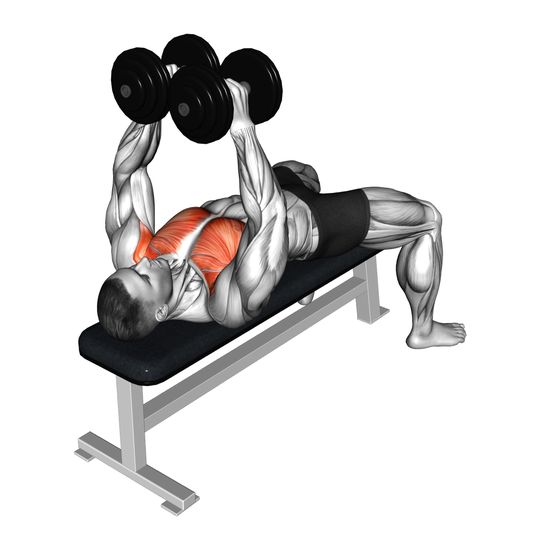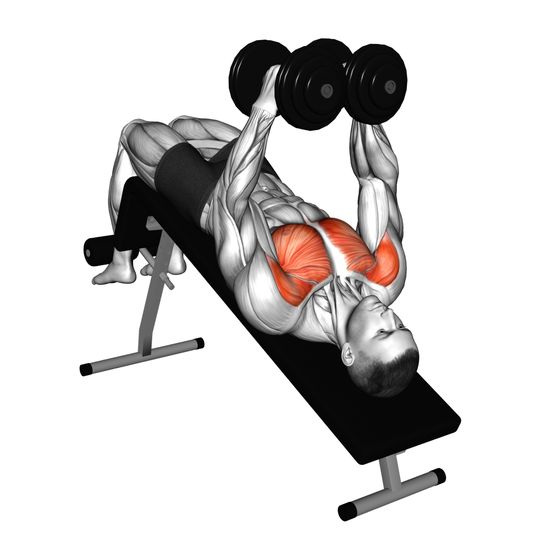


Lie on a decline bench and press dumbbells upward in a controlled motion to work the chest with assistance from the triceps. Maintain a stable shoulder and torso position throughout each rep.
How to do the Dumbbell Decline Bench Press#
- Lie back on the decline bench and hook your feet under the pads so your body is secure.
- Bring the dumbbells up to shoulder level, starting from your thighs or with a partner’s help, with palms facing forward.
- Draw your shoulder blades back and down and position your elbows at roughly a 45–90° angle from your torso.
- Exhale as you press the dumbbells upward until your arms are nearly straight and you feel the chest contract.
- Inhale and lower the weights slowly back to the starting position, keeping control before beginning the next rep.
Muscles worked#
The dumbbell decline bench press is a lower chest exercise. With the head below the hips, the arms press down and away from the body, which lines the load up with the fibres of the sternal and costal portions of the pectoralis major, the part of the chest that forms the lower shelf. The upper chest and front delts contribute less than on a flat or incline press because the shoulder does not have to flex as far.
The triceps extend the elbows and take a larger share than usual, since the decline shortens the range and finishes with the elbows close to the sides. The front delts assist at the start of the press. Holding two independent weights also asks the rotator cuff and the muscles around the shoulder blade to stabilise each arm, and the abs and hip flexors brace against the foot pads to keep you from sliding down the bench.
- Primary: Chest (Pectoralis Major)
- Secondary: Triceps (Triceps Brachii), Front delts (Anterior Deltoid)
Common mistakes#
- Allowing the shoulders to round forward instead of keeping the scapulae pulled back.
- Flaring the elbows excessively so they track far out to the sides.
- Dropping the dumbbells quickly on the descent instead of controlling the movement.
- Using a hip drive or body momentum to power the press.
Why it works#
The decline angle takes the shoulders out of the press. The path is shorter and the elbows never go as high as on a flat bench, so lifters with cranky shoulders can usually press heavier here with less irritation. That reduced shoulder involvement is also why the exercise is so often felt hardest in the lower chest, which many programs otherwise leave to dips.
Dumbbells add two things a barbell cannot. Each arm works alone, so a stronger side cannot hide a weaker one, and the hands are free to move slightly inward at the top, which lets the chest contract through a longer range. Because the load is lower than a barbell decline and the dumbbells can be dropped, it is also the safer version for anyone training without a spotter.
Sets, reps and setup#
Three to four sets of 8-12 reps with 90 seconds to two minutes of rest, once a week as a second chest exercise after a flat or incline press. The decline is a poor choice as a sole chest movement because it does little for the upper pecs.
- Setup
- Set the bench to a 15-30 degree decline and hook your feet under the pads before lying back. Bring the dumbbells to the sides of the chest with the elbows at roughly 45-60 degrees from the body and the shoulder blades pulled together. Press up and slightly inward until the arms are straight, pause, then lower until the dumbbells are level with the chest.
- Progression
- Move up a dumbbell size when 12 reps on all sets is clean and the elbows stay tucked. Getting heavy dumbbells into position on a decline is the real limiter; have a partner hand them to you, or start seated and roll back with them on your thighs. If the shoulders roll forward at the bottom, the weight is too heavy.
Variations#
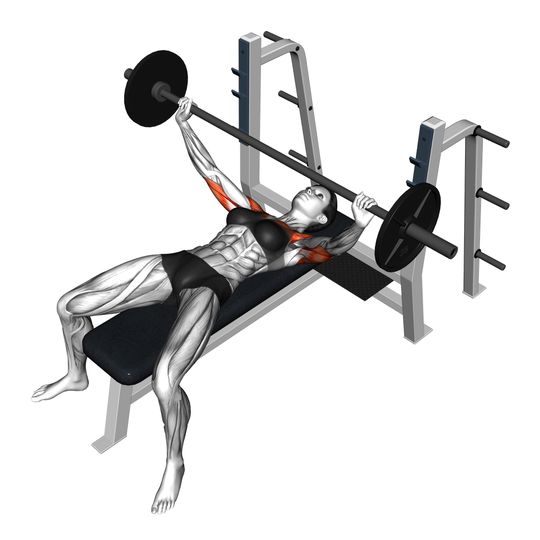
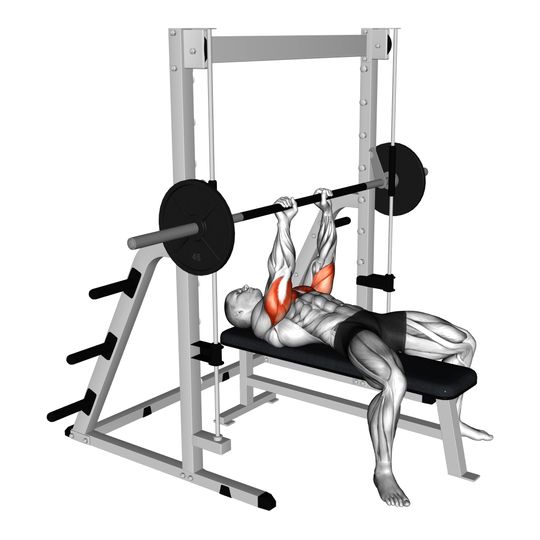
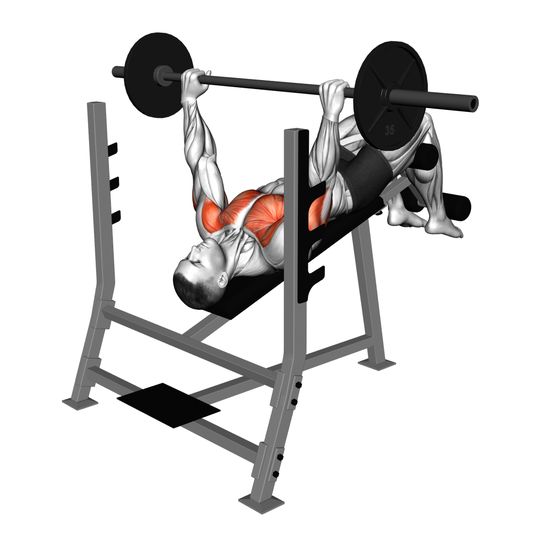
- Barbell Decline Bench Press Heavier loading with a fixed hand position, but it needs a spotter.
- Dumbbell Bench Press The flat version, spreading the work more evenly across the whole chest and shoulders.
- Dumbbell Decline Chest Fly Straight-arm arc on the same bench that isolates the lower chest without the triceps.
- Chest Dip The bodyweight lower-chest movement, with a forward lean and a deep stretch at the bottom.
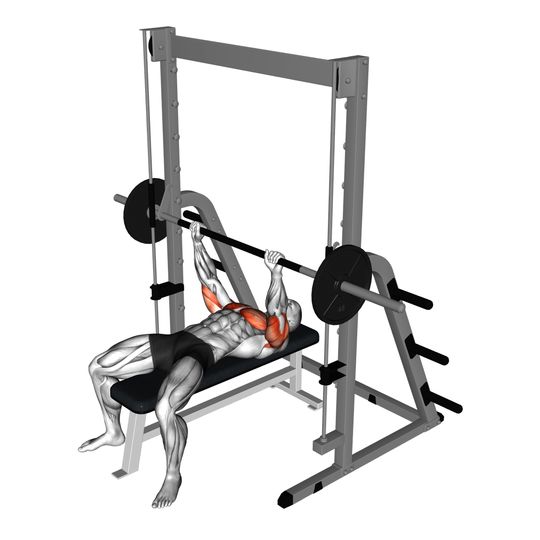
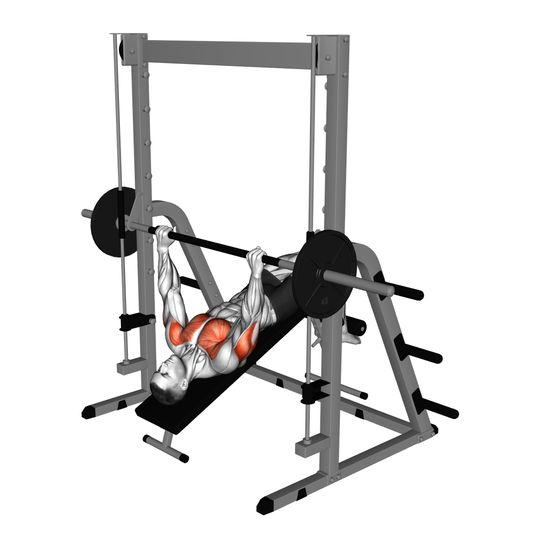
- Smith Machine Decline Bench Press A fixed bar path that removes balance and makes heavy sets safe without a partner.
Dumbbell decline bench press vs barbell decline bench press#
The barbell allows more total load and a stable grip, which makes it the stronger choice for pushing absolute pressing strength on the decline. It also needs a spotter more than any other bench angle: failing under a barbell with your feet hooked and your head low is not a position you want to be in alone.
The dumbbell version gives up some load in exchange for independent arms, a longer range with the hands converging at the top, and the ability to drop the weights if a rep fails. For most lifters using the decline as a chest builder rather than a strength test, the dumbbells are the more useful and safer option.
Common questions#
What muscles does the dumbbell decline bench press work?
The lower chest does most of the work, with the triceps extending the elbows and the front delts assisting at the start of each press. The rotator cuff and shoulder blade muscles stabilise each arm independently, and the abs and hip flexors brace against the foot pads.
Is the decline bench press good for lower chest?
Yes, it is the pressing movement that most directly loads the lower fibres of the pecs, because the arm travels down and away from the body. Combine it with an incline press to cover the upper chest, since the decline alone leaves that region undertrained.
What angle should the bench be for a decline dumbbell press?
Between 15 and 30 degrees. That is enough to shift the load to the lower chest and take pressure off the shoulders without making it awkward to get the dumbbells into position. Steeper declines shorten the range further and add little.
How do I get the dumbbells into position on a decline bench?
Sit on the raised end with the dumbbells on your thighs, hook your feet under the pads, and roll back while bringing the weights to your chest in one motion. For heavier loads, have a training partner hand you the dumbbells once you are lying down.
Is the decline press easier on the shoulders than the flat bench?
For most people, yes. The shoulder does not have to flex as far and the elbows stay closer to the body, which reduces strain on the front of the joint. Lifters who get shoulder pain on the flat bench often find the decline comfortable, though it should not replace flat and incline pressing entirely.