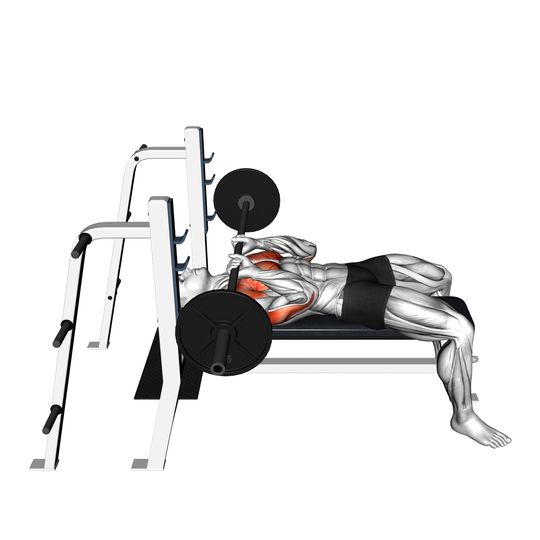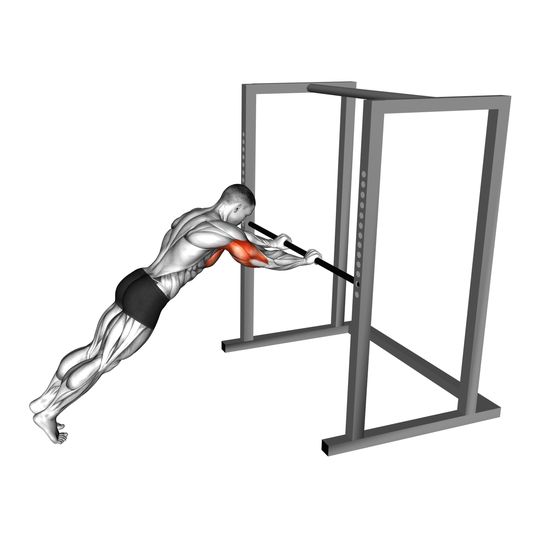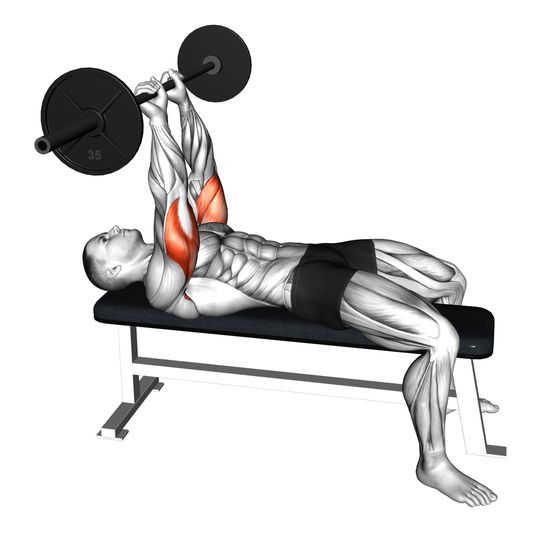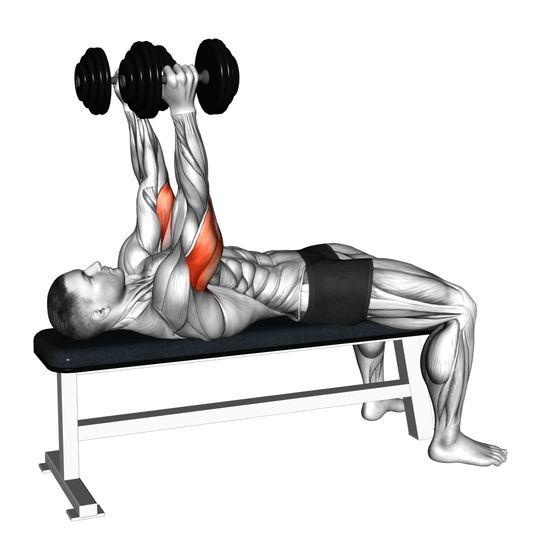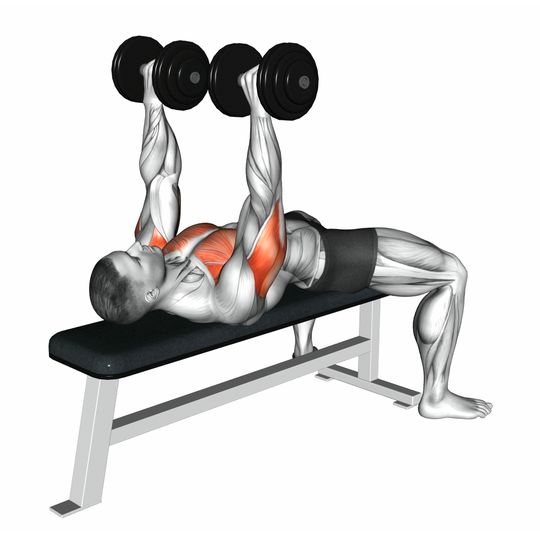


A narrow-grip barbell press that emphasizes the triceps while also recruiting the chest and front shoulders. It is performed from a flat bench using a grip inside shoulder width.
How to do the Close Grip Bench Press#
- Lie flat on a bench with feet planted and grip the barbell slightly narrower than shoulder-width.
- Lift the bar off the rack and brace your upper back by drawing your shoulder blades together against the bench.
- Keep your elbows closer to your sides and lower the bar in a controlled line to the mid-chest while inhaling.
- Pause briefly at the chest, then exhale and press the bar back up until your arms are straight.
- Maintain firm foot contact and a tight upper-back position for the entire set.
Muscles worked#
The close grip bench press is a triceps exercise disguised as a chest exercise. Narrowing the grip to about shoulder width and tucking the elbows means the forearms stay more vertical and the elbows bend further, so the triceps (triceps brachii) have to straighten the arm through a longer range against heavier weight than any pushdown or extension allows. All three heads work, with the long and medial heads doing most of the lockout.
The chest still does a great deal. The pecs, particularly the inner and lower fibres, drive the bar off the chest, and the front delts help in the bottom half. The upper back and lats hold the shoulders pinned to the bench, and the forearms and wrists carry the bar in a straight line. It should feel like a bench press where the arms give out before the chest does.
- Primary: Triceps (Triceps Brachii), Chest (Pectoralis Major)
- Secondary: Front delts (Anterior Deltoid)
Common mistakes#
- Using a grip that is too wide, which reduces triceps emphasis.
- Letting the elbows flare out excessively.
- Bouncing the bar off the chest to gain momentum.
- Allowing the feet or torso to shift, losing a stable base.
How much should you bench press?#
What the average bench press actually is, and what counts as beginner, intermediate, advanced, or elite at your bodyweight — for men and women, in kg and lbs.
See bench press strength standards →
Why it works#
It is the heaviest triceps exercise you can do. Where a skullcrusher might be limited to 30-40 kg, a close grip bench lets the triceps work against 80-90 percent of your regular bench press, and that kind of loading builds arm size and lockout strength that isolation work cannot match. Powerlifters use it as their main secondary press for exactly this reason.
It is also a good primary press for people whose shoulders do not enjoy a wide grip. The tucked elbows reduce the stretch on the front of the shoulder, and the narrower hand position keeps the shoulder joint in a more neutral place. Many lifters find they can train the close grip variation pain-free when the standard bench aggravates them.
Sets, reps and setup#
Three or four sets of 6-10 reps with two to three minutes of rest, once a week. Expect to use 85-95 percent of your regular bench press weight. As a strength builder, heavy triples work well; as an arm builder, stay in the 8-10 range and control the descent.
- Setup
- Grip the bar with the index fingers about shoulder width apart, or roughly 35-45 cm between the hands. Pin your shoulder blades back and down, plant your feet, and lower the bar to the lower chest or upper stomach with the elbows tucked to about 45 degrees. Press up and slightly back toward the rack, finishing with the elbows locked.
- Progression
- Add 2.5 kg a week for as long as it keeps moving cleanly. When you stall, run a two-second pause on the chest for a cycle, or add a set of board or pin presses to overload the lockout. Do not narrow the grip further to chase more triceps; hands closer than shoulder width strain the wrists and add nothing.
Variations#
- Barbell Bench Press The standard grip, which brings the chest and shoulders in more and lets you lift more total weight.
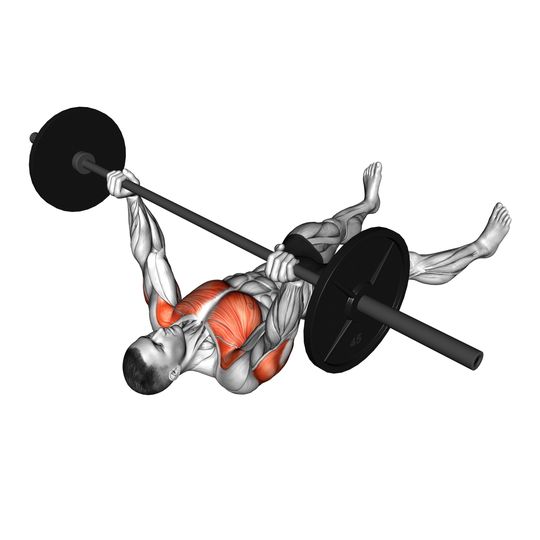
- Barbell Floor Press Pressing from the floor stops the elbows at parallel, removing leg drive and isolating the triceps lockout.
- JM Press A hybrid of a close grip bench and a skullcrusher, the bar is lowered toward the chin for even more triceps emphasis.
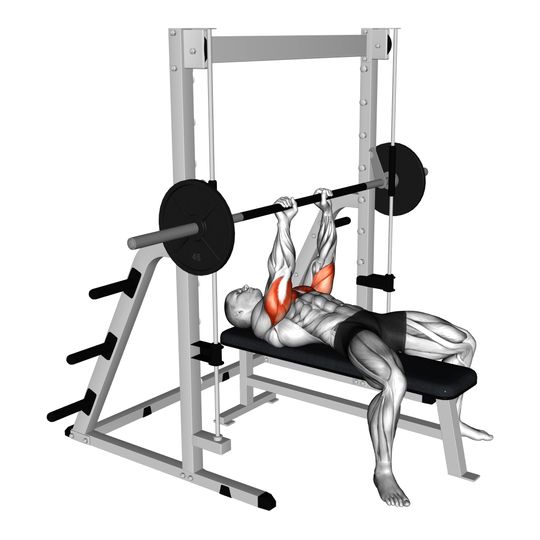
- Smith Machine Close Grip Bench Press The fixed bar path lets you train close to failure without a spotter.
- Barbell Skullcrusher A lighter isolation movement for the triceps that pairs well after heavy close grip sets.
Close grip bench press vs regular bench press#
The regular bench press uses a grip wide enough to shorten the range of motion and involve the chest and shoulders fully, which is why it allows the most weight. It is the better choice for overall chest development and for anyone who competes in the lift.
The close grip version trades a little total load for much more triceps work and a friendlier shoulder position. If arm size or lockout strength is the goal, or if wide-grip pressing hurts, the close grip bench should be your main horizontal press. Most serious lifters keep both in their week, usually the regular bench first and the close grip as the second pressing day.
Common questions#
What muscles does the close grip bench press work?
The triceps and chest share the work, with the triceps taking a much bigger share than in a standard bench press. The front delts assist, and the upper back, lats, and forearms stabilise the bar.
How close should my grip be on a close grip bench press?
About shoulder width, with the hands 35-45 cm apart for most people. Going narrower than that puts the wrists at an awkward angle and does not increase triceps activation in any meaningful way.
Is the close grip bench press better for triceps than skullcrushers?
It lets you load the triceps far heavier, so it is better for strength and for building overall mass. Skullcrushers isolate the long head through a bigger stretch. The best arm programs use a heavy close grip press followed by a lighter isolation movement.
Where should the bar touch on a close grip bench?
Lower on the chest than a regular bench, around the bottom of the sternum or the top of the stomach. This keeps the forearms vertical and the elbows tucked, which is what makes the triceps do the work.
How much less should I close grip bench compared to my regular bench?
Most lifters handle 85-95 percent of their standard bench press. If the gap is much bigger than that, your triceps are a weak point and the exercise is exactly what you need.