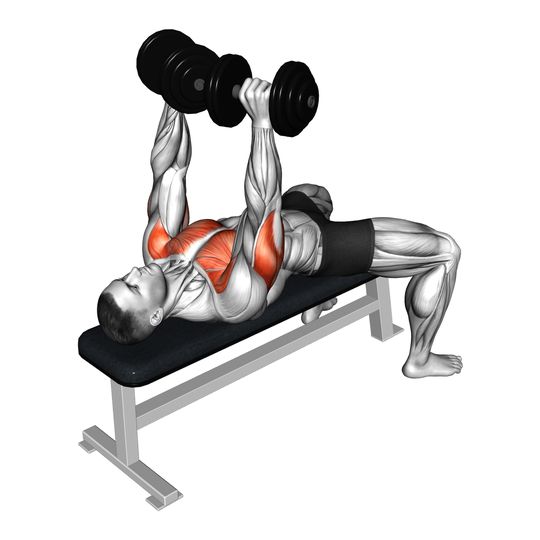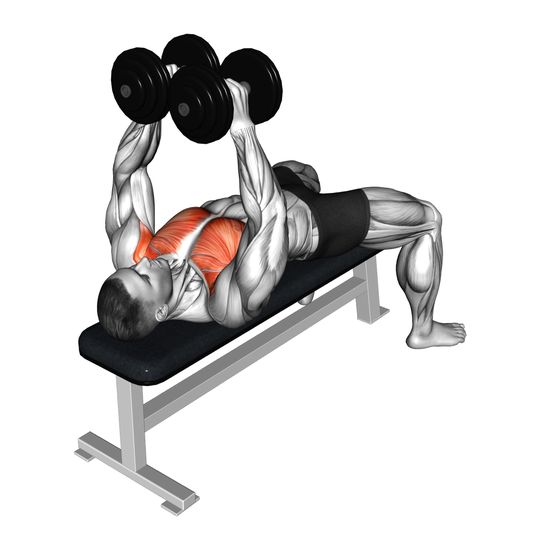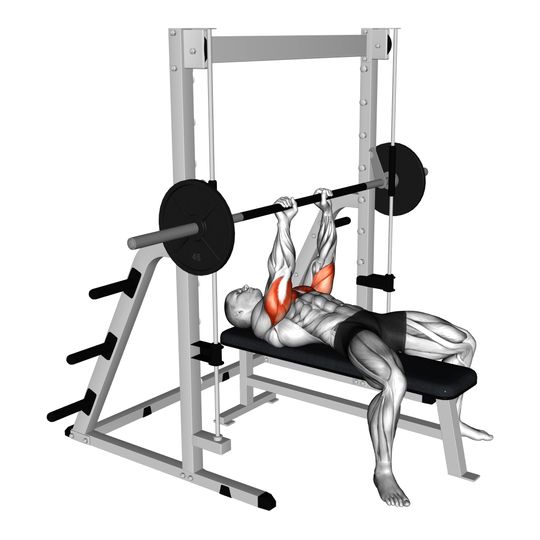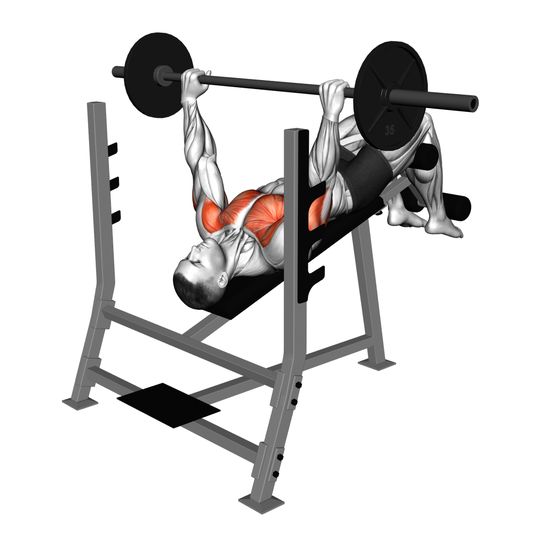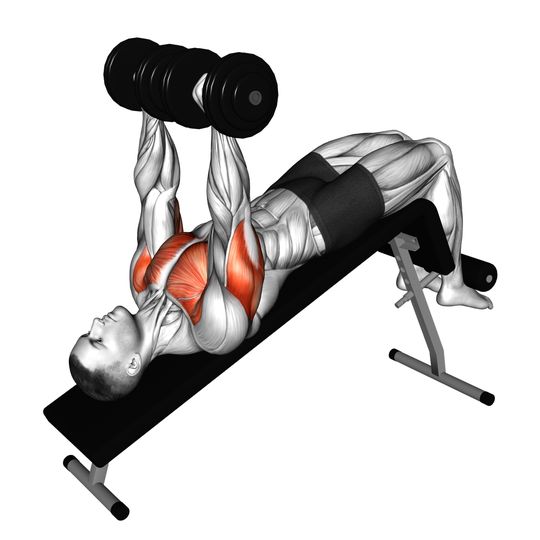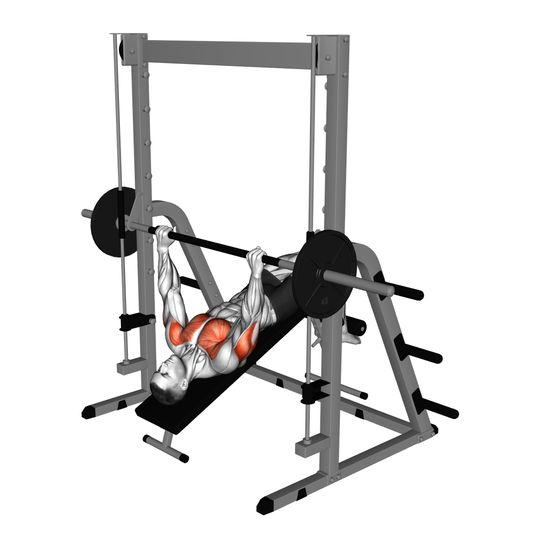


Press dumbbells upward from an inclined bench to perform a pushing motion that primarily works the upper chest and front shoulder muscles.
How to do the Incline Dumbbell Bench Press#
- Set the bench to a moderate incline (about 30–45°) and lie back with your feet planted for stability.
- Hold a dumbbell in each hand with palms facing forward and the weights aligned roughly over your shoulders.
- Draw your shoulder blades together and keep your upper back stable throughout the movement.
- Lower the dumbbells in a controlled manner until they are near the middle of your chest, keeping your elbows at a moderate angle.
- Drive the weights upward until your arms are mostly extended and exhale as you press, then repeat for the desired reps.
Muscles worked#
- Primary: Chest (Pectoralis Major)
- Secondary: Front delts (Anterior Deltoid), Triceps (Triceps Brachii)
Common mistakes#
- Allowing the lower back to overarch and lift off the bench.
- Flaring the elbows out too wide, placing stress on the shoulders.
- Letting the dumbbells drift too far forward or backward of the chest.
- Bouncing the weights off the chest instead of using a controlled descent.
Why it works#
Set to about 30 degrees, the incline dumbbell press is the most reliable way to bias the upper chest without turning the lift into a shoulder press. EMG research suggests upper-pec activity rises as the bench comes toward 30 degrees, while angles past 45 degrees shift work to the front delts.
Dumbbells add what an incline barbell cannot: each arm presses on its own path, the handles drop lower than a bar allows, and a failed rep can simply be set down.
Sets, reps and setup#
Set the bench to roughly 30 degrees, then run 3-4 sets of 8-12 reps with 90-120 seconds of rest. This is an accessory lift, not the one you test.
- Setup
- Thirty degrees is one or two notches up from flat on most benches. Feet planted, shoulder blades pinned back, dumbbells starting outside the lower chest. Press up and slightly in.
- Progression
- Add reps before weight: work from 8 up to 12 across all sets, then move to the next pair of dumbbells.
Variations#
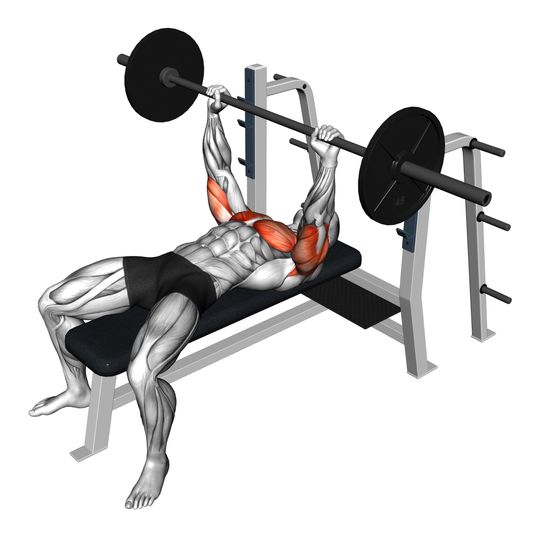
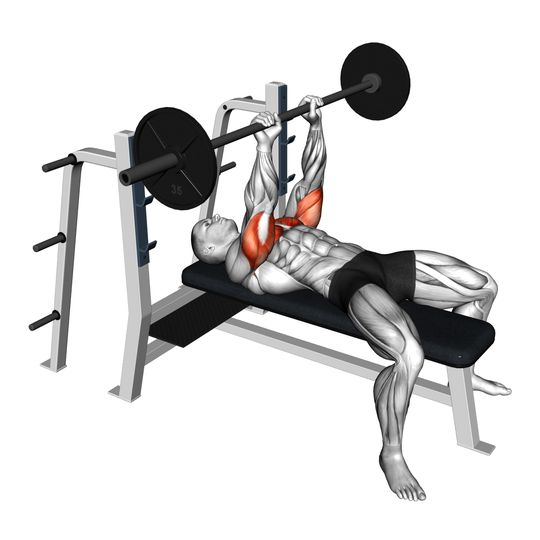
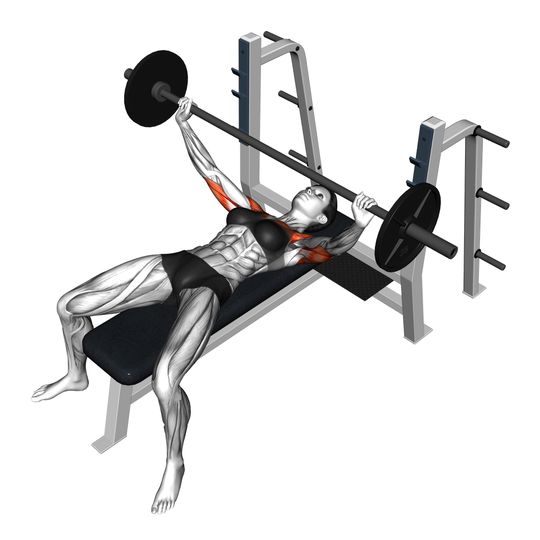
- Incline Bench Press (Barbell) Same angle with a bar, so you can load heavier and progress in smaller jumps.
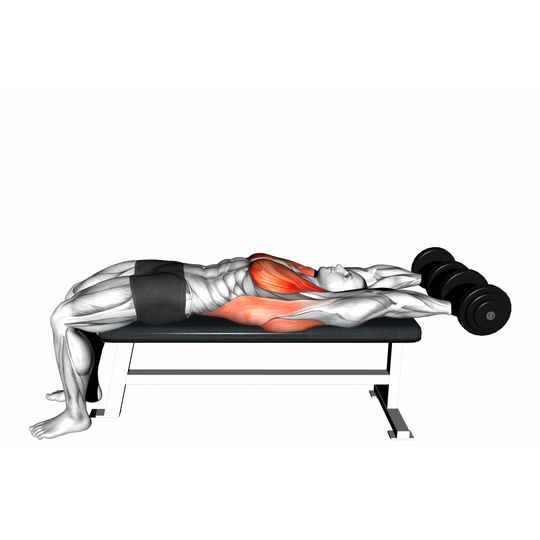
- Bench Press (Dumbbell) The flat version, which biases the mid-chest and allows more weight.
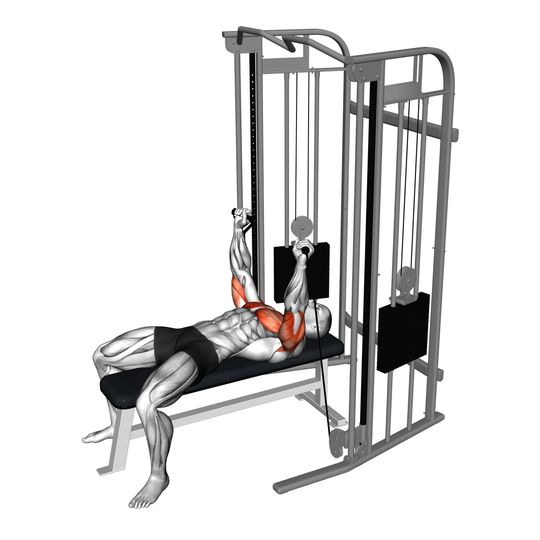
- Incline Bench Press (Cable) Constant tension through the top, where dumbbells get easy.
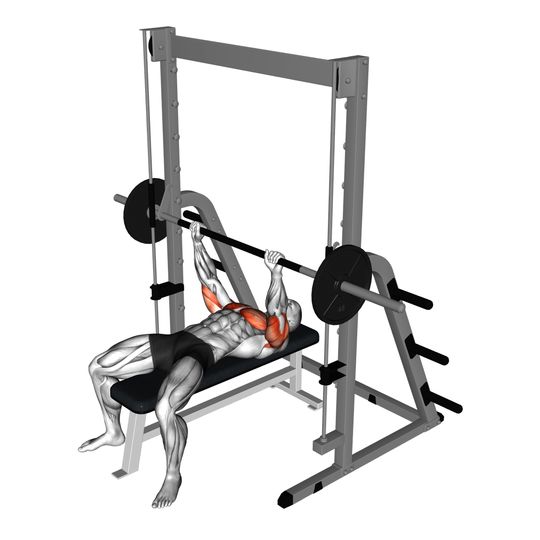
- Incline Bench Press (Smith Machine) Fixed bar path, so you can push closer to failure alone.
Incline dumbbell press vs incline barbell press#
Choose dumbbells for range of motion and shoulder comfort, and the barbell when you want to load the angle heavy. Dumbbells also let your hands drop below chest level.
The barbell moves more weight and progresses in 2.5 lb steps, but it fixes both hands to one path and is harder to bail out of alone.
Common questions#
What angle should the bench be for incline dumbbell press?
About 30 degrees. EMG research suggests upper-chest activity is highest in roughly the 30-45 degree range and falls off above it as the front delts take over.
How many sets and reps should I do?
Three to four sets of 8-12 reps with 90-120 seconds of rest, each taken to within a couple of reps of failure.
Does it really hit the upper chest?
Yes. The clavicular fibers of the pec line up with an inclined press, and EMG work generally shows more upper-pec activity on an incline than on a flat bench.
What is the most common mistake?
Setting the bench too steep. Past about 45 degrees the lift becomes a shoulder press.
What can I use at home instead?
An adjustable bench at 30 degrees and one pair of dumbbells, run for higher reps if the load is light. With no bench, feet-elevated push-ups train a similar angle.