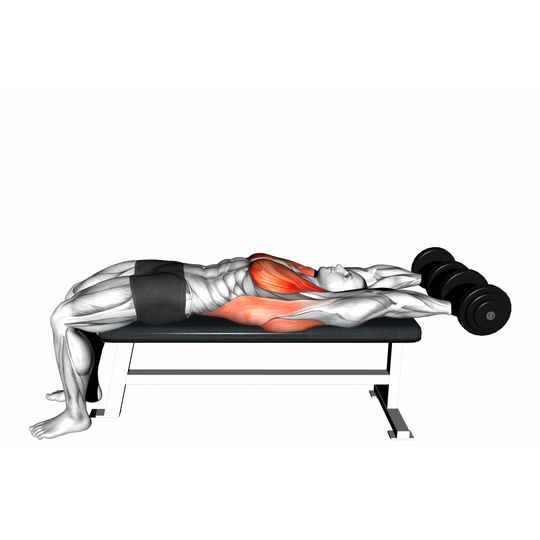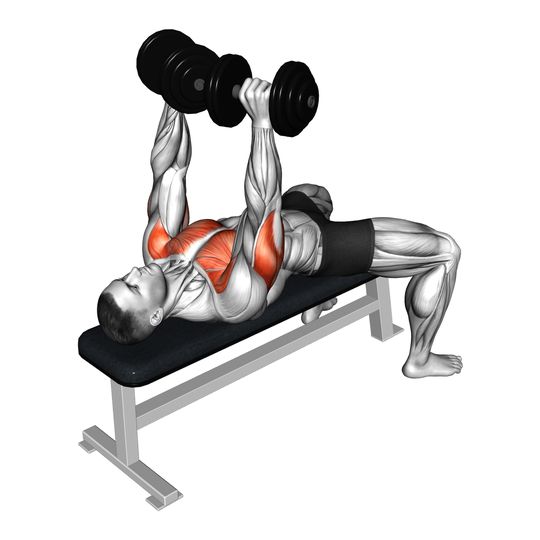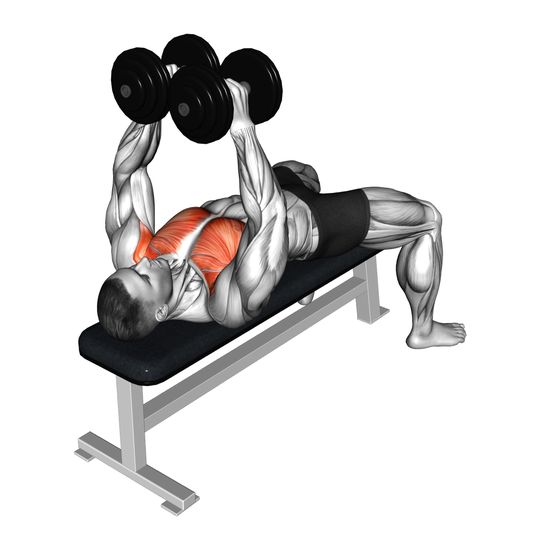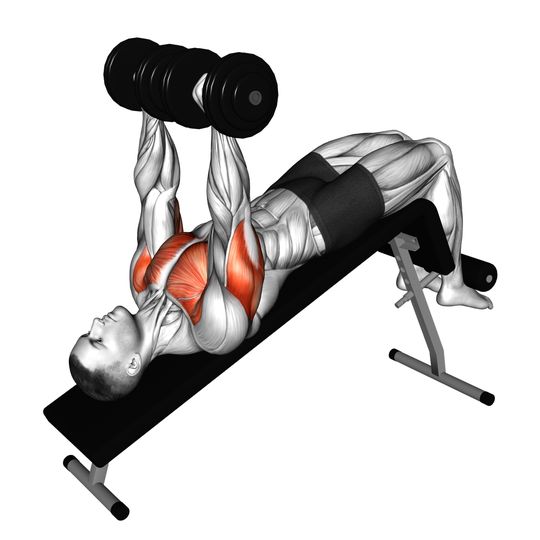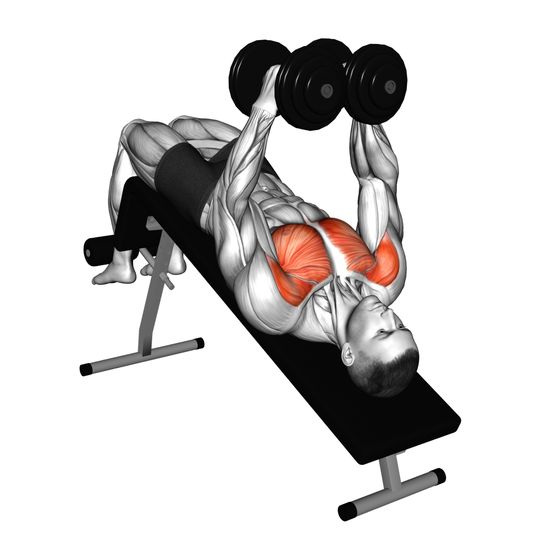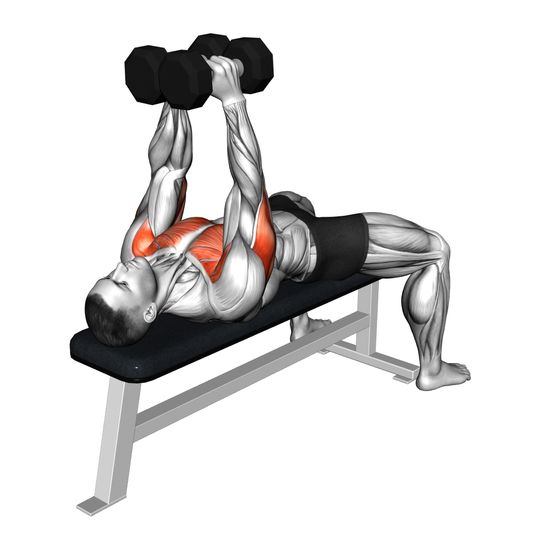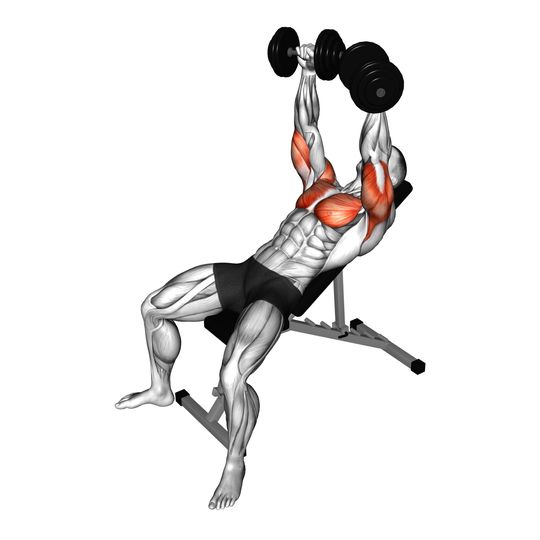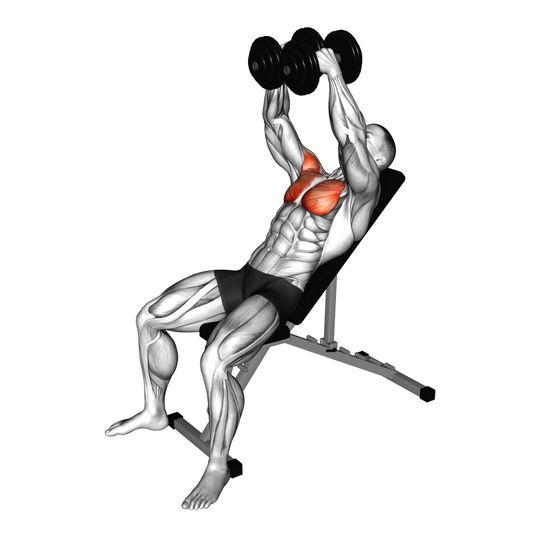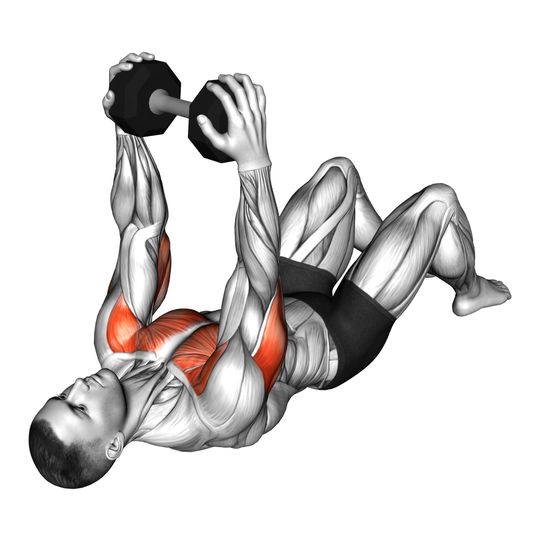


You lie on the floor and press dumbbells from chest level to near-full arm extension, using a horizontal pressing motion that primarily works the chest.
How to do the Dumbbell Floor Press#
- Lie on your back with knees bent, feet flat, and hold a dumbbell in each hand at chest height.
- Brace your core and press both dumbbells upward by extending your elbows until your arms are nearly straight.
- Pause briefly at the top with the weights controlled, then lower the dumbbells under control.
- Lower until your upper arms make light contact with the floor, then prepare and repeat without bouncing.
- Keep your feet planted and avoid driving your hips off the floor throughout the set.
Muscles worked#
The dumbbell floor press is a horizontal press with the bottom of the range removed. The chest (pectoralis major) still drives the dumbbells up and together, but because the upper arms stop when they touch the floor, the pecs never reach the deep stretch they get on a bench. That shifts a larger share of the work to the triceps, which straighten the elbows from a dead stop and carry the lockout, and to the front delts in the first few centimetres off the floor.
Lying on the floor also removes leg drive and the arch, so the upper back and lats have to create their own stable platform and the abs keep the ribs down. Each arm works independently, which means the forearms and shoulder stabilisers have to keep two weights on the same path. It feels like a strict press from a dead stop, and the triceps usually fatigue before the chest does.
- Primary: Chest (Pectoralis Major)
- Secondary: Triceps (Triceps Brachii), Front delts (Anterior Deltoid)
Common mistakes#
- Allowing the elbows to flare excessively out to the sides.
- Bouncing the weights off the floor instead of lowering under control.
- Lifting the hips to create extra range of motion.
Why it works#
The floor press is the most shoulder-friendly way to press heavy. Stopping the upper arms at the floor caps the shoulder extension at a range almost everyone tolerates, which is why it is the go-to press for lifters with irritated shoulders, and the dead stop at the bottom kills any momentum, so the triceps and chest have to produce all the force from a standstill.
It also fits anywhere. There is no bench to adjust, no rack to load, and a pair of dumbbells on the living room floor is a complete pressing setup. For home trainers it is the main chest exercise; for gym lifters it is a second press that overloads the lockout without more shoulder stress.
Sets, reps and setup#
Three or four sets of 6-10 reps with 90 seconds to two minutes of rest, once or twice a week. Pause for a full second with the upper arms on the floor and press with intent. Expect to use about 80-90 percent of your dumbbell bench press weight because the range is shorter but the dead stop is honest.
- Setup
- Sit on the floor with the dumbbells on your thighs, roll back onto your upper back, and bring the weights to the chest with the elbows on the floor at about 45 degrees to the body. Press the dumbbells up and slightly together until the arms are straight, then lower until the upper arms rest on the floor and pause.
- Progression
- Add 2 kg per hand when 10 paused reps are clean. If the hips lift or the back arches to get the weight moving, the load is too heavy. Extend the pause to two or three seconds before adding weight.
Variations#
- Barbell Floor Press Both hands on a bar, allowing heavier loads and a fixed path for pure lockout strength.
- Dumbbell Bench Press The full-range version on a bench, which stretches the chest more and builds more overall pec mass.
- Dumbbell Hex Press The dumbbells pressed together for the whole rep, which adds a squeeze for the inner chest and more triceps.
- Close Grip Bench Press The barbell press with the most triceps emphasis, which shares the floor press's role as a lockout builder.
- Push Up A bodyweight press through a full range for when no dumbbells are available.
Dumbbell floor press vs dumbbell bench press#
The bench press lets the elbows drop below the torso, which stretches the chest at the bottom of each rep and gives the pecs a longer range to work through. That makes it the better exercise for chest growth and the one to build your pressing around when your shoulders are healthy.
The floor press stops the arms at parallel, which protects the shoulders, removes leg drive, and shifts the work toward the triceps and the lockout. It is the smarter choice when the bench aggravates your shoulders, when you train at home without a bench, or when you want a second press that builds the top half of the lift. Many lifters run both in the same week.
Common questions#
What muscles does the dumbbell floor press work?
The chest, triceps, and front delts share the pressing, with the triceps taking a bigger share than they would on a bench because the range starts from a dead stop at parallel. The upper back, lats, and abs stabilise the body on the floor.
Is the floor press as good as the bench press?
For chest growth, no, because the shorter range removes the stretched position where the pecs get their best stimulus. For triceps, lockout strength, and shoulder health, it is as good or better. Treat it as a complement to the bench, or as the main press when a bench is not an option.
Should my legs be straight or bent during the floor press?
Either works. Bent knees with flat feet feel more stable and are the common choice. Straight legs remove any temptation to drive with the legs and make the press stricter. Whichever you pick, keep the hips on the floor for the entire set.
Why is the floor press good for shoulder pain?
Because the floor stops the upper arms before the shoulder reaches the deep extension that usually causes discomfort on a bench. The range is limited to the part of the press most shoulders handle well, so you can keep training the chest and triceps while the joint settles.
How much should I floor press compared to my bench press?
Most lifters handle around 80-90 percent of their dumbbell bench press weight. The range is shorter, which helps, but the dead stop removes the elastic rebound off the chest, which hurts.