


The T-bar row is heavy horizontal pulling with a neutral grip and, on most setups, a chest pad taking the strain off your lower back. That is an unusually favourable combination: you can row a lot of weight, the mid-back does the work, and your spinal erectors are not the reason the set ends.
Replacing it comes down to how much of that support you can keep. Free-weight rows keep the load and hand the bracing back to you. Landmine variations keep the arc and the neutral grip almost exactly. Chest-supported dumbbell and machine rows keep the support and swap the bar for handles.
Every T-bar row alternative, and what it changes#
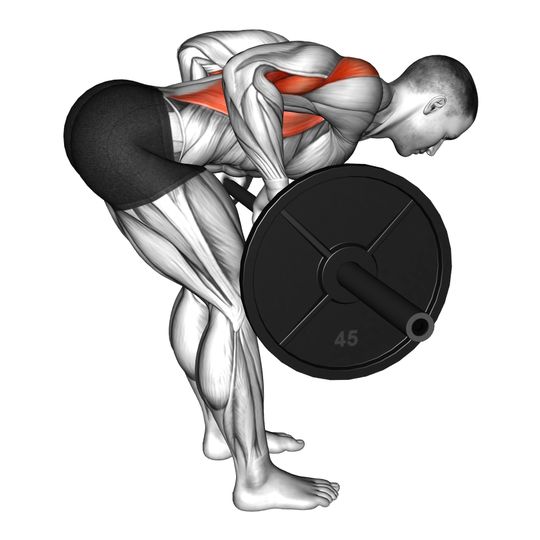
1. Barbell Bent Over Row#
BarbellUpper backLats
The free-weight parent of the movement: same horizontal pull, same mid-back and lat emphasis, similar loading potential. Without a chest pad your hips and lower back hold the position, so the set usually ends when your torso rises rather than when your back gives out.
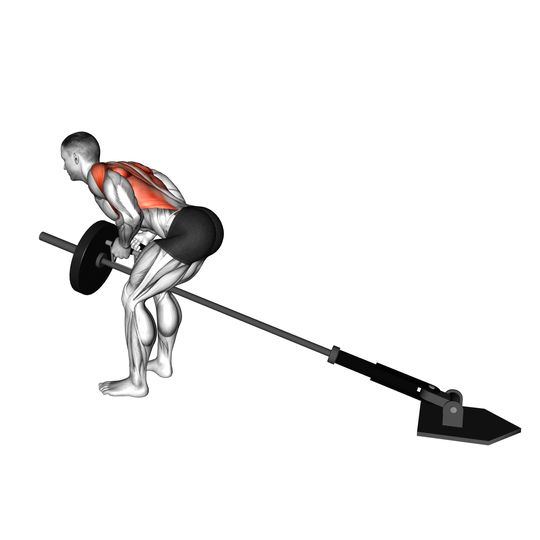
2. Landmine Row#
BarbellOther equipmentUpper backLats
The closest thing to a T-bar row you can build from a barbell and a corner. One end is anchored, so the bar travels through the same arc and the grip stays neutral — this is the substitute that changes almost nothing except who is supporting your chest.
3. Meadows Row#
BarbellOther equipmentLatsUpper back
A landmine row done one arm at a time from a side-on stance, which lets the shoulder blade travel further and puts a hard stretch on the lat at the bottom. More range and more per-side control than the T-bar, at the cost of the loads you can handle.
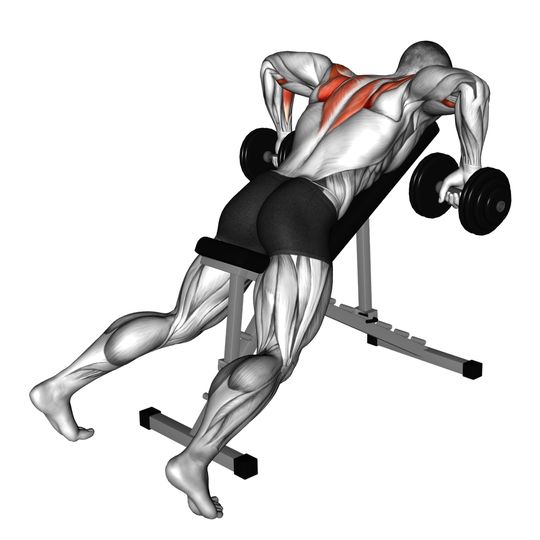
4. Dumbbell Incline Row#
DumbbellBenchUpper backLats
Lying chest-down on an incline bench restores exactly the support a chest-supported T-bar gives you: no lower-back involvement, no cheating with the hips, and strict mid-back work. The best pick when the reason you row on a T-bar is that free rows bother your back.
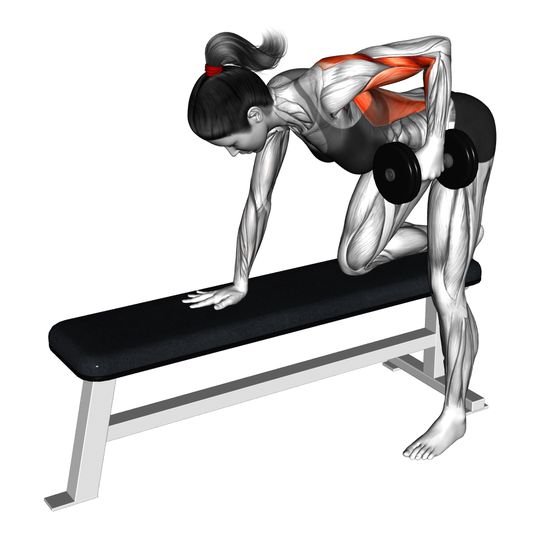
5. One Arm Dumbbell Row#
DumbbellBenchLatsUpper back
One hand braced on a bench takes most of the load off the spine while the working side rows through a long range. It fixes side-to-side differences the barbell hides, and a single dumbbell is enough to train the mid-back hard.
6. V Grip Seated Cable Row#
CableLatsUpper back
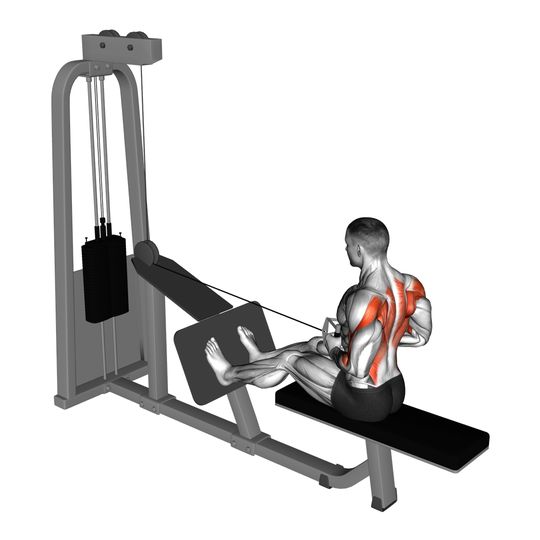
Seated with a neutral V-grip, this is the same pull direction and the same grip as a T-bar row, with constant cable tension and no need to hold a hinged position. Easy to progress in small increments and gentle on the lower back.
7. Iso-Lateral Row#
MachineLatsUpper back
A chest-supported machine row with independent handles: the support of the T-bar, plus each side working on its own so the stronger arm cannot take over. The fixed path means you can push close to failure safely.
8. Inverted Row#
Other equipmentUpper backLats
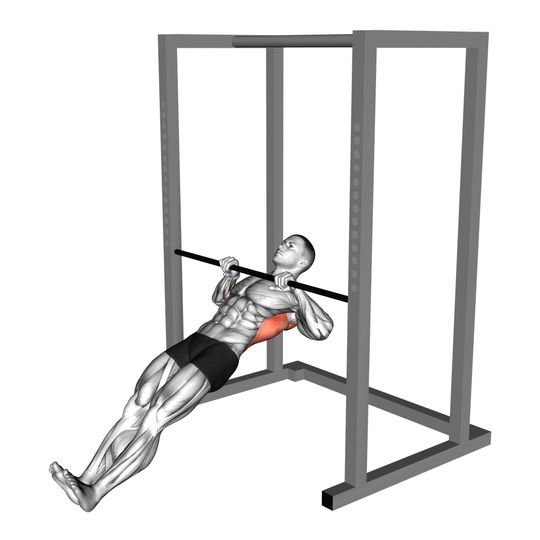
Bodyweight horizontal pulling with your feet on the floor and difficulty set by your body angle. It scales from very easy to very hard without any weight, which makes it the home substitute — and the plank-like position trains the same bracing the T-bar demands.
How to choose, by what you have#
The same shortlist, filtered by the equipment actually in front of you. Each row names the one to start with.
At home, no equipment#
Start with Inverted Row
Find something to pull under — a low bar, a sturdy table, or rings — and set the difficulty with your feet. Inverted rows cover the pattern completely, and raising your feet onto a chair keeps them hard once floor-level reps get easy.
Dumbbells only#
Start with Dumbbell Incline Row
With a bench, row chest-down on an incline: it is the closest thing to a chest-supported T-bar and it takes your lower back out of the equation. Without a bench, single-arm rows braced on any stable surface do the same job one side at a time.
Barbell and rack#
Start with Barbell Bent Over Row
A bent-over row is the straightforward answer. If you can wedge one end of the bar into a corner or a landmine, do that instead — landmine and Meadows rows keep the T-bar’s arc and neutral grip, and they are far kinder to the lower back.
Full gym#
Start with Iso-Lateral Row
Prioritise the chest-supported options: an iso-lateral machine row first, then a seated cable row with a V-grip. Both give you the neutral grip and the mid-back emphasis while letting you train close to failure without holding a hinge.
Frequently asked questions#
What is the best T-bar row alternative?
A landmine row, because it is mechanically almost the same lift — anchored bar, same arc, neutral grip. If you want the chest support as well, a chest-supported machine row or a dumbbell row on an incline bench is the closer match.
Is a barbell row the same as a T-bar row?
Nearly, with two differences. A T-bar’s neutral grip lets the elbows tuck closer to the body, and most T-bar stations support your chest. Barbell rows put your lower back and hamstrings in charge of holding the position, which means less weight and more systemic fatigue.
How do I do a T-bar row without a T-bar machine?
Wedge one end of a barbell into a corner or a landmine sleeve, load the far end, and row it with a double-handle attachment or your hands around the bar. That is a landmine row, and it reproduces the T-bar’s arc and grip with equipment almost every gym has.
Which T-bar row alternative is best for a bad lower back?
Anything chest-supported. A dumbbell row on an incline bench, a chest-supported machine row, or a seated cable row all remove the need to hold a hinged position, so your erectors are not loaded isometrically for the whole set.
Should I use a neutral or overhand grip on row alternatives?
Neutral if you are matching the T-bar. It keeps the elbows closer to the torso, which biases the lats and lets most people pull more weight comfortably. An overhand, wider grip shifts work toward the rhomboids and rear delts — useful, but a different emphasis.