


A landmine row is a barbell row with one end pinned to the floor. That single change does three useful things: the bar travels through an arc instead of a straight line, the grip ends up neutral, and the anchored end carries part of the load, so the weight on the bar is not the weight in your hands.
Replacing it means deciding which of those three you actually came for. Dedicated T-bar stations keep all of them and add a chest pad. Free barbell rows keep the load and hand the arc back to a straight line. Dumbbell and cable rows keep the neutral grip and the per-side control while giving up the ability to pile plates on.
Every landmine row alternative, and what it changes#
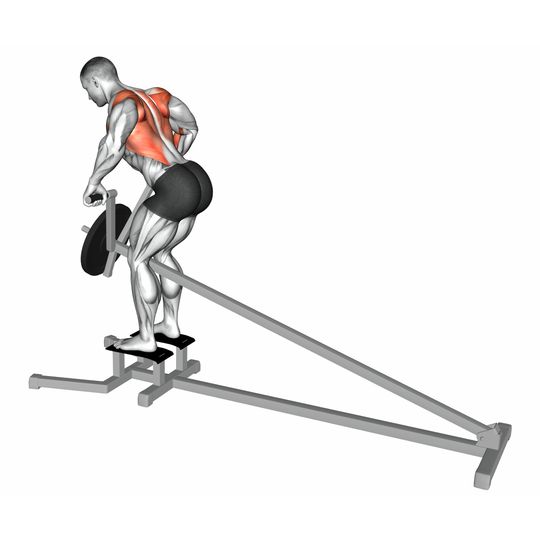
1. T Bar Row#
MachineUpper backLats
The purpose-built version of the same idea: an anchored bar, an arcing path, and a neutral double handle. If your gym has the station, this is not really a substitute so much as the finished product — the handle spacing is fixed for you and the loading pin is at a sensible height.
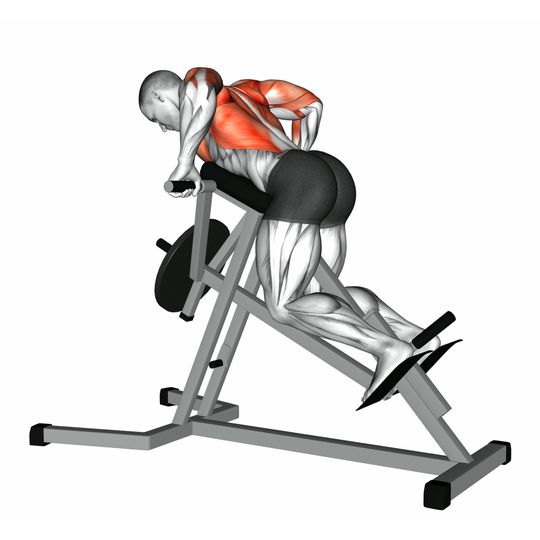
2. Chest Supported T-Bar Row#
MachineLatsUpper back
Everything above, plus a pad under your chest. Removing the hinge means your lower back and hamstrings stop being the limiting factor, so the set ends when your mid-back gives out. The obvious pick if you row landmine specifically because free rows leave your back tired for days.
3. Meadows Row#
BarbellOther equipmentLatsUpper back
The one-arm landmine row, taken from a side-on stance so the shoulder can travel much further forward at the bottom. More stretch on the lat, more control per side, and a much clearer sense of whether the back or the arm is pulling — at the cost of the loads a two-handed row allows.
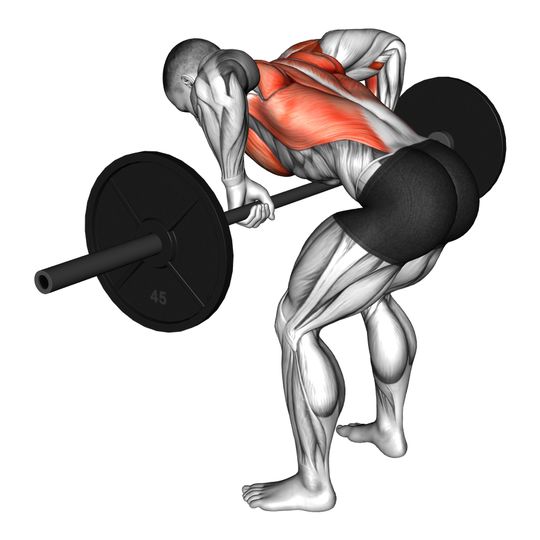
4. Barbell Bent Over Row#
BarbellUpper backLats
The straight-line, double-overhand parent of the movement. The grip changes to pronated and the elbows flare a little wider, which shifts some work from the lats toward the rhomboids and rear delts. It also removes the anchor, so every kilo on the bar is a kilo you hold.
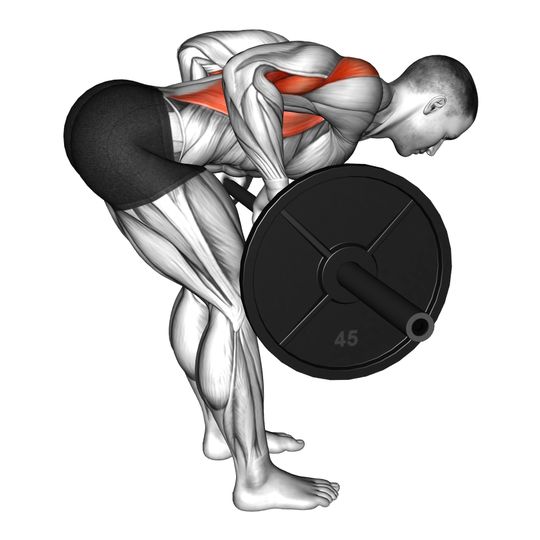
5. Pendlay Row#
BarbellUpper backLats
A barbell row reset on the floor between every rep, which forces a strict torso position and turns the set into a series of hard concentric pulls. The dead stop makes cheating obvious and builds the exact starting strength a landmine row rewards.
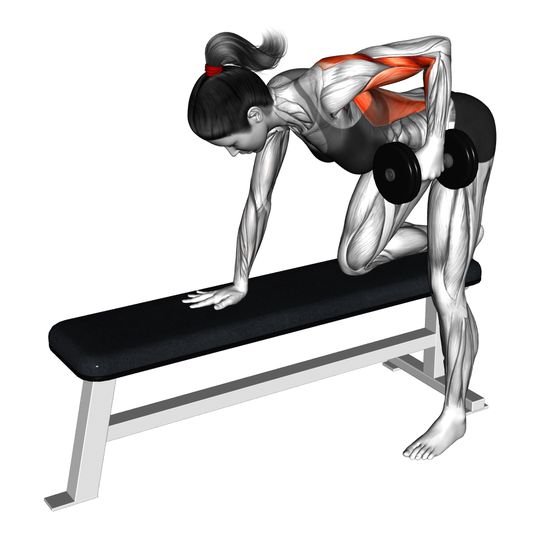
6. One Arm Dumbbell Row#
DumbbellBenchLatsUpper back
One hand braced on a bench keeps the spine mostly unloaded while the working side rows through a long, neutral-grip range — the closest single-dumbbell match for a landmine row’s feel. It also exposes the side-to-side difference a two-handed bar hides.
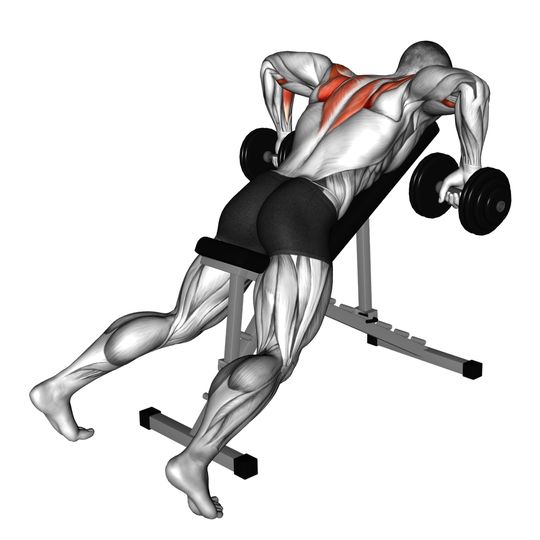
7. Dumbbell Incline Row#
DumbbellBenchUpper backLats
Lying chest-down on an incline bench with a dumbbell in each hand gives you the chest support, the neutral grip, and strict mid-back work all at once. No hinge to hold and no way to use the hips, which makes it easy to push a set genuinely close to failure.
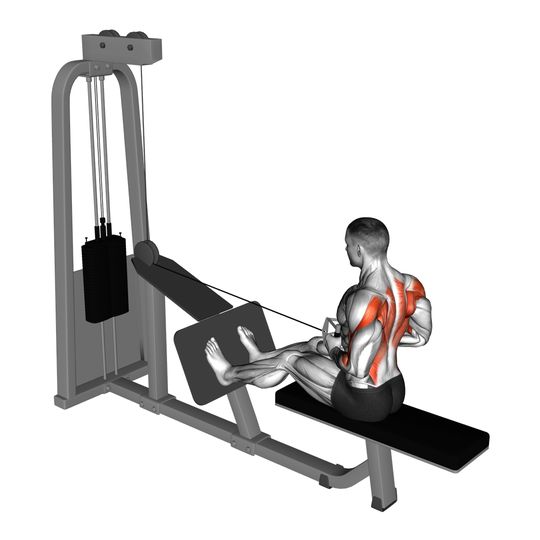
8. V Grip Seated Cable Row#
CableLatsUpper back
A seated V-grip row is the same pull direction and the same neutral grip with constant tension and no hinge to maintain. It progresses in tiny increments, which the landmine never does — the practical everyday substitute when the corner is occupied.
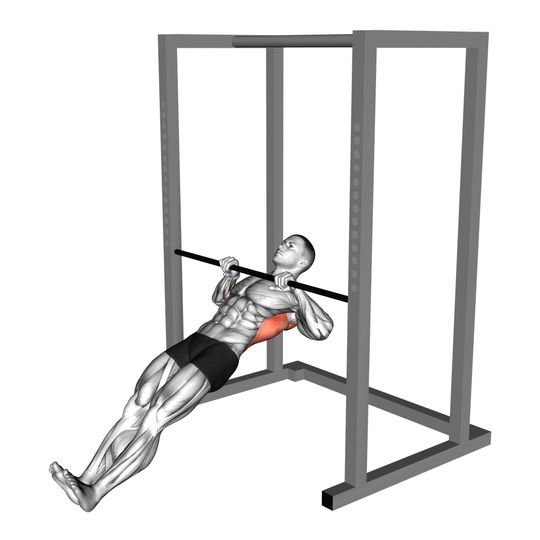
9. Inverted Row#
Other equipmentUpper backLats
Bodyweight horizontal pulling with the difficulty set by your body angle. It scales from very easy to very hard without any equipment beyond something to pull under, and holding the plank position trains the same bracing a landmine row demands of your torso.
How to choose, by what you have#
The same shortlist, filtered by the equipment actually in front of you. Each row names the one to start with.
At home, no equipment#
Start with Inverted Row
Find something to pull under — a low bar, a heavy table, rings, or a broomstick across two chairs — and set the difficulty with your feet. Feet on the floor with a high bar is the easy end; feet elevated on a chair with your chest reaching the bar is hard enough for most people to stay there for months.
Dumbbells only#
Start with One Arm Dumbbell Row
One heavy dumbbell replaces the landmine almost completely. Brace a hand and a knee on a bench, row through the longest range you can control, and let the shoulder blade travel at both ends. With a bench free, an incline dumbbell row is the stricter option and spares your lower back entirely.
Barbell and rack#
Start with Meadows Row
If you have a barbell and a corner, you can still row landmine-style — wedge the sleeve in and use a towel as padding. Without a corner, a Meadows row from a side-on stance keeps the one-arm arc, and a Pendlay row keeps the strictness if you would rather pull with both hands.
Full gym#
Start with Chest Supported T-Bar Row
Take the chest-supported options first: a chest-supported T-bar row, then an iso-lateral machine row, then a seated V-grip cable row. All three keep the neutral grip and the mid-back emphasis, and none of them ask you to hold a hinge for the length of the set.
Frequently asked questions#
What is the best landmine row alternative?
A T-bar row, because it is the same movement with purpose-built hardware — anchored bar, arcing path, neutral handle. If you want the lower back out of it as well, a chest-supported T-bar row or a dumbbell row on an incline bench is the closer match.
Can I do a landmine row without a landmine attachment?
Yes. Wedge one end of the barbell into the corner of a room, weigh it down with a plate or a heavy dumbbell so it cannot slide, and load the free end. Wrap a towel around the corner if you care about the wall. Mechanically it is identical to the sleeve version.
Is a landmine row better than a barbell row?
It is easier on the lower back and easier to learn, because the anchored end supports part of the load and the arc keeps the bar close to you. A barbell row builds more total strength and lets you handle more absolute weight. Most lifters get the most out of running both, not choosing.
Which landmine row alternative is best for a bad lower back?
Anything with chest support. A chest-supported T-bar row, an incline dumbbell row, or a seated cable row all remove the isometric hinge, so your spinal erectors are not loaded for the whole set. Seated cable rows are the gentlest of the three and the easiest to load precisely.
Why does the landmine row feel heavier than the plates suggest?
It usually feels lighter, not heavier — the anchored end takes a share of the load, so a landmine row loaded with 60 kg puts noticeably less than 60 kg in your hands. That is why the numbers do not transfer to a barbell row, and why you should match effort rather than weight when you swap.