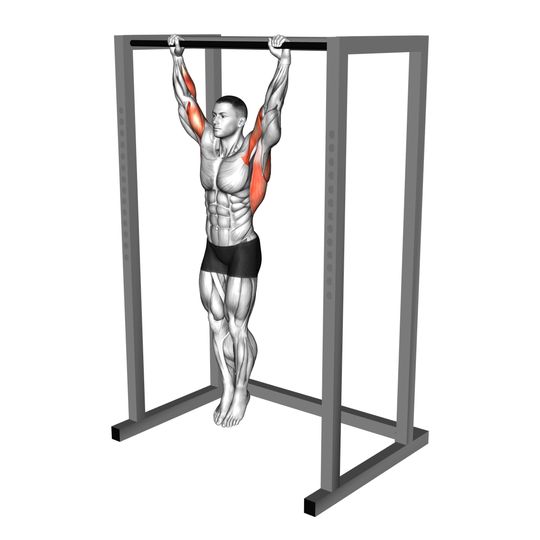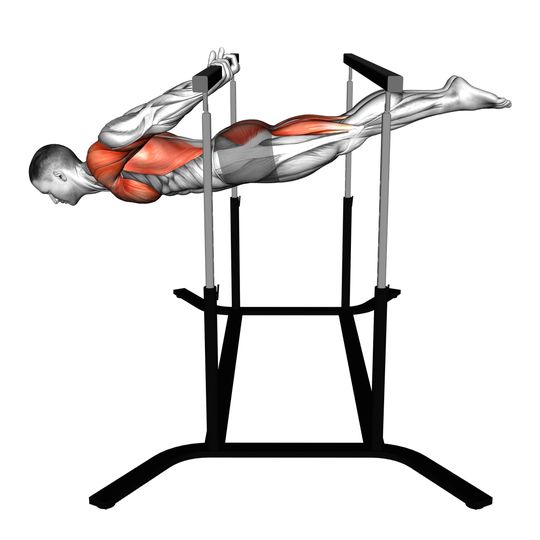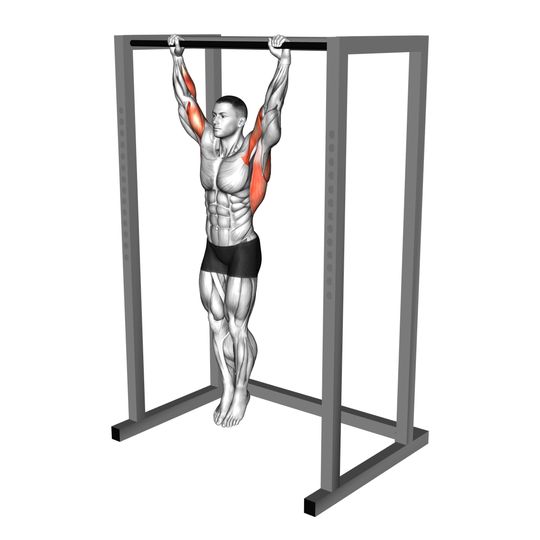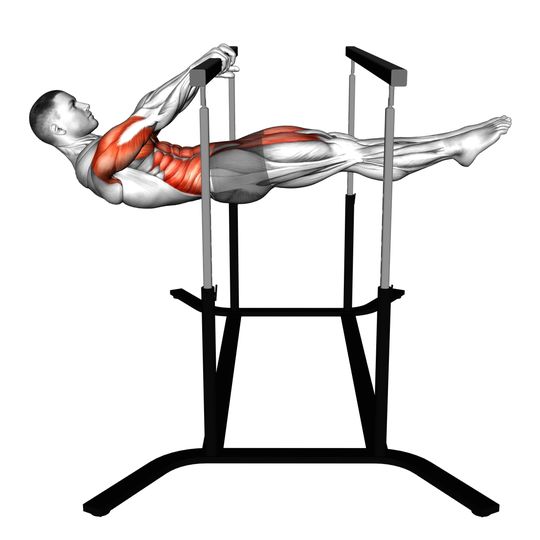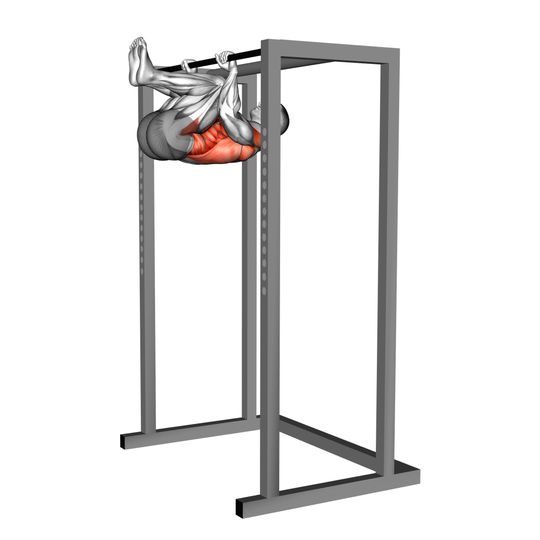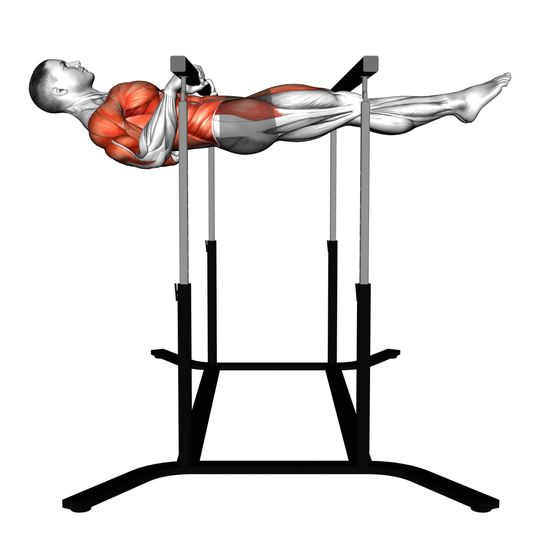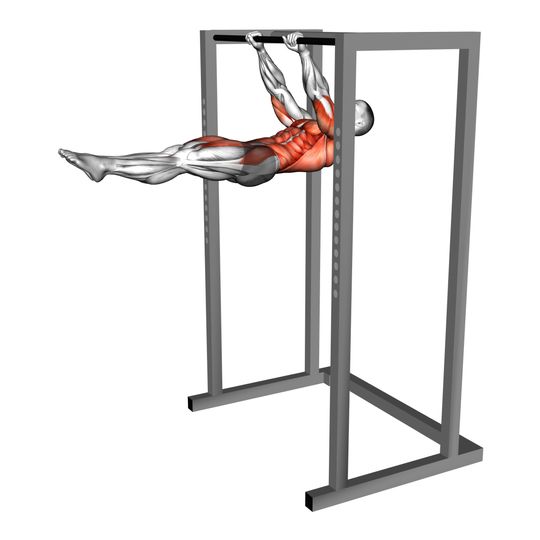


A vertical pulling exercise performed from an underhand grip that primarily works the latissimus dorsi.
How to do the Chin Up#
- Take an underhand (supinated) grip slightly inside shoulder width and hang with your arms fully extended.
- Draw your shoulder blades downward and back, brace your core, and maintain a slight arch in your spine.
- Exhale and pull your torso upward until your head clears the bar, driving your elbows down and keeping them close to your sides.
- Inhale and lower slowly and under control to a full hang before beginning the next rep.
Muscles worked#
The chin up is a lat and biceps exercise in roughly that order. The underhand grip puts the biceps in their strongest position, so they contribute far more than in a pull up, and the arm path with the elbows pulling down in front of the body takes the latissimus dorsi through a long range from full stretch at the bottom to a hard contraction as the elbows tuck to the ribs. That is why most people can do two or three more chin ups than pull ups.
The upper back finishes the rep: the lower traps and rhomboids pull the shoulder blades down and together at the top, and the rear delts assist. The forearms and grip hold you on the bar, and the abs keep the legs from swinging and the ribcage from flaring as you pull. Because the biceps are so involved, the elbows and forearms fatigue noticeably, and sore biceps the next day are normal.
- Primary: Lats (Latissimus Dorsi), Biceps (Biceps Brachii)
- Secondary: Upper back (Rhomboids & Middle Trapezius), Forearms (Forearm Flexors & Extensors (incl. Brachioradialis)), Abs (Rectus Abdominis)
Common mistakes#
- Using leg swing or kipping to boost momentum.
- Letting the shoulders shrug up instead of initiating the pull from the scapulae.
- Pulling primarily with the arms and neglecting lat engagement.
- Failing to lower fully between reps and shortening the range of motion.
Chin Up vs other exercises#
Head-to-head breakdowns of muscles worked, loading, joint stress, and which one to pick for your goal.
Why it works#
The chin up is the most accessible heavy vertical pull there is. It needs a bar and nothing else, loads the lats and biceps with your entire bodyweight, and the mechanics are forgiving enough that most people can learn it faster than a pull up. For anyone who wants a bigger back and arms without much equipment, it does more per rep than any other bodyweight exercise.
It also scales in both directions. Beginners can use bands, an assisted machine, or negatives and see clear progress week to week, while strong lifters can strap on a belt and add plates for years. Few movements let you go from unable to do one rep to pulling an extra fifty kilograms on the same piece of equipment.
Sets, reps and setup#
Three to five sets of 5-10 reps with two to three minutes of rest, twice a week. If you cannot yet do five, do sets of two or three with more sets, or use a band. Once you can do ten clean reps from a dead hang, add weight rather than reps and drop back to sets of five to eight.
- Setup
- Grip the bar underhand with the hands shoulder-width or slightly closer. Hang with the arms straight, pull the shoulder blades down first, then drive the elbows down toward the hips until the chin clears the bar and the chest comes close to it. Lower in about two seconds to a full hang with straight arms before the next rep, and keep the legs still.
- Progression
- Start with slow negatives of five seconds or band-assisted reps, moving to a thinner band every couple of weeks. Once you can do three sets of ten bodyweight, add 2.5 kilograms on a dip belt and work back to ten before adding more. A tempo pause of one second at the top with the chest at the bar is a useful step between bodyweight and weighted work.
Variations#
- Pull Up The overhand version, which reduces the biceps contribution and shifts more of the load onto the lats and upper back.
- Neutral Grip Pull Up Palms facing each other on parallel handles, a middle ground that is easier on the elbows and wrists.
- Assisted Chin Up The same movement on an assisted machine or with a band so you can train the full range before you can do bodyweight reps.
- Underhand Lat Pulldown The cable equivalent with the same grip, useful for volume and for lifters building toward their first chin up.
- Close Grip Pull Up An overhand grip with the hands close together, which lengthens the range and brings the biceps back into the pull.
Chin up vs pull up#
The chin up uses an underhand grip, which puts the biceps in a strong position and lets the elbows travel in front of the body. That makes it easier for most people and a better arm builder, and it still works the lats through a long range. It is the version to learn first if pull ups are still out of reach.
The pull up uses an overhand grip, which reduces what the biceps can contribute and shifts the work toward the lats, upper back, and rear delts. It is the harder of the two and the better test of pure back strength. Both build the back; the choice is mostly about how much biceps involvement you want.
Common questions#
What muscles does the chin up work?
The lats and biceps do most of the work, with the underhand grip letting the biceps contribute heavily. The upper back, rear delts, forearms, and abs support the movement and hold your body position.
Are chin ups better than pull ups for biceps?
Yes. The underhand grip puts the biceps in their strongest position, so they take a much larger share of the load than in an overhand pull up. Weighted chin ups build biceps as effectively as most curls.
Are chin ups easier than pull ups?
For most people, yes, by two or three reps. The biceps help more and the elbows travel a more natural path in front of the body. If you are working toward your first pull up, getting chin ups first is the usual route.
How many chin ups should I be able to do?
Five clean reps from a dead hang is a solid first goal for most adults, ten is a good intermediate benchmark, and fifteen or more usually means it is time to start adding weight rather than chasing reps.
How can I do more chin ups?
Train them two or three times a week with plenty of sets that stop short of failure, add slow negatives at the end, and do a set of chin ups between other exercises. Losing bodyfat helps too, since every kilogram you carry is load on the bar.
Why do my elbows hurt during chin ups?
The underhand grip stresses the tendons on the inside of the elbow, especially with a very narrow grip or sudden jumps in volume. Widen the hands to shoulder width, add volume gradually, and rotate in neutral grip pull ups to spread the load.