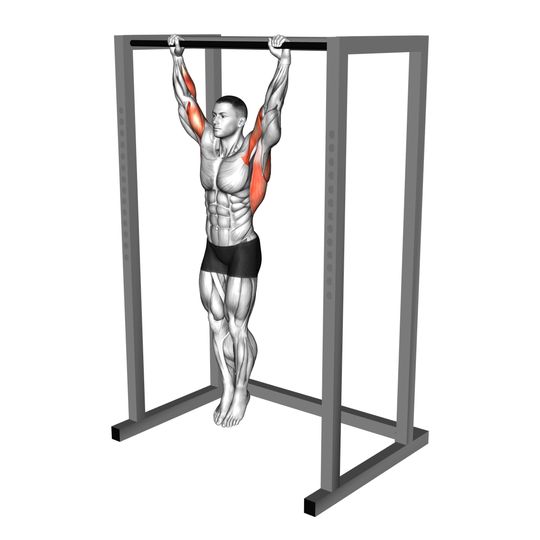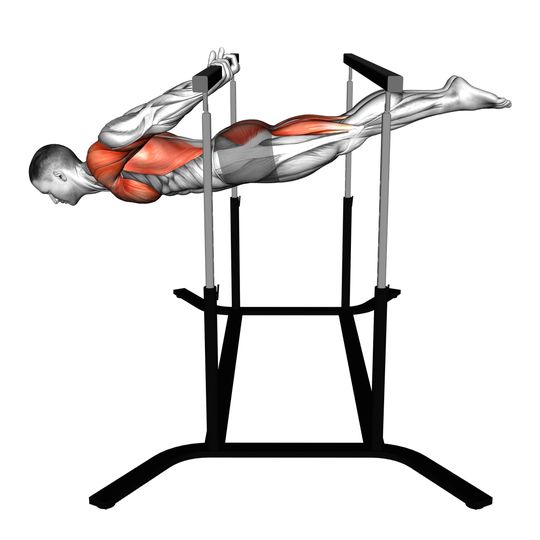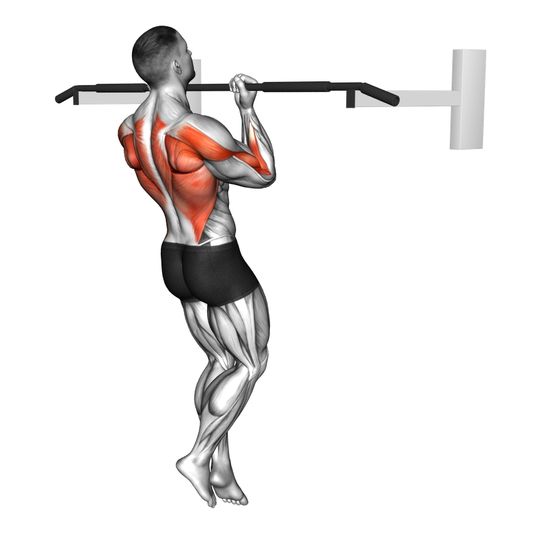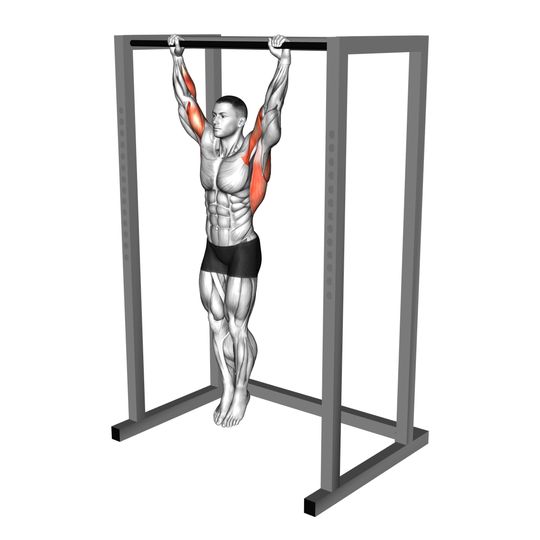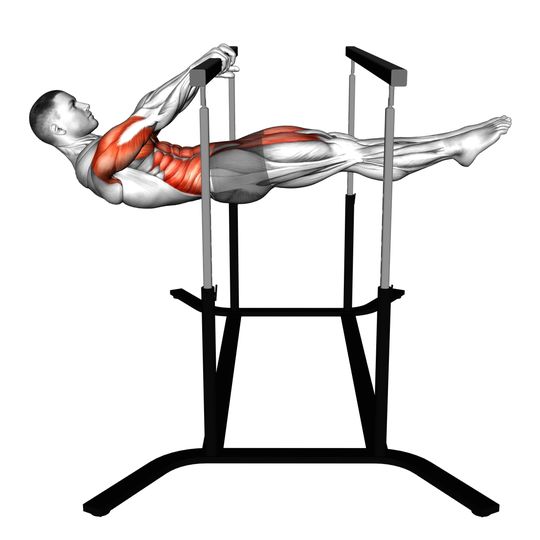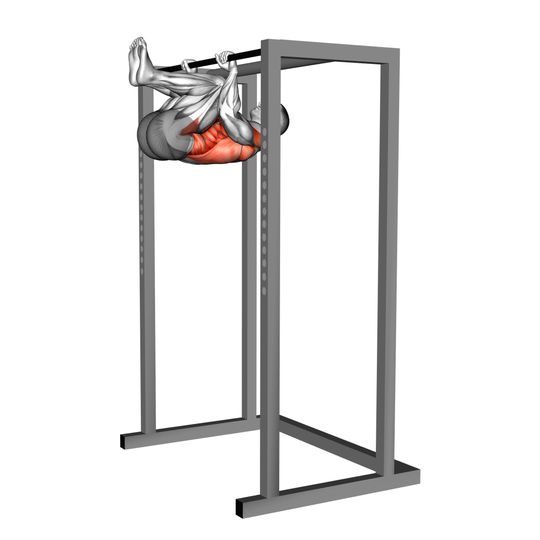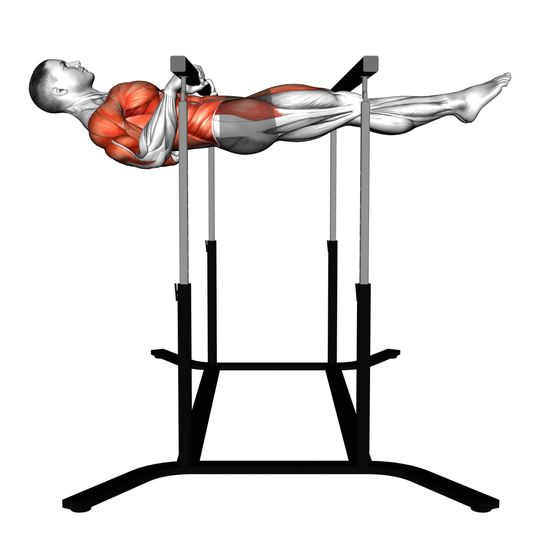


Raise your straight body from a dead hang toward a horizontal, front-lever position, loading the back and core with emphasis on the abdominals (rectus abdominis) and obliques.
How to do the Front Lever Raise#
- Grab a pull-up bar or rings with an overhand grip and hang with your arms fully extended.
- Engage your core and pull your shoulder blades down and back to create full-body tension.
- Lift your legs and hips together until your body is approximately parallel to the floor, keeping the torso straight.
- Hold the horizontal position briefly while maintaining scapular depression and controlled breathing.
- Lower back to the dead hang slowly and under control before repeating.
Muscles worked#
- Primary: Lats (Latissimus Dorsi), Abs (Rectus Abdominis), Upper back (Rhomboids & Middle Trapezius)
- Secondary: Obliques (External & Internal Obliques), Rear delts (Posterior Deltoid), Traps (Trapezius), Forearms (Forearm Flexors & Extensors (incl. Brachioradialis)), Glutes (Gluteus Maximus)
Common mistakes#
- Allowing the hips to droop so the body is not straight.
- Bending the arms instead of keeping them straight throughout the movement.
- Kipping or using momentum rather than a controlled raise.
- Relaxing the shoulders and losing scapular tension during the hold.