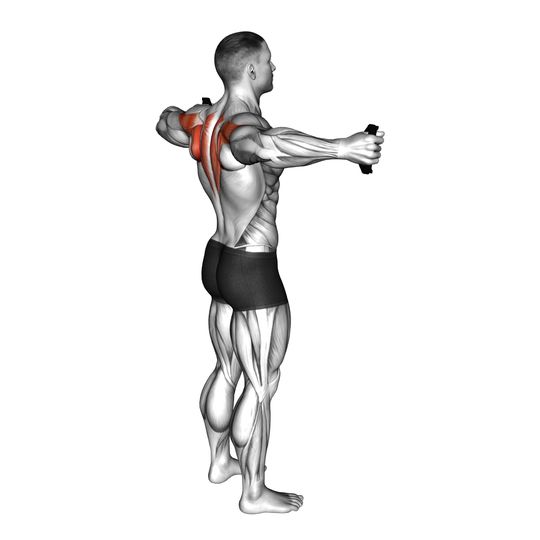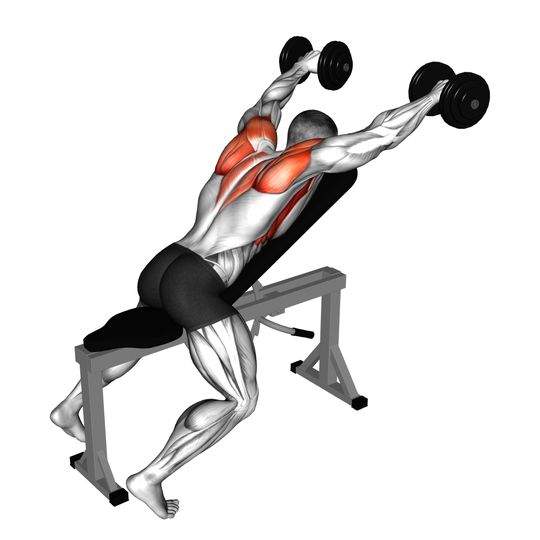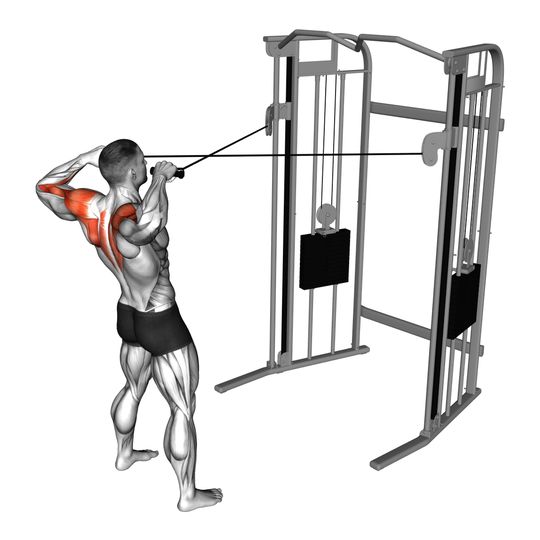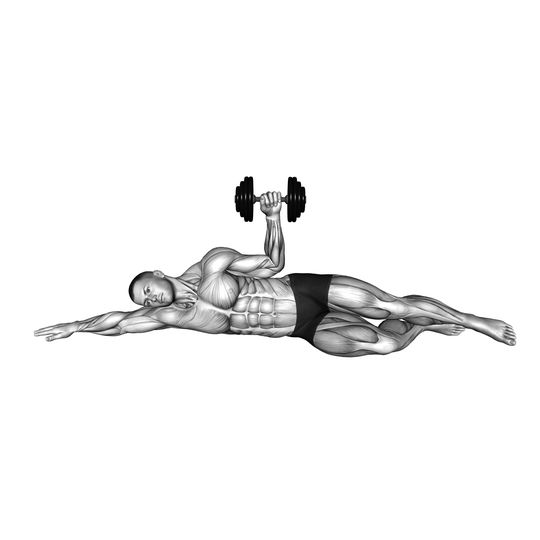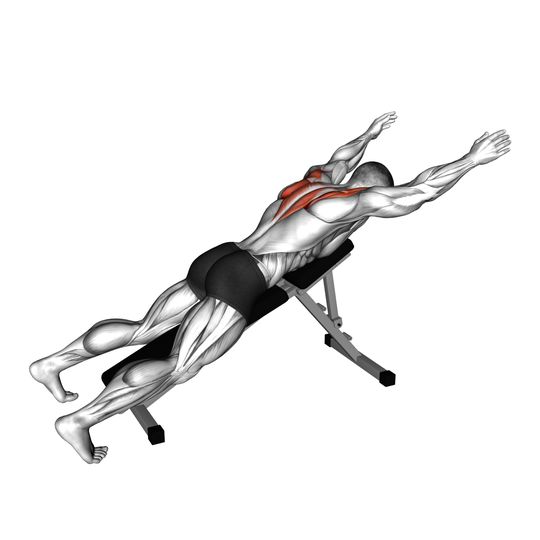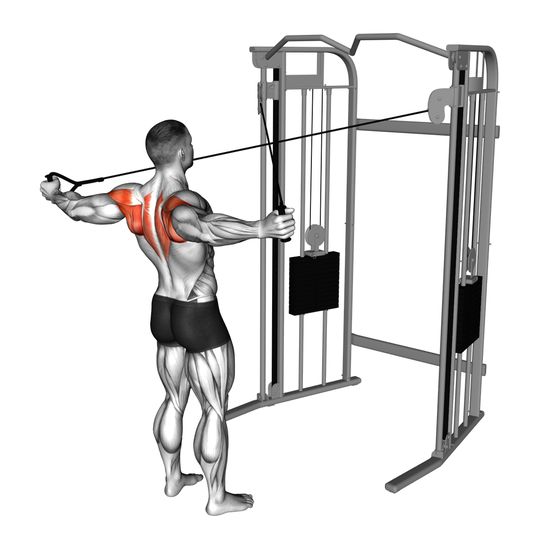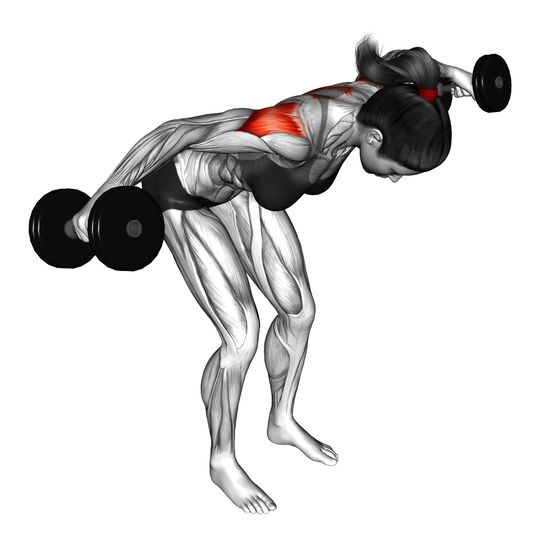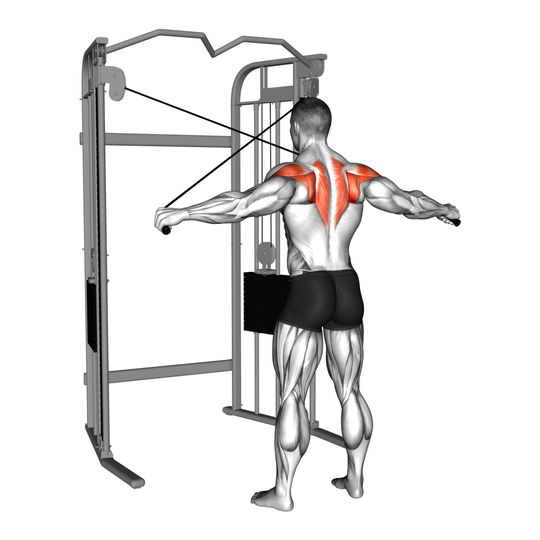


Perform a reverse fly on a leverage machine by moving the arms outward and backward to train the upper back and rear deltoids.
How to do the Machine Reverse Fly#
- Set the seat so the handles align with your shoulders and load an appropriate weight.
- Sit with your chest against the pad and reach forward to grasp the handles with your arms extended; establish this as the start position.
- Open your arms in a wide arc, leading from the elbows and pulling the handles out and back while squeezing the upper back and rear delts.
- Hold the contracted position briefly with the arms roughly level with the shoulders, then return the handles to the start position in a slow, controlled motion.
- Keep your torso braced and avoid twisting or using momentum to move the weight.
Muscles worked#
- Primary: Rear delts (Posterior Deltoid)
- Secondary: Upper back (Rhomboids & Middle Trapezius), Traps (Trapezius)
Common mistakes#
- Using body momentum or jerking to move the handles.
- Shrugging the shoulders instead of engaging the upper back.
- Allowing the chest to lift off the pad.
- Bending the elbows so much that the movement becomes a row.
Cannot do this one today?#
Machine taken, gym closed, or the movement just not agreeing with you? Here is what to run instead, and what each substitute changes.
9 best reverse pec deck alternatives →
Why it works#
The rear delt is a small muscle with a short working range, so the thing that limits it is almost never load — it is whether your elbows can travel behind your torso without the traps and lower back joining in. The machine solves that by holding your chest against a pad and fixing the path, which is why a set here can be taken to genuine failure while a bent-over dumbbell version usually ends when the hinge position falls apart.
That stability also makes the exercise repeatable. Same seat height, same handles, same stopping point every week, so the only variable left is reps and load — and rear delts respond well to being trained often, which is easier when nothing about the setup taxes your back or grip.
Sets, reps and setup#
Three to four sets of 12-20 reps with 45-75 seconds of rest, once or twice a week. The rear delt has a short range and recovers quickly, so higher reps and shorter rests work better here than heavy sets of five.
- Setup
- Set the seat so the handles sit at shoulder height with your chest flat on the pad. Keep a slight bend in the elbows, thumbs up or neutral, and stop the rep when your arms reach shoulder level rather than dragging them further back.
- Progression
- Add reps before plates: work every set from 12 up to 20, then take the next increment and start again at 12. If the traps take over as the weight climbs, that is the signal to go back down.
Variations#
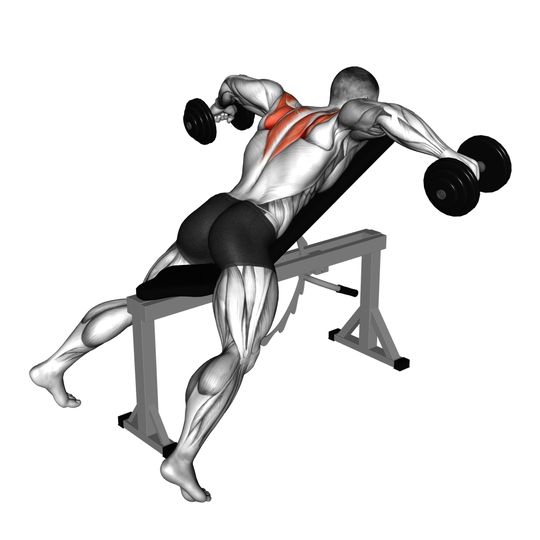
- Reverse Fly (Dumbbell) The free-weight version — available anywhere, but your hinge position becomes the limiting factor before the rear delts do.
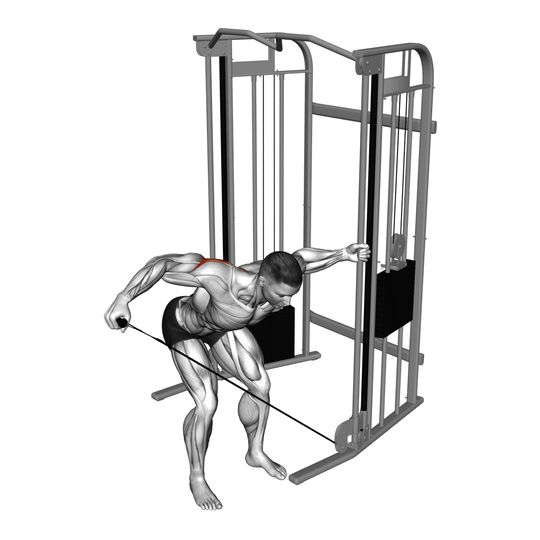
- Reverse Fly (Cable) Keeps tension across the whole arc, including the start of the rep where the machine is often easiest.
- Rear Delt Reverse Fly (Cable) A cross-body cable line that lets each arm move independently and finish a little further back.
- Reverse Fly Single Arm (Cable) One side at a time, which is the fastest way to find and fix a side-to-side difference.
- Face Pull (Cable) Adds external rotation to the same rear delt work, so it doubles as rotator cuff volume.
Machine reverse fly vs dumbbell reverse fly#
The machine wins on consistency. Chest supported and the path fixed, you can push the last few reps hard without your torso rising or your lower back deciding when the set ends. For a muscle this small, that difference matters more than the extra couple of kilos a dumbbell version might allow.
Dumbbells win on availability and freedom. Nothing to queue for, and your shoulder blades are free to move as they like, which some lifters simply feel better. If you use them, prop your chest on an incline bench so the position holds up for the full set.
Common questions#
What muscles does the machine reverse fly work?
The rear delts do most of the work. The upper back — rhomboids and mid traps — helps by pulling the shoulder blades together, and the traps assist near the end of the rep.
How many reps should I do on the reverse fly machine?
Twelve to twenty per set, three to four sets. The range is short and the muscle is small, so light sets taken close to failure beat heavy sets with a shortened range.
Why do I feel it in my traps instead of my rear delts?
Usually the seat is too low, the weight is too heavy, or you are pulling past shoulder level. Raise the seat so the handles line up with your shoulders, cut the load, and stop each rep once your arms are level with your body.
Machine reverse fly or face pull?
Both train rear delts, so either works. The face pull adds external rotation, which makes it the better choice if shoulder health is the goal; the machine reverse fly is the more isolated movement and easier to push to failure.