

The face pull does two jobs in one rep: it pulls the arms back and out against the rear delts, and it rotates the upper arm outward at the finish, which trains the small external rotators of the shoulder. The rope, the high pulley, and the elbows-high finish exist to combine those two movements without letting the lats take over.
So a good substitute has to cover at least one of the two honestly — horizontal abduction for the rear delts, or external rotation for the cuff — and ideally both. Bands do both at once and cost nothing. Reverse flyes take care of the rear delts and leave rotation out. Wide rows arrive heavier with more upper back in the mix. Dedicated rotation work fills the gap any fly leaves behind.
Every face pull alternative, and what it changes#
1. Band Pullaparts#
Resistance bandRear deltsUpper back
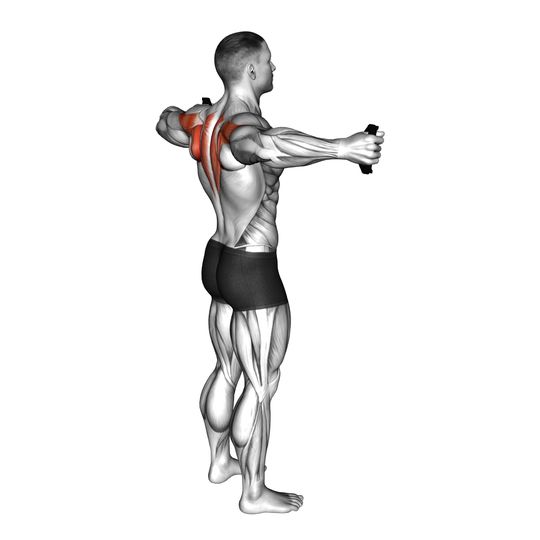
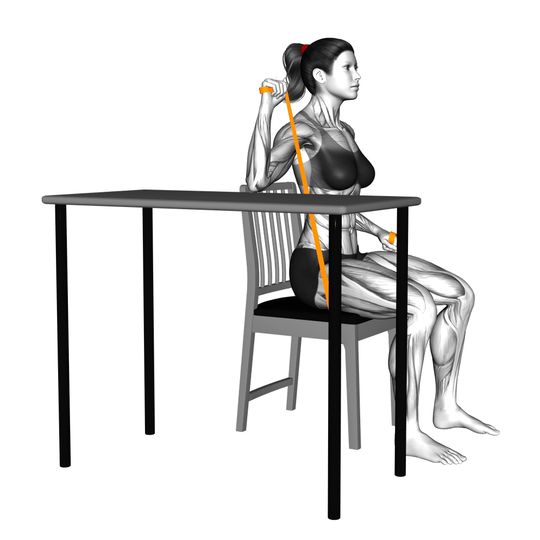
The closest match that needs no machine. Hold a band at arm’s length, pull it apart to the chest with the elbows slightly high, and let the hands finish rotated outward — that is a face pull with the resistance curve reversed, hardest exactly where the rear delts are shortest. Twenty to thirty reps a set is the normal range here.
2. Cable Rear Delt Fly#
CableRear delts
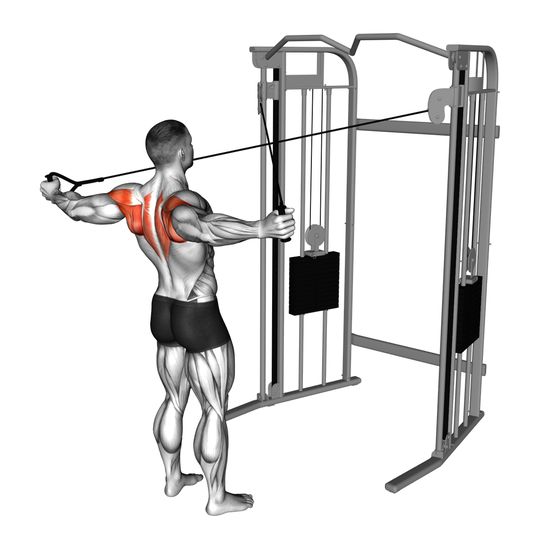
Two pulleys at shoulder height and crossed in front of you isolate the horizontal abduction half of the face pull with tension from the very start of the rep. You lose the external rotation, so pair it with a rotation exercise if the face pull was your only cuff work.
3. Machine Reverse Fly#
MachineRear delts
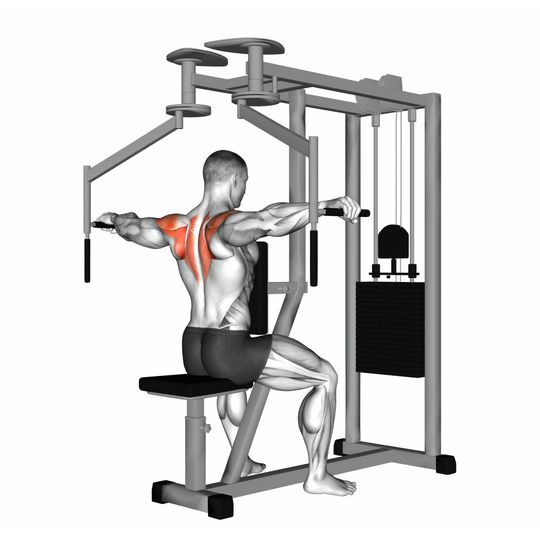
The reverse pec deck fixes your torso and your elbow path, so the rear delts get a long, strict set without the cheating a free-standing face pull invites. It is the heaviest strict rear delt option in most gyms and the right pick when the cable stations are all busy.
4. Dumbbell Chest Supported Reverse Fly#
DumbbellBenchRear deltsUpper back
Chest down on an incline bench, light dumbbells, and the arms travelling out and slightly up. The support removes the hinge and the momentum, which turns the smallest pair in the rack into real rear delt work. Turn the thumbs up at the top and you add a hint of the rotation the face pull provides.
5. Cable External Rotation#
CableRear delts
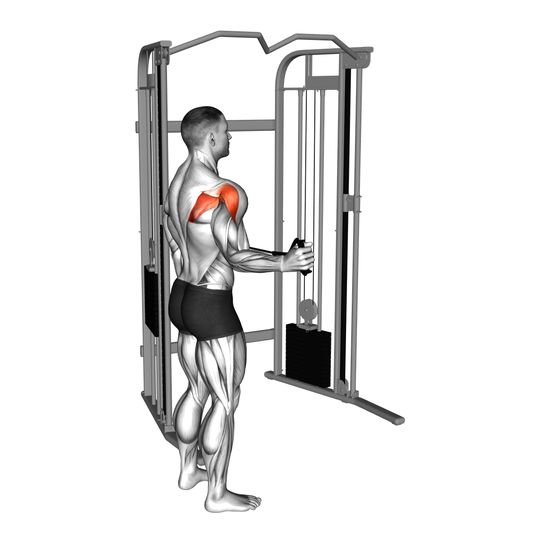
If the face pull was in your program for shoulder health, this is the half you cannot skip. A low cable, elbow pinned to your side, forearm rotating outward against the load: it isolates the infraspinatus and teres minor better than the face pull itself does, at a fraction of the weight.
6. Band Shoulder External Rotation#
Resistance bandUpper back
The same rotation pattern with a band anchored at elbow height, which makes it the at-home partner to band pull-aparts. Between the two you have both halves of the face pull covered with one piece of equipment that fits in a drawer.
7. Wide Grip Seated Cable Row#
CableUpper backLats
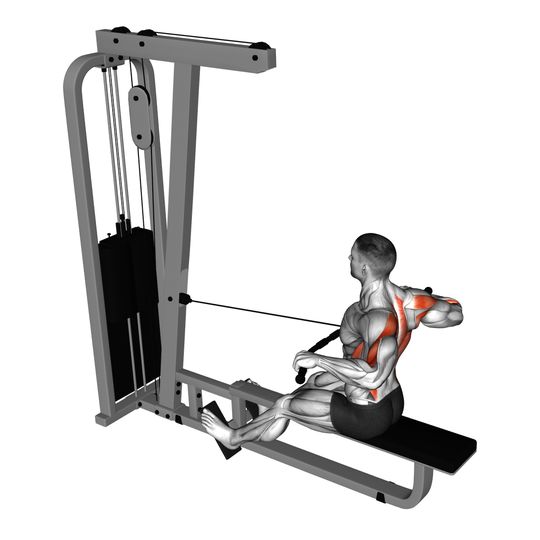
A wide grip pulled to the upper chest with the elbows flared is a face pull with a bar instead of a rope, and it takes far more weight. You lose most of the external rotation, but the rear delts and mid-traps get a heavier stimulus than any fly can give them.
8. Cable Y Raise#
CableSide deltsTraps
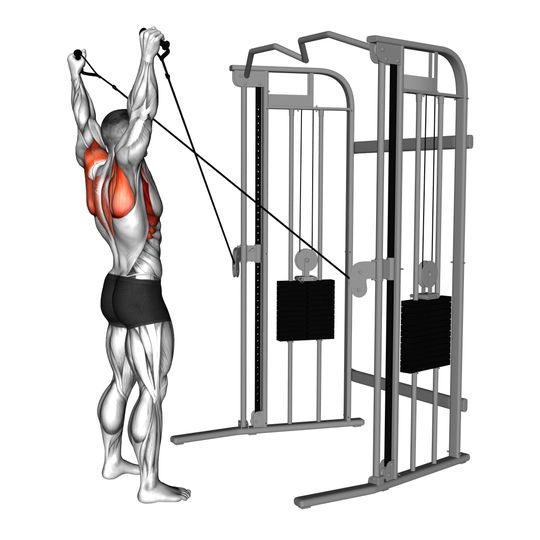
Pulling two low cables up and out into a Y trains the rear delts together with the lower traps, the muscle that keeps the shoulder blade tilted back when you press overhead. It is the pick if your face pulls were there to fix rounded shoulders rather than build rear delts.
9. Prone Y Raise#
TrapsUpper backRear delts
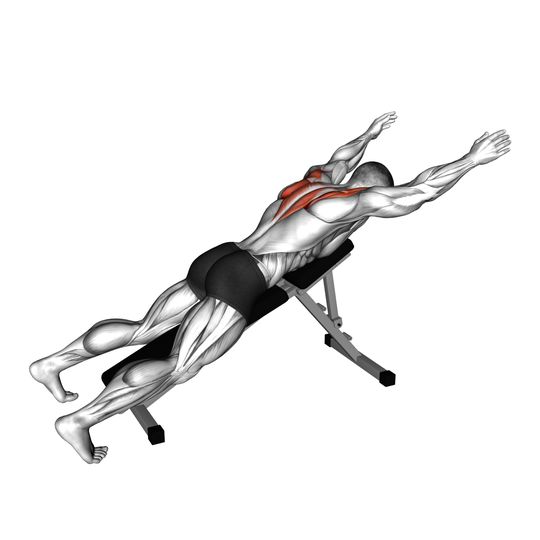
Face down on the floor with the arms overhead in a Y, lifting them a few inches loads the rear delts and lower traps with nothing but bodyweight. The range is short and momentum is impossible, so the reps feel much harder than they look — the honest fallback when there is no equipment at all.
How to choose, by what you have#
The same shortlist, filtered by the equipment actually in front of you. Each row names the one to start with.
At home, no equipment#
Start with Band Pullaparts
A single band replaces the face pull almost completely. Pull-aparts at chest height cover the rear delts, the same band anchored at elbow height covers external rotation, and looping it around a door handle at head height and pulling to the face gives you the original movement itself. Prone Y raises on the floor add the overhead angle for free.
Dumbbells only#
Start with Dumbbell Chest Supported Reverse Fly
Support your chest on an incline bench and use light dumbbells for reverse flyes, then add lying external rotations on your side with an even lighter one. Dumbbells cannot reproduce the combined pull-and-rotate of a face pull in one movement, so split it into the two pieces and do both.
Barbell and rack#
Start with Wide Grip Seated Cable Row
A barbell cannot isolate a rear delt, so bias a row toward it: grip wide, pull to the upper chest, elbows travelling out rather than back. Expect roughly half your usual row weight. Pair it with a band or cable external rotation, because the row covers the pulling half and none of the rotating half.
Full gym#
Start with Machine Reverse Fly
The reverse pec deck is the strict, heavy rear delt option; a cable reverse fly from two shoulder-height pulleys is the next best. Either way, finish with a low-cable external rotation to replace the part of the face pull the flyes leave out.
Frequently asked questions#
What is the best face pull alternative?
Band pull-aparts. They train the same rear delt abduction and, if you let the hands rotate outward at the finish, the same external rotation, with resistance that peaks exactly where the rear delts are working hardest. In a gym with cables, a reverse fly plus a low-cable external rotation reproduces the face pull as two separate exercises.
Can I do face pulls with a resistance band?
Yes, and it is one of the best ways to do them. Anchor a band at head height — a door anchor or a pull-up bar works — grab it with both hands, and pull toward your face with the elbows high, finishing with the hands rotated back. The band gets harder toward the end of the rep, which suits the rear delts well.
Are reverse flyes the same as face pulls?
Not quite. Both train horizontal shoulder abduction for the rear delts, but the face pull adds external rotation at the finish, which works the rotator cuff. If you swap face pulls for reverse flyes, add a dedicated external rotation exercise to keep that benefit.
How do I train rear delts without a cable machine?
Band pull-aparts, chest-supported dumbbell reverse flyes, and prone Y raises on the floor cover the rear delts completely without a cable. Keep the weight light, the reps between fifteen and thirty, and pause briefly at the finish of each rep — the rear delts respond to strict, high-rep work far better than to heavy loads.
How heavy should face pull alternatives be?
Light enough to control for fifteen to twenty-five strict reps. The rear delts and external rotators are small muscles with short leverage, so any weight that requires a swing or a shrug is training your traps and momentum instead. Progress by adding reps and slowing the finish before adding load.