


The pec deck isolates one thing: shoulder adduction, the pec’s job of bringing your arm across your body. Fixed pads mean your elbows cannot bend, so the triceps and front delts contribute almost nothing and the chest works from a deep stretch to a full squeeze.
Any real substitute has to keep the arms relatively straight and the resistance pulling outward at chest height. Cables do it with constant tension and adjustable angles. Dumbbells and bands do it with a changing resistance curve. Presses do not isolate at all, but a wide grip gets you closer than a narrow one.
Every pec deck alternative, and what it changes#
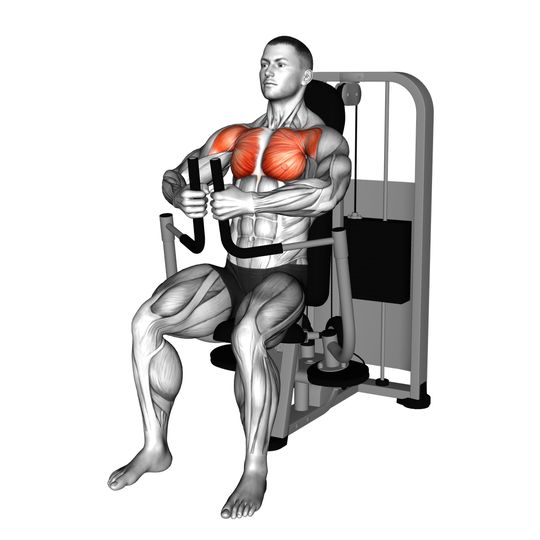
1. Machine Chest Fly#
MachineChest
The same movement with handles instead of pads, so your elbows are slightly freer and your shoulders can settle into a more comfortable position. Identical adduction pattern, identical fixed path — this is a straight swap, not a compromise.
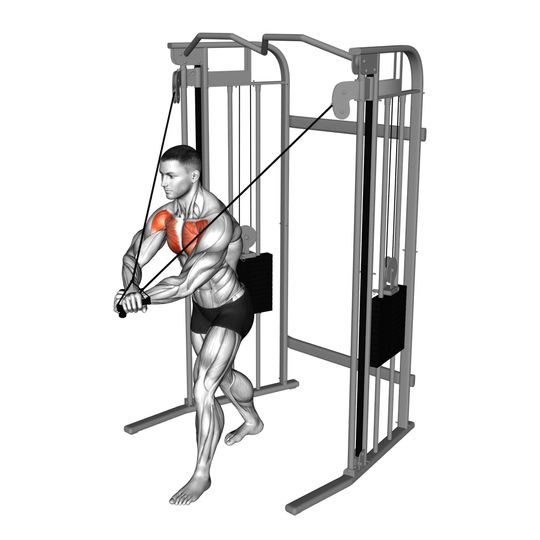
2. Cable Crossover#
CableChest
Cables keep tension constant through the whole range and let your hands cross past your midline, which shortens the pec further than any machine allows. Set the pulleys high, level, or low to bias the upper, middle, or lower chest.
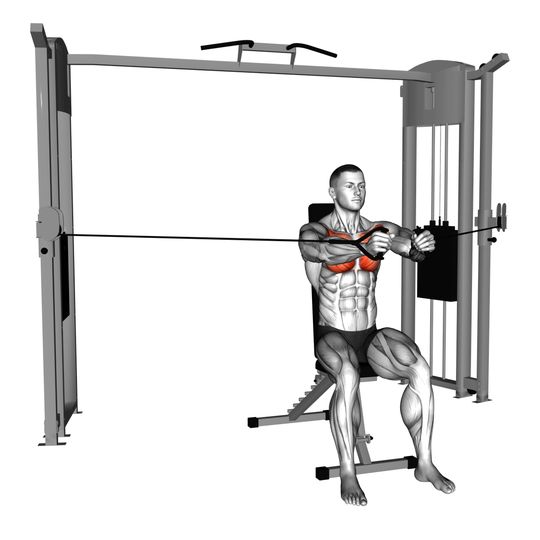
3. Seated Cable Chest Fly#
CableBenchChest
Sitting between two pulleys removes the balance and torso stabilising that a standing crossover demands, which makes it the closest cable version to the pec deck feel. Constant tension, fixed body position, and the same adduction path.
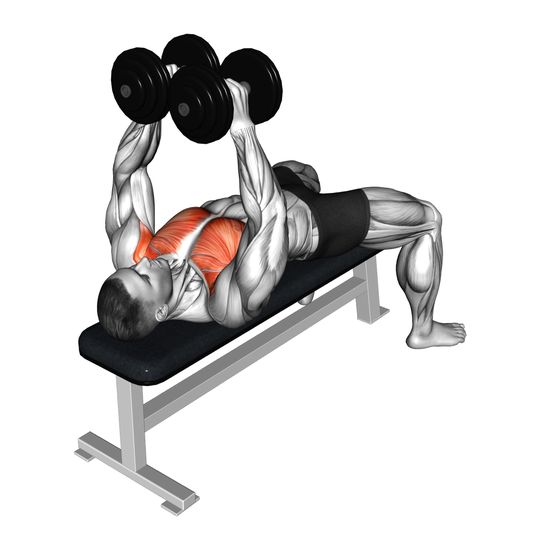
4. Dumbbell Chest Fly#
DumbbellBenchChest
The free-weight original. Lying on a bench with dumbbells gives the pecs their deepest loaded stretch at the bottom, though resistance drops off as the weights come together at the top. Two dumbbells and a bench is the whole requirement.
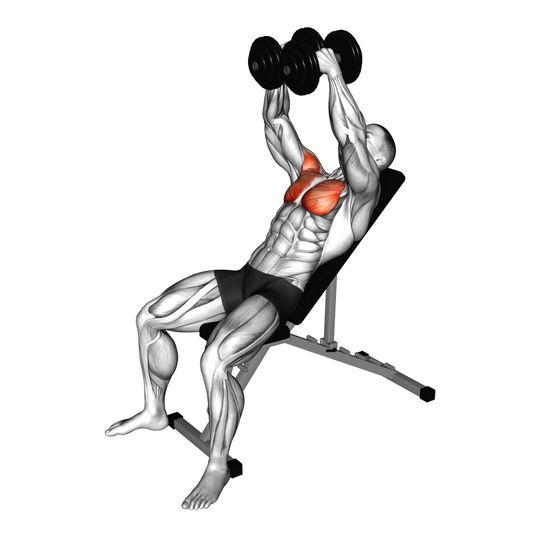
5. Incline Dumbbell Fly#
DumbbellBenchChest
The same fly on an incline, which shifts the line of pull toward the clavicular pecs and the front delts. Worth choosing over the flat version if your upper chest is what you were using the pec deck to build.
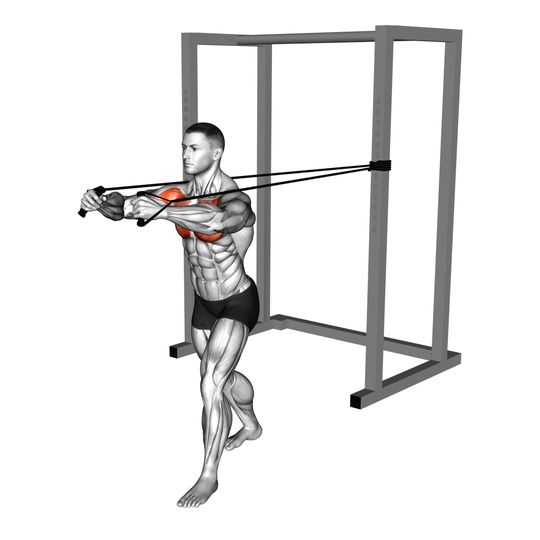
6. Band Chest Fly#
Resistance bandChest
A band behind your back turns any room into a fly station. Tension increases as your hands come together, so the squeeze at the end is the hardest part — the opposite of a dumbbell fly, and a useful pairing with one.
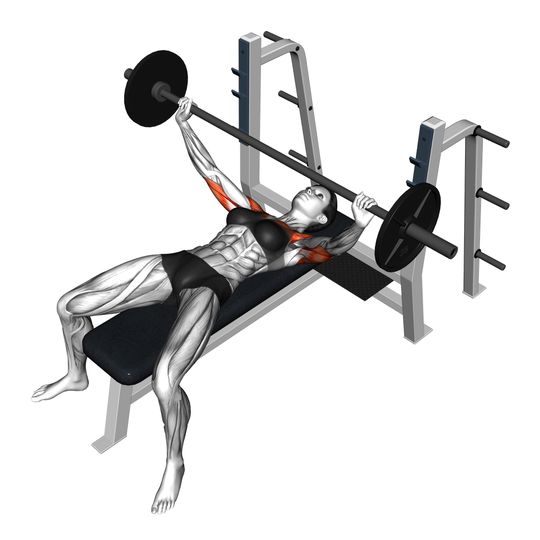
7. Wide Grip Bench Press#
BarbellBenchChest
Not an isolation movement, but the widest grip puts the shoulders in more abduction and asks more adduction of the pecs than a standard press. The honest barbell answer when there is no cable, machine, or dumbbell option available.
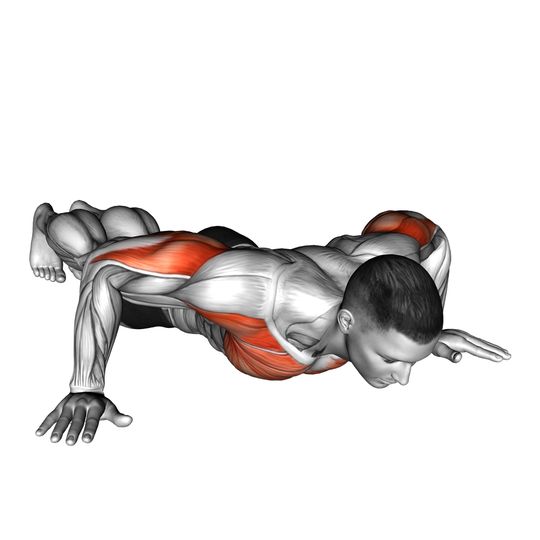
8. Wide Push Up#
Chest
A wide hand position makes a push-up more pec-dominant, and slowing the descent to three or four seconds gives the chest a stretch it never gets at normal tempo. No equipment, and it scales by elevating your feet.
How to choose, by what you have#
The same shortlist, filtered by the equipment actually in front of you. Each row names the one to start with.
At home, no equipment#
Start with Band Chest Fly
A single band is enough. Loop it behind your back and fly at chest height, and the resistance peaks exactly where the pec is shortest. Add slow wide push-ups for the stretched end of the range and you have both halves of the pec deck covered.
Dumbbells only#
Start with Dumbbell Chest Fly
Dumbbell flyes on a bench give the deepest stretch of any option here — keep a slight, fixed elbow bend and stop when your upper arms reach the plane of your torso. Go incline instead if the upper chest is the target.
Barbell and rack#
Start with Wide Grip Bench Press
A barbell cannot isolate adduction, so widen the grip and accept a press. Wide-grip bench asks more of the pecs and less of the triceps than a standard grip; a plate squeeze between your palms adds the pure adduction the bar cannot.
Full gym#
Start with Machine Chest Fly
A handled chest fly machine is a direct replacement. If those are taken too, a seated cable fly gives you the same fixed-torso adduction with constant tension, and a standing crossover adds the cross-body range machines cannot reach.
Frequently asked questions#
What is the best pec deck alternative?
A cable fly. It trains the same shoulder adduction the pec deck isolates, keeps tension constant through the whole range, and lets your hands travel past your midline for a fuller contraction. A handled chest fly machine is the closest like-for-like if you want the fixed path.
Are dumbbell flyes as good as the pec deck?
For the stretched position, better — the bottom of a dumbbell fly loads the pec harder than any machine. For the squeeze, worse, because resistance drops toward the top as the weights align with gravity. Pairing a dumbbell fly with a band or cable fly covers both ends.
How do I replace the pec deck at home?
Use a band around your back and fly at chest height for the contracted position, then add slow wide push-ups for the stretch. Between them you cover the same adduction pattern, and neither needs more than a doorway of space.
Can push-ups replace the pec deck?
Partly. Push-ups are a press, so the triceps and front delts share the load rather than leaving it to the chest. A wide hand position and a slow eccentric get you closer, but if isolating the pecs is the point, a band or cable fly is the better substitute.
Should my elbows be bent on pec deck alternatives?
Slightly, and then locked there. A small fixed bend spares the elbow joint without turning the fly into a press. If the angle changes during the rep you are pressing, which shifts work to the triceps and defeats the purpose of the movement.