

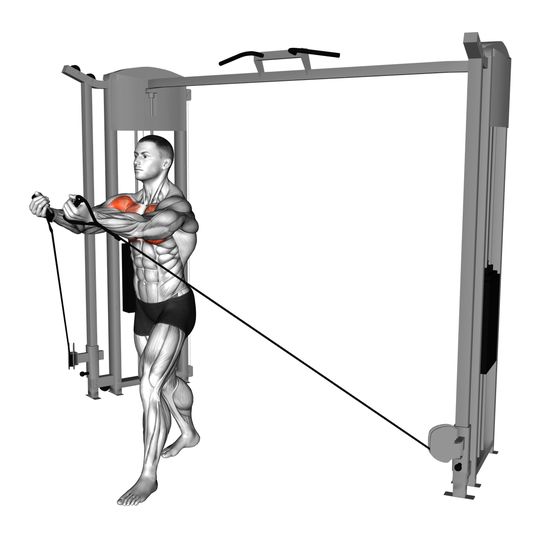
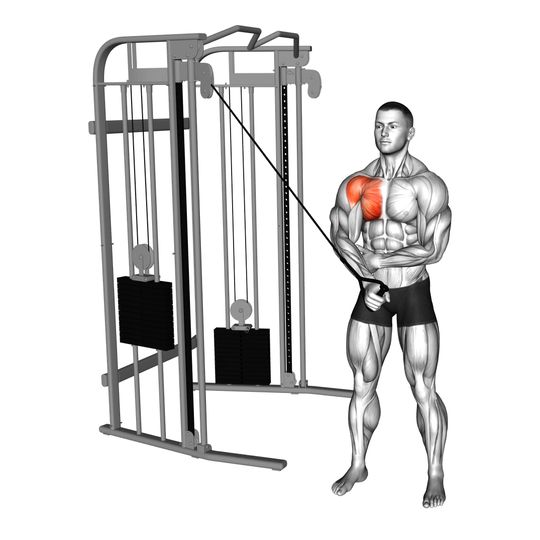
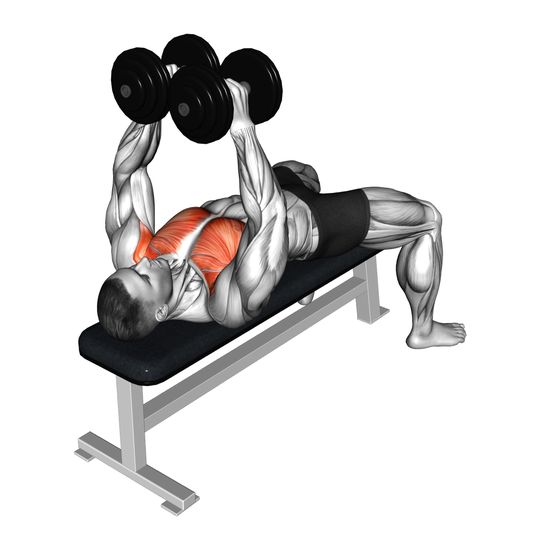
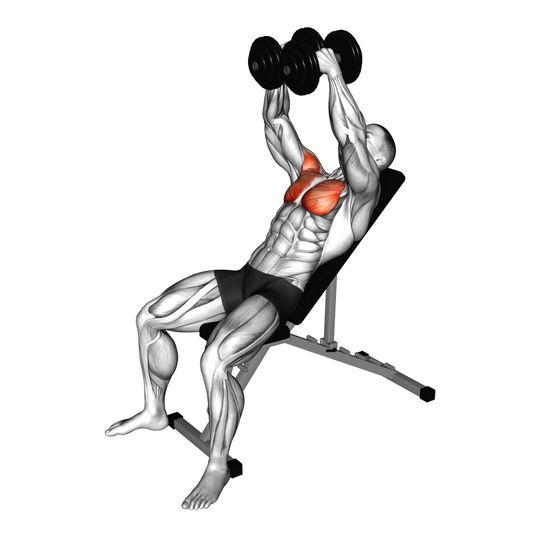
A cable crossover isolates shoulder adduction — the pec bringing your arm across your body — and does it with two properties nothing else quite matches. Tension never drops, because a cable pulls the same amount at every point in the range, and your hands can travel past your midline, which shortens the pec further than a fixed machine allows.
A substitute has to give up one of those or find another way to buy it. Machines keep the fixed path and the smooth loading but stop at your chest. Dumbbells keep the free path and add the deepest stretch available, then lose almost all resistance at the top. Bands invert the curve entirely, which is why a band and a dumbbell together cover a crossover better than either alone.
Every cable crossover alternative, and what it changes#
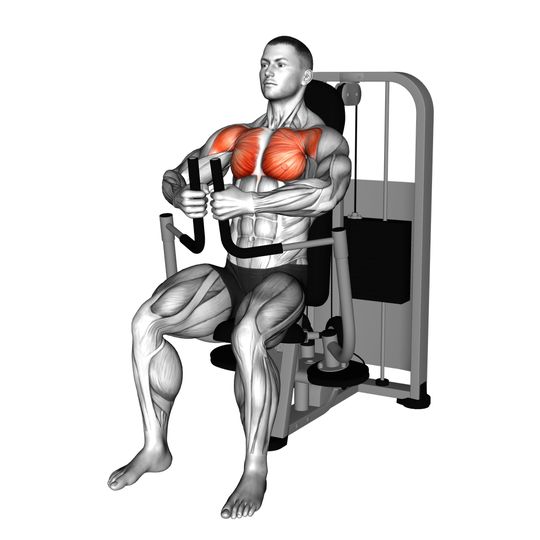
1. Pec Deck#
MachineChest
The same adduction with your arms fixed against pads and your torso pinned to a seat. It cannot let your hands cross, and the resistance curve is set by the cam rather than by physics, but nothing else in the gym makes it this easy to take a chest set to failure safely.
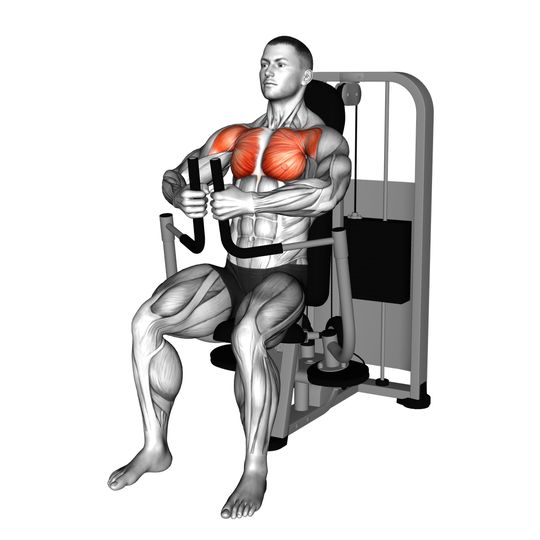
2. Machine Chest Fly#
MachineChest
A handled fly machine sits between the pec deck and the crossover: your elbows are freer than on pads, the shoulder can settle where it wants, and the path is still guided. The obvious first swap when the cable rack is busy and you want the same movement with no setup.
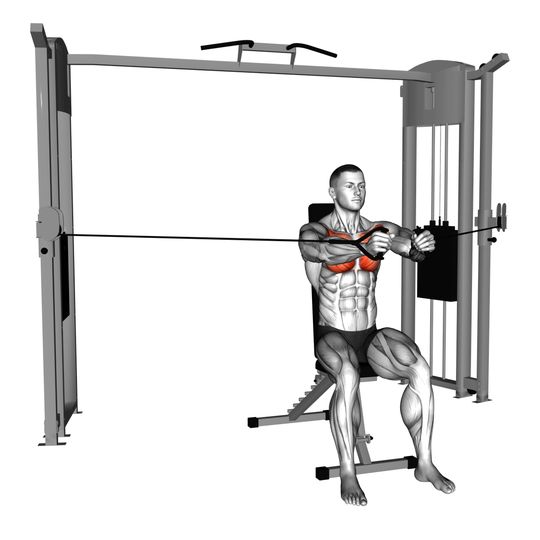
3. Seated Cable Chest Fly#
CableBenchChest
Sitting between two pulleys keeps the constant cable tension while removing the balance and torso bracing a standing crossover demands. Everything you were getting from the cables, minus the part where your legs and core get tired first.
4. Low Cable Fly Crossovers#
CableChest
Pulleys at the bottom and hands sweeping up and together, which loads the upper and mid chest through a line most people neglect. If only the low pulleys are free, this is not a downgrade — it is the crossover angle that pairs best with flat pressing.
5. Single Arm Cable Crossover#
CableChest
One pulley, one arm, and a much longer arc than a two-handed crossover allows, because the working hand can start behind the shoulder and finish well past the opposite hip. It also lets you brace with the free hand, which stops the torso rotating into the rep.
6. Dumbbell Chest Fly#
DumbbellBenchChest
The free-weight original, and the best stretched-position chest movement there is. Lying flat, the bottom of the rep loads the pec harder than any cable angle — then resistance falls away as the dumbbells align with gravity, so the squeeze at the top does almost nothing.
7. Incline Dumbbell Fly#
DumbbellBenchChest
The same fly with the bench raised, which points the line of pull toward the clavicular fibres and mimics a high-to-low crossover reversed. Worth choosing over the flat version if the upper chest was what you were chasing with the cables.
8. Band Chest Fly#
Resistance bandChest
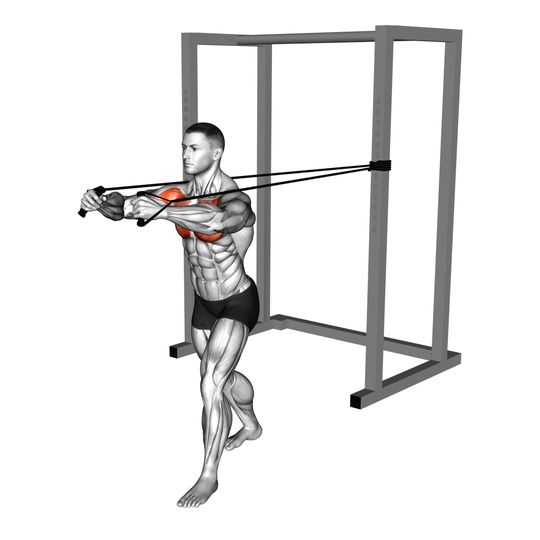
A band around your back turns any room into a crossover station, and the resistance rises as your hands come together — the opposite of a dumbbell fly and much closer to what a cable gives you at the end of the rep. Cross your hands at the finish to reproduce the full range.
9. Wide Grip Bench Press#
BarbellBenchChest
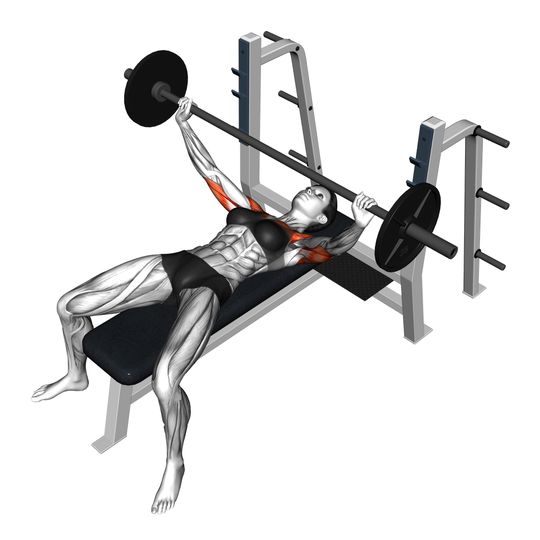
Not isolation, but the widest comfortable grip puts the shoulders in more abduction and asks the pecs for more adduction than a standard press. The honest barbell answer when there are no cables, machines, dumbbells, or bands within reach.
How to choose, by what you have#
The same shortlist, filtered by the equipment actually in front of you. Each row names the one to start with.
At home, no equipment#
Start with Band Chest Fly
A single long band is enough. Loop it behind your back, fly at chest height, and cross your wrists at the finish for the range a machine cannot give you. Anchor it high or low on a door to reproduce the high-to-low and low-to-high angles, and add slow wide push-ups for the stretched end.
Dumbbells only#
Start with Dumbbell Chest Fly
Dumbbell flyes cover the half of the crossover that bands and machines do worst — the deep stretch at the bottom. Keep a small fixed elbow bend, stop when your upper arms reach the plane of the bench, and pause there. Set the bench to thirty degrees if the upper chest is the target.
Barbell and rack#
Start with Wide Grip Bench Press
A barbell cannot isolate adduction, so widen the grip and accept a press. Wide-grip bench shifts work from the triceps to the pecs, and a plate squeeze held between your palms for time adds the pure adduction the bar never provides.
Full gym#
Start with Machine Chest Fly
A handled fly machine is the fastest like-for-like. If it is taken, a seated cable fly gives you the constant tension with a fixed torso, and a single-arm crossover from one free pulley covers the cross-body range when the rack is half occupied.
Frequently asked questions#
What is the best cable crossover alternative?
A chest fly machine or a pec deck. Both isolate the same shoulder adduction with a guided path and smooth loading, which is most of what a crossover offers. What they cannot do is let your hands cross the midline, so add a band fly with a crossing finish if that range matters to you.
Are dumbbell flyes as good as cable crossovers?
They are better at the bottom and worse at the top. A dumbbell fly loads the pec in its most stretched position harder than any cable angle, but resistance drops to nearly nothing as the weights meet overhead. A cable holds tension throughout, which is why the two pair so well.
How do I do a cable crossover at home?
Use a resistance band. Anchored high on a door it reproduces a high-to-low crossover; anchored low it gives you the upward angle; looped behind your back it works standing with no anchor at all. Band tension peaks where the pec is shortest, so squeeze and hold briefly at the end of each rep.
Does pulley height change which part of the chest works?
Somewhat. High pulleys pulling down emphasise the lower and mid fibres, low pulleys pulling up bias the clavicular head, and shoulder-height pulleys sit in between. The differences are real but modest, and doing all three over a week matters more than agonising over one.
Should my arms be straight during crossover alternatives?
Nearly. Set a small bend in the elbow and hold it there for the whole set. If the angle opens and closes during the rep you have turned the fly into a press, which recruits the triceps and front delts and removes the reason you chose the movement.
About the exercise you are replacing#
Cable Crossover — form, muscles worked, and common mistakes →