

A chest dip is a decline press done with your own body as the weight. Leaning forward with the elbows flared sends the load into the lower and outer chest, the triceps finish the lockout, and the shoulders travel through a deep stretch at the bottom that no barbell press reproduces. That depth is both why the dip builds the chest so well and why it is the first exercise to go when a shoulder gets irritated.
Replacing it means keeping the decline angle and the heavy chest and triceps loading, and deciding what to do about the stretch. Decline presses keep the line of push and let you pick the weight. Machine dips keep the exact movement and remove the bodyweight problem in both directions. Cable flyes keep the lower chest squeeze without any of the shoulder stress.
Every chest dip alternative, and what it changes#
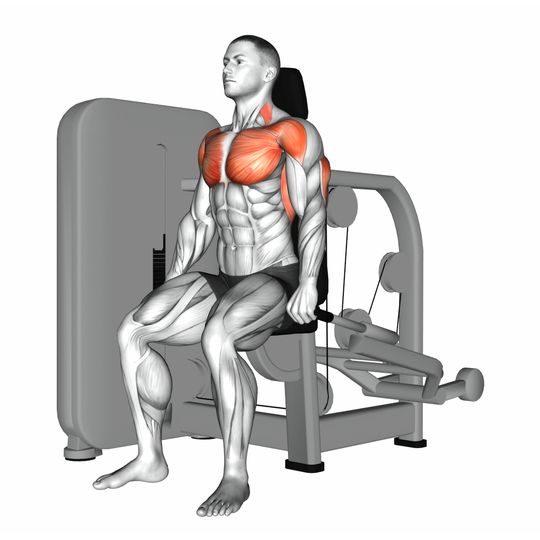
1. Seated Dip Machine#
MachineTriceps
The same movement with a weight stack instead of your bodyweight, which fixes the two most common dip problems at once: too heavy for beginners, too light for advanced lifters. The seat also caps the depth, so it is the version to use while a shoulder recovers.
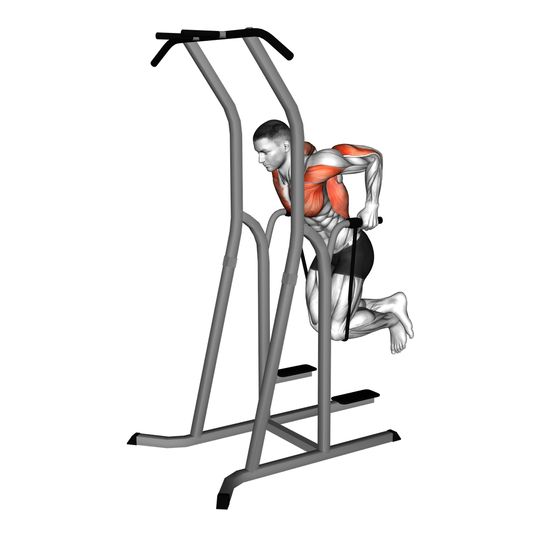
2. Assisted Dip#
Resistance bandDip barsTricepsChest
If the issue is simply that bodyweight is too much, the assisted dip station keeps everything about the exercise intact and subtracts weight from you. Lower the assistance a little each week and it turns itself back into a chest dip.
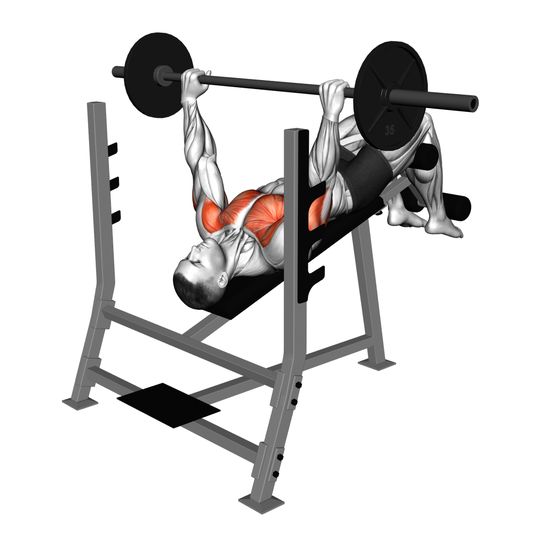
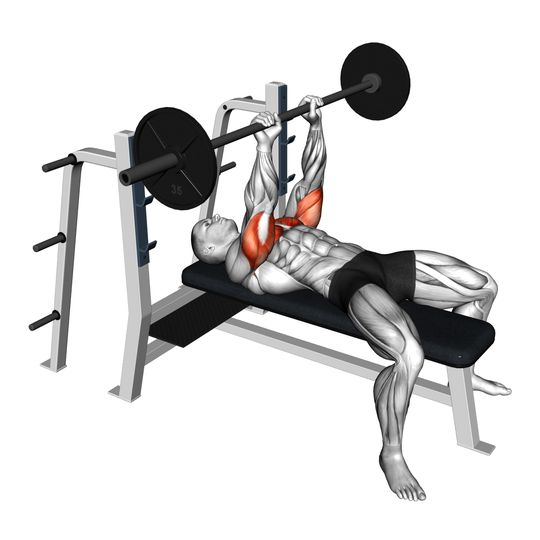
3. Barbell Decline Bench Press#
BarbellBenchChest
The closest free-weight match for the line of push: a downward pressing angle that biases the lower chest and lets the triceps finish, with a barbell you can load precisely. You lose the deep stretch at the bottom, which is exactly the point if your shoulders are the reason you stopped dipping.
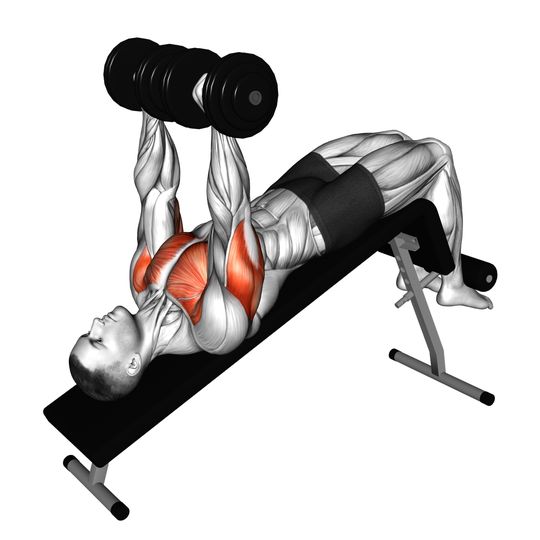
4. Dumbbell Decline Bench Press#
DumbbellBenchChest
Same decline angle, but the dumbbells travel down and slightly out, which restores some of the stretch and lets each side work independently. Bring them together at the top and the lower chest squeeze is close to the finish of a good dip.
5. Iso-Lateral Decline Chest Press#
MachineChest
A plate-loaded decline press guides the arc and lets you push hard without a spotter, which makes it the best option for taking the lower chest close to failure. The independent arms also stop a stronger side from carrying a weaker one.
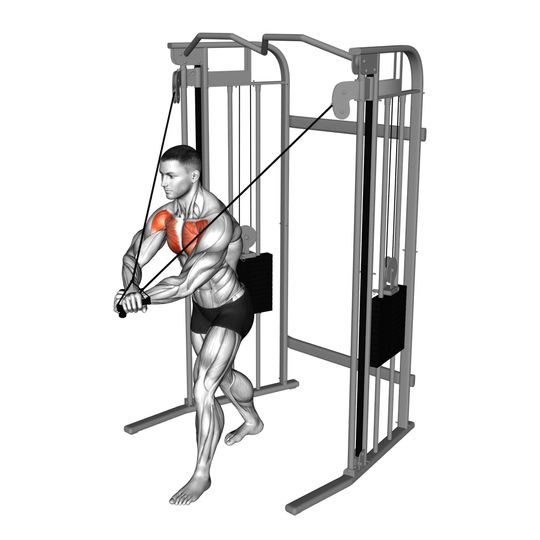
6. Cable Crossover#
CableChest
Set the pulleys high and bring the hands down and together in front of the hips. That high-to-low line trains the lower chest fibres the dip targets with constant tension and none of the shoulder stress, and it is the pick when you want the lower chest without the triceps.
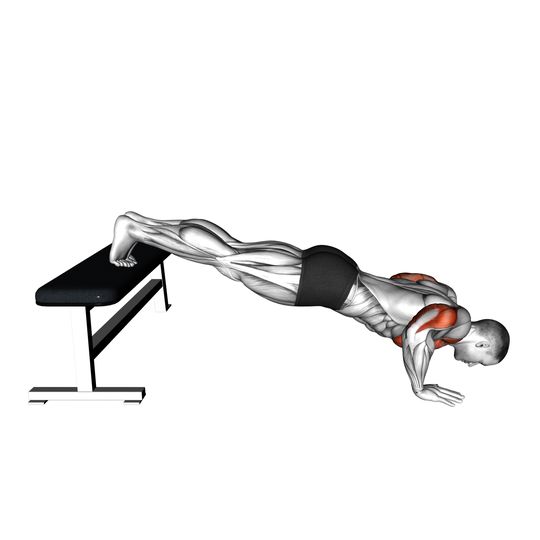
7. Decline Push Up#
BenchChestFront delts
Feet raised, hands on the floor, chest travelling down between the hands. Raising the feet shifts the load toward the upper chest, so lean forward and keep the hands slightly wide to keep the lower chest involved. It is the bodyweight substitute that needs nothing but a bench or a step.
8. Ring Push Up#
Suspension trainerChest
Rings let the hands turn out and travel together at the top, which brings back the chest squeeze and the deep stretch that a floor push-up loses. Harder than they look and the closest bodyweight relative of the dip when there are no parallel bars.
9. Close Grip Bench Press#
BarbellBenchTricepsChest
When the dip was in your plan for the triceps as much as the chest, a close-grip bench keeps both under a barbell you can load and progress. Tuck the elbows and touch low on the chest to match the dip’s elbow path.
How to choose, by what you have#
The same shortlist, filtered by the equipment actually in front of you. Each row names the one to start with.
At home, no equipment#
Start with Decline Push Up
Push-ups carry this at home. Decline push-ups with the feet on a chair give you the pressing volume, and two sturdy chairs set shoulder-width apart give you a real dip if you want the original. Slow the lowering to three seconds and pause at the bottom — the stretch is what you are replacing, so earn it with tempo rather than reps.
Dumbbells only#
Start with Dumbbell Decline Bench Press
Decline dumbbell presses are the direct swap: same downward line of push, a stretch at the bottom, and a squeeze at the top. Without a decline bench, a flat press with the hips raised slightly and the elbows tucked to about 45 degrees gets most of the way there.
Barbell and rack#
Start with Barbell Decline Bench Press
Decline barbell bench for the lower chest, close-grip bench for the triceps. Neither reproduces the stretched bottom position of a dip, which makes them the right choice while a shoulder is unhappy and the wrong one if you were dipping precisely for that range of motion.
Full gym#
Start with Seated Dip Machine
The seated dip machine is the exact movement with a weight you choose; the assisted dip station is the same exercise with weight subtracted. Add high-to-low cable flyes for the lower chest squeeze if the machines cap your range, and a decline press if you want to load the pattern heavily.
Frequently asked questions#
What is the best chest dip alternative?
A seated dip machine or an assisted dip, because both keep the exact movement and only change the weight. If there are no dip stations at all, a decline bench press with a barbell or dumbbells matches the downward pressing line and the lower chest emphasis better than any flat press.
Do chest dips work the lower chest?
Yes. Leaning the torso forward and flaring the elbows turns the dip into a decline press, which biases the lower and outer fibres of the pectoralis major. Staying upright with the elbows tucked turns it into a triceps dip instead — the lean is what decides which muscle does the work.
Are dips or decline bench press better for the chest?
They are close, and they differ mainly in range. The dip takes the shoulder through a deeper stretch at the bottom, which is a strong growth stimulus but hard on irritated shoulders. The decline bench stops the stretch at the chest and lets you load with precision. Many lifters do best rotating between the two.
How do I replace dips if they hurt my shoulders?
Remove the deep stretch and keep the decline line. Decline barbell or dumbbell presses, a plate-loaded decline machine, and high-to-low cable flyes all train the same lower chest without taking the shoulder past the point where a dip bothers it. Return to dips later with a shallower depth and a controlled lowering.
How do I do chest dips at home without dip bars?
Two sturdy chairs or the corner of a kitchen counter give you parallel surfaces at roughly shoulder width. Lean forward, lower until your shoulders are just below your elbows, and press up. If that is too hard, decline push-ups with the feet on a chair build the same lower chest and triceps with less load.