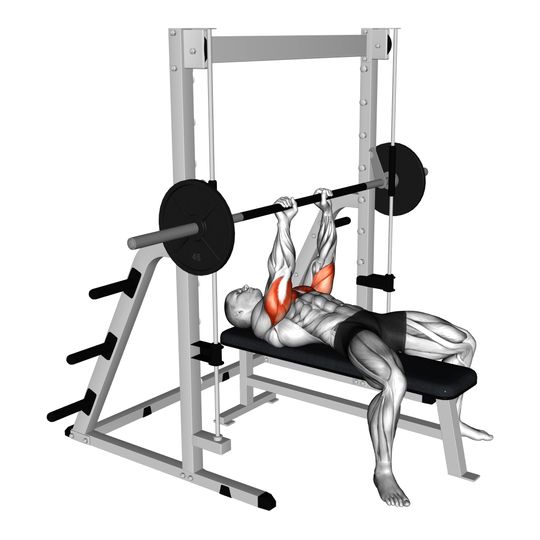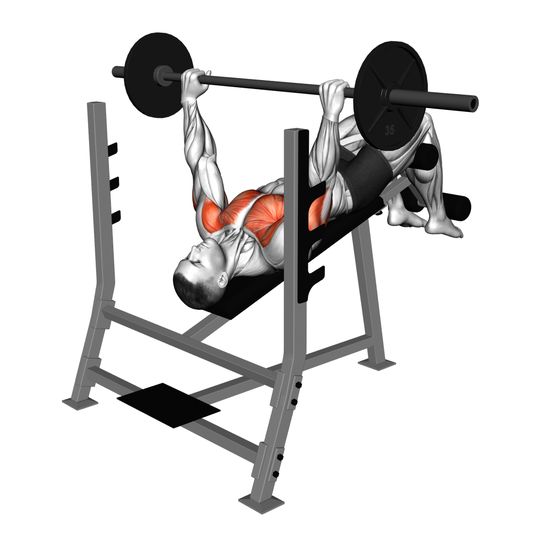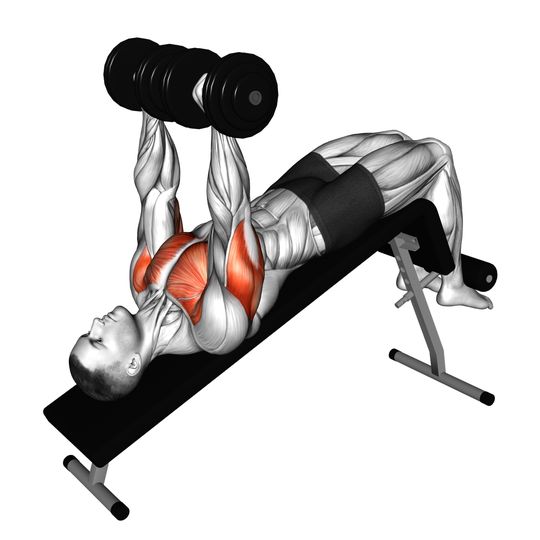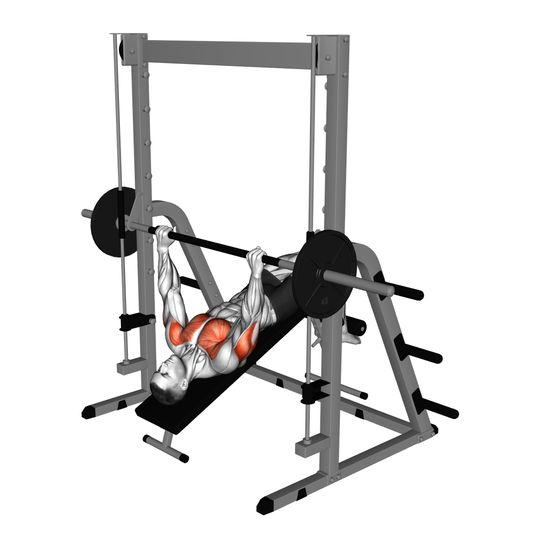


Decline push-up is a feet-elevated bodyweight pressing movement that increases load on the chest. It emphasizes the upper chest and anterior deltoids while also recruiting triceps and core for stabilization.
How to do the Decline Push Up#
- Set your feet on a stable elevated surface and place your hands slightly wider than shoulder-width on the floor.
- Brace your core and align your body from heels to head so your spine stays neutral.
- Bend your elbows and lower your chest toward the floor until your upper arms are about parallel to the ground.
- Push through your palms to extend the elbows and return to the starting position.
- Control your tempo and breathe evenly; do not bounce at the bottom.
Muscles worked#
Raising the feet shifts more of your bodyweight onto the hands and tilts the torso so you press at an upward angle, similar to an incline bench press. That puts the upper chest, the clavicular head of the pectoralis major, and the front delts at the centre of the movement, with the rest of the chest still doing plenty of work. Compared with a flat push up you will feel it higher on the chest and more in the front of the shoulders, and each rep is heavier.
The triceps lock the elbows out at the top, and the higher the feet, the more the shoulders and triceps take over from the chest. The abs, obliques, and glutes have to hold a straight line from heels to head against gravity trying to fold you at the hips, which is harder on a decline than on the floor. The serratus anterior pushes the shoulder blades around the ribcage at the top of each rep.
- Primary: Chest (Pectoralis Major), Front delts (Anterior Deltoid)
- Secondary: Triceps (Triceps Brachii), Abs (Rectus Abdominis)
Common mistakes#
- Allowing the hips to sag and breaking the straight line from head to heels.
- Flaring the elbows out excessively, increasing shoulder stress.
- Placing the hands too far forward, which shifts load away from the chest.
- Rushing the rep and using momentum instead of controlled strength.
Why it works#
The decline push up is the simplest way to make push ups harder without adding external load. Feet on a bench puts roughly three quarters of your bodyweight over the hands, against about two thirds for a flat push up, so a lifter who can do thirty on the floor gets back into a productive 10-15 rep range without a weighted vest or bands.
It also trains the upper chest and front delts, the two areas that flat push ups and flat bench pressing under-serve, which makes it a useful stand-in for incline pressing on days without a barbell. The core demand is real too: holding a rigid body while pressing at an angle builds the same anti-extension strength as a plank, but under load.
Sets, reps and setup#
Three to four sets of 8-15 reps with 60-90 seconds of rest, once or twice a week as an upper chest and shoulder exercise. Start with the feet on a low step; a standard bench at about 45 centimetres is the sweet spot for most people. Once you pass fifteen clean reps, raise the feet or add load rather than pushing the reps higher.
- Setup
- Place the feet on a bench or box, hands on the floor slightly wider than the shoulders and set forward enough that the hands sit under the chest at the bottom rather than under the face. Squeeze the glutes, brace the abs, and lower until the chest is a fist's height from the floor with the elbows at about 45 degrees to the body, then press to a full lockout and let the shoulder blades spread.
- Progression
- Raise the feet in steps, from a low box to a bench to a plyo box, and stop when the movement becomes a shoulder press rather than a chest press. From there, add a weight plate on the upper back, a resistance band across the shoulders, or slow the descent to three seconds and pause at the bottom.
Variations#
- Push Up The flat version with less load per rep and more emphasis on the mid and lower chest.
- Incline Push Up Hands elevated instead of feet, which makes the rep easier and shifts the work toward the lower chest.
- Pike Push Up Hips high and torso nearly vertical, turning the push up into a shoulder press with almost no chest involvement.
- Chest Dip A leaning bodyweight press that loads the lower chest and triceps heavily, the natural pair to the decline push up.
- Incline Dumbbell Bench Press The loaded gym equivalent of the same pressing angle, once bodyweight is no longer enough.
Decline push up vs incline push up#
The names describe the body angle, not the chest region, which trips people up. In a decline push up the feet are raised, so the head is lower than the feet and you press upward relative to the torso, loading the upper chest and shoulders; it is the harder version because more bodyweight sits over the hands.
In an incline push up the hands are raised and the torso tilts up, so less weight lands on the hands and the pressing angle biases the lower chest. It is the easier version and the right starting point for anyone still building toward full floor push ups. The two are opposite ends of the same progression.
Common questions#
What muscles does the decline push up work?
The upper chest and front delts take the largest share because you press at an upward angle, with the rest of the chest and the triceps contributing. The abs, glutes, and serratus anterior hold the body in a straight line and stabilise the shoulder blades.
Are decline push ups harder than regular push ups?
Yes. Elevating the feet moves more of your bodyweight over the hands, so each rep is heavier. A bench-height decline puts roughly ten to fifteen percent more of your bodyweight on your arms than a flat push up, and higher elevations add more.
Do decline push ups work the upper chest?
They do. The angle of the torso relative to the arms mimics an incline bench press, so the clavicular head of the chest and the front delts are more involved than in a flat push up. Raise the feet too high, though, and the shoulders take over completely.
How high should my feet be for decline push ups?
A standard bench, about 40 to 50 centimetres, suits most people and keeps the chest as the main target. Go lower if you cannot get eight clean reps, and only go higher once fifteen are easy; above roughly 60 centimetres the movement turns into a shoulder press.
Where should my hands be on a decline push up?
Slightly wider than the shoulders and far enough forward that they sit under the chest at the bottom of the rep, not under the face. Because the body is tilted, the hands need to be a little further ahead than in a flat push up.