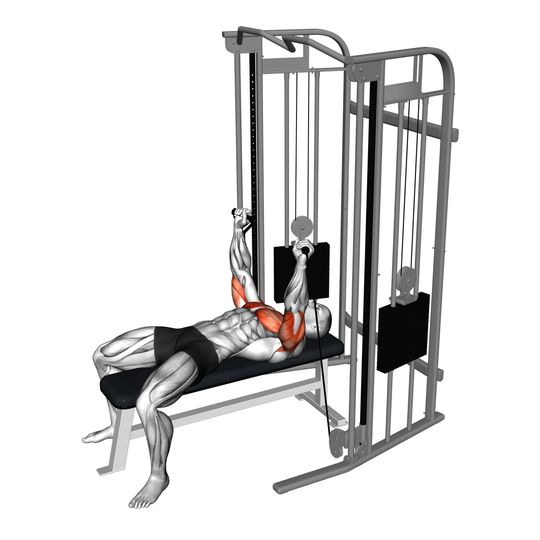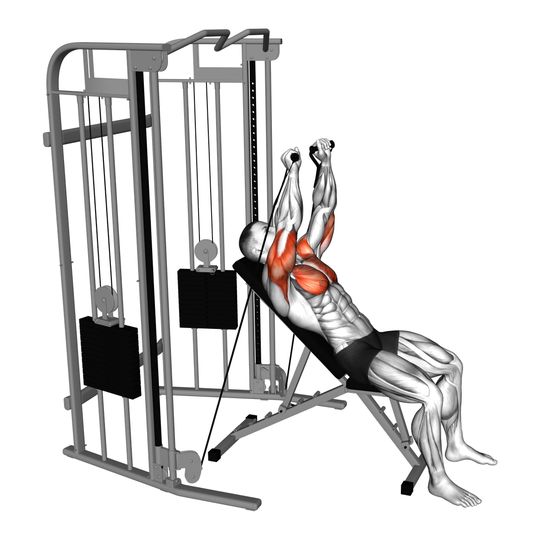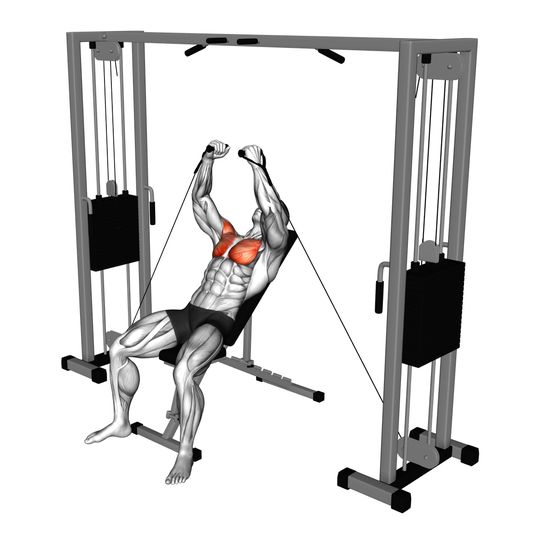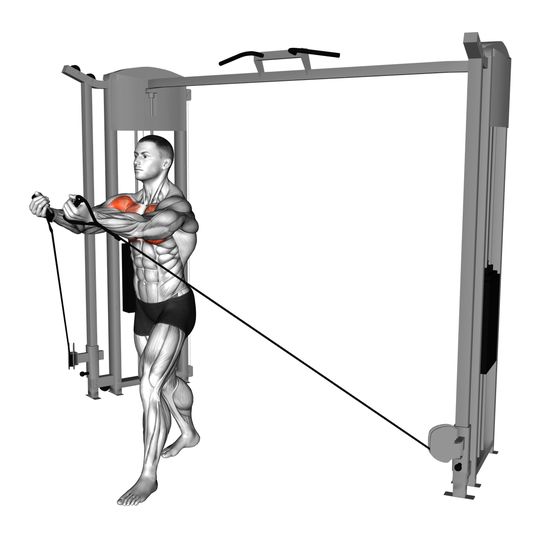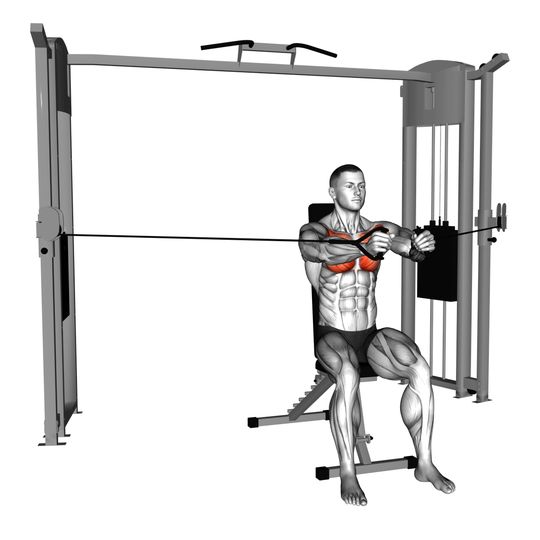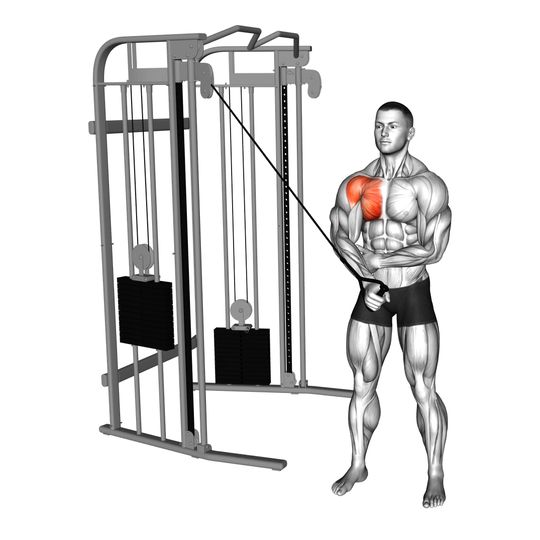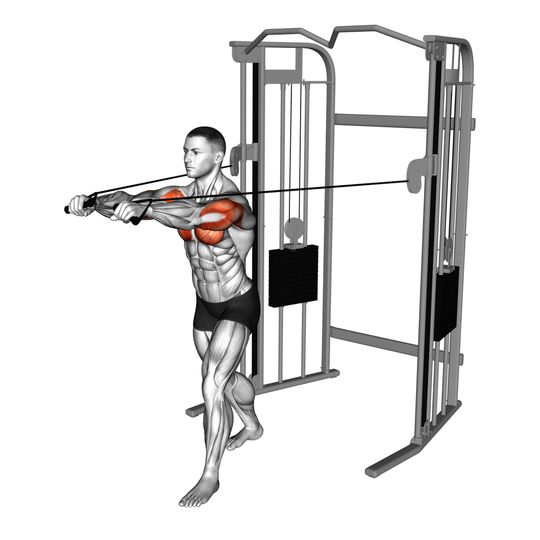


Stand between two cable pulleys and draw the handles together in front of your chest, using the pectoral muscles to drive the movement.
How to do the Cable Crossover#
- Set each pulley near shoulder height and choose an appropriate weight.
- Grab a handle in each hand with palms facing forward and take a short step forward into a staggered stance to create chest tension.
- Keep a small bend in your elbows and sweep the handles inward in a controlled arc until your hands meet in front of your chest.
- Pause briefly and contract your chest, then slowly reverse the motion to return to the start while maintaining tension.
- Repeat for the desired number of repetitions while keeping a stable torso and steady tempo.
Muscles worked#
The cable crossover is a chest isolation exercise. The pecs (pectoralis major) pull the arms across the body in a wide arc, which is the one job the chest does that a press cannot fully train, because a press stops when the hands are shoulder width apart. Bringing the handles all the way together and even past each other loads the pecs in their most shortened position, and setting the pulleys high, at chest height, or low shifts the emphasis between the lower, middle, and upper fibres.
The front delts help bring the arms forward, particularly with a low-to-high path, and the biceps work isometrically to keep the elbows slightly bent. The serratus anterior and abs stabilise the torso against the pull of the cables from behind. The triceps should barely be involved; if the elbows are straightening as the hands come together, the movement has become a press.
- Primary: Chest (Pectoralis Major)
- Secondary: Front delts (Anterior Deltoid)
Common mistakes#
- Using the arms to pull instead of initiating from the chest.
- Straightening or locking the elbows during the movement.
- Leaning back or using momentum to swing the handles together.
- Allowing the shoulders to shrug or roll forward, losing chest engagement.
Cannot do this one today?#
Machine taken, gym closed, or the movement just not agreeing with you? Here is what to run instead, and what each substitute changes.
9 best cable crossover alternatives →
Cable Crossover vs other exercises#
Head-to-head breakdowns of muscles worked, loading, joint stress, and which one to pick for your goal.
Why it works#
Cables keep tension on the chest through the whole arc. A dumbbell fly is heavy at the bottom and almost weightless at the top, while a cable pulls at a consistent angle so the pecs are still working hard when the hands meet. That constant tension and the ability to squeeze the arms across the midline is what makes the crossover such an effective finishing movement.
The adjustable pulleys also let you target what you need. High pulleys pulling down work the lower and sternal chest, mid-height pulleys train the middle, and low pulleys sweeping up target the upper chest that many lifters struggle to develop. All of this at loads that are easy on the shoulders after heavy pressing.
Sets, reps and setup#
Three or four sets of 12-15 reps with 60-90 seconds of rest, once or twice a week, usually after your pressing work. Pause for a second with the hands together and take two to three seconds to open the arms. This is a moderate-load exercise; going heavy just turns it into a press.
- Setup
- Set the pulleys at or slightly above shoulder height, take a handle in each hand, and step forward into a staggered stance until you feel a stretch across the chest with the arms open and elbows slightly bent. Lean slightly forward, keep the chest up, and sweep the hands together in a downward arc to finish in front of the lower chest. Open the arms slowly until the pecs are stretched.
- Progression
- Add a plate when you can do 15 reps with a full squeeze on every rep. If the shoulders roll forward or the elbows straighten, the weight is too heavy. Vary the pulley height every few weeks, and try finishing with the hands crossed over each other to extend the range.
Variations#
- Low Cable Fly Crossovers Pulleys at the bottom and the hands swept upward, which targets the upper chest and front delts.
- Incline Cable Fly Lying on an incline bench between the cables, which removes the balance demand and isolates the upper chest.
- Single Arm Cable Crossover One arm at a time, allowing a longer path across the body and extra core work to resist rotation.
- Pec Deck A machine fly with the arms supported on pads, the easiest way to take chest isolation to failure.
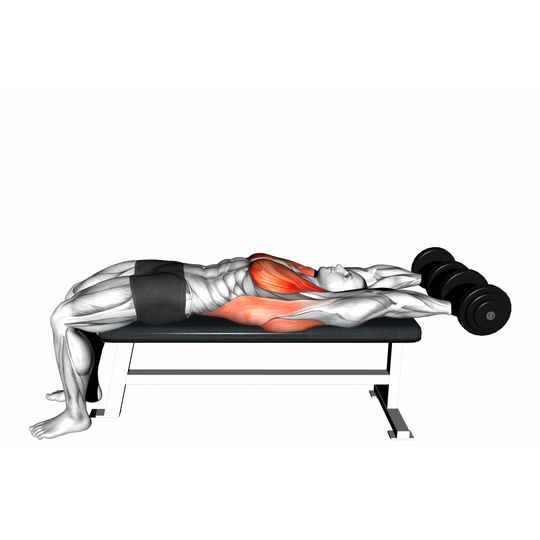
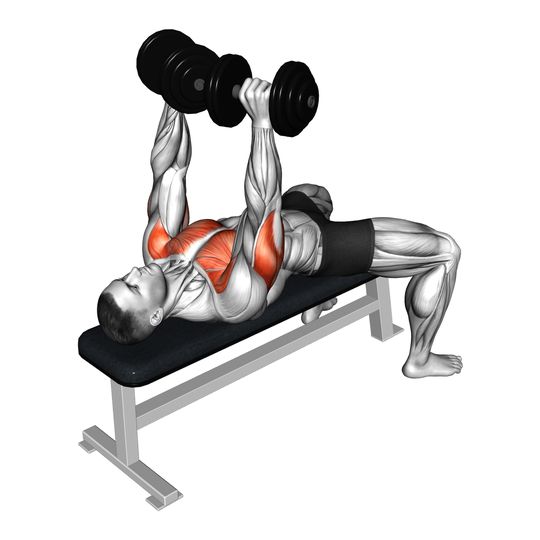
- Dumbbell Chest Fly The free-weight fly, which loads the stretched position hardest and has little tension at the top.
Cable crossover vs dumbbell fly#
The dumbbell fly loads the chest hardest at the bottom, where the arms are open and the pecs are stretched, and almost not at all at the top because gravity pulls straight down. That stretched loading is valuable, but the exercise is hard on the shoulders and easy to overdo, and the top half of each rep is wasted.
The cable crossover keeps resistance on the pecs through the entire arc and lets you squeeze the hands together and across the body, which trains the shortened position the dumbbell fly cannot. It is also more shoulder-friendly. If you only have time for one, the crossover is the more complete exercise; if you have both, use dumbbells for the stretch and cables for the squeeze.
Common questions#
What muscles does the cable crossover work?
The chest is the main target, with the front delts assisting and the biceps holding the elbow angle. Pulley height changes which part of the pecs works hardest: high pulleys hit the lower chest, low pulleys the upper chest.
What height should the cables be for a cable crossover?
At or slightly above shoulder height for the classic version that hits the middle and lower chest. Set them at the bottom and sweep upward to emphasise the upper chest. Rotating through both across your training week covers the whole muscle.
Are cable crossovers better than the bench press?
They do different jobs. The bench press builds heavy pressing strength and overall chest mass. The crossover isolates the pecs through a range the press cannot reach and is a finishing exercise, not a replacement. Do your presses first, then two or three sets of crossovers.
Should my elbows be bent during cable crossovers?
Yes, slightly, and the bend should stay the same for the whole rep. Locked elbows overload the biceps tendon and the front of the shoulder, while bending them further as you pull turns the movement into a press.
How much weight should I use for cable crossovers?
Light enough to do 12-15 controlled reps with a pause when the hands meet, which for most lifters is somewhere between 10 and 25 kg per side. If you have to lean hard or swing to get the handles together, the weight is too heavy.