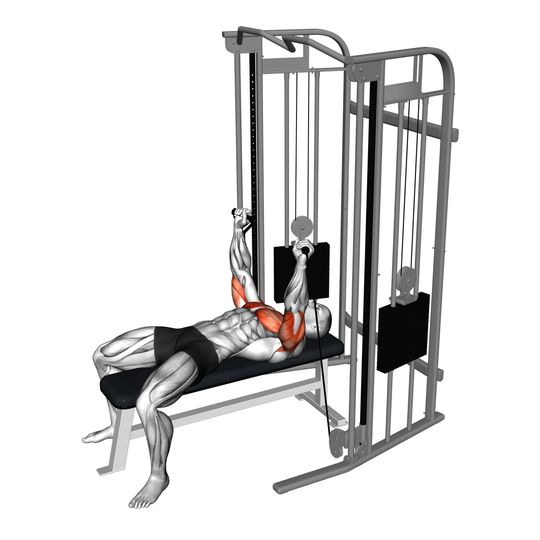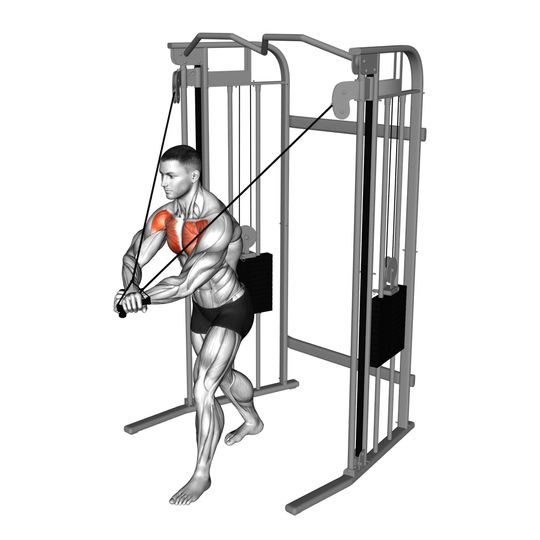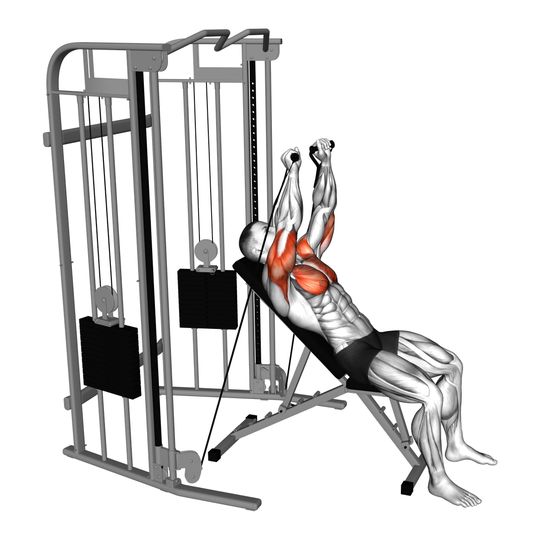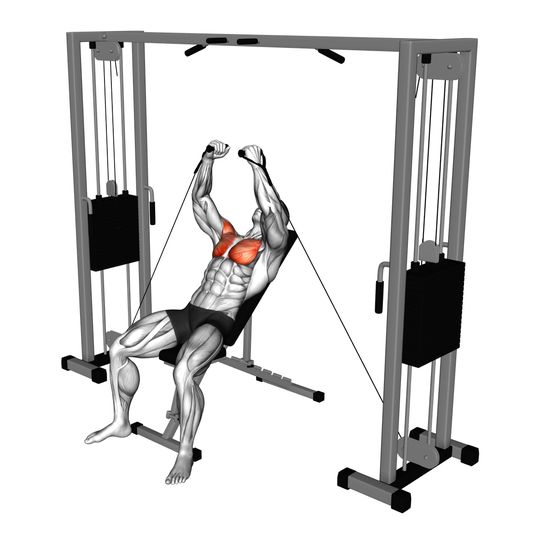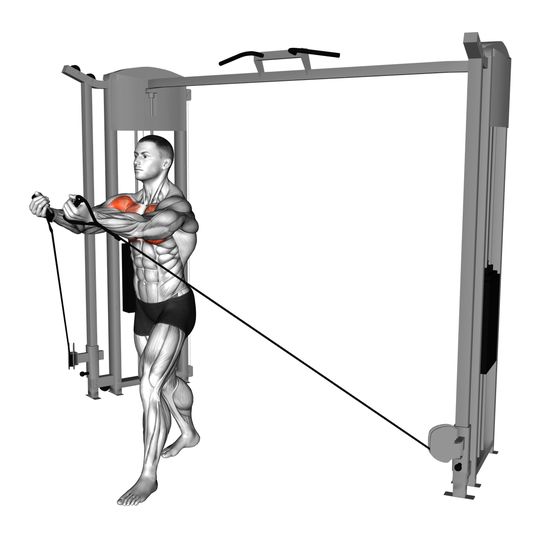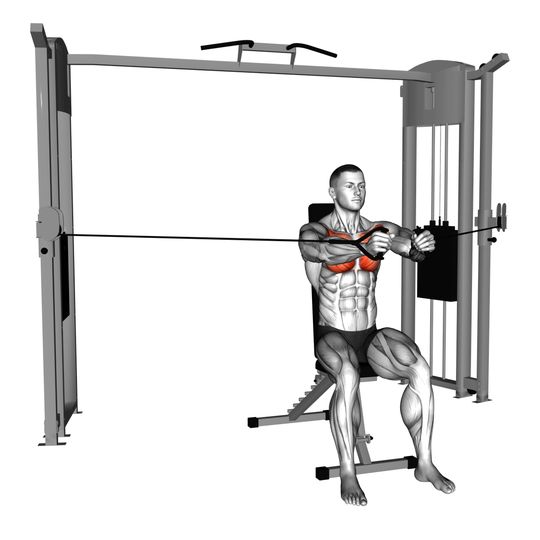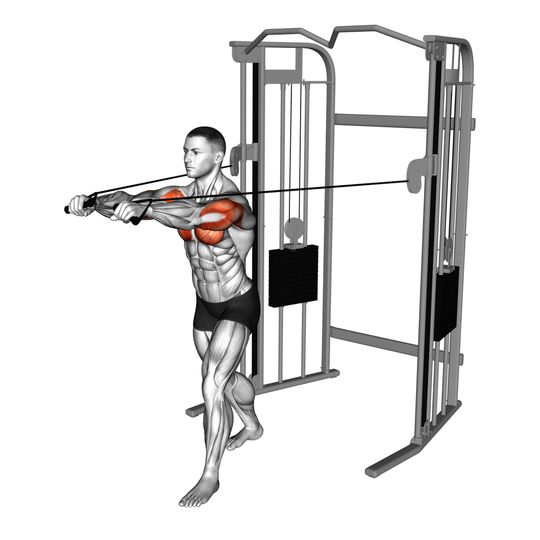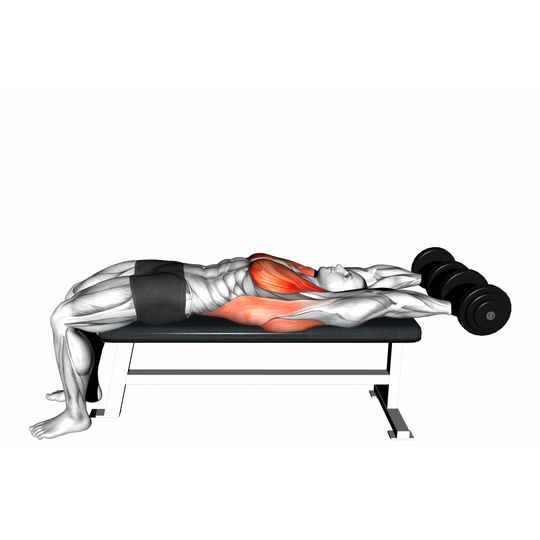


A unilateral cable fly that brings one handle across the front of the body to load the chest muscles. It emphasizes horizontal adduction of the shoulder to contract the pectorals.
How to do the Single Arm Cable Crossover#
- Set the pulley and grab a single handle, then step forward until the cable has light tension and your feet are staggered for balance.
- Brace your core and keep a small bend in the elbow for the entire movement.
- Pull the handle across your torso toward the midline, focusing on squeezing the chest.
- Hold the peak contraction briefly, then return the handle slowly to the start until tension is restored.
- Complete the set on one side before switching to the other arm.
Muscles worked#
- Primary: Chest (Pectoralis Major)
- Secondary: Front delts (Anterior Deltoid), Abs (Rectus Abdominis), Obliques (External & Internal Obliques)
Common mistakes#
- Using momentum or torso rotation to move the handle.
- Bending the elbow excessively so the movement resembles a row.
- Dropping the arm or letting the cable go slack at the start of the rep.
Why it works#
The pec's job is to bring the arm across the body, and that job only finishes past the midline. Press with two arms and your hands collide at the chest; run a two-handed crossover and the handles meet in front of you. With one arm you can keep pulling until the hand reaches the opposite hip or shoulder, which loads the last part of shoulder adduction that nothing else in a chest workout reaches.
Working one side at a time also fixes two practical problems. A stronger side can no longer quietly do more of the work, and your free hand is available to hold the frame — so you can brace properly, keep the torso from twisting, and push the set much closer to failure than you would standing unsupported with two handles.
Sets, reps and setup#
Three to four sets of 10-15 reps per side with 45-60 seconds between sides. This belongs at the end of a chest session, after your pressing, where the goal is tension and range rather than load.
- Setup
- Pulley at chest height for a straight line across, slightly higher if you want to finish low, staggered stance with a small forward lean. Fix a soft bend in the elbow and hold it, then sweep the handle across your body and control the return until you feel the chest stretch.
- Progression
- Earn 15 reps on every set before adding a plate. When the load starts breaking your position, add a one to two second squeeze at the crossover point instead — this movement is easy to overload and hard to overload usefully.
Variations#
- Cable Crossover Both arms at once. Faster to get through and easier to balance, but the hands meet in front of the chest.
- Low Cable Fly Crossovers An upward line from low pulleys, which biases the upper chest fibres.
- Seated Chest Flys (Cable) Sitting removes the balance element, so nothing but the chest limits the set.
- Chest Fly (Dumbbell) Loads the stretch at the bottom well, but gives almost nothing at the top where the arms come together.
- Pec Deck (Machine) A fixed path with your back supported — the easiest fly to take to genuine failure.
Single arm cable crossover vs two arm cable crossover#
One arm gives you more range. The hand travels past the midline to the opposite hip, so the pec finishes its full adduction, and holding the frame with your free hand means your balance never ends the set before your chest does.
Two arms are faster and feel more symmetrical, which matters when a chest session is already long. Use the two-handed version as your standard fly and the single-arm version when you want the extra range, or when you know one side is lagging.
Common questions#
What muscles does the single arm cable crossover work?
The chest is the target, particularly through the crossover past the midline. The front delt assists, and the abs and obliques work to stop the cable rotating your torso.
What pulley height should I use?
Chest height for a straight line across the body, high for a downward path that emphasises the lower chest, and low for an upward path that emphasises the upper chest. Rotating through all three over a training block is a reasonable approach.
How many sets and reps should I do?
Three to four sets of 10-15 reps per side, taken close to failure. It is a finisher, so control the eccentric rather than chasing weight on the stack.
Is the single arm version better than using both arms?
It is better at the end of the range, because your hand can cross the midline instead of meeting the other handle. It also takes twice as long. Most lifters use both, picking the single-arm version when range or a side-to-side difference is the priority.