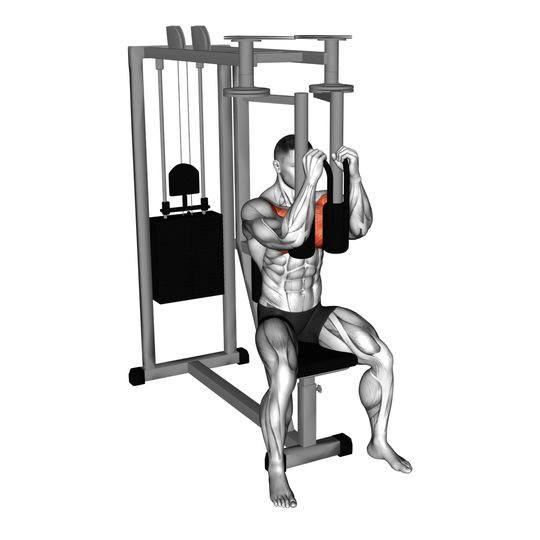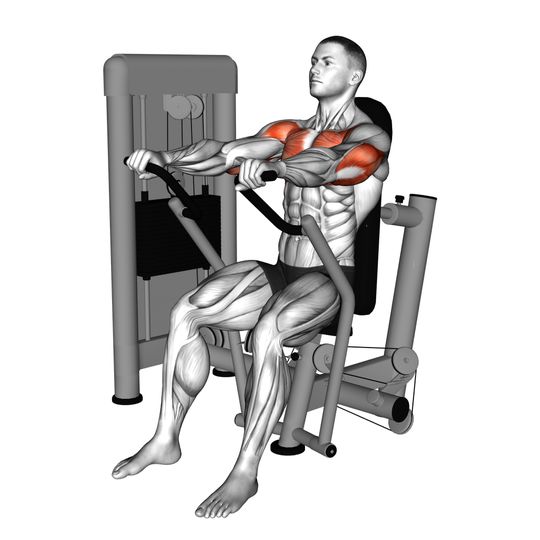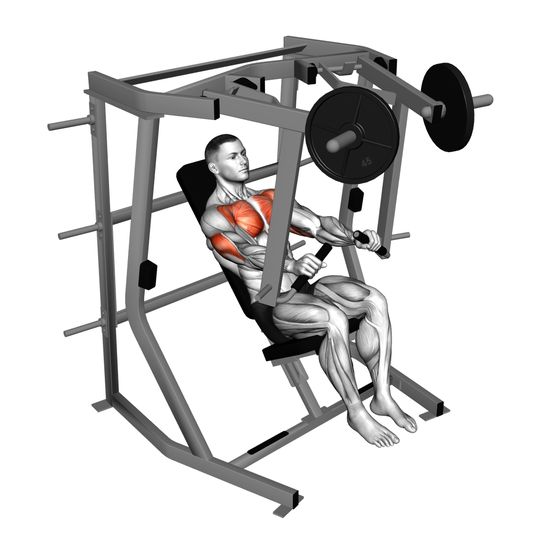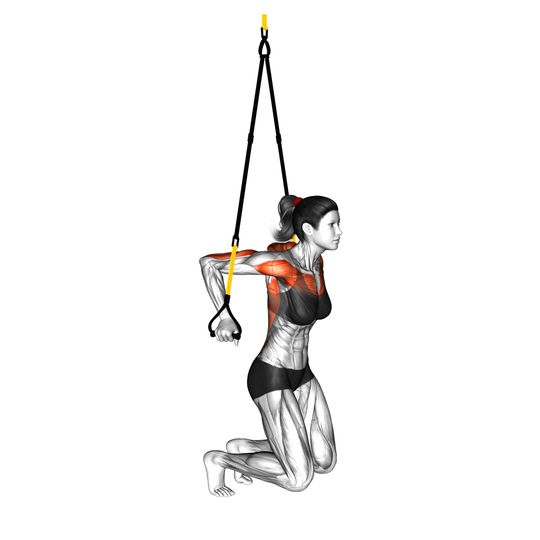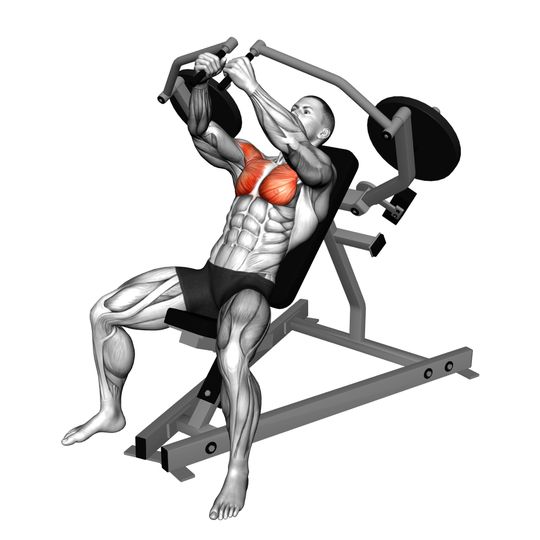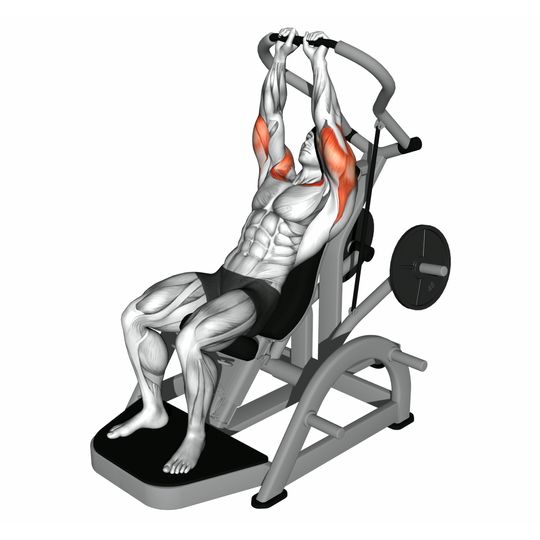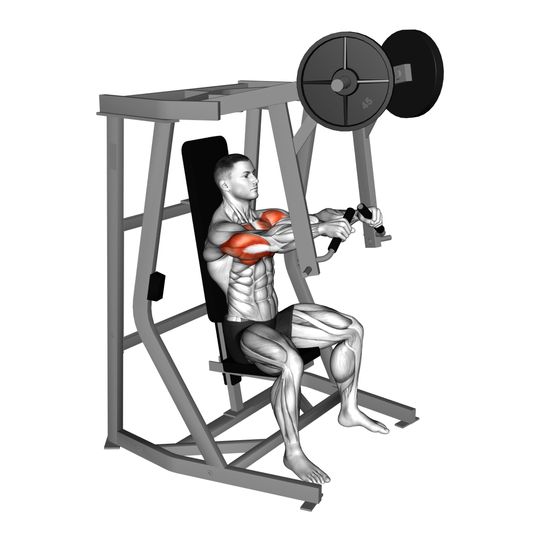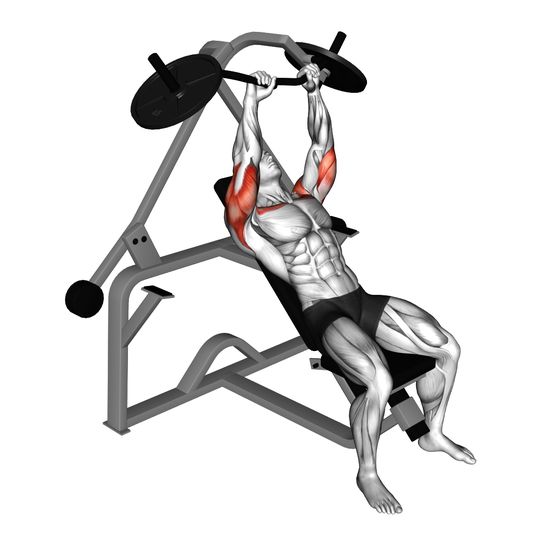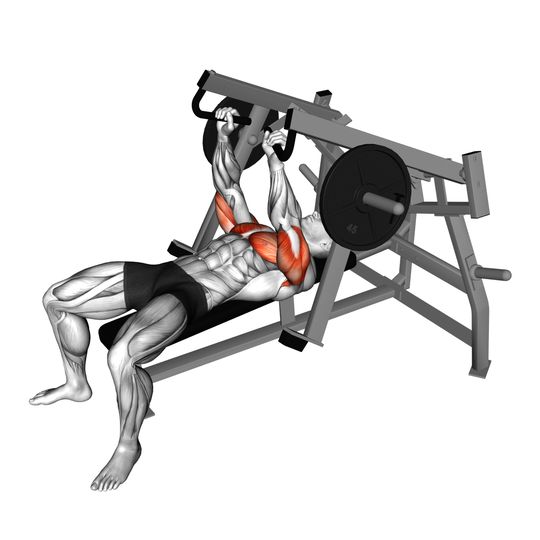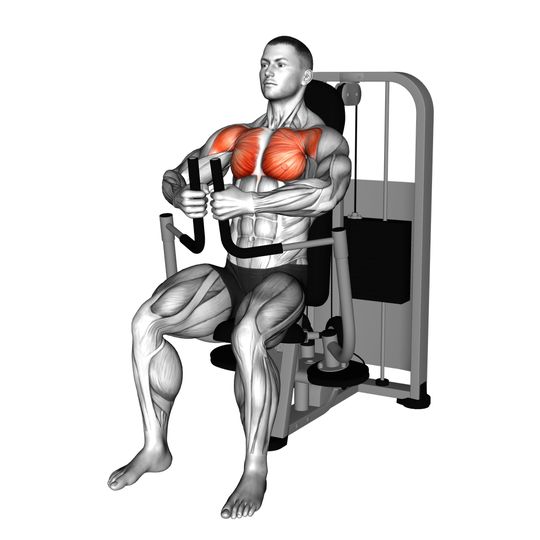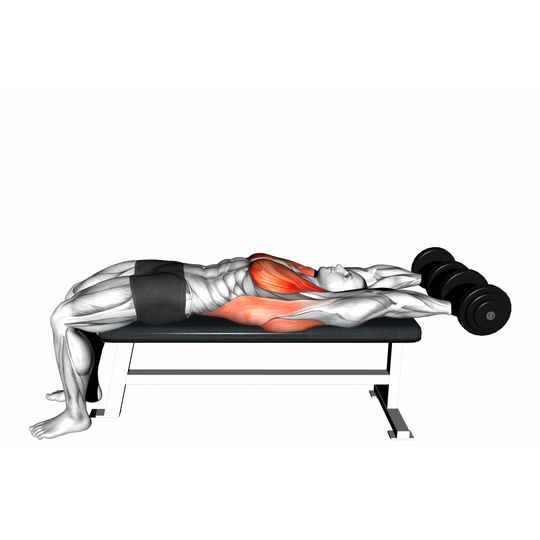


A seated machine chest fly moves the arms in a horizontal adduction to work the pectoralis major. It isolates the chest by guiding the movement on a lever-based machine.
How to do the Machine Chest Fly#
- Adjust the seat so the handles sit roughly at mid-chest height and select an appropriate weight.
- Sit with your back against the pad, feet flat, and grasp the handles with a light, secure grip.
- Start with your arms open and elbows slightly bent, keeping your shoulders down and chest tall.
- Exhale and bring the handles together in a smooth arc, focusing on contracting the chest while maintaining the elbow angle.
- Inhale and return the handles slowly to the start position under control until you feel a gentle stretch in the chest.
Muscles worked#
The machine chest fly trains the pectoralis major through horizontal adduction, which is the chest's main job: bringing the upper arm across the body. Both the upper and lower portions of the pec contribute, with the sternal head doing most of the work when the handles sit at mid-chest height. The muscle is loaded at its longest in the open position and squeezed hardest as the handles meet in front of you.
The front delts assist in the first part of the arc, and the biceps work isometrically to keep the elbows from collapsing. Unlike a press, the triceps do almost nothing because the elbow angle never changes. That is why the fly feels different from a bench press: there is no arm fatigue to hide behind, and the chest is the only thing that can finish the set.
- Primary: Chest (Pectoralis Major)
- Secondary: Front delts (Anterior Deltoid)
Common mistakes#
- Using too much weight and jerking the handles instead of moving smoothly.
- Locking or fully straightening the elbows during the motion.
- Shrugging or letting the shoulders roll forward.
- Rushing the return and failing to control the eccentric phase.
Why it works#
On a bench press the triceps and shoulders decide when the set ends, and the chest often has more left to give. The fly removes them. With the elbows fixed and the machine guiding the arc, the pecs get taken to genuine failure with none of the wrist, shoulder or stability concerns of dumbbell flys. That makes it the most reliable way to add chest volume after your heavy pressing is done.
The machine also loads the chest hardest in the squeezed position, where dumbbells provide almost no resistance. Pausing with the handles together, or even crossing them slightly, gives the inner and lower fibres of the pec a contraction they rarely get from pressing. It is equally useful as a warm-up to fill the chest with blood before heavy sets.
Sets, reps and setup#
Three to four sets of 10-15 reps with 60-90 seconds of rest, once or twice a week, placed after your pressing. A one-second squeeze with the handles together on every rep is not optional; it is where most of the value lives.
- Setup
- Adjust the seat so the handles line up with the middle of your chest and the pivot points sit at shoulder height. Sit back with the chest up, shoulders down, and a slight bend in the elbows. Bring the handles together in a smooth arc, hold, then open until you feel a stretch across the chest without the shoulders rolling forward.
- Progression
- Add reps to 15, then move up one plate and return to 10. If the shoulders start rolling forward at the stretch or the elbows bend more to shorten the lever, the load is too heavy. A three-second eccentric is a better next step than more weight.
Variations#
- Pec Deck Forearms on pads instead of hands on handles, which takes the biceps out and suits lifters with elbow issues.
- Cable Crossover Free arc from high pulleys, letting you adjust the angle and cross the hands for a longer squeeze.
- Dumbbell Chest Fly Loads the stretch hard but gives almost no resistance at the top, the opposite profile to the machine.
- Machine Incline Chest Fly Handles start lower and finish higher, shifting emphasis toward the upper chest.
- Machine Chest Press The pressing counterpart, bringing the triceps and shoulders back in for heavier loads.
Machine chest fly vs dumbbell fly#
The dumbbell fly loads the chest most in the stretched position at the bottom and almost not at all at the top, where the weights sit over the shoulders. That stretch is useful, but it comes with a real shoulder risk when the dumbbells get heavy and the arms are wide.
The machine reverses the profile: resistance is steady across the arc and strongest in the squeeze. It is safer, easier to progress and better for taking a set to failure. If you want stretch-loaded work, the dumbbell version has a place; for most lifters the machine is the more productive fly.
Common questions#
What muscles does the machine chest fly work?
The pectoralis major does nearly all of the work, bringing the arms together across the body. The front delts assist early in the arc and the biceps hold the elbow angle, while the triceps stay largely out of it because the elbows never straighten.
Is the machine chest fly good for building chest?
Yes, particularly as a second chest exercise after pressing. It isolates the pecs, loads them hardest in the squeezed position and allows a safe push to failure. On its own it lacks the heavy loading a press provides, so pair it with a bench or machine press.
How should I set the seat on a chest fly machine?
So the handles are level with the middle of your chest and the machine's pivot points sit roughly at shoulder height. If the handles sit too high you will feel it in the front delts; too low and the range at the top gets cut short.
Should my arms be straight or bent on a chest fly?
Slightly bent, around 10-20 degrees, and held there for the whole rep. Straight arms put unnecessary strain on the elbow and shoulder; bending more as the set goes on shortens the lever and is a sign the weight is too heavy.
Chest fly or pec deck: what is the difference?
A pec deck puts your forearms against pads with the elbows bent at 90 degrees, so the biceps and grip are removed and the movement is pure shoulder adduction. The handle-based chest fly uses a straighter arm and longer lever. Both train the same muscle; use whichever your gym has and your elbows tolerate.