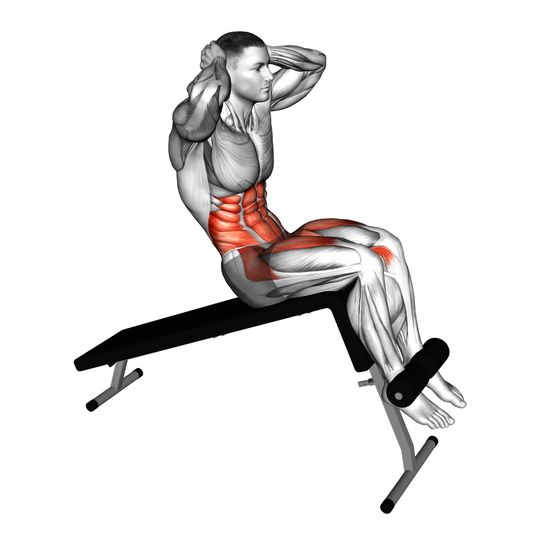


A decline crunch is a short trunk-flexion performed on a declined bench that mainly works the abdominal muscles.
How to do the Decline Crunch#
- Lie on a decline bench with your feet secured under the pads and knees bent; place your fingertips lightly beside your head.
- Brace your core and tilt your ribcage toward your pelvis to initiate the curl.
- Lift your shoulders about 4–6 inches off the bench while exhaling and hold briefly at the top.
- Lower under control back toward the bench while inhaling until your shoulders return near the start.
- Repeat for the planned number of repetitions.
Muscles worked#
The decline crunch is a rectus abdominis exercise. Because your head starts below your hips, the abs have to curl the torso against a longer lever than a floor crunch and there is real resistance from the very first inch. The upper portion of the six-pack works hardest as the ribcage folds toward the pelvis, and the whole muscle stays under tension on the way back down because gravity is pulling the shoulders past the level of the hips.
The hip flexors are involved because your feet are hooked under the pads, which is why the movement should stay a crunch rather than a sit-up: the moment the lower back leaves the bench, the iliopsoas and rectus femoris take over. The obliques fire to keep the torso straight and step in harder if you add a twist. Holding a plate on the chest asks the shoulders and grip to do a little work as well.
- Primary: Abs (Rectus Abdominis)
- Secondary: Hip flexors (Iliopsoas (Hip Flexors)), Obliques (External & Internal Obliques)
Common mistakes#
- Pulling the head forward with your hands.
- Using momentum to jerk the torso upward.
- Performing a full sit-up instead of a small crunch.
- Allowing the lower back to arch during the movement.
Why it works#
A floor crunch runs out of resistance quickly; once you can do 30 of them, adding weight is awkward and progress stalls. The decline bench solves both problems. The angle increases the load on the abs through the whole rep, and a plate held across the chest or behind the head adds resistance in small increments, so the abs can be trained with progressive overload like any other muscle.
The bench also stretches the abs slightly at the bottom, so each rep works through a longer range than a floor crunch allows. That combination of extra range, extra load and a stable setup is why the decline crunch is a staple in programs that treat the abs as a muscle to grow rather than a place to burn calories.
Sets, reps and setup#
Three to four sets of 10-15 reps with 60 seconds of rest, two or three times a week. Once bodyweight is easy, hold a plate or dumbbell on the chest. Keep the reps slow: two seconds up, a one-second hold, two seconds down.
- Setup
- Set the bench to a 20-30 degree decline, hook your feet under the pads and lie back with the knees bent. Cross your arms over your chest or hold a plate there, tuck the chin slightly, and curl the ribs toward the pelvis until the shoulder blades are well off the bench. Squeeze, then lower until the shoulders are just above the pad without relaxing the abs.
- Progression
- Work up to 15 controlled reps before adding a 5 kg plate, then build back to 15 before adding another. Steepening the bench is the other lever. If you find yourself pulling on your neck or the lower back leaving the pad, drop the weight and shorten the range until the crunch is clean again.
Variations#
- Crunch The floor version, with less resistance and a shorter range, right for beginners.
- Cable Crunch Kneeling at a high pulley with the load adjustable to the kilo, the easiest crunch to progress.
- Decline Sit Up The full range version on the same bench, which brings the hip flexors in heavily.
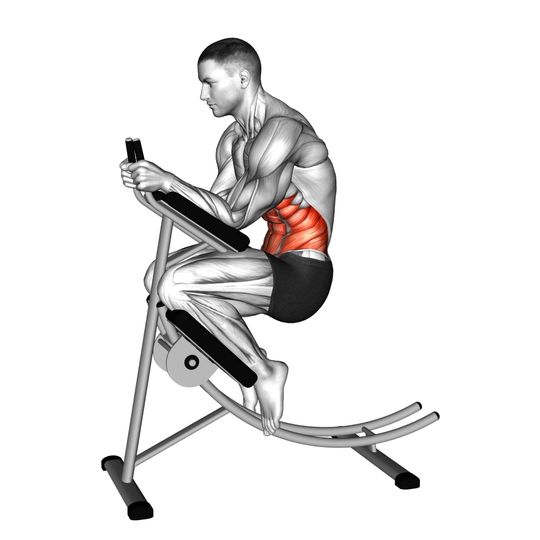
- Machine Crunch A fixed path and a weight stack for hard, safe sets to failure.
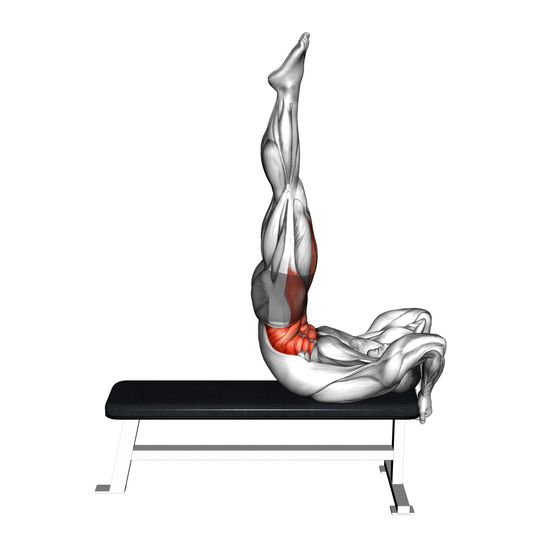
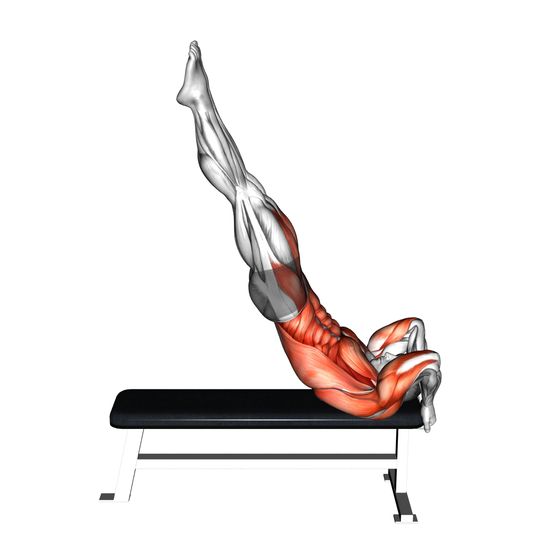
- Hanging Leg Raise Trains the abs from the bottom up by curling the pelvis toward the ribs instead of the ribs toward the pelvis.
Decline crunch vs decline sit up#
The decline crunch lifts only the shoulders and upper back off the bench, so the movement is a short spinal flexion driven by the abs. The lower back stays on the pad and the hip flexors do little more than anchor you. It is the more targeted abs exercise of the two.
The decline sit up brings the whole torso up to vertical, and once the lower back leaves the bench the hip flexors do most of the remaining work. It is harder, builds more total trunk strength and is useful as a test, but for growing the abs specifically, the crunch puts more of the effort where you want it.
Common questions#
What muscles does the decline crunch work?
The rectus abdominis, the six-pack muscle, curls the ribcage toward the pelvis against the extra resistance of the decline. The obliques stabilise the trunk and work harder if you add a twist, and the hip flexors anchor the body through the feet without taking over as long as the lower back stays on the bench.
Are decline crunches better than regular crunches?
For most people, yes. The angle increases the resistance through the whole rep, the range is slightly longer, and it is easy to add weight by holding a plate. A regular floor crunch is a good starting point, but it stops being challenging quickly.
How steep should the bench be for decline crunches?
Start at 20-30 degrees. Steeper angles increase the load but also make it harder to keep the movement a crunch rather than a sit up, and put more pull through the hip flexors. Progress by adding weight before adding angle.
How do I add weight to decline crunches?
Hold a plate flat against your chest with both arms crossed over it, or hold a dumbbell at the chest. Holding the weight behind the head is harder because the lever is longer, but it tempts you to pull on the neck. Add in 2.5-5 kg steps once 15 reps is easy.
Why does my lower back hurt during decline crunches?
Usually because the movement has become a sit up: the lower back is leaving the bench and arching as the hip flexors pull the pelvis forward. Keep the range short, tuck the pelvis slightly before you start, lower the bench angle, and stop each rep when the shoulder blades are clear of the pad.