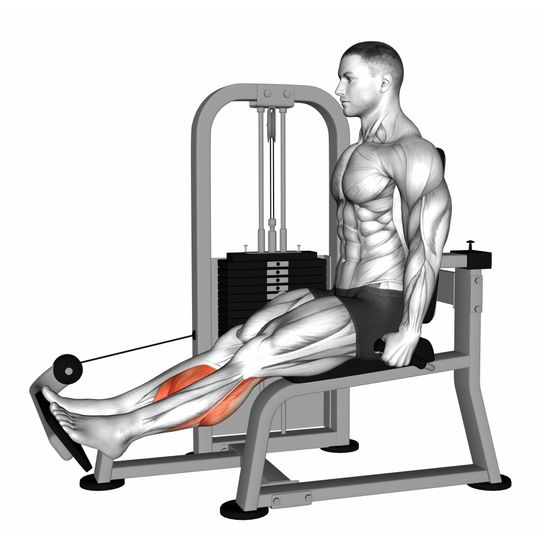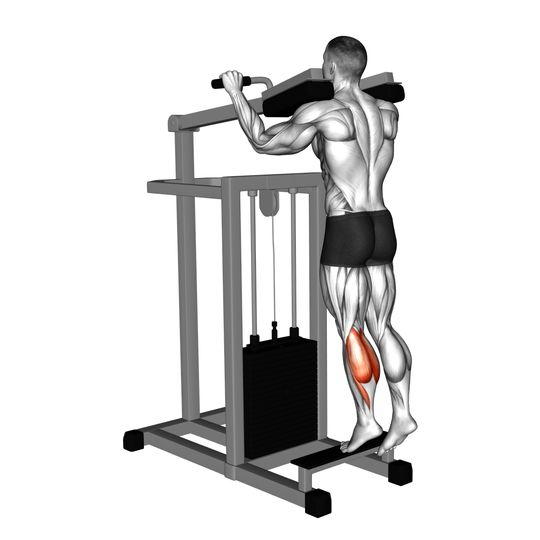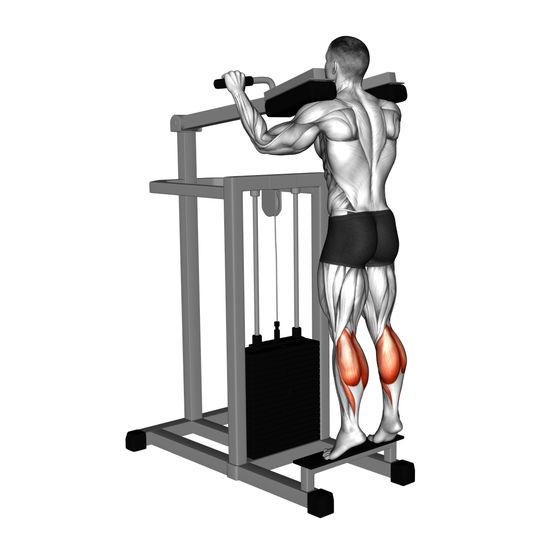


A seated leverage-machine exercise that lifts the heels by ankle plantarflexion to strengthen the calf muscles.
How to do the Seated Calf Raise#
- Sit on the machine and place your feet on the platform so only your toes contact it and your heels hang off; select one- or two-leg mode.
- Extend your legs so they are straight but do not lock your knees.
- Drive through the balls of your feet to raise your heels as high as you can, contracting the calves at the top.
- Lower your heels slowly until you feel a full stretch in the calves.
- Repeat for the prescribed number of repetitions.
Muscles worked#
The seated calf raise targets the soleus, the flat muscle that sits underneath the gastrocnemius and runs from the back of the knee to the heel. Because the knee is bent to 90 degrees, the gastrocnemius, which crosses the knee, is shortened and cannot contribute much, so the soleus is left to lift the load almost on its own. That is the whole point of the seated version: the standing calf raise trains the gastrocnemius, the seated version trains the muscle beneath it.
The gastrocnemius still works a little, and the smaller muscles of the lower leg that flex the toes and stabilise the ankle assist through the range. Nothing else is involved, which makes this one of the purest isolation exercises in the gym. The soleus is built mainly from slow-twitch fibres, so it tolerates high reps and long sets, and the burn is deep and low in the calf rather than high up under the knee.
- Primary: Calves (Gastrocnemius & Soleus)
Common mistakes#
- Locking or bending the knees during the movement.
- Bouncing at the top instead of using controlled reps.
- Not lowering the heels fully and shortening the range of motion.
- Placing the entire foot on the platform so the heels can't hang off.
Why it works#
The soleus is the bigger of the two calf muscles by volume and it is the one most lifters never train directly, because every standing calf raise, jump, and sprint favours the gastrocnemius. The seated calf raise is the only common gym exercise that isolates it, so adding it is the fastest way to add thickness to the lower calf and to the width of the leg seen from the front.
It also loads the Achilles tendon in a controlled, bent-knee position that is easy on the joint, which is why it appears in almost every Achilles rehab program. The soleus does most of the work in walking and in any slow, sustained plantar flexion, so a stronger one improves running economy and ankle stability, and the seated machine lets you train it hard with no balance demand.
Sets, reps and setup#
Three to four sets of 12-20 reps with 60-90 seconds of rest, two or three times a week. The soleus recovers quickly and responds to volume, so it can be trained more often than most muscles. Use a full two-second pause in the stretched bottom position and a one-second squeeze at the top on every rep.
- Setup
- Sit with the balls of the feet on the edge of the platform and the pad snug across the lower thighs, just above the knees. Release the safety, let the heels drop as far as they go until you feel a deep stretch, then push up through the big toe until the ankles are fully extended. Lower over two to three seconds and pause at the bottom before the next rep.
- Progression
- Add reps to twenty, then add one plate and drop back to twelve. When the weight gets awkward, slow the eccentric to four seconds, add a three-second pause at the bottom, or finish each set with partial reps from the stretched position. Rotating the toes slightly in or out is a minor tweak and not worth chasing.
Variations#
- Standing Calf Raise Performed with straight knees, which shifts the emphasis to the gastrocnemius, the visible upper part of the calf.
- Donkey Calf Raise Bent at the hips with straight knees, which stretches the gastrocnemius further and loads it through a longer range.
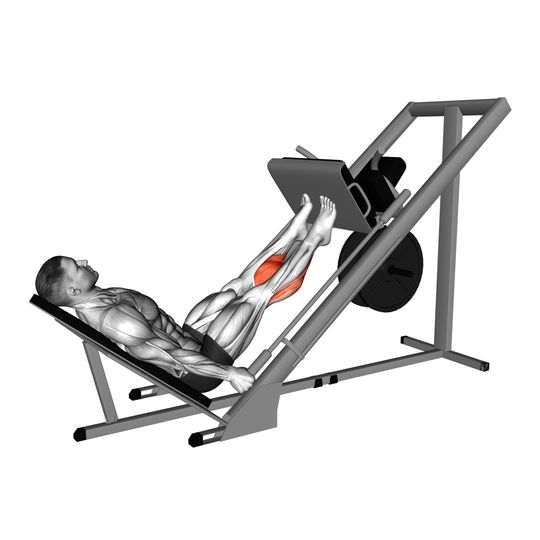
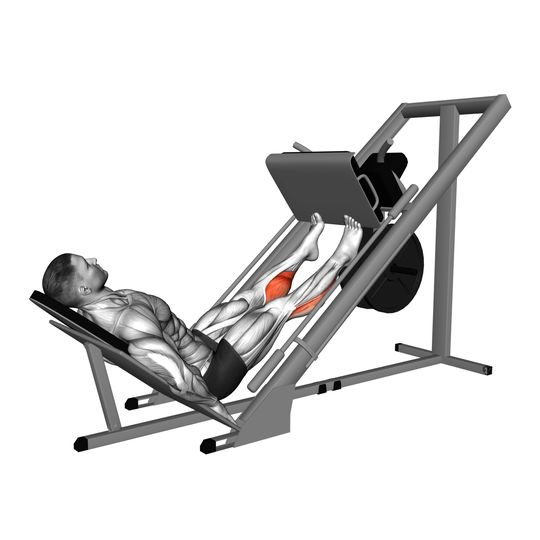
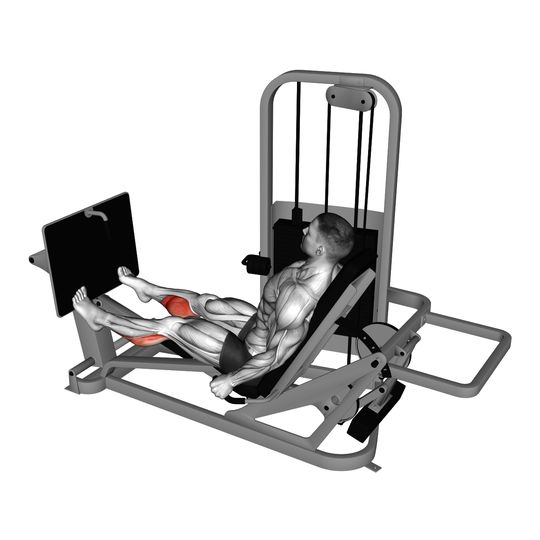
- Calf Press on Leg Press A straight-leg calf raise on the leg press platform, an easy option when there is no dedicated calf machine.
- Single Leg Calf Raise One leg at a time with bodyweight or a dumbbell, which exposes the weaker calf and needs no machine.
Seated calf raise vs standing calf raise#
The standing calf raise is done with straight knees, so both calf muscles work, and the gastrocnemius, the two-headed muscle that forms the visible bulge of the calf, does the largest share. It suits heavier loads and lower reps and gives the calf its shape from behind.
The seated calf raise bends the knee to 90 degrees, which takes most of the gastrocnemius out and leaves the soleus doing the lifting. The soleus adds thickness low on the calf and width from the front and side, and it responds better to higher reps. Neither replaces the other; a complete calf program includes both, usually the standing version first while the gastrocnemius is fresh.
Common questions#
What muscles does the seated calf raise work?
Mainly the soleus, the deep calf muscle under the gastrocnemius, because the bent knee shortens the gastrocnemius and stops it from contributing much. The smaller muscles of the lower leg that stabilise the ankle and flex the toes assist.
Is the seated or standing calf raise better?
They train different muscles, so neither is better overall. Standing raises build the gastrocnemius, the visible upper calf; seated raises build the soleus underneath it. For full calf development do both, and if you only have time for one, alternate them by session.
How many reps should I do on the seated calf raise?
Twelve to twenty per set, with a pause at the bottom and a squeeze at the top. The soleus is dominated by slow-twitch fibres and handles high reps well; sets of six to eight heavy reps tend to turn into bouncing and skip the stretch that makes the exercise work.
Why aren't my calves growing from calf raises?
Usually the reps are bounced with no pause at the bottom, the range is short, or the calves are trained once a week as an afterthought. Slow the lowering, pause for two seconds in the stretch, train them two or three times a week, and add weight when twenty controlled reps is easy.
Should the seated calf raise be done with toes in or out?
Feet pointing straight ahead is the default and works the whole soleus. Turning the toes slightly in or out changes the emphasis between the inner and outer calf a little, but the difference is small; full range and controlled tempo matter far more than foot angle.