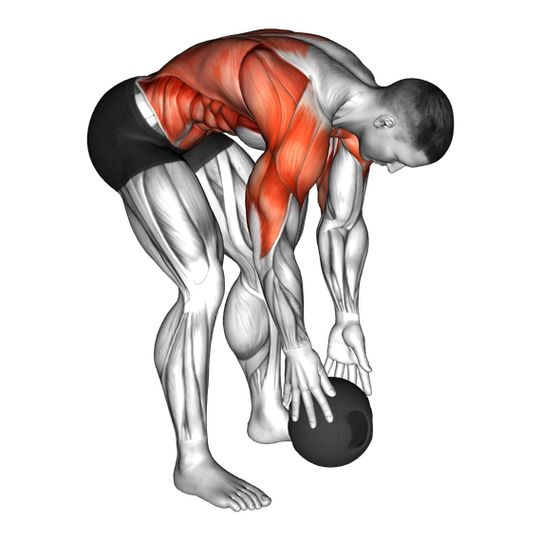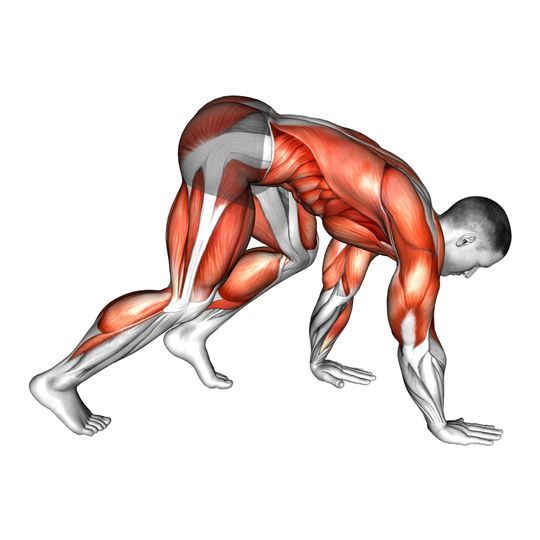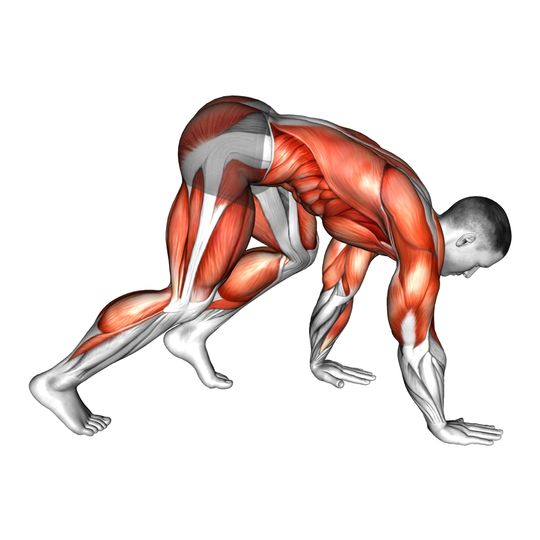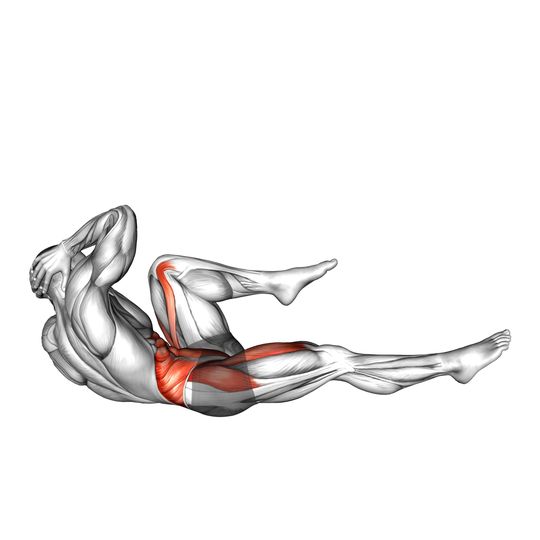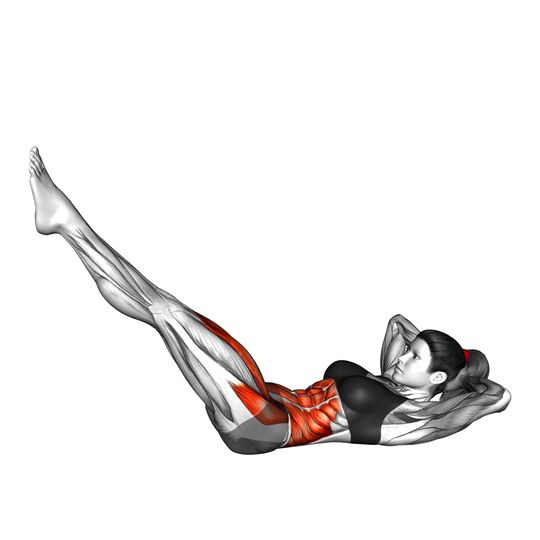


From a hands-and-knees position, reach one arm forward while extending the opposite leg back, maintaining a neutral spine to engage the core and glutes. Perform controlled repetitions, switching sides each rep or set.
How to do the Bird Dog#
- Kneel on all fours with shoulders above wrists and hips above knees and keep a neutral spine.
- Brace your core and maintain even weight distribution through hands and knees.
- Extend one arm forward and the opposite leg straight back until both align with your torso.
- Hold the top position briefly while keeping hips level and spine steady.
- Lower the arm and leg back to the starting position and repeat on the opposite side.
Muscles worked#
The bird dog is a stability exercise, so the muscles that matter are the ones holding still. Reaching one arm forward and the opposite leg back tries to rotate the pelvis and arch the lower back, and the abs, obliques and the deep transversus abdominis brace to prevent it. The erector spinae and multifidus along the spine work to keep the back in neutral, and the glute of the extended leg lifts and holds it level with the torso.
The hamstrings assist the glute, the hip flexors of the kneeling leg hold you up, and the shoulder of the supporting arm is stabilised by the rotator cuff and serratus anterior. It does not feel like a burn so much as a whole-body tightness, with the working glute and the lower back muscles fatiguing first. If you feel it mainly in the lower back, the leg is going too high and the spine is arching.
- Primary: Abs (Rectus Abdominis), Lower back (Erector Spinae), Glutes (Gluteus Maximus)
- Secondary: Obliques (External & Internal Obliques), Hamstrings (Biceps Femoris, Semitendinosus & Semimembranosus)
Common mistakes#
- Allowing the lower back to sag or overarch.
- Rotating or dropping the hips to one side.
- Failing to fully extend the arm and leg, reducing the range of motion.
- Rushing the movement and losing control during transitions.
Why it works#
It teaches the spine to stay still while the limbs move, which is the skill every squat, deadlift, row and carry depends on. Most people can brace lying flat but lose their position as soon as an arm or leg starts moving; the bird dog trains exactly that transition, at a load that lets you feel and correct the error. It is a staple in lower-back rehabilitation for that reason, and it works as well for healthy lifters as a warm-up.
It also trains the glutes and the back extensors in a way that is nearly impossible to overdo. The load is small, the spine stays neutral throughout, and it can be done every day before training or in the morning without any recovery cost. For anyone whose lower back tightens up in squats or deadlifts, a few slow sets of bird dogs beforehand often settles it.
Sets, reps and setup#
Two to three sets of 6-10 slow reps per side with a three to five second hold at the top, and 30-45 seconds of rest, three or more times a week. It suits the start of a session as a warm-up, or the end of a core circuit. Speed is the enemy here; the slower and stiller the better.
- Setup
- Kneel on all fours with the hands under the shoulders and the knees under the hips. Find neutral by gently tucking the ribs and squeezing the glutes so the lower back neither sags nor rounds. Reach one arm forward and the opposite leg back until both are level with the torso, no higher, and hold. Bring them back under control without letting the hips shift, then switch sides.
- Progression
- Lengthen the hold to ten seconds and slow the transitions. Then bring the elbow and knee together under the body between reps without touching the floor, place a light object on the lower back to expose any tilt, or lift the supporting knee slightly so only the hand and toes stay grounded. Bands around the hands and feet add load if you want it.
Variations#
- Dead Bug The same opposite-limb pattern lying on your back, which is easier to keep the spine still on.
- Plank to Push Up A prone brace with moving arms that trains the same anti-rotation control under more load.
- Shoulder Taps High plank with alternating hand taps, adding shoulder work to the anti-rotation demand.
- Glute Kickback on Floor The leg half of the bird dog on its own, isolating the glute with the hands staying down.
- Fire Hydrants Quadruped hip abduction that trains the outer glutes and pelvic control from the same position.
Bird dog vs dead bug#
The dead bug is performed on your back, which makes it the easier of the two to do well: the floor gives feedback on whether the lower back is arching, the load on the shoulders and hips is small, and beginners usually feel the abs working straight away. It is the right starting point for learning to move the limbs while keeping the ribs down.
The bird dog is performed on all fours against gravity, which brings in the back extensors, the glutes and the shoulders as well as the abs and obliques. It is harder to feel when the spine drifts and more demanding on hip and shoulder stability, so it is the better exercise once the dead bug is comfortable and the more complete one for lifters and for lower-back rehabilitation.
Common questions#
What muscles does the bird dog work?
The abs, obliques and transversus abdominis brace the trunk against rotation, the erector spinae and multifidus hold the spine neutral, and the glute and hamstrings of the extended leg lift and hold it. The rotator cuff and serratus anterior stabilise the supporting shoulder.
Is the bird dog good for lower back pain?
It is one of the most widely used exercises for exactly that. It strengthens the back extensors and the deep core with the spine in neutral and no compression, and it retrains the habit of moving the limbs without moving the back. Keep the leg at hip height, not higher, and stop if a rep hurts.
How many bird dogs should I do?
Two to three sets of 6-10 slow reps per side with a three to five second hold at the top, three or more times a week. Quality matters far more than count; a few perfectly still reps beat twenty fast ones.
How high should I lift my leg in a bird dog?
Only to the height of your torso, so the leg is a straight line with the back. Lifting it higher forces the lower back to arch and the pelvis to tilt, which is the exact fault the exercise is meant to fix.
Why do I lose balance doing bird dogs?
Usually because the weight shifts onto the kneeling leg and supporting hand instead of staying centred, or because the movement is too fast. Push the supporting hand into the floor, brace before the limbs move, and go slowly. Placing the extended arm slightly wider also helps at first.