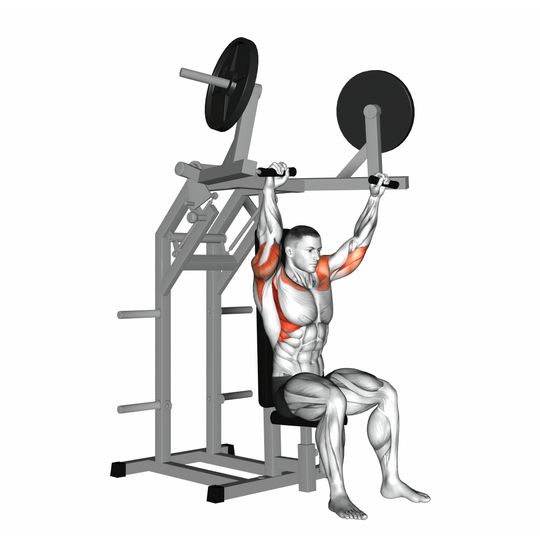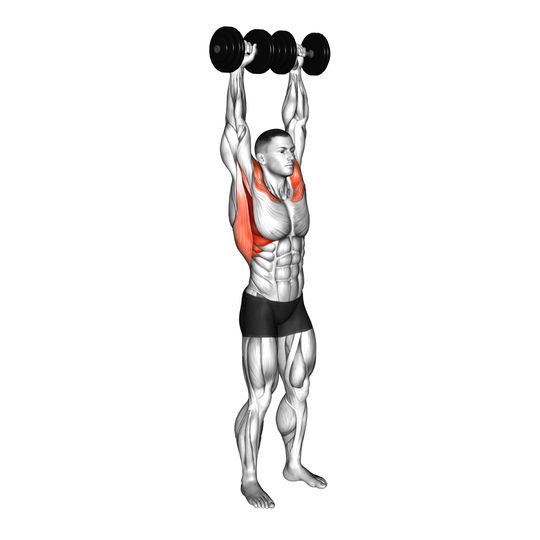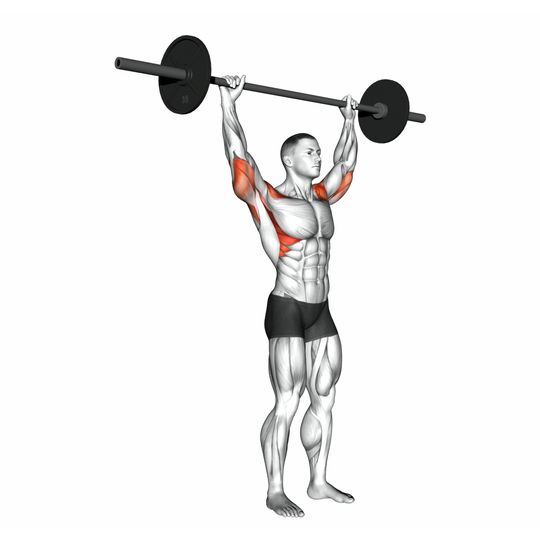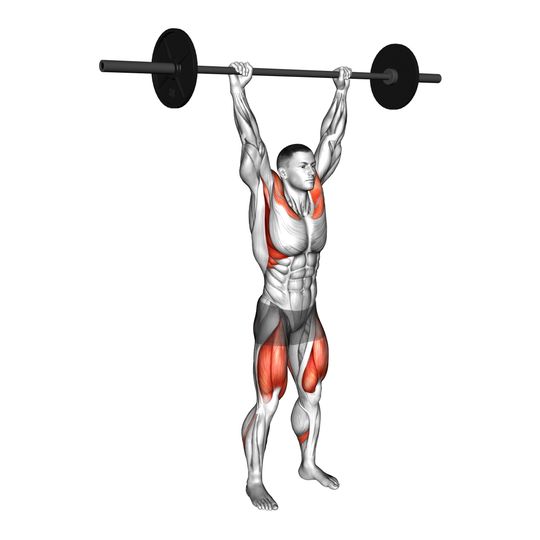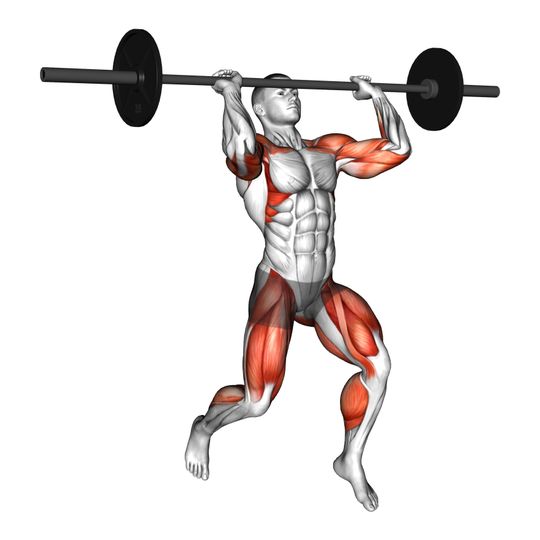


A seated pressing movement performed on a leverage machine that drives the handles upward to extend the arms and primarily works the shoulder (deltoid) muscles.
How to do the Seated Machine Shoulder Press#
- Sit with your back against the pad and adjust the seat so the handles align with your shoulder level.
- Place your hands on the handles with palms facing forward and establish a stable, upright posture.
- Press the handles upward until your arms are extended overhead.
- Lower the handles in a controlled manner back to the starting position.
- Repeat for the planned number of repetitions.
Muscles worked#
The seated machine shoulder press trains the front and side heads of the deltoid, the muscles that lift the arm overhead. The front delt does most of the pressing, and the side delt joins in more as the handles move out and up. Because the machine fixes the path, the shoulder works through the same arc on every rep, which is exactly what makes the exercise good for feeling the delts and less good for teaching the balance a free-weight press demands.
The triceps straighten the elbows and take a growing share of the load near lockout, and the upper traps help elevate the shoulder at the top. The core and lower back have little to do, since the seat and back pad hold you in place. Expect the fatigue across the front and outside of the shoulder, with the triceps burning on the last reps of a hard set.
- Primary: Front delts (Anterior Deltoid), Side delts (Lateral Deltoid)
- Secondary: Triceps (Triceps Brachii), Traps (Trapezius)
Common mistakes#
- Setting the seat so the handles sit too high or too low relative to the shoulders.
- Using a pronounced lower-back arch to help push the weight.
- Relying on jerky momentum instead of a controlled press.
- Letting the elbows flare excessively out to the sides.
Why it works#
It lets you press heavy overhead without the stability demands of a barbell or dumbbells. That makes it the safest way for beginners to learn the pressing pattern, the easiest way to take a set of overhead pressing to failure, and the obvious choice when shoulders or lower back are tired from the free-weight version. The fixed path also means you can push the last reps hard without a spotter.
Many machines let you choose between a neutral and a pronated grip and let you adjust the seat so the handles start at shoulder height, which puts the range where the delts work hardest and removes the awkward bottom portion of a dumbbell press. For lifters whose shoulders dislike barbell pressing, the machine is often the version that keeps overhead work in the program.
Sets, reps and setup#
Three to four sets of 8-12 reps, once or twice a week. Sets of 6-8 with a heavier stack are fine on a strength day; sets of 15-20 work as a finisher after lateral raises. It sits naturally after a free-weight press or as the main shoulder exercise on a machine-based day.
- Setup
- Set the seat so the handles are level with the top of your shoulders when you sit back with the spine against the pad. Grip the handles with elbows below the wrists, brace the core, and press until the arms are straight without shrugging into the ears. Lower under control over two to three seconds until the handles are back at shoulder height. Keep the head against the pad and the feet flat on the floor.
- Progression
- Increase the load when every rep of every set reaches a full lockout with the shoulders still down. Then add a pause with the handles at shoulder height, a slow lowering phase, or single-arm sets to expose a weaker side. If the machine's top range feels short, do not chase it; the delts have finished their work by the time the elbows are nearly straight.
Variations#
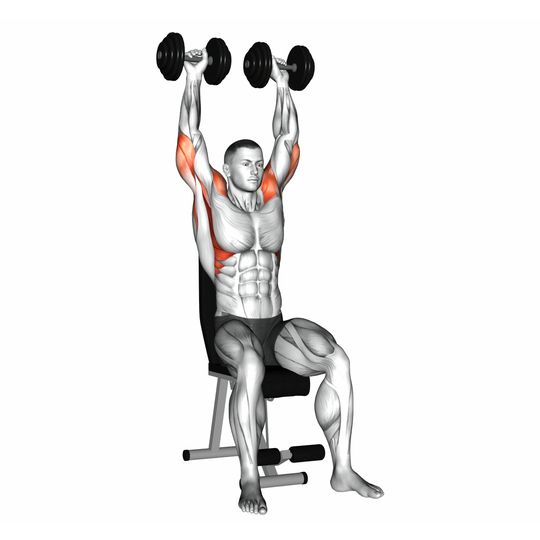
- Shoulder Press (Dumbbell) The free-weight version that adds balance and a longer range at the bottom.
- Overhead Press (Barbell) The standing barbell press, the strength standard for shoulders and a full-body stability test.
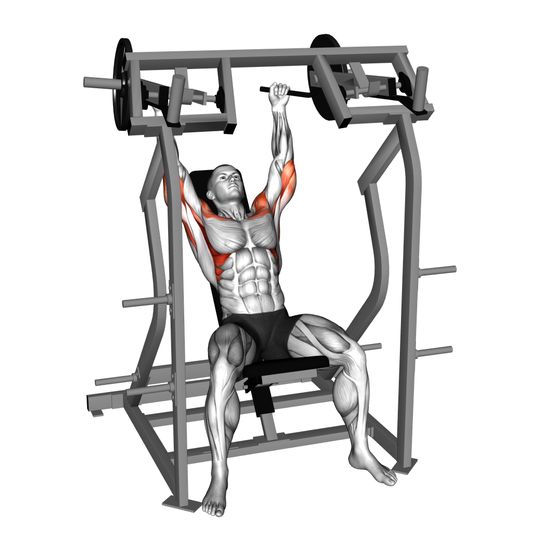
- Shoulder Press (Plate Loaded) A lever machine loaded with plates rather than a pin stack, with independent arms on most models.
- Overhead Press (Smith Machine) A barbell on fixed rails, a middle ground between the machine and the free bar.
- Arnold Press (Dumbbell) A rotating dumbbell press that brings the front delt through a longer range.
Machine shoulder press vs dumbbell shoulder press#
Both train the same muscles and both build shoulders. The dumbbells demand balance from the rotator cuff and core, allow a longer range at the bottom and let each arm find its own path, so they are the better teacher and the better choice for lifters who want their pressing to carry over to sport. The machine removes all of that, which is exactly its value: you can load more, fail safely and repeat a consistent path.
Use the dumbbells as the main press when you are fresh and the machine when you want to add volume with less fatigue, or when the free-weight version bothers a shoulder. Beginners often progress faster starting on the machine and moving to dumbbells once the pattern feels natural.
Common questions#
What muscles does the seated shoulder press machine work?
The front and side deltoids do the pressing, the triceps straighten the elbows and the upper traps assist at the top. The rear delts and core are barely involved because the machine and back pad handle stability.
Is the machine shoulder press as good as dumbbells?
For building the deltoids, yes, if the sets are equally hard. For balance, coordination and the rotator cuff, dumbbells do more. Most lifters do best using the machine for volume and the dumbbells or barbell as the main press.
Should my elbows be in front or out to the sides?
Slightly in front of the body, roughly 30-45 degrees from straight out to the side. Flaring the elbows straight out puts the shoulder in an uncomfortable position for many people; tucking them fully forward turns it into more of a chest press. Many machines offer a neutral grip that puts the elbows in a comfortable middle position automatically.
How high should I set the seat?
So the handles sit level with the top of your shoulders at the start. Too low and the bottom of the rep becomes a strained shrug; too high and you lose the part of the range where the delts work hardest. Adjust once and note the setting for next time.
Why do I feel the machine press in my triceps?
Because the triceps finish every press and take over near lockout, especially with a narrow or neutral grip. If the delts are not getting tired first, use a slightly wider grip, stop just short of full lockout, or lower the seat a notch so the range starts lower where the shoulders do more.