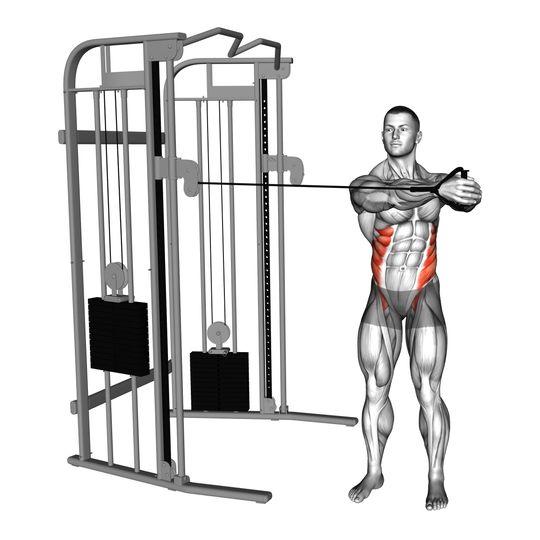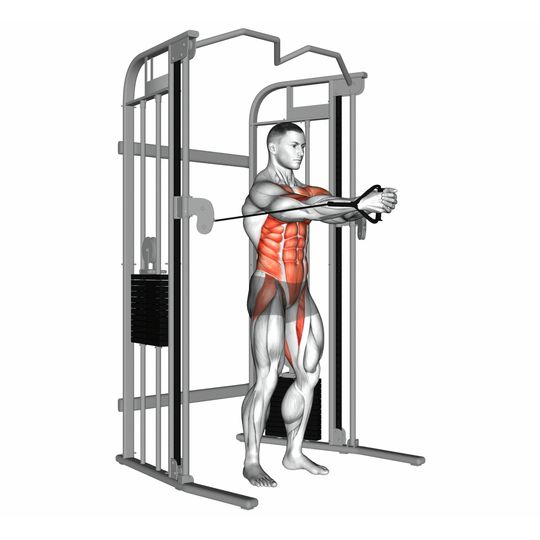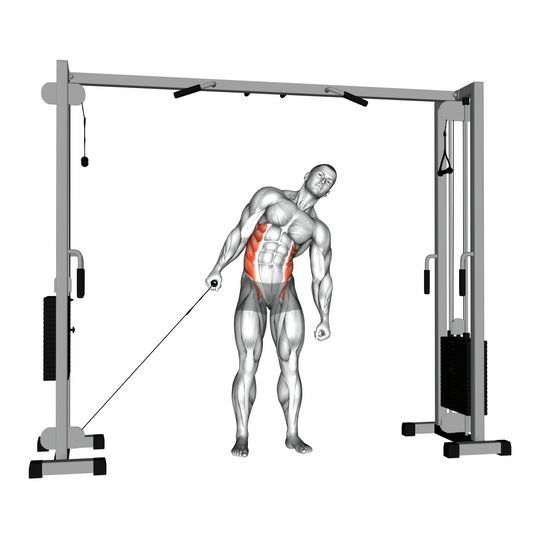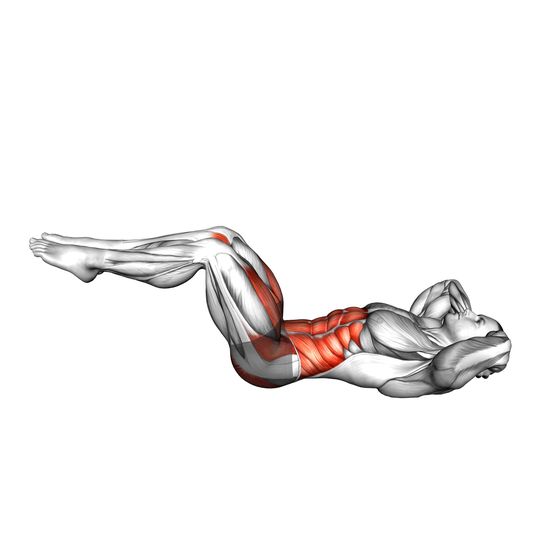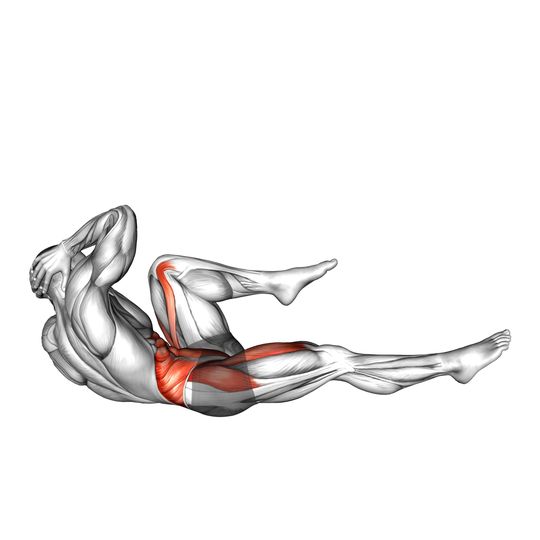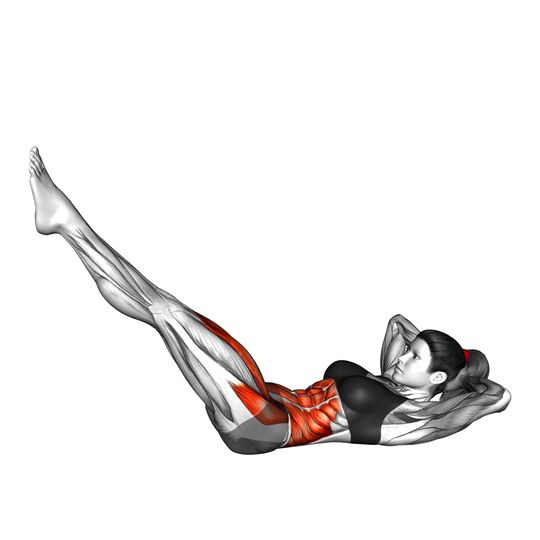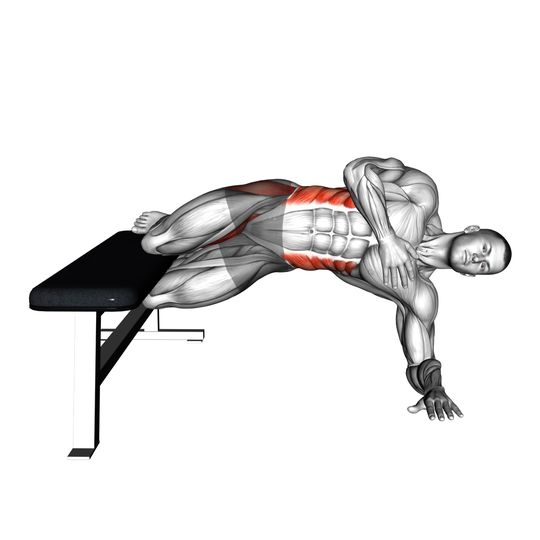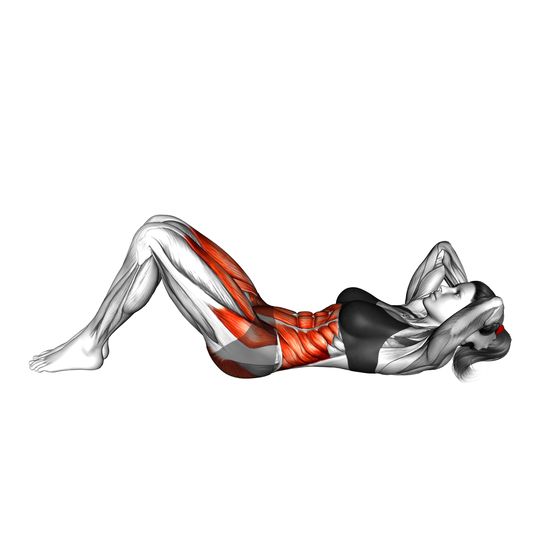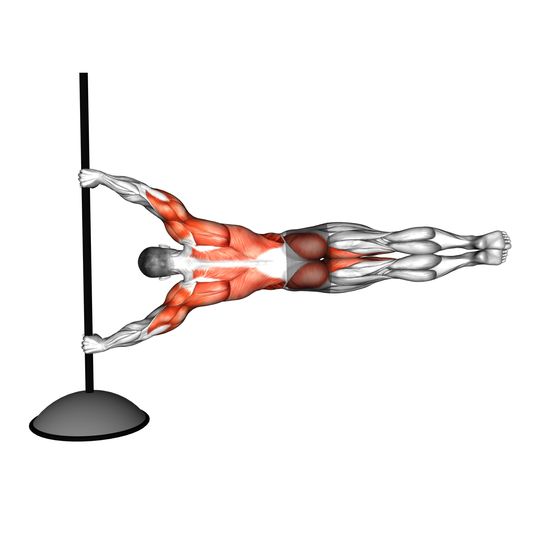


Stand side-on to a cable machine and pull a handle diagonally across your body, using rotational force to work the obliques and other core muscles. Perform the movement with control from the torso rather than the arms.
How to do the Cable Woodchopper#
- Set the pulley to a high position and grasp the handle with both hands, standing shoulder-width with knees slightly bent and feet staggered if preferred.
- Brace your core and rotate your torso while pulling the handle down and across your body in a smooth, diagonal chopping motion.
- Pivot the back foot as you drive the movement and keep your arms long, finishing near the opposite hip.
- Reverse the motion slowly to return to the start while maintaining core tension and steady breathing.
- Complete the desired reps then switch sides and repeat with the machine set on the opposite side.
Muscles worked#
The cable woodchopper is a rotational core exercise, which makes the obliques the main target. The external and internal obliques on opposite sides of the trunk work together to turn the torso against the cable, and because the pull comes from a high pulley down across the body, the abs (rectus abdominis) also flex the trunk as the handle travels toward the opposite hip. Most ab work is flexion only; this is one of the few exercises that trains the twisting that the obliques exist for.
The glutes and hips generate a large part of the power by pivoting the back foot and turning the pelvis, the lats and rear shoulder pull the handle down at the start, and the front delts and arms carry the load through the arc. The arms should stay long and mostly passive. If the biceps or shoulders are tired at the end of a set, you were pulling the cable instead of rotating your trunk.
- Primary: Obliques (External & Internal Obliques), Abs (Rectus Abdominis)
- Secondary: Front delts (Anterior Deltoid), Lats (Latissimus Dorsi), Glutes (Gluteus Maximus)
Common mistakes#
- Pulling primarily with the arms instead of rotating the torso.
- Rounding or overextending the lower back during the chop.
- Using momentum or jerking the cable rather than a controlled motion.
- Allowing the knees or hips to twist improperly instead of pivoting the feet.
Why it works#
Rotational strength is the most under-trained quality in most gym programs. Every sport that involves throwing, striking, or changing direction depends on the trunk transferring force from the hips to the shoulders, and the woodchopper trains exactly that transfer with an adjustable load. Golfers, tennis players, and fighters get more from a few sets of these than from any number of crunches.
It is also a good choice for lifters whose lower backs are tired of flexion-based ab work. The movement is standing, the spine stays fairly neutral while it rotates, and the load can be light while still challenging the obliques hard. Done with control, it doubles as an anti-rotation exercise on the way back to the start.
Sets, reps and setup#
Three sets of 10-15 reps per side with 60 seconds of rest, two or three times a week. Use a moderate weight and take two to three seconds to return to the start; the controlled return trains the obliques as much as the chop. Alternate sides each set rather than doing all sets on one side first.
- Setup
- Set the pulley high and stand side-on to the machine with the feet a bit wider than shoulder width and the knees soft. Grab the handle with both hands, arms nearly straight. Rotate the torso and hips away from the machine, pivoting on the back foot as the hands travel diagonally down to the outside of the far knee. Return slowly along the same path.
- Progression
- Add a plate when 15 controlled reps per side are easy. Try the low-to-high version with the pulley at the bottom to change the angle, or a horizontal chop from a mid-height pulley. If the arms are bending and pulling, drop the weight and slow the tempo until the rotation comes from the trunk.
Variations#
- Cable Twist A horizontal rotation from a mid-height pulley that isolates the twisting component without the downward chop.
- Pallof Press The anti-rotation counterpart, holding the trunk still while the cable tries to twist it.
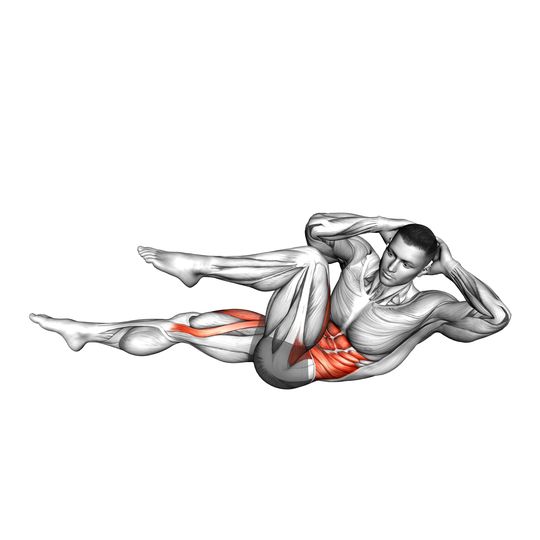
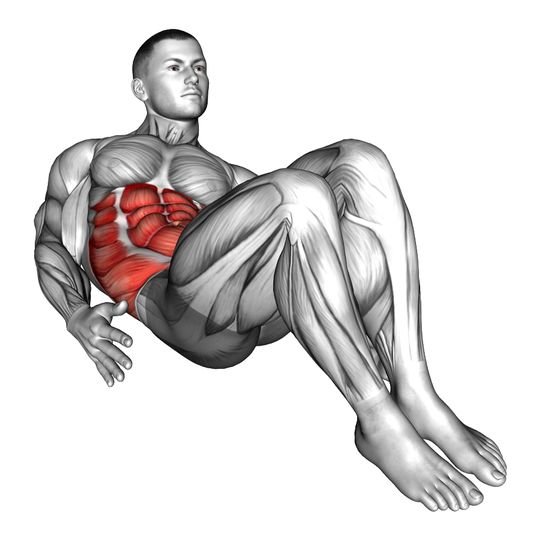
- Russian Twist A seated bodyweight or plate-loaded rotation for when there is no cable machine.
- Cable Side Bend Lateral flexion against a cable to train the obliques through a different plane.
- Cable Crunch Loaded spinal flexion for the rectus abdominis to pair with the rotational work.
Cable woodchopper vs Pallof press#
The woodchopper creates rotation, so it trains the obliques to produce force through a twisting arc. That is what carries over to swinging, throwing, and striking, and it is the choice when you want the obliques to grow and to get stronger through movement.
The Pallof press resists rotation, so it trains the same muscles to stay rigid while the cable tries to turn you. That is the quality that protects the spine under a heavy squat or deadlift and it is much easier to learn. Beginners and lifters with back issues should start with the Pallof press; most people benefit from both.
Common questions#
What muscles does the cable woodchopper work?
The obliques are the main target, with the rectus abdominis flexing the trunk as the handle comes down. The glutes and hips drive the pivot, the lats and rear shoulder start the pull, and the front delts and arms carry the handle through the arc.
Should the cable be high or low for woodchoppers?
The classic version uses a high pulley and chops down across the body, which combines rotation with flexion. A low pulley chopped upward adds an extension component and works the upper obliques and shoulders more. Both are useful, so rotate them every few weeks.
Are cable woodchoppers good for love handles?
They strengthen and build the obliques underneath, but they do not burn fat from that specific spot. The fat covering the sides of the waist comes off with a calorie deficit. Build the muscle with woodchoppers and let diet handle the rest.
How heavy should woodchoppers be?
Light enough to rotate smoothly with nearly straight arms for 10-15 reps and return under control, which for most people is somewhere between 10 and 25 kg on a standard stack. Heavy woodchoppers turn into arm pulls and lose the point.
Should I pivot my feet during a woodchopper?
Yes. Letting the back heel lift and the foot pivot allows the hips to rotate with the torso, which keeps the lower back safe and lets the glutes contribute. Keeping the feet planted forces all the rotation through the lumbar spine.