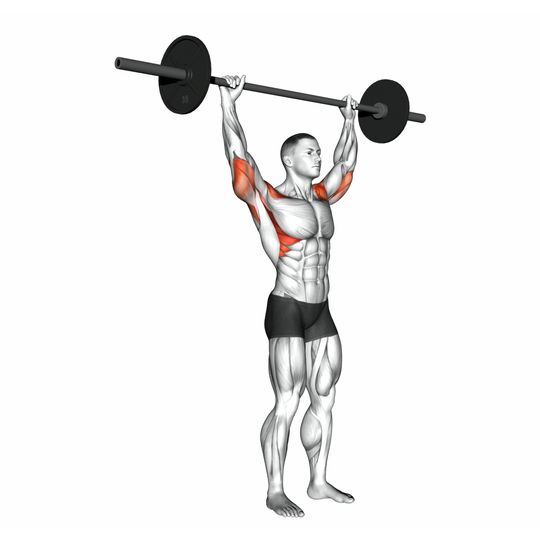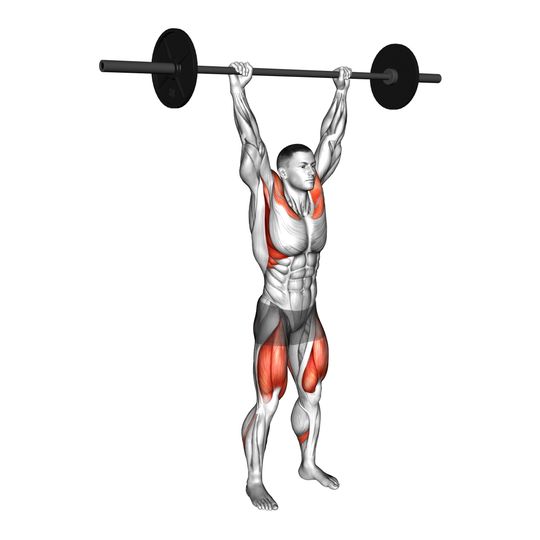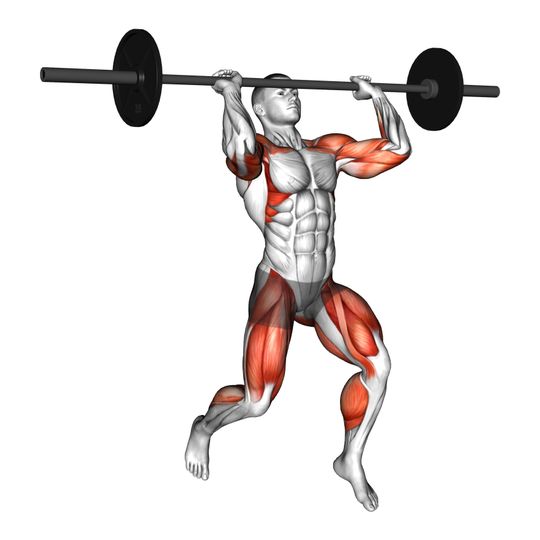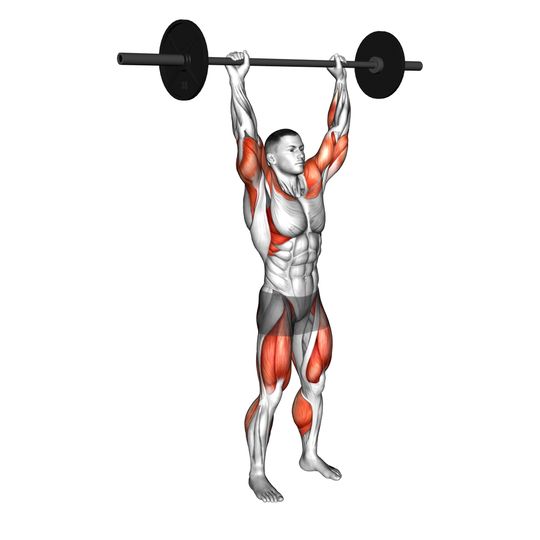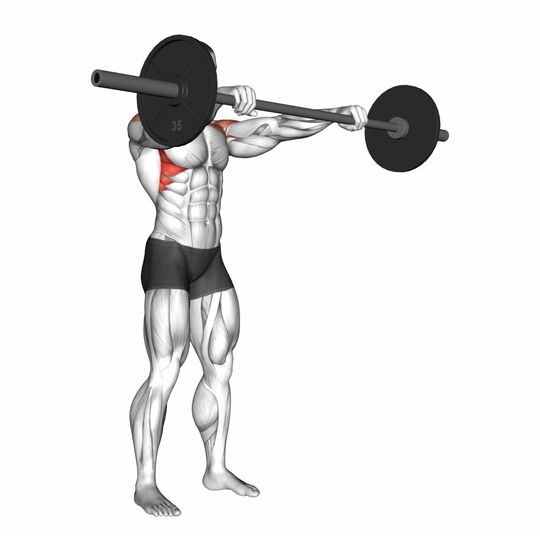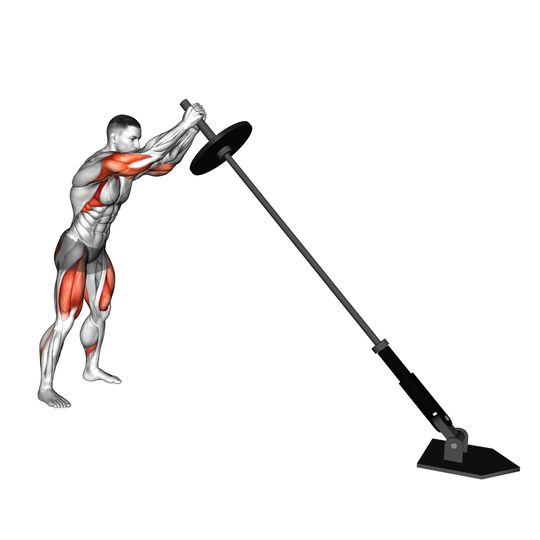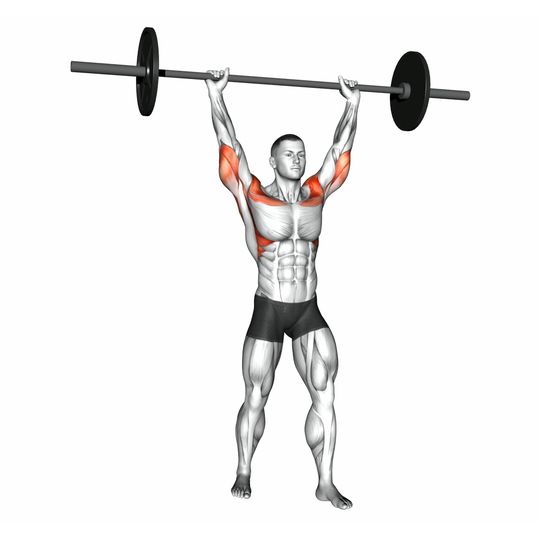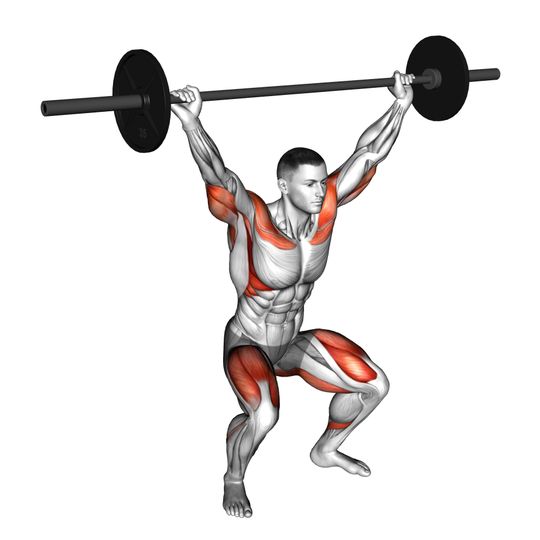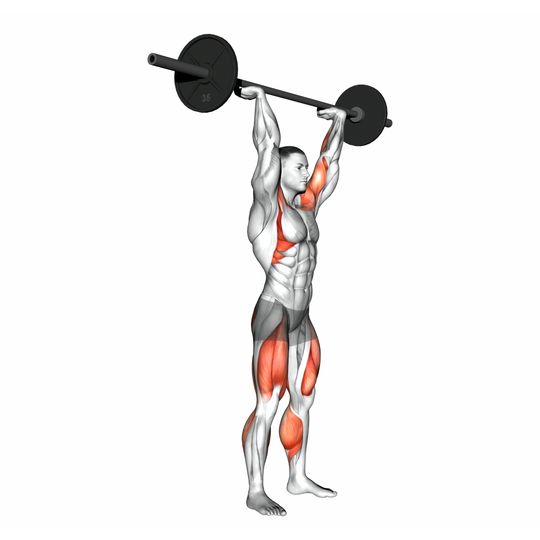


Perform a vertical press from a seated position using a barbell to work the shoulder (deltoid) muscles, with the triceps assisting. Maintain an upright torso while moving the bar overhead.
How to do the Seated Barbell Press#
- Sit tall on a military bench with your feet flat and the loaded bar set on the rack behind your head; grip the bar about shoulder-width apart.
- Lift the bar out of the rack and steady it near the front of your shoulders.
- Drive the bar straight up until your arms are nearly extended overhead.
- Lower the bar in a controlled manner to the upper-chest region.
- Breathe consistently—inhale as you lower and exhale as you press—and repeat for the desired reps.
Muscles worked#
The seated barbell press is a front delt exercise before anything else. With the bar starting at the collarbone, the anterior deltoid carries the load through the hardest part of the range, the first few inches off the chest, and the side delts take a growing share as the arms rise past the shoulders. Sitting removes leg drive, so every kilo overhead is pressed by the shoulders and arms alone.
The triceps extend the elbows and are the usual point of failure near lockout. The upper traps and serratus anterior rotate the shoulder blade upward as the bar passes the head, and the upper back holds the shoulder blades stable against the bench. The core still works, because there is a bar over your head and the spine has to stay stacked, but far less than it does standing.
- Primary: Front delts (Anterior Deltoid), Side delts (Lateral Deltoid)
- Secondary: Triceps (Triceps Brachii), Traps (Trapezius), Upper back (Rhomboids & Middle Trapezius)
Common mistakes#
- Using a grip much wider or narrower than shoulder-width.
- Allowing the bar to move forward instead of pressing in a vertical path.
- Dropping the bar quickly on the descent rather than controlling it.
How much should you overhead press?#
What the average overhead press actually is, and what counts as beginner, intermediate, advanced, or elite at your bodyweight — for men and women, in kg and lbs.
See overhead press strength standards →
Why it works#
Sitting down takes the legs and most of the lower back out of the overhead press, which forces the shoulders to do the work and removes the small knee dip that turns a strict press into a push press when the weight gets heavy. For lifters who want to train the delts specifically rather than test whole-body pressing strength, that isolation is the point.
It also lets you press safely when fatigued or when your lower back is not up to standing under load. The bench supports the trunk, the rack is right behind you, and the bar can be set down between sets without cleaning it. That makes higher volume and closer-to-failure sets practical in a way the standing press does not.
Sets, reps and setup#
Three to five sets of 5-8 reps with two to three minutes of rest as the main press on a shoulder or push day, once or twice a week. Sets of 10-12 work for size if you keep the bar path strict and the lower back off the bench.
- Setup
- Set the bench upright or one notch back, with the rack pins so the bar unracks at collarbone height with a slight arm bend. Grip just outside shoulder width, wrists stacked over the elbows, feet flat and glutes squeezed. Press the bar straight up past the face, finish with the bar over the ears, and lower under control to the top of the chest.
- Progression
- Add 2.5 kg once you complete every prescribed rep on all sets with the bar touching the collarbone each time. If the lower back arches away from the pad or the bar drifts forward, hold the weight for another week. Paused reps at the bottom for two seconds are a reliable way to build the weak point without more load.
Variations#
- Barbell Overhead Press Standing, with the core and legs involved and the option to use a little body english.
- Seated Dumbbell Shoulder Press Independent arms with a longer range and a more natural path around the face.
- Smith Machine Shoulder Press The same seated press with the balance removed, allowing heavier loads and easier failure.
- Seated Machine Shoulder Press A lever machine with a fixed arc, the most stable option for high-rep work.
- Push Press Standing with deliberate leg drive to move heavier loads, the opposite intent to sitting down.
Seated barbell press vs standing overhead press#
The standing overhead press is the bigger exercise. It trains the core, glutes and upper back as stabilisers, teaches whole-body bracing, and is the lift people mean when they talk about overhead strength. It also allows a small amount of leg and hip involvement that most lifters use without noticing.
The seated press narrows the target. Removing the legs and supporting the torso puts more of the load directly on the delts and triceps, so it is the better choice when the goal is shoulder size or when the lower back needs a break. Most lifters press more standing, and that gap is a rough measure of how much the legs were helping.
Common questions#
What muscles does the seated barbell press work?
The front delts drive the bar off the chest and the side delts join as the arms rise, with the triceps finishing the lockout. The upper traps and serratus anterior move the shoulder blades, and the upper back and core hold the trunk stable against the bench.
Is the seated barbell press better than standing?
Better for isolating the shoulders, since sitting removes leg drive and supports the lower back. The standing press is better for overall strength and core stability. Neither is wrong; choose based on whether you are training the shoulders or the whole pressing chain.
Should the bench be fully upright for a seated barbell press?
Fully upright or one notch back, around 80-85 degrees. Leaning further back turns it into a high incline press and shifts the load toward the upper chest. Keep the back flat against the pad and avoid arching to create a shelf.
How wide should my grip be for a seated shoulder press?
Just outside shoulder width, so the forearms are vertical when the bar is at the collarbone. A wider grip shortens the range but stresses the shoulders more; a narrower grip pushes the work onto the triceps. Vertical forearms at the bottom is the test.
How much should I be able to seated press?
Most lifters seated press around 85-95 percent of their standing strict press, because the legs and hips can no longer contribute. If your seated press is much lower than that, the trunk was doing more work standing than you realised, and the seated version will fix it.