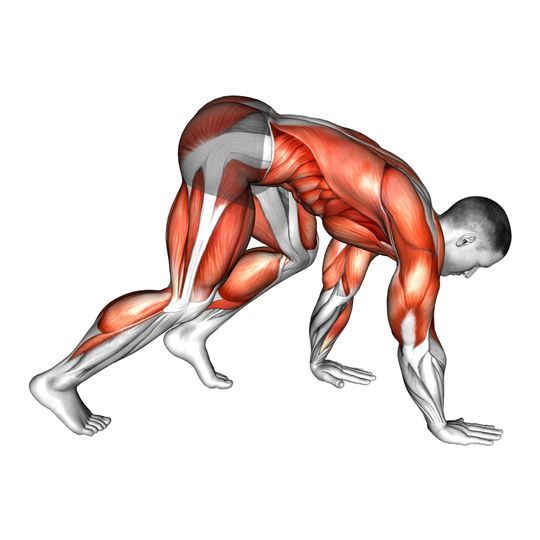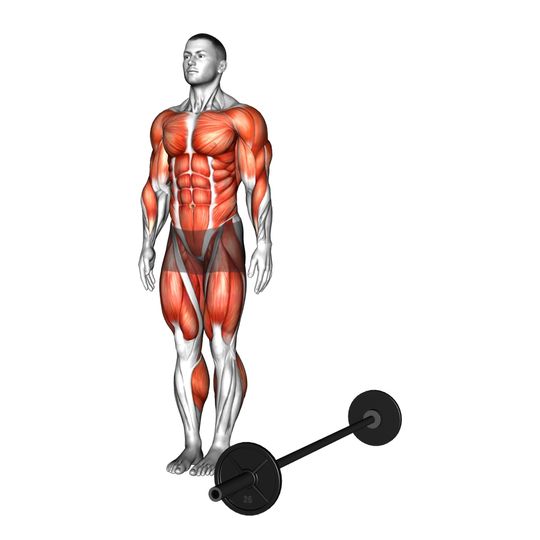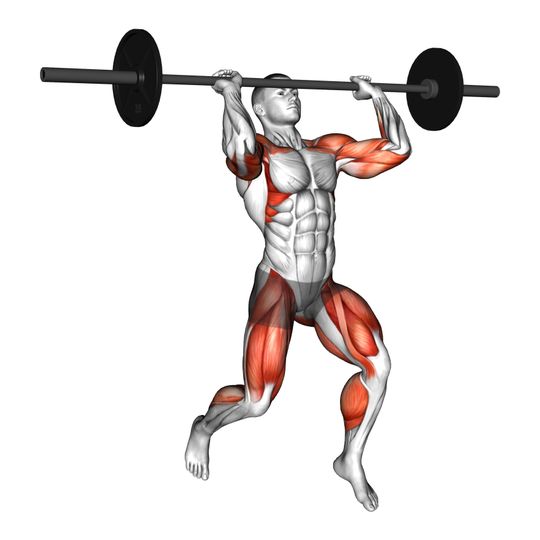


A knee-dominant squat variation that isolates the quadriceps by performing controlled knee flexion and extension while the torso leans back slightly.
How to do the Sissy Squat#
- Stand with feet about hip-width apart and keep your weight toward the balls of your feet.
- Brace your core and maintain a rigid torso with hips held forward.
- Bend both knees and lean your upper body back as the knees travel forward, lowering under control.
- Descend until knee flexion is comfortably deep, keeping the hips from hinging.
- Drive through the toes to extend the knees and return to the start position while keeping the torso stable.
Muscles worked#
The sissy squat is a pure quad exercise. By keeping the hips locked in extension and letting the knees travel far forward while the torso leans back, all of the movement happens at the knee, so the quadriceps do everything. The rectus femoris, the head that crosses the hip as well as the knee, is stretched harder than in any other squat because the hip stays open while the knee bends deeply, which is why sissy squats produce soreness down the front of the thigh that leg extensions never do.
The hip flexors work with the abs to hold the hips forward against the backward lean, and the calves stabilise the ankle as the weight moves onto the balls of the feet. The glutes contribute almost nothing, which is the point. Because the knee is loaded in deep flexion with the shin far forward, the patellar tendon takes a lot of tension, and that is what most people notice first.
- Primary: Quads (Quadriceps Femoris)
- Secondary: Abs (Rectus Abdominis), Hip flexors (Iliopsoas (Hip Flexors)), Calves (Gastrocnemius & Soleus)
Common mistakes#
- Hinging at the hips instead of letting the knees drive the movement.
- Allowing the lower back to round or overarch during the descent.
- Letting the knees collapse inward as you lower.
Why it works#
The sissy squat trains the quads in a position barbell squats and leg presses cannot reach. When the hip is extended and the knee deeply bent, the rectus femoris is at its longest, and loading a muscle at long lengths is one of the most reliable ways to make it grow. It hits the quads above the knee and the sweep of the outer thigh with nothing more than bodyweight.
It is also a tendon exercise. The slow, deep knee bend with the shins forward loads the patellar tendon in a controlled way, and lifters who build up gradually often find their knees feel better under heavy squats afterwards. It needs no equipment, so it fits at the end of a leg day or in a home workout to bring up lagging quads.
Sets, reps and setup#
Two to three sets of 8-15 reps with 90 seconds of rest, once or twice a week after your main leg work. Bodyweight is enough for most people for a long time. Use a three-second descent and stop where the knees tolerate it; the stretch at the bottom is where the quads grow and where impatience gets people hurt.
- Setup
- Stand with the feet hip-width and hold a rack or pole for balance, or hook the heels into a sissy squat bench. Rise onto the balls of the feet, push the hips forward, then bend the knees and lean the torso back as one straight line from knee to shoulder. Lower until the stretch is strong, then drive through the toes back to standing.
- Progression
- First reduce the help from your hands, then slow the eccentric, then hold a plate across the chest. If the knees ache after a session rather than during, back off the depth for two weeks and rebuild. Anyone whose knees cannot yet tolerate the deep position should start with reverse Nordic curls.
Variations#
- Leg Extension Seated with the hips fixed, an easier way to isolate the quads with precise loading.
- Reverse Nordic Curl Kneeling and leaning back from the knees, the same rectus femoris stretch with the ankles anchored and less shear.
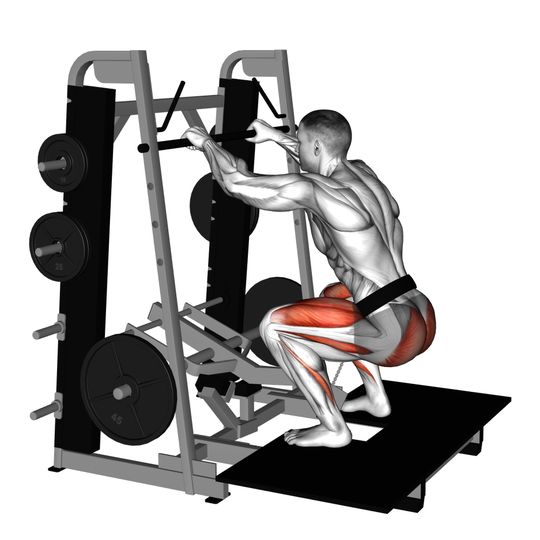
- Hack Squat Machine squat with the back supported and the feet forward, loading the quads heavily through a similar knee-forward path.
- Pendulum Squat Arc-path machine squat with deep knee flexion and no spinal load, a good heavy pairing before sissy squats.
Sissy squat vs leg extension#
Both isolate the quads, but they load them at opposite ends of the range. The leg extension is hardest with the knee nearly straight and the hip bent, where the quads are short; the machine makes it easy to progress in small increments and take sets to failure safely. It is the more practical exercise for most people most of the time.
The sissy squat is hardest at the bottom, with the knee fully bent and the hip open, where the rectus femoris is stretched to its limit. That is what the leg extension misses, which is why the two pair well. Run leg extensions for load and volume, then add two sets of sissy squats for the range the machine cannot reach.
Common questions#
What muscles does the sissy squat work?
Almost entirely the quads, with the rectus femoris under the most stretch because the hips stay extended. The hip flexors and abs hold the hips forward, the calves stabilise the ankle, and the glutes barely contribute.
Are sissy squats bad for your knees?
Not for healthy knees, if you build up slowly. The deep bend loads the patellar tendon heavily, which strengthens it over time but will aggravate it if you start with full range and high volume. Progress depth gradually and stop if pain lingers after the session.
Why is it called a sissy squat?
The usual story is that it is named after Sisyphus, condemned in Greek mythology to push a boulder uphill forever, because the quads burn like that. Whatever the origin, it is one of the harder bodyweight leg exercises.
Do you need a sissy squat machine?
No. Holding a rack or pole for balance works well and lets you adjust how much assistance you use. The bench version anchors the ankles so you can lean back further and hold a plate more comfortably, a useful upgrade once bodyweight is easy.