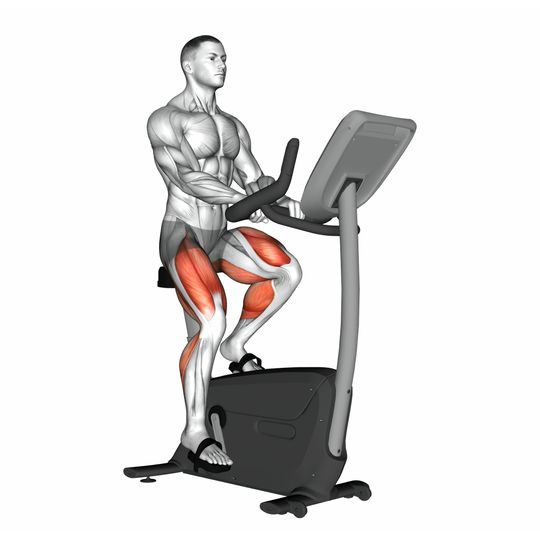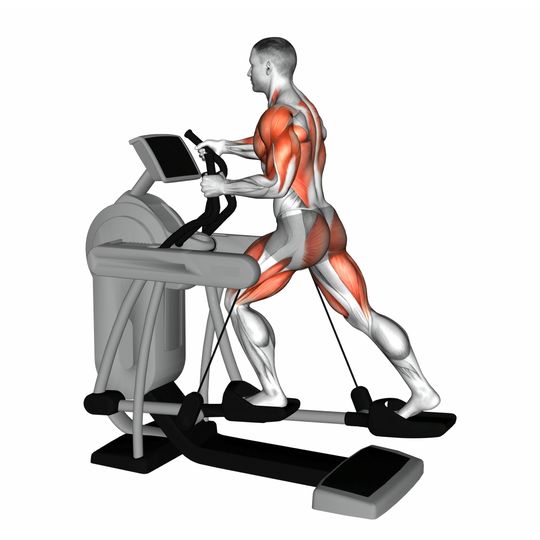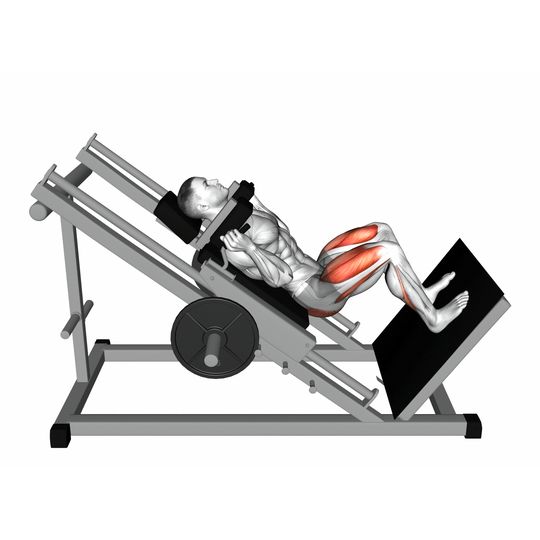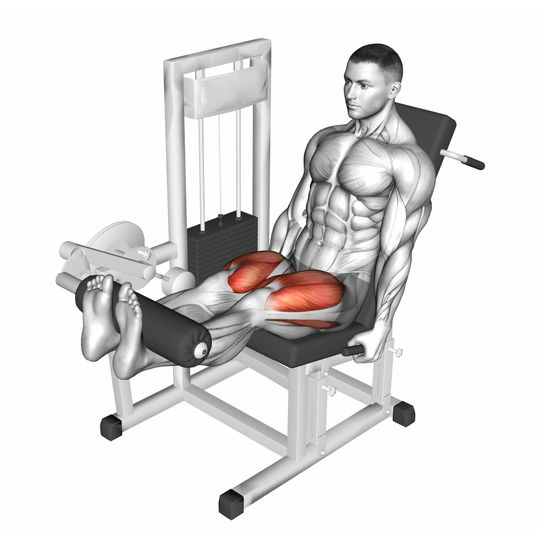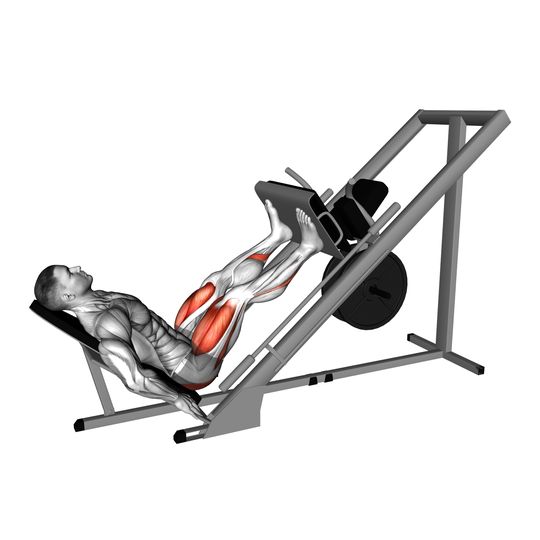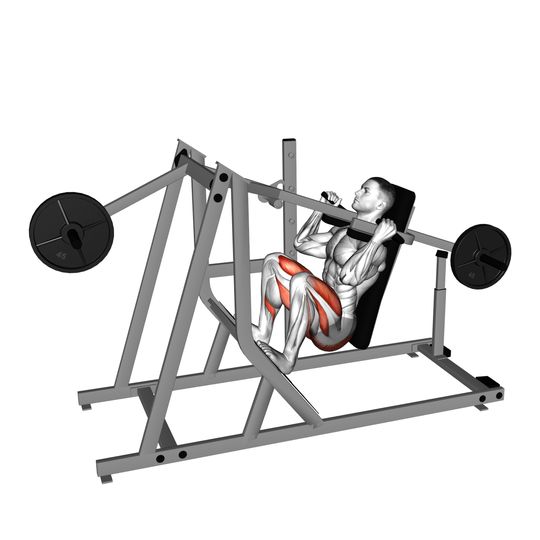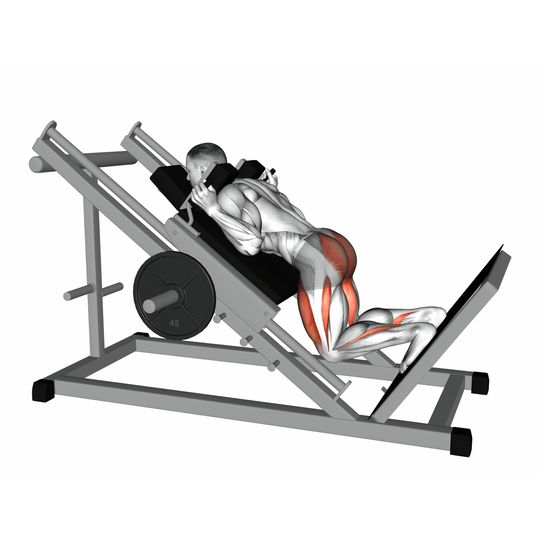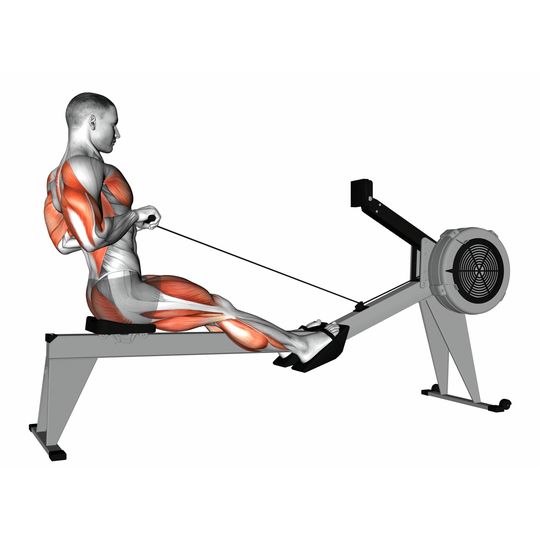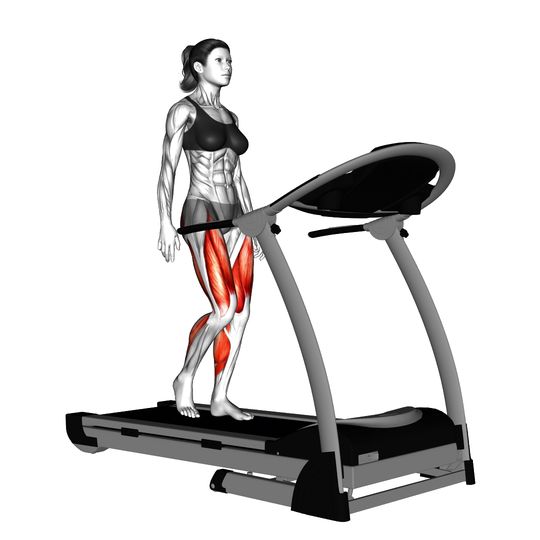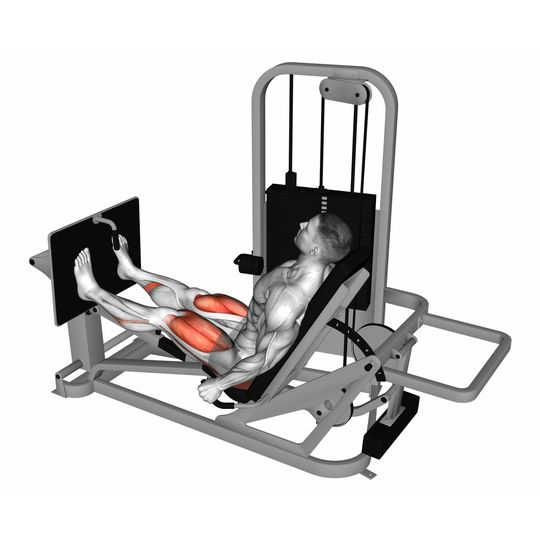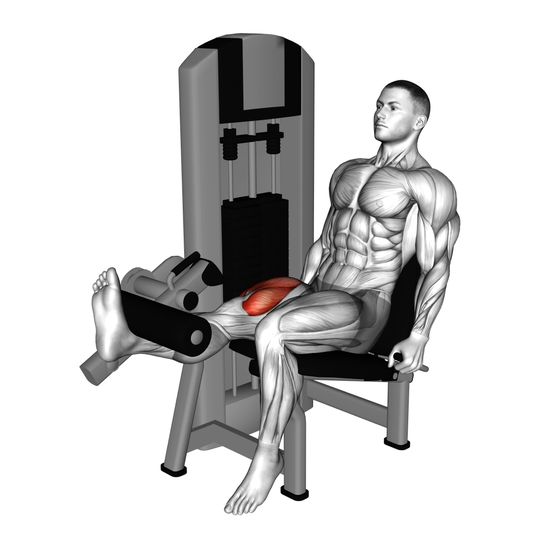


Perform a squat with resistance attached to a belt at your hips, moving through hip and knee extension. The movement primarily works the thigh muscles (quadriceps).
How to do the Belt Squat#
- Attach the belt to the machine and step into it so the load rests at your hips; stand with feet about hip-to-shoulder width.
- Brace your core, keep a neutral spine and lift your chest.
- Bend at the hips and knees to lower into a squat until your thighs reach a comfortable depth (about parallel if possible).
- Drive through your heels to extend your hips and knees and return to standing while keeping the load centered at your hips.
- Control the descent on each rep and reset your position before the next repetition.
Muscles worked#
The belt squat loads the quads and glutes exactly like a regular squat, because the movement at the hips and knees is the same: the quads straighten the knees and the glutes drive the hips forward. What changes is where the weight hangs. With the load on a belt at the hips, the torso stays upright and nothing presses on the spine, so the quads and glutes are almost the only muscles working hard, and it feels like a pure leg burn rather than a full-body grind.
The adductors of the inner thigh assist in the deep position and help keep the knees tracking, the hamstrings help the glutes with hip extension, and the calves control the ankle. The abs and lower back still brace, but against far less than in a barbell squat, and the upper back does nothing. That lower stabiliser demand is why the belt squat leaves the lower back fresh and why sets can go closer to failure.
Common mistakes#
- Rounding the lower back during the descent.
- Letting the knees collapse inward.
- Rising onto the toes instead of driving through the heels.
- Leaning the torso forward excessively instead of keeping the chest up.
Why it works#
The belt squat is the way to squat heavy when your spine cannot, or should not, take more. The load hangs from the hips, so there is no compression on the vertebrae and no bar to hold, which makes it the standard choice for lifters with back injuries, for sessions when the lower back is already fried from deadlifts, and for anyone with a shoulder or elbow that will not tolerate a bar on the back.
It is also an outstanding leg builder in its own right. Because the trunk and grip are not the limiting factor, sets end when the quads and glutes are actually done, and the machine lets you accumulate far more hard squatting volume in a week than you could recover from with a barbell. Powerlifters use it to add leg work between heavy squat days; physique lifters use it as a primary quad movement.
Sets, reps and setup#
Three to four sets of 8-15 reps with 90 seconds to two minutes of rest, once or twice a week. Higher reps suit it well, because the missing spinal load means the legs, not the back, decide when a set ends. Take the last set within a rep of failure; there is no bar to get stuck under.
- Setup
- Step onto the platform, fasten the belt snugly around the hips so it sits on the hip bones rather than the waist, and attach the load. Stand with the feet shoulder width or slightly wider, hold the handles lightly for balance without pulling on them, then sit down between the legs until the thighs are at least parallel and drive back up through the whole foot with the chest tall.
- Progression
- Add reps to fifteen, then add 5 to 10 kilograms and drop back to eight. When progress stalls, slow the descent to three seconds or add a two-second pause at the bottom. Setting the feet slightly further forward or raising the heels on a wedge shifts more work to the quads without changing the load.
Variations#
- Barbell Squat The standard back squat with the load on the spine, which trains the trunk and upper back alongside the legs.
- Hack Squat Sled squatting on angled rails with the back supported, another way to load the quads heavily without a free bar.
- Leg Press Seated pressing with the spine fully supported, for heavy leg volume when the machine is available.
- Pendulum Squat An arcing machine squat that keeps the torso upright and the quads loaded through a very deep range.
- Goblet Squat A dumbbell held at the chest, which achieves a similar upright, quad-focused squat with much lighter loads.
Belt squat vs barbell squat#
The barbell squat puts the load on the upper back and asks the whole body to stabilise it, which is what makes it the best single strength lift and the one with the most carryover to sport. It is also the reason it fatigues the lower back, limits volume, and is the first thing to go when the spine is unhappy.
The belt squat moves the same hips and knees through the same range but hangs the load from the hips, so the spine is unloaded and the legs do almost all the work. It is the better tool for leg volume and for anyone who cannot squat under a bar. Most lifters do best keeping the barbell squat as the main strength lift and using the belt squat for extra quad and glute work.
Common questions#
What muscles does the belt squat work?
The quads and glutes do the bulk of the work, exactly as in a regular squat, with the adductors, hamstrings, and calves assisting. The abs and lower back brace far less than under a barbell because the load hangs from the hips instead of sitting on the spine.
Is the belt squat as good as a barbell squat?
For the legs, yes. The quads and glutes see the same movement and can be loaded just as hard. What it does not train is the trunk and upper back holding a bar, so the barbell squat remains better for total strength and sport carryover.
Is the belt squat good for a bad back?
It is one of the best squatting options for people with back pain, because there is no compressive load on the spine and the torso stays upright. Many lifters who cannot back squat at all can belt squat heavy without any discomfort.
Where should the belt sit for belt squats?
Low on the hips, resting on the hip bones, not on the waist. A belt on the waist pulls the lower back into flexion as you descend and makes the movement uncomfortable. Snug enough that it does not slide when you sit down.
How much weight should I use on a belt squat?
Start lighter than your barbell squat and let the reps guide you: eight to fifteen hard reps with full depth. Belt squat machines vary a lot in leverage, so a weight that feels like a barbell squat on one machine may feel much heavier or lighter on another.