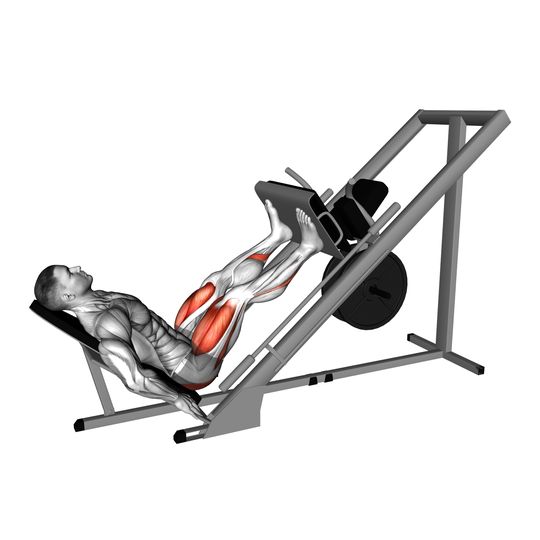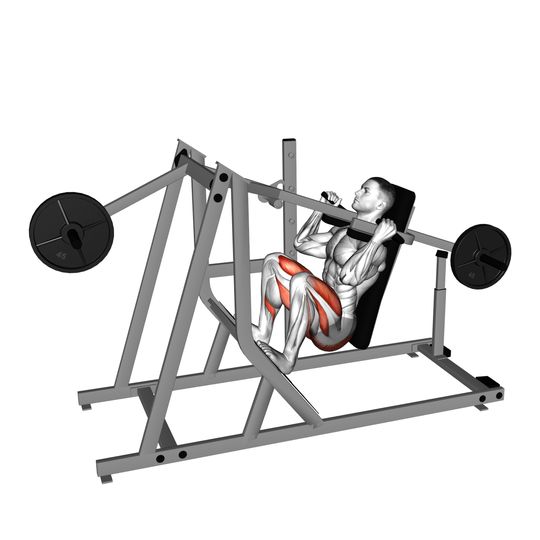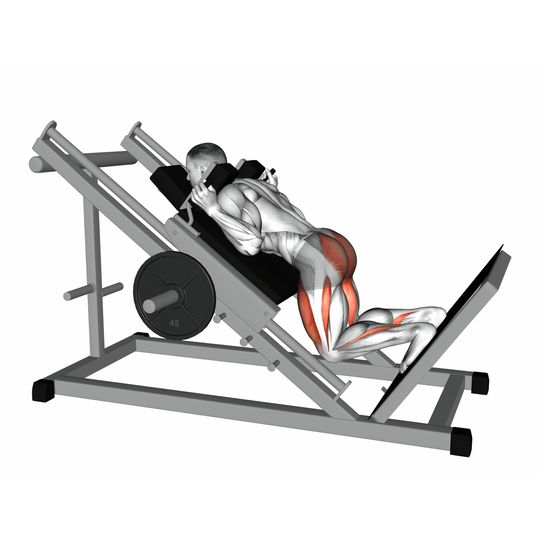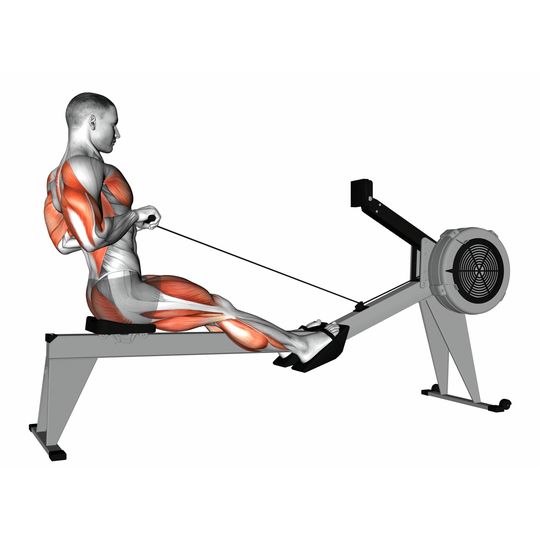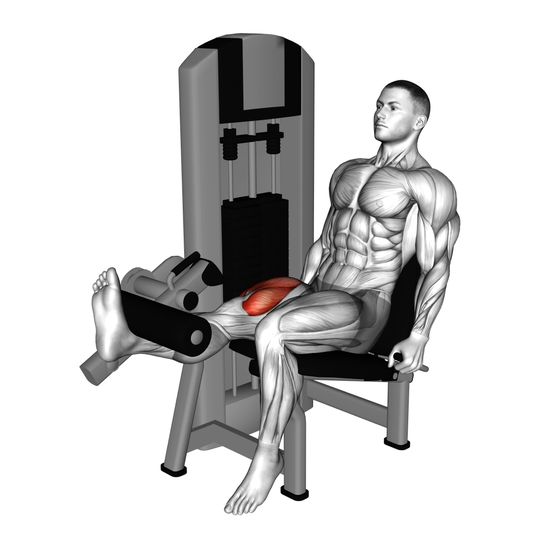


Perform seated knee extensions on the leverage machine, extending the knees to work the quadriceps through a controlled concentric and eccentric motion.
How to do the Leg Extension#
- Adjust the seat and backrest so you sit upright and the lower leg pad rests just above your shins.
- Sit with your back against the pad and place your feet under the roller so your knees are free to move.
- Exhale as you straighten your legs, driving the movement with your quadriceps until legs are nearly straight.
- Briefly hold the top position without forcefully locking the knees, then inhale and lower the pad slowly back to the start.
- Repeat for the prescribed number of repetitions with a controlled tempo.
Muscles worked#
The leg extension isolates the quadriceps. Nothing else in the body can straighten the knee, so every rep belongs to the four heads of the quads: vastus lateralis on the outside, vastus medialis on the inside near the knee, vastus intermedius underneath and rectus femoris down the front. It is the only common exercise that trains the rectus femoris through a full range, because that muscle also flexes the hip and gets shortchanged in squats and presses.
There is no secondary muscle worth naming. The hamstrings act only as a brake near lockout, and the hip flexors hold you in the seat. That total isolation is the point: the knee is the only joint moving, there is no balance demand, and you can feel exactly where the quads give out. Expect a hard burn right above the knee and along the outer thigh.
- Primary: Quads (Quadriceps Femoris)
Common mistakes#
- Using momentum or jerking the legs to lift the weight.
- Allowing the hips to lift off the seat during extension.
- Positioning the pad incorrectly so it presses too high or low on the shins.
- Forcing a hard knee lockout at the top of the movement.
- Letting the weight drop quickly on the lowering phase.
Cannot do this one today?#
Machine taken, gym closed, or the movement just not agreeing with you? Here is what to run instead, and what each substitute changes.
9 best leg extension alternatives →
Leg Extension vs other exercises#
Head-to-head breakdowns of muscles worked, loading, joint stress, and which one to pick for your goal.
Why it works#
It fills the gap that compound leg work leaves. Squats, leg presses and hack squats load the quads hardest in the bottom and back off at the top, and they barely touch the rectus femoris. The leg extension loads the quads at the shortened end of the range where those lifts go slack, and it lets you take a set to failure without your lower back, hips or grip having any say in the matter.
It is also the easiest quad exercise to recover from and to dose precisely. Beginners can learn to feel the quads work before they squat, lifters with back problems can build quads without spinal load, and anyone rehabbing a knee under supervision can control the exact range and resistance. Add slow eccentrics or a pause at the top and it becomes a serious finisher on a light load.
Sets, reps and setup#
Three to four sets of 10-15 reps with 60-90 seconds of rest, once or twice a week, usually after the compound leg work. Sets of 8-10 with a heavy stack are fine occasionally, but the knee prefers moderate loads and more reps; it is an accessory, not a strength test.
- Setup
- Adjust the seat so your knees line up with the machine's pivot and the pad sits on your lower shins just above the ankles. Back flat against the pad, hands on the handles, hips down. Extend until the legs are straight and squeeze the quads for a second at the top, then lower under control over two to three seconds without letting the stack slam.
- Progression
- Increase the load when you can hold a one-second squeeze at the top on every rep of every set. If the stack runs out or the knees complain, add a three-second lowering phase, finish sets with partial reps in the top half of the range, or work one leg at a time, which roughly halves the load you need.
Variations#
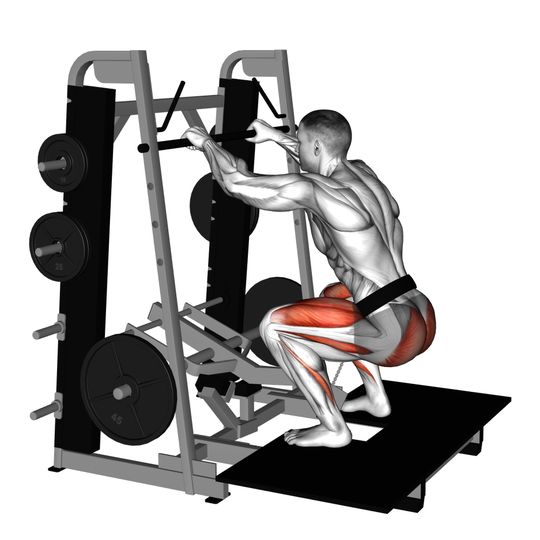
- Machine Single Leg Extension One leg at a time, which exposes side-to-side strength differences and lets you concentrate on each quad.
- Sissy Squat A bodyweight movement that loads the quads in the same knee-dominant way with the hips locked open.
- Reverse Nordic Curl A kneeling eccentric that stretches and loads the rectus femoris hard without any equipment.
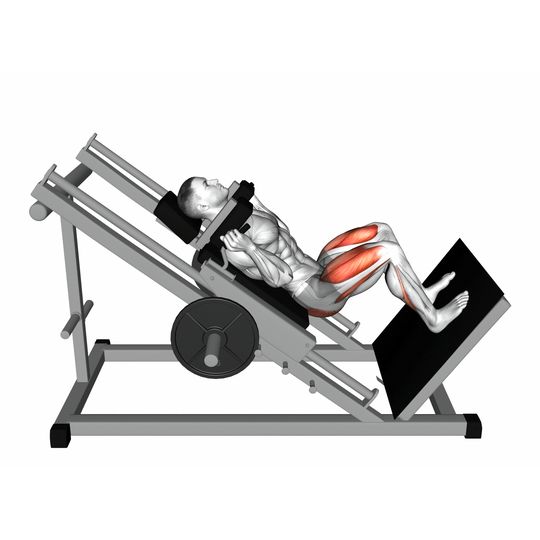
- Hack Squat The heavy compound partner, hitting the quads through the deep range the extension misses.
- Leg Press A supported compound press that pairs well with extensions on the same leg day.
Leg extension vs squat#
The leg extension is an isolation exercise and the squat is a compound one, so they are not competing for the same job. The squat trains the quads, glutes, adductors, spinal erectors and core together, builds full-body strength and is the better use of your time if you only have one exercise for legs.
The extension does two things the squat cannot: it trains the rectus femoris properly, since that muscle stays slack during a squat, and it loads the quads hardest near full knee extension where the squat gets easy. Used after squats for two to four sets of 10-15, it adds quad growth that the squat alone will not produce. Used instead of squats, it leaves most of the lower body untrained.
Common questions#
What muscles does the leg extension work?
Only the quadriceps: the vastus lateralis, vastus medialis, vastus intermedius and rectus femoris. It is a pure knee-extension movement, so there is no meaningful glute, hamstring or core involvement, which is why it isolates the quads so well.
Are leg extensions bad for your knees?
Not for healthy knees under sensible loads. The exercise puts shear stress on the joint at full extension, which is why moderate weights and controlled reps are the rule, but it is used in knee rehabilitation precisely because it strengthens the quads in a predictable way. Pain that persists means lower the weight or shorten the range.
How many leg extensions should I do?
Three to four sets of 10-15 reps once or twice a week is enough for most lifters. Doing them after squats or presses with a one-second squeeze at the top gives you more than doing them first with heavier weight.
Should my toes point up, in or out on leg extensions?
Straight up is the default and it is fine. Turning the feet slightly out or in changes quad emphasis by a small amount at most, and it is not worth doing if it makes the knees uncomfortable. Focus on a full range and a hard squeeze instead.
Should I lock out at the top of the leg extension?
Yes, reach full extension and hold it for a beat. The top is where the rectus femoris and vastus medialis work hardest, and cutting the rep short skips the part of the range the exercise is best at. Do it under control rather than snapping the knees straight.