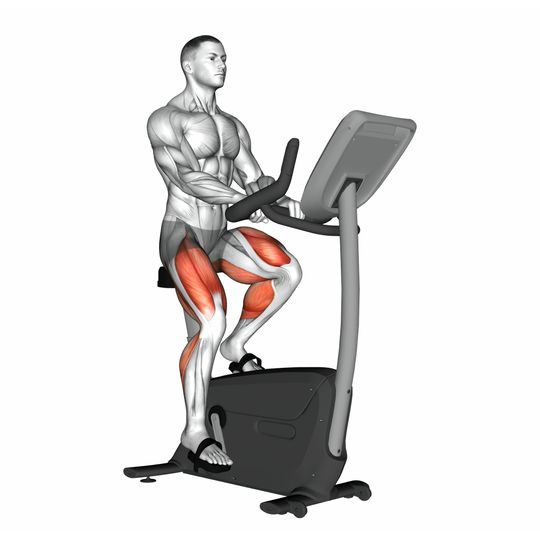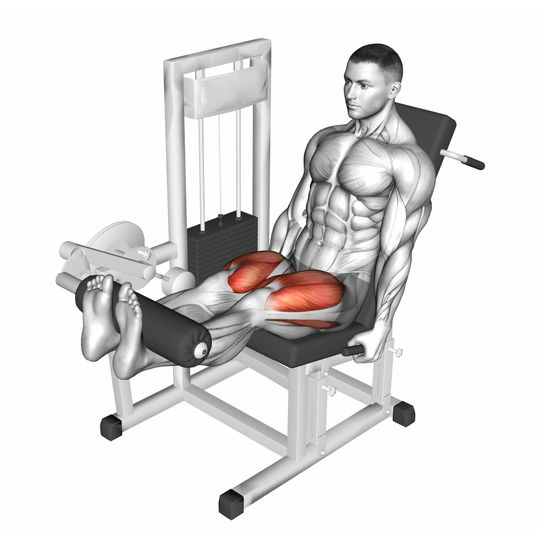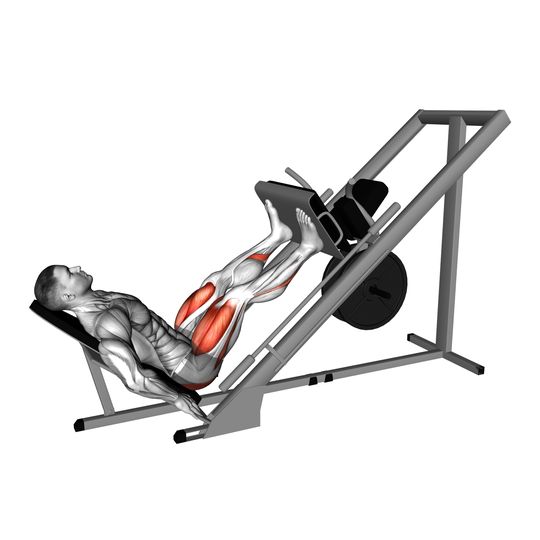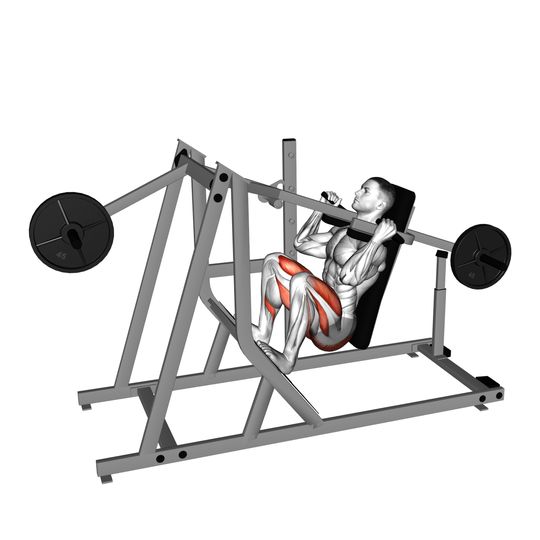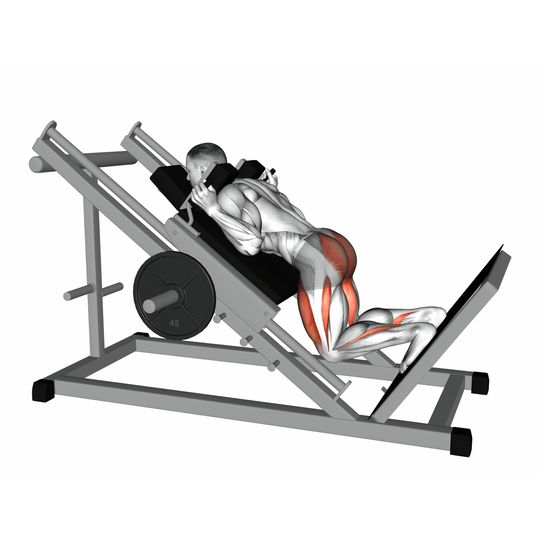


You pedal from a reclined, seated position to produce continuous lower-body work. The movement primarily engages the quadriceps and glutes while providing cardiovascular conditioning.
How to do the Recumbent Bike#
- Adjust the seat so your knee has a slight bend at the bottom of the pedal stroke.
- Place your feet flat on the pedals and fasten any straps or clips.
- Sit with your back supported, keep your shoulders relaxed, and grip the handlebars lightly.
- Pedal in smooth, circular strokes, driving through your heels and maintaining a steady cadence.
- Change resistance or cadence to match your target intensity and slow gradually to stop.
Muscles worked#
- Primary: Quads (Quadriceps Femoris), Glutes (Gluteus Maximus)
- Secondary: Hamstrings (Biceps Femoris, Semitendinosus & Semimembranosus), Calves (Gastrocnemius & Soleus), Hip flexors (Iliopsoas (Hip Flexors))
Common mistakes#
- Seat positioned so the knee fully locks or remains overly bent.
- Pedaling from the toes instead of using the whole foot.
- Gripping the handlebars tightly and hunching the shoulders.
- Using very low resistance and spinning at an unproductive cadence.