

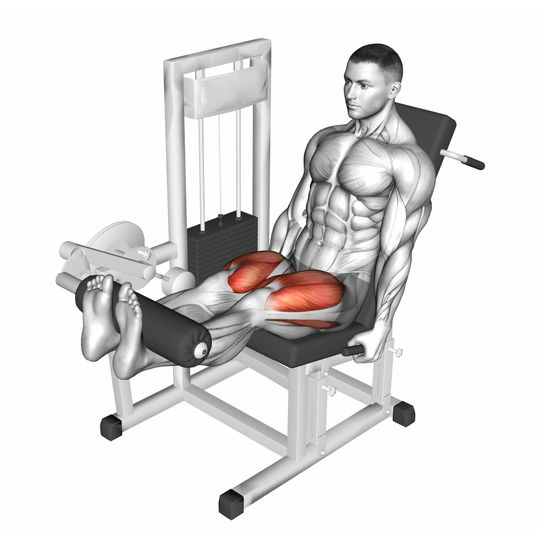
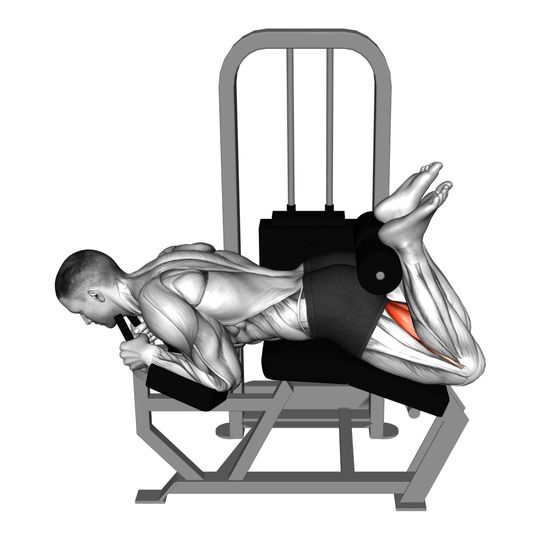
The leg extension and the leg curl sit next to each other in almost every gym and get compared constantly, but they are not two ways of doing the same thing. The leg extension isolates the quadriceps on the front of the thigh by straightening the knee. The leg curl isolates the hamstrings on the back by bending it. Neither can do the other's job.
That does not make the leg extension vs leg curl question pointless. Most lifters have room for a limited number of isolation exercises on a leg day, and the two machines differ in what they add on top of squats and hinges, how they load the joint, and how they should be programmed. This page covers what each one does, which version of the leg curl is worth using, and which deserves priority when time is short.
| Factor | Leg Extension | Lying Leg Curl |
|---|---|---|
| Main target | Quadriceps, all four heads | Hamstrings, especially the short head of the biceps femoris |
| Joint action | Knee extension | Knee flexion |
| What compounds miss | Rectus femoris, barely worked in squats | Short head of the biceps femoris, only worked by knee flexion |
| Joint stress | Shear on the knee near lockout, usually well tolerated | Low, cramps and strains more common than knee issues |
| Best rep range | 10–15 | 8–15 |
| Best for | Quad detail, knee-friendly volume | Hamstring size, knee flexion strength |
Leg Extension vs Lying Leg Curl: muscles worked#
Leg Extension
- Primary: Quads
Lying Leg Curl
- Primary: Hamstrings
- Secondary: Calves
Muscles worked#
The leg extension trains the quadriceps and almost nothing else. All four heads — vastus lateralis, vastus medialis, vastus intermedius and rectus femoris — straighten the knee against the pad. Its real value is the rectus femoris, which crosses the hip as well as the knee and contributes little to squats because it shortens at one joint while lengthening at the other. The leg extension machine is one of the few exercises that loads it properly.
The leg curl trains the hamstrings — biceps femoris, semitendinosus and semimembranosus — by bending the knee, with the calves assisting at the start of the rep. Its unique contribution is the short head of the biceps femoris, which only crosses the knee and so gets nothing from Romanian deadlifts, good mornings or any hip hinge. A program built entirely on hinges leaves that muscle undertrained; the leg curl machine is the fix.
Seated vs lying leg curl, and setting up the extension#
If you use a leg curl, the seated leg curl is the better default. Sitting flexes the hip, which lengthens the hamstrings before the knee even bends, so the muscle works at a longer length through the whole set. Research comparing the two found more hamstring growth from the seated leg curl than from the lying version, which fits the broader finding that training a muscle at long lengths grows it faster. The lying leg curl is still useful and loads the short head hard, but when both are available, sit down.
The leg extension has no such choice, but setup matters. Line the knee up with the machine pivot, set the ankle pad just above the foot, and recline the back pad slightly, which lengthens the rectus femoris and makes the exercise more complete. Full extension at the top with a one-second squeeze is where the quads work hardest; cutting the last fifteen degrees to protect the knee mostly removes the part of the rep worth doing.
Joint stress and safety#
The leg extension has a reputation for being bad for the knees that the evidence does not support for healthy joints. It does put shear force across the knee near lockout, but the loads are moderate and the movement is used in rehabilitation for exactly that reason. Lifters recovering from an ACL reconstruction or with active kneecap pain should use a partial range and lighter loads until the joint settles.
The leg curl is easier on the knee but harder on the hamstring itself. Cramping is common when the knee is fully bent, and strains happen when lifters kick the weight up and let it fall. Control the lowering over two to three seconds, keep the hips on the pad on the lying version, and stay at a load you can pause at the top — the hamstrings respond to tension, not to how many plates you can flick.
Programming and how to use both#
Neither machine should be the main lift of a leg day; both are finishing exercises that add targeted volume after squats, presses and hinges have done the heavy work. Program the leg extension for 2–4 sets of 10–15 at the end of a quad-focused session, or light before squats as a knee warm-up. Program the leg curl for 2–4 sets of 8–15 after your hip hinge, or on an upper-body day if leg day is already long.
If you can only fit one, look at what your program is missing. Lifters who squat and leg press a lot but rarely hinge should keep the leg curl. Lifters who deadlift regularly but avoid deep squats should keep the leg extension. As a rough balance check, most people can leg curl around 60–70 percent of what they leg extend for the same reps; a ratio well below that means the hamstrings are the weaker link and deserve the slot.
The verdict#
Pick the leg extension if the front of the thigh is the gap in your development, if your program is already heavy on hinges, or if you want a knee-friendly way to add quad volume without loading the spine. It is the only common exercise that trains the rectus femoris properly, and it makes an excellent finisher after squats or a hack squat.
Pick the leg curl if your hamstrings lag, if your program is built around squats and presses with little direct hinge work, or if you want to protect against hamstring strains. Use the seated version where possible. Most balanced leg programs include both every week, and the honest answer to leg curl vs leg extension is usually that you should stop choosing.
Frequently asked questions#
Is the leg extension or leg curl better?
Neither, because they train opposite muscles. The leg extension isolates the quadriceps on the front of the thigh and the leg curl isolates the hamstrings on the back. The better question is which muscle your program is undertraining: heavy squatters usually need the leg curl, heavy deadlifters usually need the leg extension, and most lifters benefit from both.
Should I do leg extensions and leg curls in the same workout?
Yes, it is the standard approach. Both are low-fatigue isolation exercises, so pairing them at the end of a leg day for 2–4 sets each adds quad and hamstring volume without much cost to recovery. Supersetting them saves time and gives each muscle a rest while the other works.
Is the seated leg curl better than the lying leg curl?
For hamstring growth, yes. The seated leg curl trains the hamstrings with the hips flexed, which keeps the muscle at a longer length, and research comparing the two found more growth from the seated version. The lying leg curl is still worthwhile if it is the only machine available or if seated curls bother your hips.
How much should I leg curl compared with leg extension?
Most lifters can leg curl roughly 60–70 percent of what they leg extend for the same reps, though machines vary enough that this is only a rough guide. A ratio far below that suggests the hamstrings are relatively weak and should get priority; a ratio above it usually means the leg extension is being cut short at the top.
Are leg extensions bad for your knees?
Not for healthy knees. The leg extension machine does put shear force across the joint near lockout, but the loads are moderate and the exercise is used in knee rehabilitation for that very reason. Lifters recovering from ACL surgery or with active kneecap pain should use lighter loads and a partial range until the joint settles; everyone else can train it through the full range.