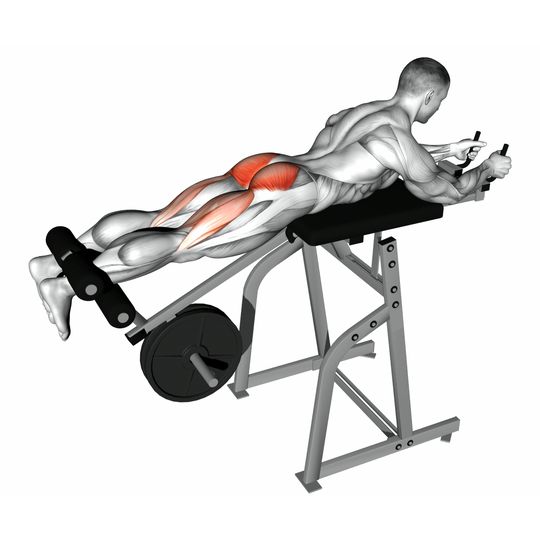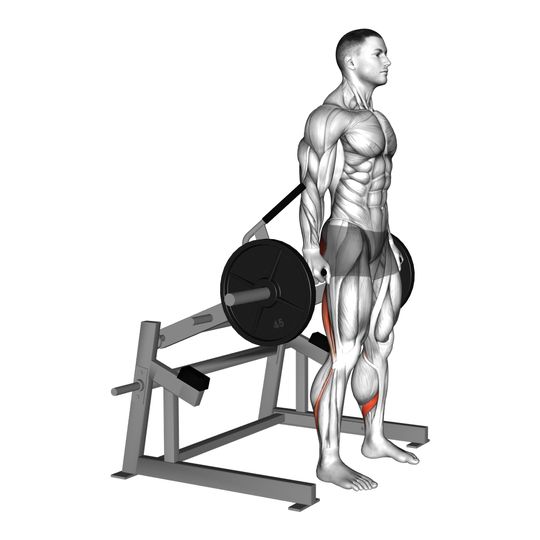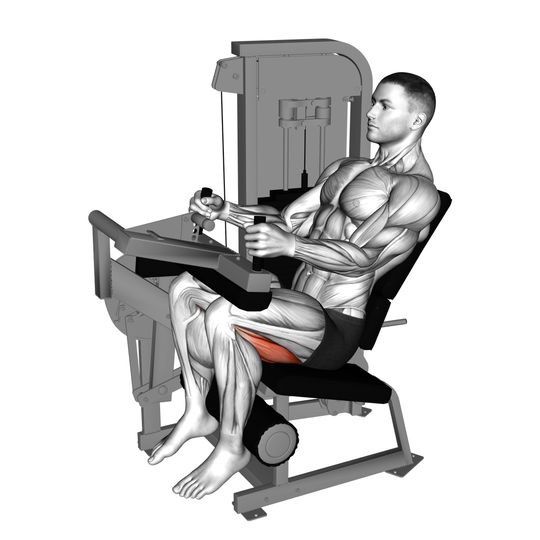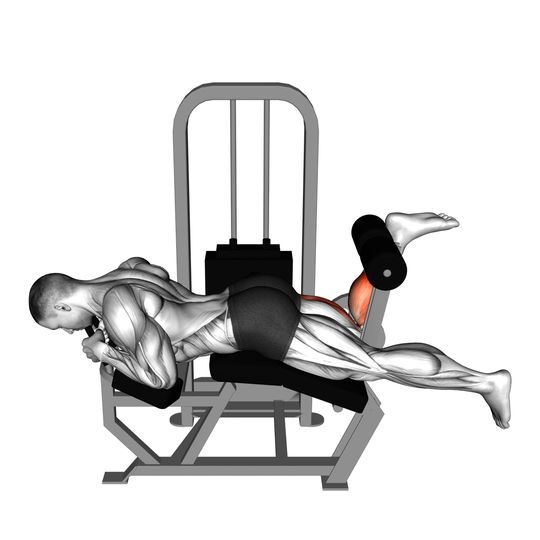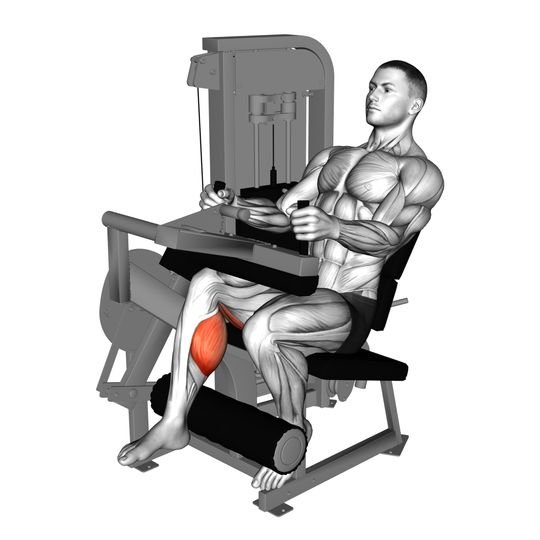


Lie prone on a leg-curl machine and flex your knees to draw your heels toward your glutes, primarily working the hamstrings.
How to do the Lying Leg Curl#
- Lie face down on the bench and set the machine pad a few inches below your calves; keep your hips flat and hold the handles.
- Start with your legs extended and knees straight.
- Bend your knees to curl your heels toward your glutes, keeping your thighs pressed to the pad.
- Hold briefly at the top of the movement with control.
- Lower your feet slowly back to the starting position, resisting the weight on the way down.
Muscles worked#
The lying leg curl works the hamstrings through knee flexion, which is the half of their job that deadlifts and hip hinges leave out. All three hamstrings take part: the biceps femoris on the outside of the thigh and the semimembranosus and semitendinosus on the inside. Lying face down keeps the hips flat, which stretches the hamstrings at the hip end and lets them shorten hard at the knee, so the contraction at the top of the rep is stronger than on the seated version.
The calves help at the start of the curl, and the gastrocnemius contributes more if you point the toes, which is why flexing the feet toward the shins keeps the work on the hamstrings. The glutes and lower back hold the hips down against the pad. If your hips lift off the bench, the weight is doing that, not you.
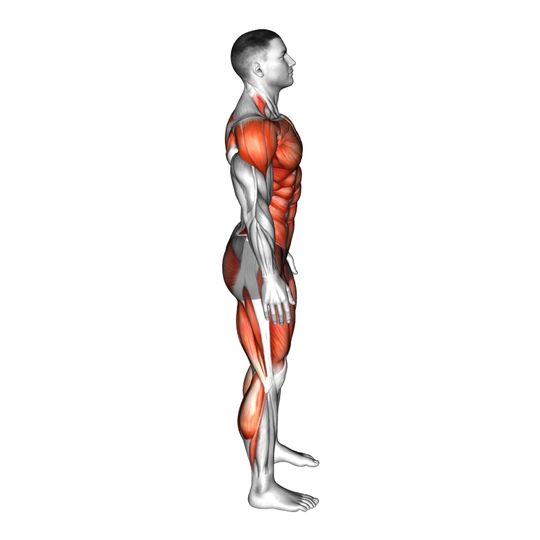
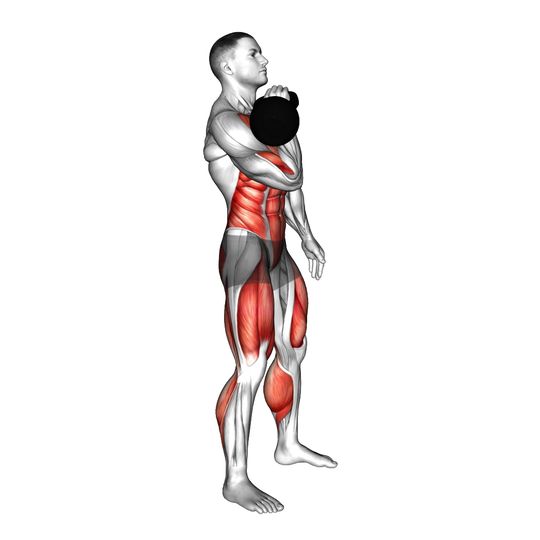
- Primary: Hamstrings (Biceps Femoris, Semitendinosus & Semimembranosus)
- Secondary: Calves (Gastrocnemius & Soleus)
Common mistakes#
- Lifting the hips off the bench during the curl.
- Using momentum or jerking to move the weight.
- Allowing the thighs to lift away from the pad.
- Dropping the legs quickly on the lowering phase.
- Incorrect pad placement under the calves.
Cannot do this one today?#
Machine taken, gym closed, or the movement just not agreeing with you? Here is what to run instead, and what each substitute changes.
9 best leg curl alternatives →
Lying Leg Curl vs other exercises#
Head-to-head breakdowns of muscles worked, loading, joint stress, and which one to pick for your goal.
Why it works#
It is the direct way to build hamstring size and to protect the knee. The hamstrings cross the knee as well as the hip, and only knee-flexion exercises like this one load them in that role. Sprinting, jumping and changing direction all rely on the hamstrings braking the shin, so a strong leg curl is about more than a fuller back of the thigh.
Because it is fixed to a machine, the leg curl is easy to load precisely and easy to recover from. It can go heavy without any spinal load, it lets you train hamstrings when the lower back needs a rest from deadlifts, and it is the cleanest place to work one leg at a time when one side lags.
Sets, reps and setup#
Three to four sets of 8-12 reps, once or twice a week, usually after squats or a hinge. Higher-rep sets of 15-20 with a lighter stack work well as a finisher. The hamstrings respond to full-range, controlled reps more than to heavy partials.
- Setup
- Lie face down with your knees just past the edge of the bench and the pad resting on the back of your lower calves, above the heels. Hold the handles, keep the hips pressed into the pad, and curl until the pad nearly touches your glutes. Squeeze for a second, then lower over two to three seconds until the legs are almost straight, without letting the stack rest.
- Progression
- Add weight when you can hold a one-second squeeze at the top on every rep of every set. When the stack gets heavy enough that the hips start lifting, switch to slower lowering phases, single-leg reps, or a pause at the bottom in the stretched position, all of which make a lighter weight harder.
Variations#
- Seated Leg Curl (Machine) Curled with the hips bent, which loads the hamstrings in a longer position and is usually better for growth if you only pick one.
- Single Leg Lying Leg Curl (Machine) One leg at a time to expose and fix a weaker side.
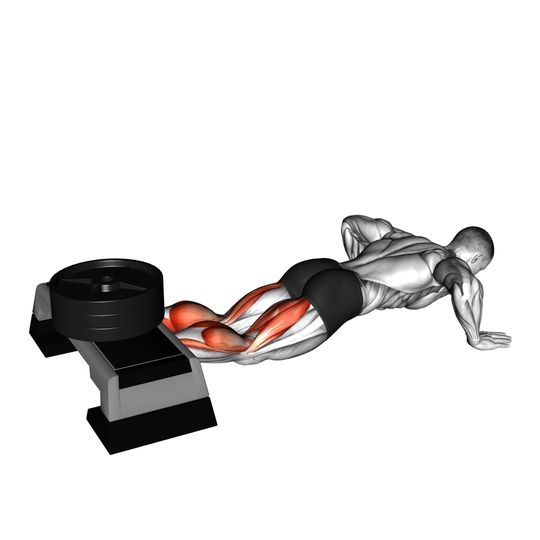
- Nordic Hamstring Curl A bodyweight eccentric knee curl that hits the hamstrings hard without any machine.
- Standing Leg Curls Curled upright with the hip extended, similar to the lying version but one leg at a time.
- Romanian Deadlift (Barbell) The hip-hinge partner that trains the hamstrings at the hip so the two together cover the whole muscle.
Lying leg curl vs seated leg curl#
Both are knee-flexion machines for the hamstrings, and the difference is hip position. Seated, the hips are bent, so the hamstrings work from a longer starting length; lying, the hips are straight, so the muscle is shorter at the hip and contracts harder at the knee. Research on hamstring growth favours the seated version when only one is used, because muscles grow more when trained at longer lengths.
That does not make the lying curl redundant. It gives a stronger peak contraction, it is easier on the lower back for people who find the seated pad uncomfortable, and many gyms only have one or the other. If you have both, rotate them across blocks or do seated curls heavier and lying curls for higher reps.
Common questions#
What muscles does the lying leg curl work?
The hamstrings: biceps femoris, semimembranosus and semitendinosus, all acting to bend the knee. The calves assist a little, and the glutes and lower back hold the hips flat on the pad.
Should my toes be pointed or pulled up during leg curls?
Pull the toes toward your shins. Pointing the toes lets the calves join in and take some of the load away from the hamstrings. Flexing the feet keeps the work where you want it.
Why do my hips lift off the bench?
Because the weight is too heavy for your hamstrings, so the hip flexors and lower back are trying to help. Drop the stack, press the hips into the pad, and curl only as fast as you can without any lift. If the machine has an angled bench, use it, since the bend at the hips makes lifting harder.
Is the lying leg curl bad for your knees?
No. It is a controlled knee flexion with no impact, and stronger hamstrings protect the knee by balancing the quads. Keep the pad above the heels, not on the Achilles, and avoid letting the stack yank the legs straight at the bottom.
How many leg curls should I do per week?
Six to ten hard sets across the week is plenty for most people, split over one or two sessions and combined with a hip hinge like the Romanian deadlift. More than that rarely adds size and makes the hamstrings sore for squats.