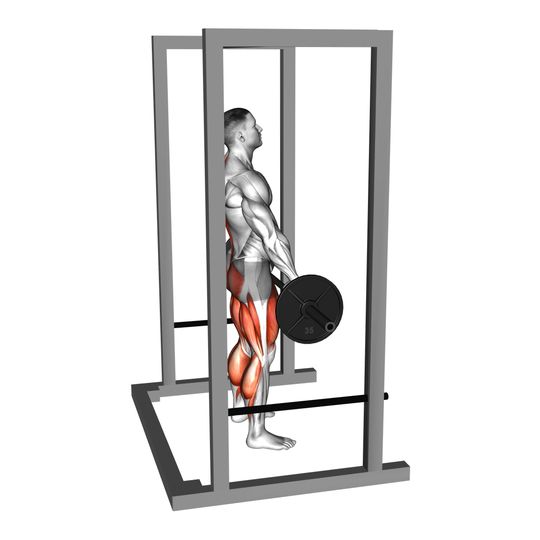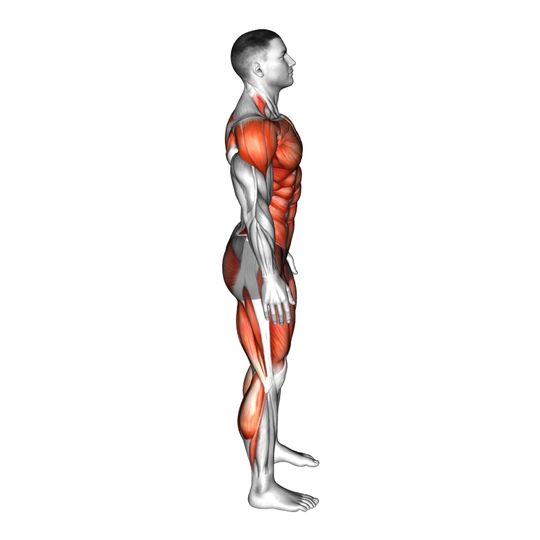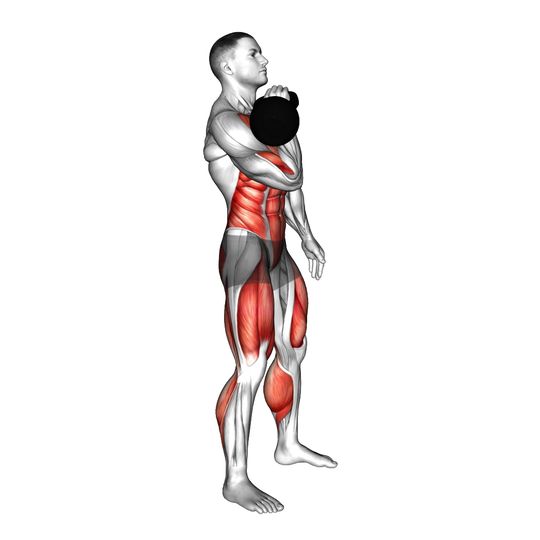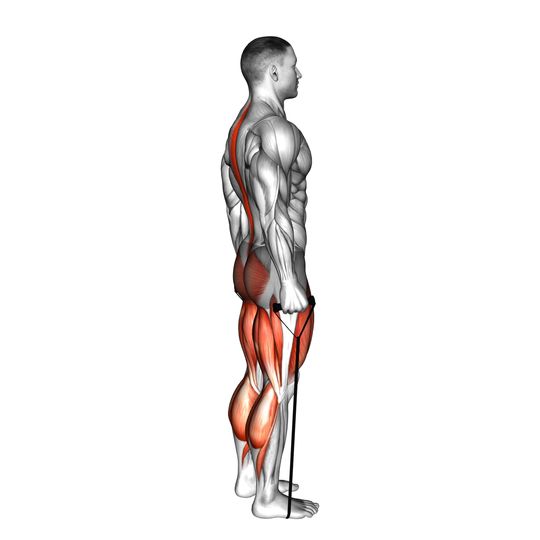


A controlled kneeling forward-lowering and return movement that heavily loads the hamstrings and also recruits the glutes.
How to do the Nordic Hamstring Curl#
- Kneel with your feet secured and torso tall, keeping your knees hip-width apart.
- Brace your core and keep your hips in line with your torso to prevent excessive hip hinge.
- Slowly lean forward by extending at the knees, letting your hamstrings control the descent until you reach your limit or lightly touch the ground with your hands.
- Contract the hamstrings to pull your body back up to the starting upright kneeling position, using your hands only for minimal assistance if needed.
Muscles worked#
The Nordic hamstring curl is almost entirely a hamstring exercise. With the ankles pinned and the hips held straight, the only way to lower yourself is to let the knees extend, and the hamstrings are the muscles resisting that. Because the body is a long lever from the knees to the head, the force they have to produce at the bottom is enormous, which is why the movement is so hard and why it builds eccentric hamstring strength faster than any leg curl.
The glutes work isometrically to keep the hips from folding; if they switch off, the hips pike back and the hamstrings get let off the hook. The abs and lower back hold the torso rigid, and the calves contribute a little through the gastrocnemius at the knee. When done right the whole rep is felt as a deep, almost cramping stretch in the back of the thigh and very little anywhere else.
- Primary: Hamstrings (Biceps Femoris, Semitendinosus & Semimembranosus)
- Secondary: Glutes (Gluteus Maximus), Calves (Gastrocnemius & Soleus), Abs (Rectus Abdominis)
Common mistakes#
- Allowing the hips to bend and lose a straight line from knees to head.
- Relying on the hands to push you back up instead of the hamstrings.
- Lowering too quickly and losing tension in the hamstrings.
- Rounding the spine during the descent.
Why it works#
The Nordic curl has the best injury prevention evidence of any single exercise. Programs built around it have repeatedly cut hamstring strain rates in football and other sprint sports by more than half, because it lengthens the hamstrings under load and shifts the point where they produce peak force to a longer muscle length, which is exactly where sprinting strains happen.
It also needs almost nothing: a partner to hold your ankles, a loaded barbell to hook the heels under, or a padded anchor. That makes it the most accessible heavy hamstring exercise for anyone training at home or in a gym without a glute ham bench. Two short sessions a week, kept far from failure, are enough to keep the adaptation, so it fits around any program.
Sets, reps and setup#
Two to three sets of 4-8 slow lowers, twice a week, with two minutes of rest. Start with a single set of five if you are new to it, because the soreness in the first two weeks is severe. Once you can control the lowering all the way to the floor, add reps to eight, then add resistance.
- Setup
- Kneel on a pad with the ankles anchored, squeeze the glutes so the hips stay in line with the shoulders, and fold the arms across the chest. Lower by letting the knees open, taking three to five seconds and fighting for control the whole way. Catch yourself with the hands at the bottom, push back to the start with a light hand assist, and reset.
- Progression
- Begin by only lowering until you lose control, then catching yourself. Extend the range a little each week. Once the full lower is controlled, start pulling yourself back up with minimal hand help, then with none. After that, hold a plate to the chest or loop a band behind you to add load, or move to the glute ham raise for an easier way to progress.
Variations#
- Glute Ham Raise The same knee flexion pattern on a padded bench with a footplate, which shortens the lever and lets you complete full reps and add load.
- Lying Leg Curl Machine knee flexion with a fixed load and no hip control demand, the easy way to train the same muscle to failure.
- Seated Leg Curl Knee flexion with the hips bent, which trains the hamstrings in a more stretched position and pairs well with Nordics.
- Reverse Nordic Curl Leans back from the knees instead of forward, so the quads and hip flexors do the work rather than the hamstrings.
- Barbell Romanian Deadlift Loads the hamstrings through the hip hinge instead of the knee, covering the other half of hamstring training.
Nordic hamstring curl vs Romanian deadlift#
The Romanian deadlift loads the hamstrings at the hip with the knee nearly straight, while the Nordic curl loads them at the knee with the hip locked. The hamstrings cross both joints, and these two movements each work one of them, so they are complementary rather than interchangeable.
The RDL is easy to load heavy and is a better overall posterior chain builder because the glutes and back share the work. The Nordic is a purer hamstring exercise with a stronger record for reducing strains. Most well-built lower body programs include a hip hinge like the RDL and a knee flexion movement like the Nordic or a leg curl.
Common questions#
What muscles does the Nordic hamstring curl work?
The hamstrings do nearly all of the work, controlling the knee as your body lowers toward the floor. The glutes and core hold the hips and torso straight, and the calves assist slightly at the knee.
Are Nordic curls good for preventing hamstring injuries?
Yes. Team sport programs that added Nordic curls have cut hamstring strain rates substantially, and it is one of the best studied injury prevention exercises. The benefit comes from building strength at long muscle lengths, so full range and slow lowering matter.
How do I do a Nordic curl without a partner?
Hook your heels under a loaded barbell in a rack, a heavy bench, a Smith machine bar set low, or the pads of a lat pulldown seat. Pad your knees and make sure the anchor cannot lift; if the anchor moves at the bottom, your hamstrings are not being loaded.
Why can't I do a full Nordic curl?
Almost nobody can at first. The lever is long and the force required near the floor is several times higher than at the top. Lower only as far as you can control, catch yourself with your hands, and extend the range a little each session.
How many Nordic curls should I do?
Two to three sets of four to eight controlled lowers, twice a week, is enough for both strength and injury prevention. Start with one set and build up over three weeks, because the soreness from the first few sessions is worse than almost any other exercise.