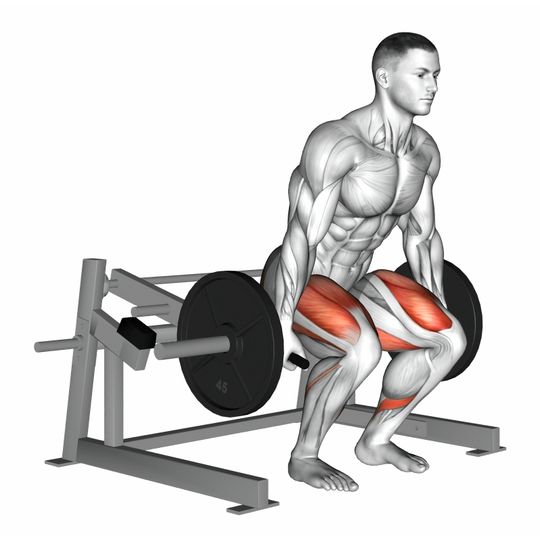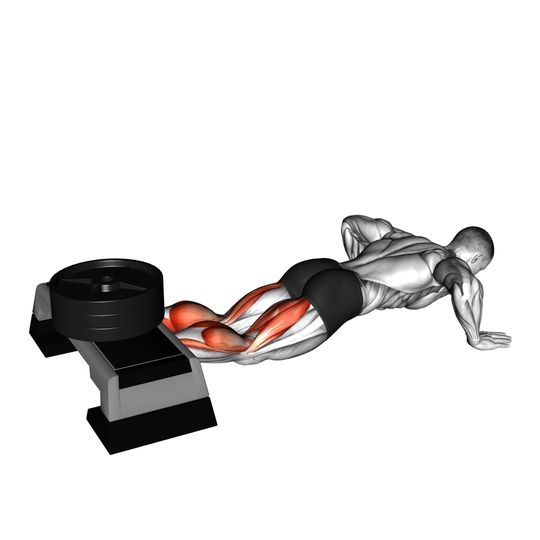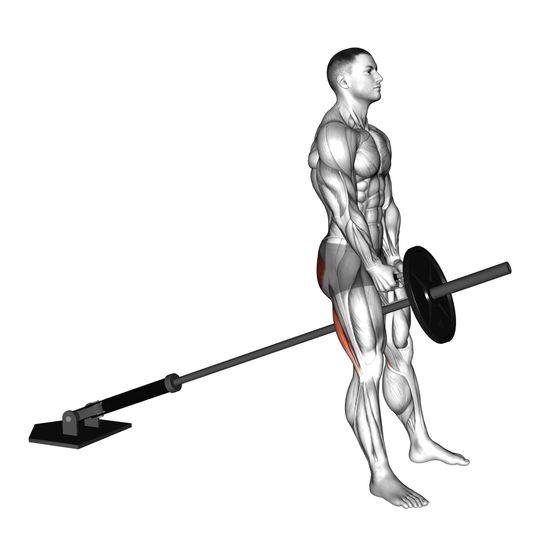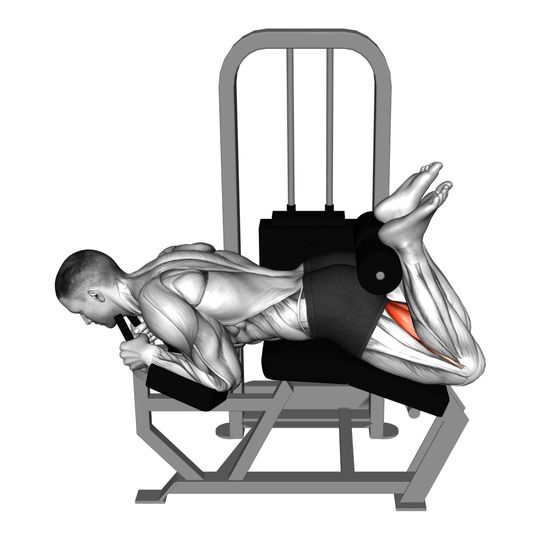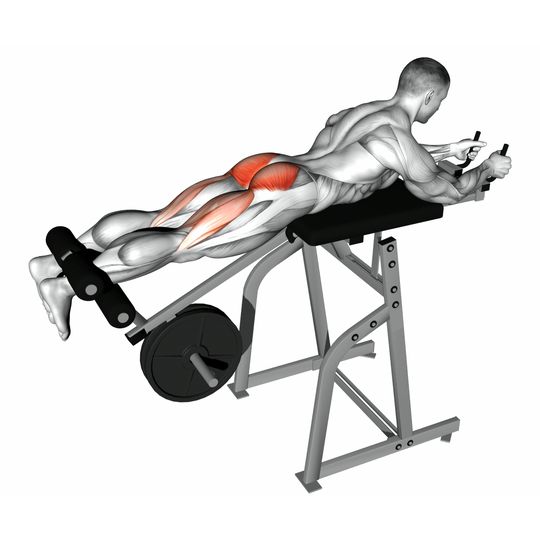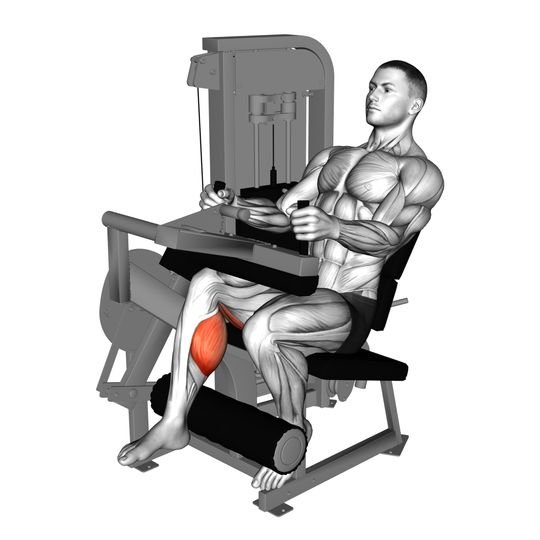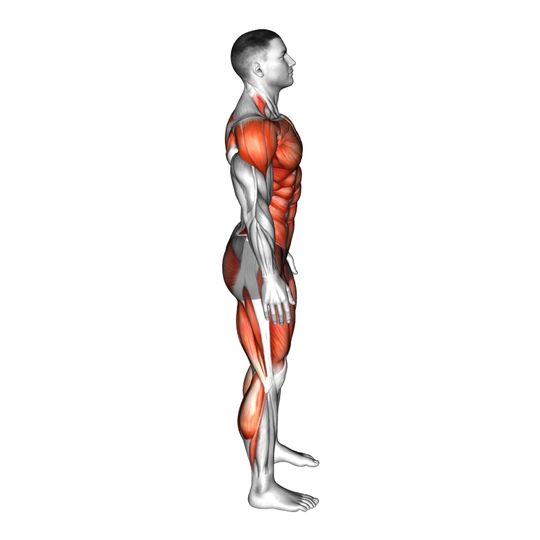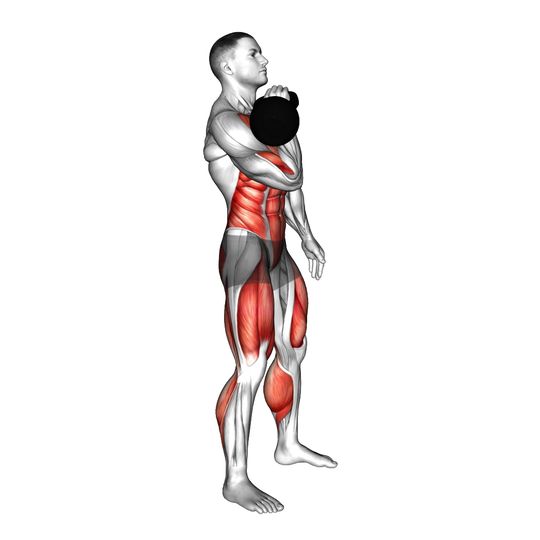


A prone bodyweight movement that eccentrically lengthens and concentrically shortens the hamstrings while the hips drive the torso upright. It emphasizes knee control and hip extension to strengthen the posterior chain.
How to do the Glute Ham Raise#
- Set the footplate and rollers so your ankles are secured and your knees sit just behind the thigh pad; lie face down on the bench.
- Brace your core and come to an upright torso with your knees bent to about 90 degrees.
- Slowly extend your knees to lower your body forward until your torso is roughly horizontal and you feel tension in the hamstrings.
- Pull yourself back by flexing the knees and driving the hips forward, squeezing the hamstrings and glutes to return to the vertical position.
- Optional: increase resistance by holding a weight plate on your chest or behind your neck, and move deliberately without using your hands to push.
Muscles worked#
The glute ham raise trains the hamstrings at both joints they cross. As you lower, the knee straightens while the hips stay locked, so the hamstrings lengthen under your full bodyweight; on the way back up they flex the knee and drag your torso upright. The glutes hold the hips extended the entire time, which is why they burn even though nothing visibly moves at the hip. Very few gym exercises load the hamstrings this hard through their full length.
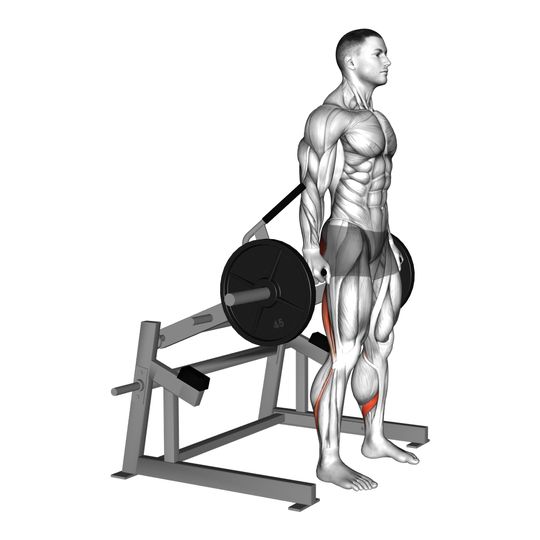
The calves work harder than most people expect because the gastrocnemius crosses the knee and helps pull you back up, which is also why pointing the toes into the footplate makes the rep easier. The spinal erectors and abs keep the torso a rigid plank so the hamstrings have something solid to pull on. If your lower back tires before your hamstrings, the hips are drifting and you are turning it into a back extension.
- Primary: Hamstrings (Biceps Femoris, Semitendinosus & Semimembranosus), Glutes (Gluteus Maximus)
- Secondary: Calves (Gastrocnemius & Soleus), Lower back (Erector Spinae), Abs (Rectus Abdominis)
Common mistakes#
- Pushing with the hands instead of using the hamstrings to pull you up.
- Allowing the hips to collapse or hinge forward rather than maintaining a straight line through the torso.
- Lowering too quickly and relying on momentum instead of controlled knee extension.
- Incorrect foot or knee placement so the rollers and pad do not stabilize the ankles and thighs.
Why it works#
The glute ham raise is the closest thing in the gym to a loaded eccentric hamstring exercise you can actually progress, and eccentric hamstring strength is the single most reliable lever for reducing hamstring strains in anyone who sprints or plays field sports. It also builds the knee flexion strength that the deadlift and Romanian deadlift barely touch, since those load the hamstrings only at the hip.
For physique goals it fills the gap left by machine leg curls: the hamstrings work in a stretched position with the hips extended, and the load curve gets harder as you lower, which is exactly the range most lifters are weakest in. It needs no barbell loading or spotter, and the machine lets you scale from assisted reps to plate-loaded sets, so it fits beginners and advanced lifters on the same piece of equipment.
Sets, reps and setup#
Three to four sets of 6-10 reps with two to three minutes of rest, once or twice a week on a lower body or posterior chain day. Treat it as a strength movement, not a burnout; when you hit ten clean reps with full range, add load rather than reps.
- Setup
- Set the footplate so the knees sit just behind the front edge of the thigh pad. Too far forward and the pad blocks knee flexion; too far back and the pad digs into the kneecaps. Lock the hips straight, cross the arms over the chest, and lower in three to four seconds until the torso is horizontal. Drive the toes into the plate and curl yourself back up without letting the hips bend.
- Progression
- If you cannot complete a full rep, hold a light band anchored in front of you or place a box under the pad to shorten the range, then move the footplate back a notch each week. Once bodyweight reps are easy, hold a plate on the chest, then move it behind the head, then hold a dumbbell at arm's length in front of you.
Variations#
- Nordic Hamstring Curl The same knee flexion lowering done from the floor with a partner or anchor holding the ankles, with a longer lever and no thigh pad support.
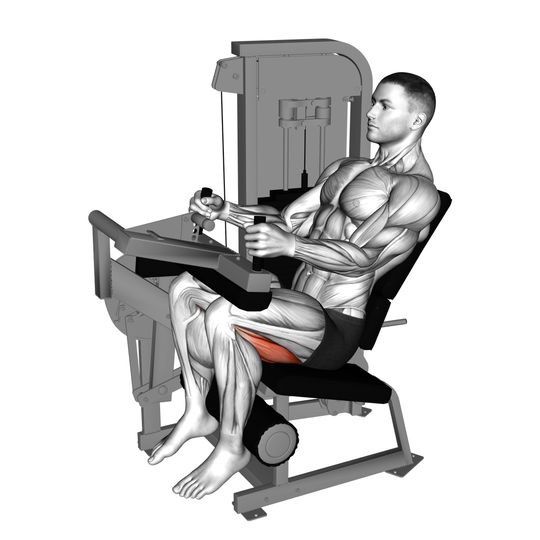
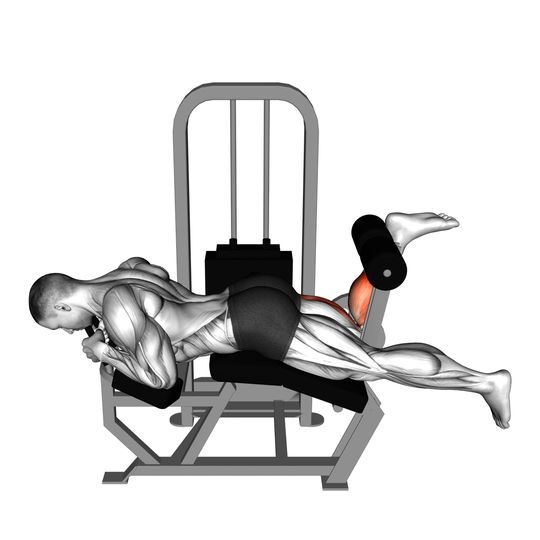
- Lying Leg Curl Isolates the same knee flexion on a machine with a fixed load, which makes it easier to control and to take past failure.
- Barbell Romanian Deadlift Loads the hamstrings through the hips with a straight knee, the complementary pattern that pairs with this one.
- Back Extension Uses the same bench with the pad lower on the hips so the movement comes from the hips and lower back instead of the knees.
Glute ham raise vs Nordic hamstring curl#
Both load the hamstrings by straightening the knee under bodyweight, but the glute ham raise supports the thighs on a pad and starts with the torso horizontal, so the lever gets shorter as you rise and the top half of the rep is manageable. That makes it far easier to complete full reps and to add load once bodyweight is not enough.
The Nordic curl has no pad and the full torso and thigh lever from the knee down, so the bottom of the rep is brutally hard and most people only ever train the lowering phase. It is the better pure eccentric exercise and needs no machine. If you have access to a GHD, use it to build strength through the full range and keep Nordic lowers as an occasional eccentric block.
Common questions#
What muscles does the glute ham raise work?
The hamstrings do most of the work, lengthening on the way down and flexing the knee on the way up. The glutes hold the hips extended throughout, the calves assist the knee flexion, and the lower back and abs keep the torso rigid.
Is the glute ham raise better than leg curls?
It is harder and trains the hamstrings with the hips extended while they stabilise the pelvis, which is closer to how they work in sprinting. Leg curls isolate the same knee flexion with less skill and a smoother load curve. Doing both covers more than either alone.
How do I set up the glute ham raise machine?
Adjust the footplate so the knees sit just behind the top edge of the thigh pad when you are upright. If the pad blocks your knees from bending, move the plate further from the pad; if it presses on your kneecaps, bring it closer.
Why can't I get back up on the glute ham raise?
Most people lack the knee flexion strength to pull the long lever at the bottom. Shorten the range by lowering only to 45 degrees, use a band anchored in front for assistance, or push lightly off the footplate with the toes until the hamstrings catch up.
How many glute ham raises should I do?
Three to four sets of 6-10 controlled reps is plenty for most lifters. Once ten full-range reps are easy, hold a plate on your chest rather than pushing the reps past twelve.