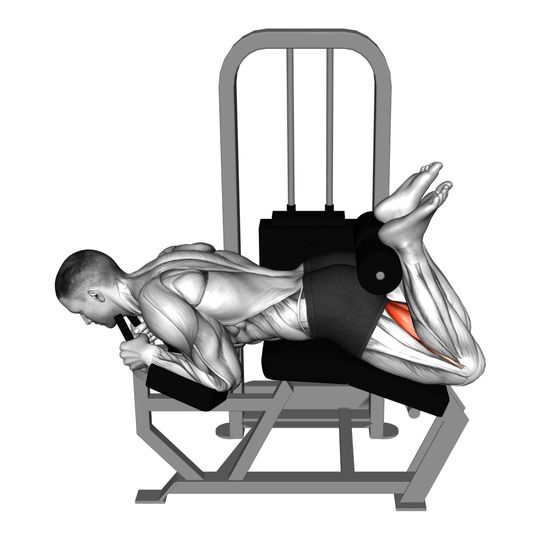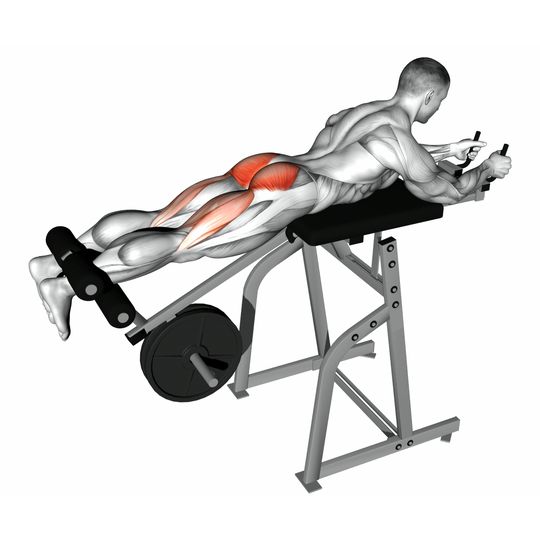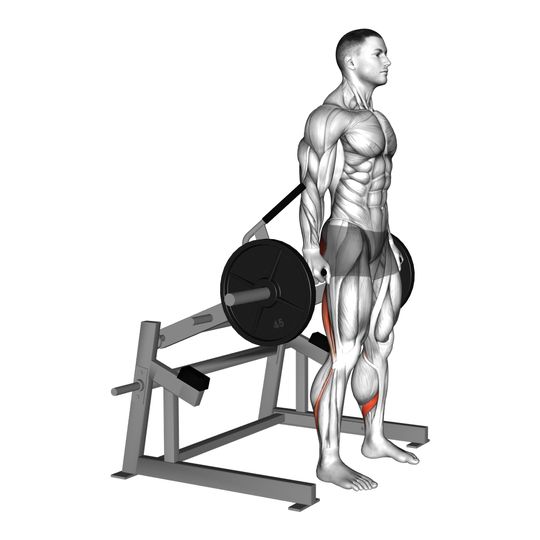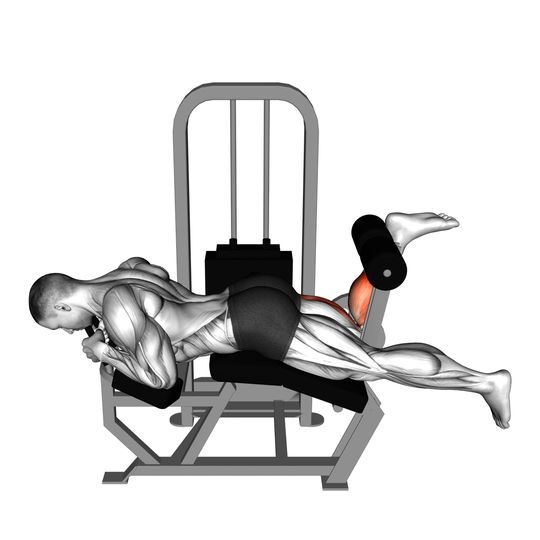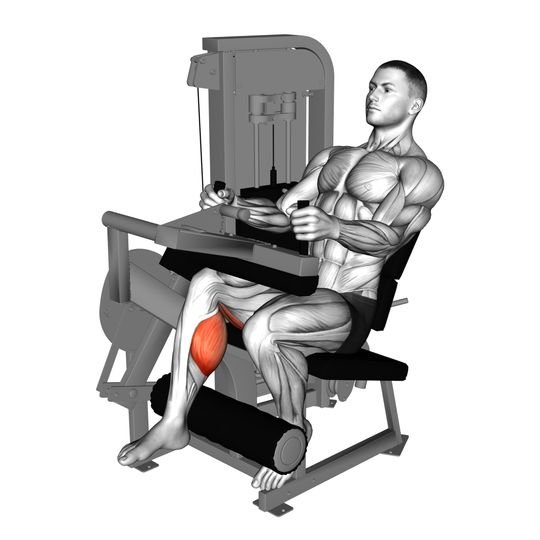


Sit with your back against the machine and bend the knees to pull the lower leg pad toward your glutes, performing knee flexion that primarily works the hamstrings.
How to do the Seated Leg Curl#
- Adjust the seat and lower-leg pad so your knee joint lines up with the machine's pivot and the pad contacts your lower shin.
- Sit tall with your back on the pad and grip the handles or seat edges for stability.
- Exhale and flex your knees to draw the pad toward your buttocks using your hamstrings.
- Pause briefly at the top of the movement with the hamstrings engaged.
- Inhale and slowly extend the legs to return the pad to the starting position under control.
Muscles worked#
The seated leg curl isolates the hamstrings through knee flexion. All three hamstring muscles (biceps femoris, semitendinosus, semimembranosus) bend the knee against the pad, and because the seated position keeps the hips flexed, the hamstrings start each rep already stretched at the hip end. Working a muscle from that lengthened position is why the seated version has been shown to grow the hamstrings more than the lying version at the same effort.
The calves, mainly the gastrocnemius which also crosses the knee, assist with the curl, and pointing the toes slightly reduces their contribution if you want a purer hamstring stimulus. The glutes are largely out of the movement, which is what makes it a good complement to hinge exercises where the glutes take over. Expect the hamstrings to burn along their whole length, including high up near the glutes, on well-performed sets.
- Primary: Hamstrings (Biceps Femoris, Semitendinosus & Semimembranosus)
- Secondary: Calves (Gastrocnemius & Soleus)
Common mistakes#
- Lifting or bridging the hips off the seat during the curl.
- Using momentum or rapid reps instead of controlled knee flexion.
- Not aligning the knee with the machine pivot, causing poor tracking.
- Selecting too much weight and losing control on the return phase.
Why it works#
Hamstrings have two jobs, extending the hip and bending the knee, and deadlifts and RDLs only train the first one. The leg curl covers the second, and the seated version does it with the muscle stretched at the hip, which gives it a rare combination of isolation and long-length loading. For hamstring size it is the best machine in the gym.
It is also easy to recover from and easy to load safely, which makes it ideal for high-effort sets close to failure that would be risky with a barbell. Runners and field athletes benefit from the knee-flexion strength it builds, and lifters with lower back fatigue can train hamstrings hard without touching the spine.
Sets, reps and setup#
Three or four sets of 8-15 reps with 60-90 seconds of rest, once or twice a week. Squeeze at the bottom for a second and take two to three seconds to let the pad return; the lengthening phase is where much of the growth comes from. Take the last set to within a rep of failure.
- Setup
- Adjust the back pad so the knee lines up with the machine's pivot and set the ankle pad on the lower calf just above the heels. Lock the thigh pad down firmly, grip the handles, and pull the pad down and back until the hamstrings are fully contracted. Return slowly to the stretched position without letting the weight bounce.
- Progression
- Add one plate when 15 reps are clean. If the hips are lifting off the seat or the thigh pad is moving, the load is too heavy for strict reps. To make lighter weights harder, add a two-second pause at the bottom or finish with a set of slow single-leg reps.
Variations#
- Lying Leg Curl Face down with the hips extended, which loads the hamstrings hardest in the shortened position.
- Machine Single Leg Seated Leg Curl One leg at a time to even out strength differences and increase the focus on each hamstring.
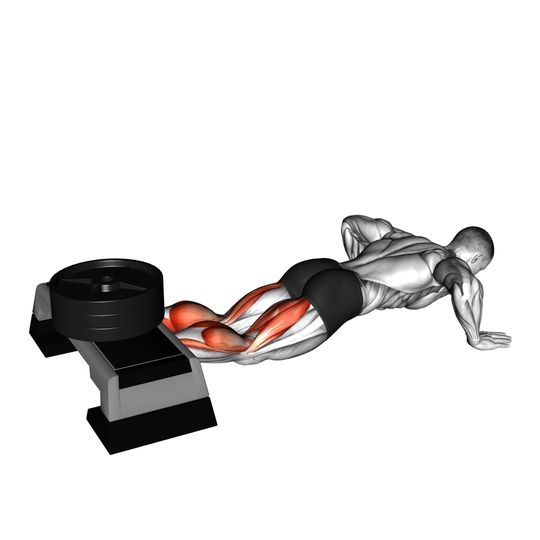
- Nordic Hamstring Curl A bodyweight knee-flexion movement with a brutal eccentric that builds hamstring strength and resilience.
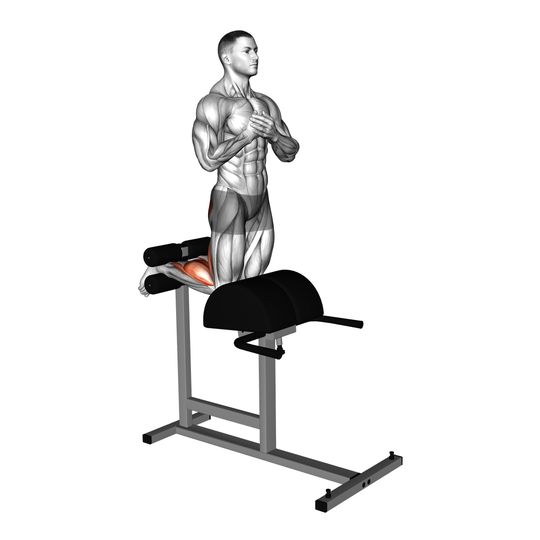
- Glute Ham Raise Combines knee flexion and hip extension on a bench so the hamstrings work at both joints.
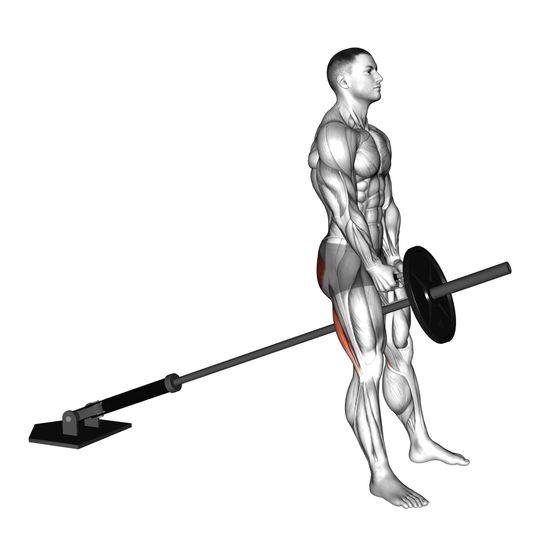
- Barbell Romanian Deadlift The hip-hinge counterpart that trains the hamstrings as hip extensors.
Seated leg curl vs lying leg curl#
Both isolate the hamstrings through knee flexion. The seated version keeps the hips bent, so the hamstrings are stretched at the hip for the entire set and are loaded most heavily near their longest length. A 2021 study comparing the two found roughly 50 percent more hamstring growth over twelve weeks with the seated curl, which is a large difference for a machine swap.
The lying version has the hips extended, which shortens the hamstrings and lets them contract harder at the top of each rep. It still builds muscle and some lifters find it more comfortable, but if you have access to both, the seated curl should be your default and the lying version a change of stimulus.
Common questions#
What muscles does the seated leg curl work?
The hamstrings are the main target, with the gastrocnemius of the calf assisting. The glutes and lower back are largely uninvolved, which is what makes the machine such a clean isolation exercise.
Is the seated leg curl better than the lying leg curl?
For building hamstring size, yes. The bent-hip position stretches the hamstrings while they work, and research shows noticeably more growth from the seated version. The lying curl is still a good exercise and a fine substitute when the seated machine is taken.
Should my toes be pointed or pulled up during leg curls?
Pulling the toes toward the shins brings the calves in and lets you curl more weight. Pointing the toes reduces calf involvement so the hamstrings do more of the work with a lighter load. Either is acceptable; keep it consistent so your progress is comparable.
How heavy should I go on the seated leg curl?
Heavy enough that 8-15 controlled reps with a slow return is hard while the hips stay down on the seat. Most intermediate lifters end up working in the 40-70 kg range. Form breaks quickly on this machine when the load is too high, so err lighter.
Can leg curls replace deadlifts for hamstrings?
No. Leg curls train knee flexion and deadlifts and RDLs train hip extension, and the hamstrings do both. A complete hamstring program has one of each. If you can only do one, the RDL trains more muscle overall, but the leg curl is the better isolation tool.