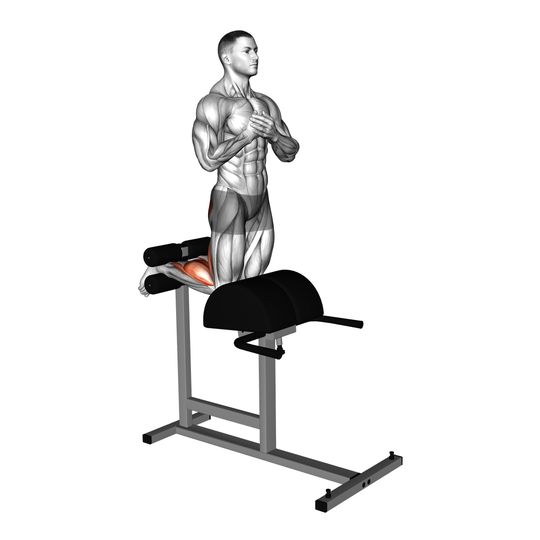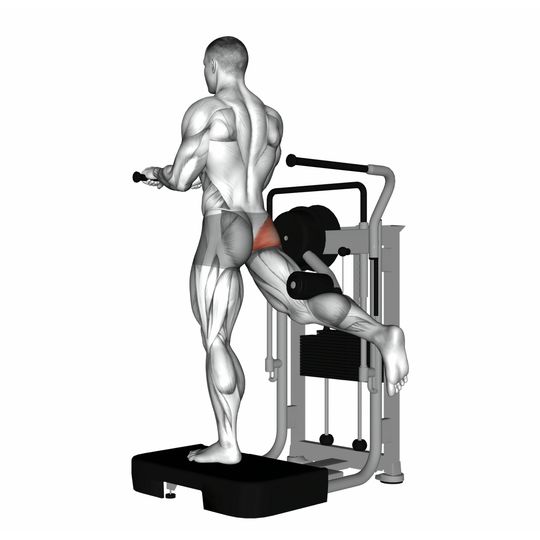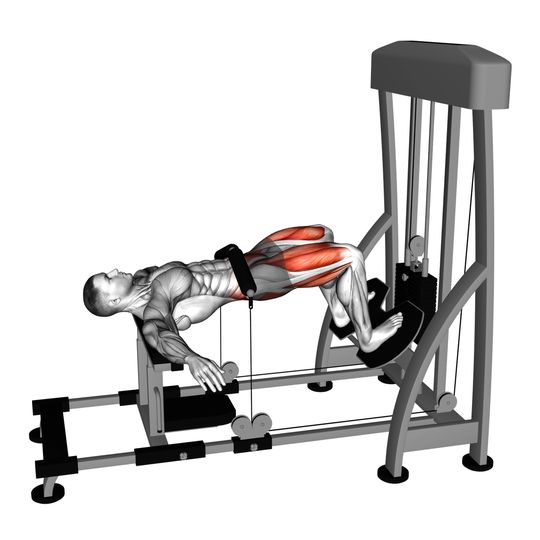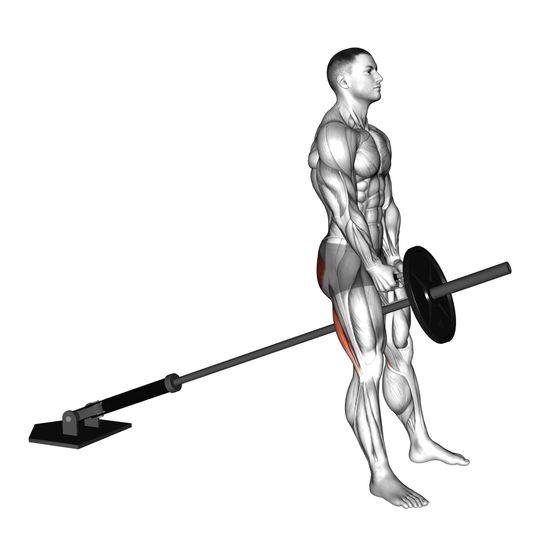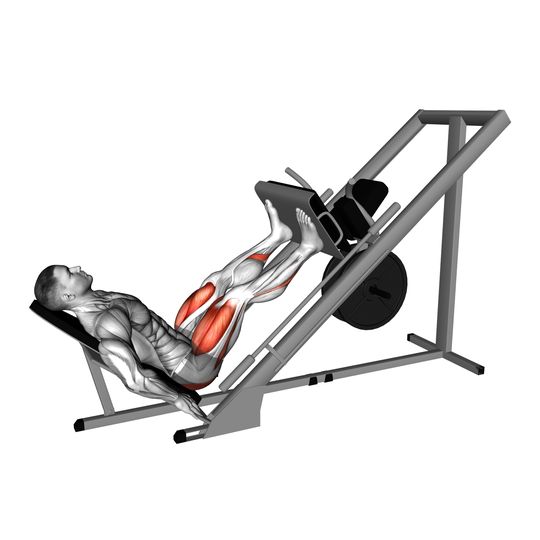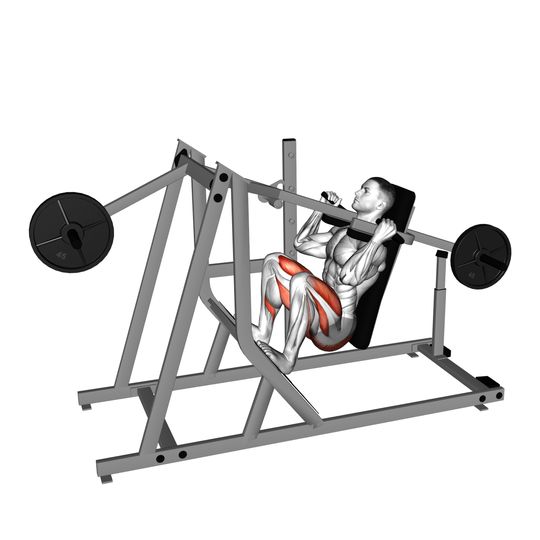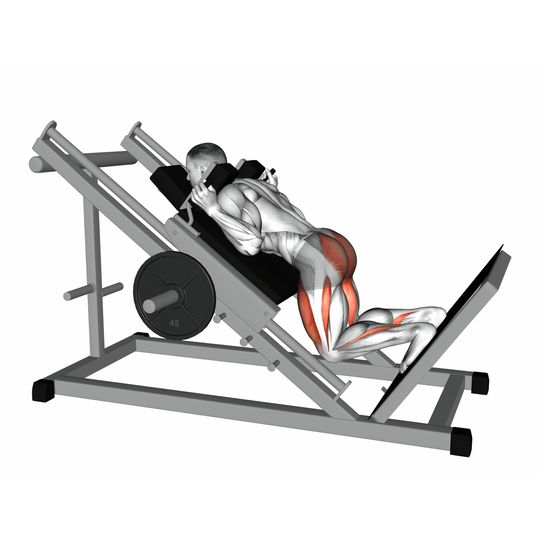


Lie prone on the reverse-hyper machine and extend your hips to raise your legs behind you, driving primarily with the glutes and hamstrings. Perform the lift in a controlled arc from the hanging start position to a stopped top position.
How to do the Reverse Hyperextension#
- Position yourself face down with your hips supported on the pad and your legs hanging off the end of the machine.
- Secure your upper body by gripping the machine or its supports for stability.
- Exhale and extend at the hips to lift your legs until they are in line with your torso.
- Hold briefly at the top while consciously contracting the glutes and hamstrings.
- Lower the legs slowly back to the starting position with control, maintaining a neutral lower back throughout.
Muscles worked#
The reverse hyperextension is a hip extension exercise driven by the glutes and hamstrings. Your torso is pinned to the pad and the legs swing behind you, so the gluteus maximus does the heavy lifting from a fully stretched position at the bottom to a squeezed finish at the top. The hamstrings assist because the knees stay nearly straight, which puts them under load at the hip rather than the knee.
The lower back works in a way few exercises manage: the spinal erectors contract to hold the trunk still while the pendulum unloads and then gently tractions the lumbar spine at the bottom of each rep. That is why it feels relieving rather than compressive. The abs and obliques brace to stop the hips rolling on the pad, and the grip and upper back hold you in place.
- Primary: Glutes (Gluteus Maximus), Hamstrings (Biceps Femoris, Semitendinosus & Semimembranosus), Lower back (Erector Spinae)
Common mistakes#
- Using momentum or rapid swinging to lift the legs.
- Overextending and arching the lower back at the top.
- Letting the hips rotate or shift on the pad during the lift.
Why it works#
Most glute work either compresses the spine or asks the lower back to hold a heavy hinge. The reverse hyper does the opposite. The load hangs from your ankles, the erectors work without a bar on top of them, and the bottom position opens up the lumbar spine a little on every rep. For lifters who squat and deadlift heavily, that combination of posterior chain volume and decompression is hard to find anywhere else.
It is also one of the few movements that trains the glutes through their full length with the hamstrings involved, rather than in the shortened range a hip thrust favours. It suits high reps, recovers quickly, and can be done before a lower body session as a warm-up or after it as accessory work without stealing from the main lifts.
Sets, reps and setup#
Three to four sets of 12-20 reps with 60 seconds of rest, two or three times a week. Keep the load moderate and the swing controlled; when the plates start doing the work instead of your glutes, the set has stopped being useful.
- Setup
- Lie face down with your hip crease at the edge of the pad and your legs hanging toward the floor, straps around the ankles. Grip the handles firmly, squeeze your glutes to raise the legs until they are level with your torso, hold for a beat, then let them swing back under control until you feel the stretch through the hips and lower back.
- Progression
- Start with a quarter of your bodyweight on the pendulum and add 5-10 kg once you can hit 20 controlled reps on every set. If your lower back starts arching hard at the top, that is your cue to stop adding load and work on a longer pause at the finish instead.
Variations#
- Machine Back Extension Legs fixed and the torso moves, which puts more of the work into the spinal erectors than the glutes.
- Glute Ham Raise Bends the knees, so the hamstrings work at both joints and the movement is far more demanding for them.
- Cable Pull Through A standing hinge that trains the same glute and hamstring pattern with the spine loaded lightly.
- Barbell Hip Thrust Loads the glutes hardest in the top, shortened position, the opposite end of the range to the reverse hyper.
- Machine Glute Kickback One leg at a time with the torso supported, useful for finding a weaker side.
Reverse hyperextension vs back extension#
On a back extension your legs are fixed and the torso moves, so the spinal erectors and the glutes share the work roughly evenly and the lower back muscles are in the spotlight. On the reverse hyper the torso is fixed and the legs move, which pushes most of the load onto the glutes and hamstrings while the erectors mostly hold still.
If you need a stronger lower back for deadlifts and squats, do the back extension. If your back is already taking a beating from those lifts and you want glute volume that does not add to it, the reverse hyper is the better tool. Many lifters alternate them week to week.
Common questions#
What muscles does the reverse hyperextension work?
The glutes and hamstrings drive the leg swing, while the lower back muscles hold the trunk steady on the pad. The abs and obliques brace the pelvis, and the grip and upper back keep you anchored to the handles.
Is the reverse hyper good for lower back pain?
Many lifters find it relieving because the load hangs from the ankles and the bottom position opens up the lumbar spine instead of compressing it. It is not a treatment for a specific injury, so keep the loads light, avoid heavy swinging, and stop if a position provokes pain rather than easing it.
How much weight should I use on the reverse hyper?
Begin with around 25 percent of your bodyweight on the pendulum and build toward 50 percent over a few months. Sets of 12-20 with a controlled swing tell you more than a heavy number; the moment momentum takes over, you have gone too far.
Should the legs swing or stay controlled?
Controlled on the way up, with a distinct glute squeeze at the top, and a relaxed but not violent swing on the way down. A little momentum at the bottom is part of the design, but kicking the legs up with the lower back defeats the purpose.
Can I do a reverse hyper without the machine?
You can lie face down across a high bench or a glute ham raise pad with your hips on the edge and lift straight legs behind you, adding ankle weights or a light dumbbell held between the feet. It trains the same glute pattern but loses the traction effect of the pendulum.