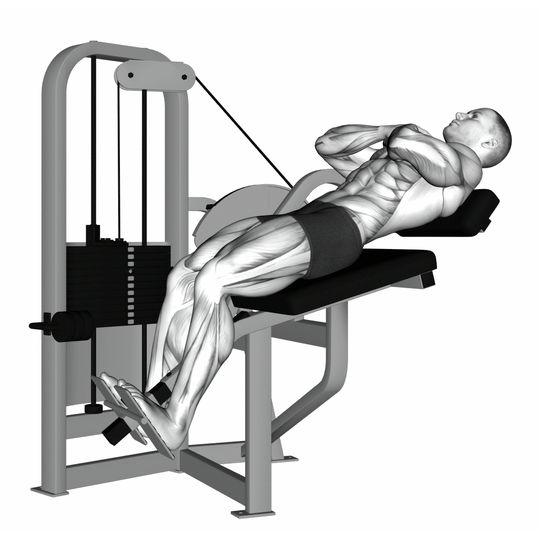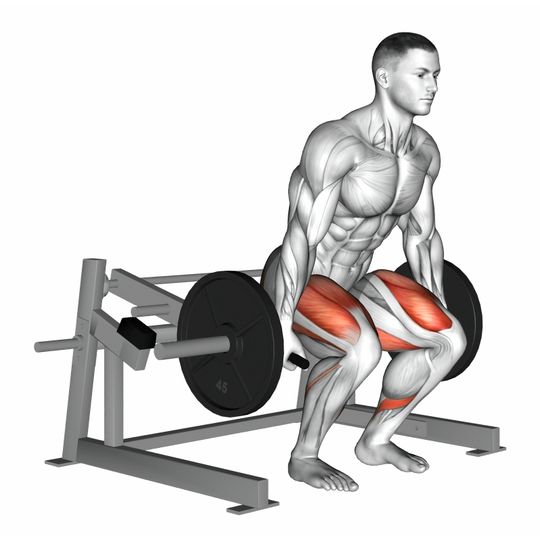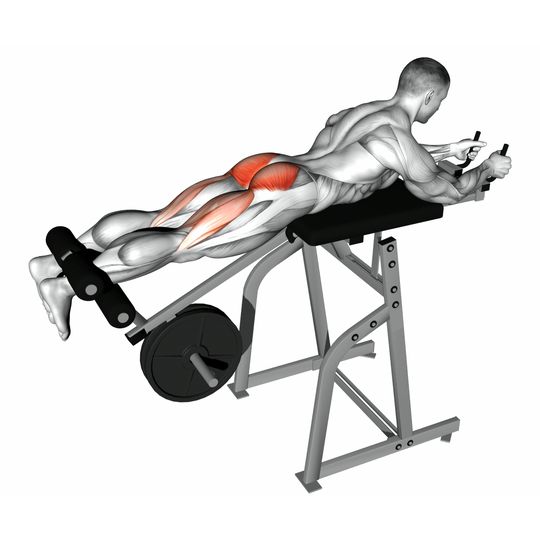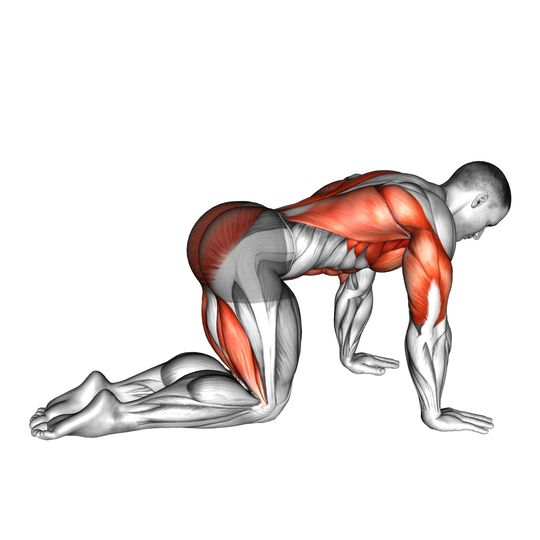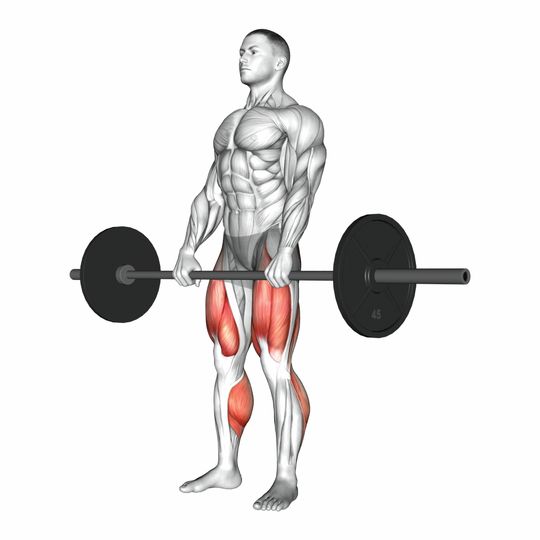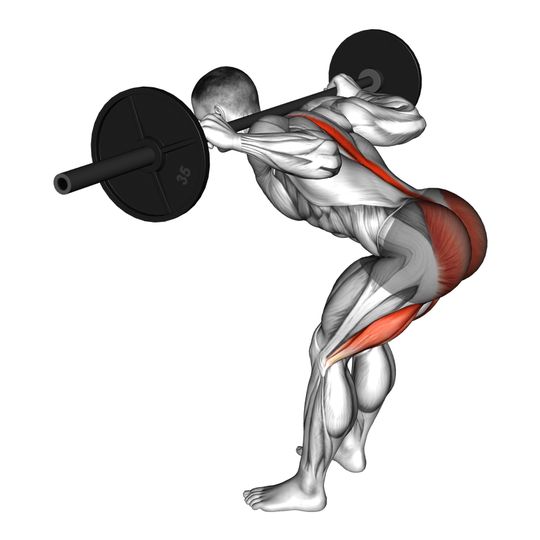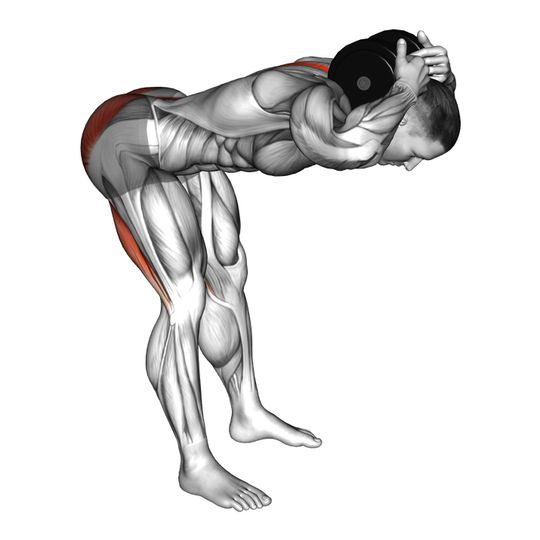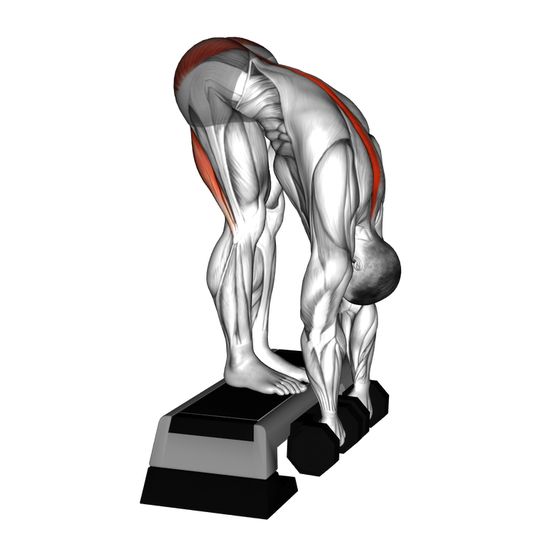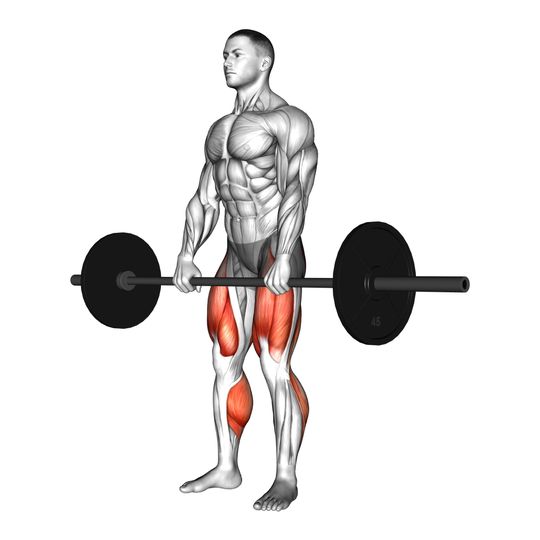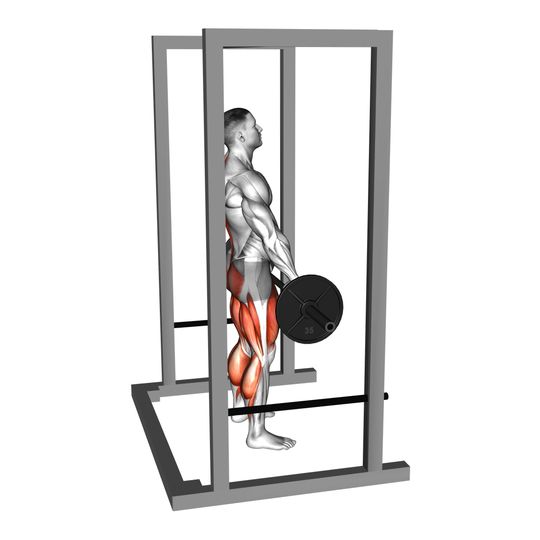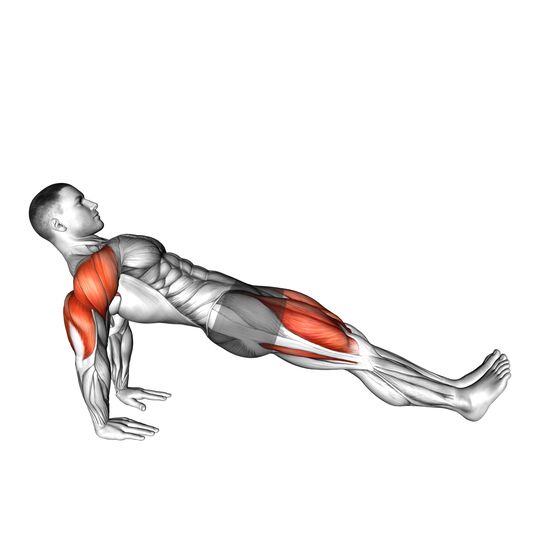


Hinge at the hips to raise and lower your torso, performing spinal and hip extension that primarily works the lower back (lumbar erectors).
How to do the Back Extension#
- Position your hips on the bench pad and secure your feet under the footplate so your upper body can move freely.
- If you want extra load, hold a weight against your chest or cradle it behind your shoulders.
- Maintain a neutral spine and initiate the movement from your hips as you lower your torso in a controlled manner.
- Extend through the lower back and hips to return the torso until it lines up with your legs, then repeat with control.
Muscles worked#
The back extension trains the entire posterior chain, and how you do it decides where the work lands. The lower back muscles (the erector spinae) hold the spine straight while the torso lowers and rises, and if you allow the spine to round and unround they become the main movers. The glutes (gluteus maximus) and hamstrings extend the hips, and with the pad set just below the hip bones and a neutral spine maintained, they take the largest share of the load.
The upper back and neck muscles keep the head and shoulders in line with the torso, and the calves and feet brace against the footplate. Holding a plate against the chest increases the work for everything from the neck down. Done well, you should feel the glutes and hamstrings stretching on the way down and squeezing hard at the top, with the lower back feeling worked but not pumped.
- Primary: Lower back (Erector Spinae)
- Secondary: Glutes (Gluteus Maximus), Hamstrings (Biceps Femoris, Semitendinosus & Semimembranosus)
Common mistakes#
- Allowing the lower back to round during the descent.
- Using momentum or jerking the torso instead of controlled movement.
- Lifting beyond the straight alignment and hyperextending the spine.
- Placing a heavy load behind the neck and straining the cervical spine.
Why it works#
Very few exercises let you load the lower back and glutes in a supported position with no spinal compression from a bar. That makes the back extension the safest way to build the erectors, which are what stop you from rounding in a deadlift or folding in a squat. Lifters who add two or three sets a week usually notice their heavy pulls feel more stable within a month.
It is also one of the better glute exercises available, provided you round the upper back slightly, tuck the chin, and drive the hips into the pad. That version, popularised by glute specialists, keeps the lower back out of the movement and loads the glutes through a long range that hip thrusts do not reach.
Sets, reps and setup#
Three sets of 12-20 reps with 60-90 seconds of rest, one to three times a week. Bodyweight is plenty at first; add a plate held at the chest or a dumbbell once 20 reps are easy. Move slowly on the way down and pause for a second at the top.
- Setup
- On a 45-degree bench, set the pad so the top edge sits just below your hip bones, letting the hips fold freely. Lock the heels against the footplate, cross the arms or hold a plate at the chest, and hinge down until you feel the hamstrings stretch. Drive the hips into the pad and squeeze the glutes to return to a straight line, no higher.
- Progression
- Add 5 kg to the plate when 20 reps are clean, or hold the weight behind the head for a longer lever. Slow the eccentric to three seconds before adding load. For a glute bias, round the upper back and keep the chin tucked; for a lower back bias, keep the spine neutral and the chest up.
Variations#
- Machine Back Extension Seated with a pad across the upper back, which isolates the erectors with an adjustable load.
- Reverse Hyperextension The torso is fixed and the legs swing, which loads the glutes and hamstrings while decompressing the lower back.
- Glute Ham Raise The same bench used for a knee-flexion movement that hammers the hamstrings.
- Barbell Good Morning A standing hinge with a bar on the back, the heavy free-weight version of the same pattern.
- Superman A floor-based extension with no equipment, useful for beginners and warm ups.
Back extension vs Romanian deadlift#
Both are hip hinges that stretch the hamstrings and glutes, but the Romanian deadlift loads the spine with a bar in the hands and demands that the erectors hold a neutral position under heavy weight. It builds more total strength and is the better choice when the goal is a stronger deadlift or bigger hamstrings.
The back extension supports the hips on a pad, so the loads are lighter and the lower back can be trained directly without a bar compressing it. It is easier to recover from, safer for beginners and for anyone with a cranky back, and better for high-rep glute work. Most programs benefit from an RDL as a main lift and back extensions as an accessory.
Common questions#
What muscles does the back extension work?
The lower back erectors, glutes, and hamstrings. With a neutral spine and the pad below the hips, the glutes and hamstrings do most of the work; with a rounded and unrounded spine, the erectors become the main movers.
Are back extensions good for lower back pain?
For many people, yes, as long as the movement is pain-free. Strong erectors and glutes support the spine, and controlled bodyweight extensions are a standard part of rehabilitation. Start light, stop before any sharp pain, and keep the top position at a straight line rather than arching backward.
Should I go past parallel on back extensions?
No. Finish with the torso in line with the legs. Arching beyond that squeezes the lumbar joints under load and does not add any useful work for the glutes or erectors.
How do I make back extensions target the glutes?
Set the pad lower on the hips, turn the toes out slightly, round the upper back with the chin tucked, and think about driving the hips into the pad rather than lifting the chest. Hold a plate at the chest and squeeze the glutes hard for a second at the top.
How much weight should I use for back extensions?
Start with bodyweight until you can do 20 controlled reps, then hold a 10 kg plate and build from there in 5 kg steps. Most strong lifters work with 20-40 kg for sets of 12-15; heavier than that usually means the movement is being rushed.