

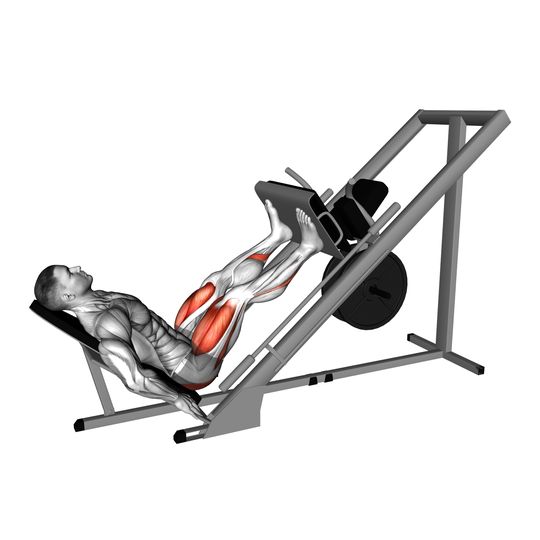
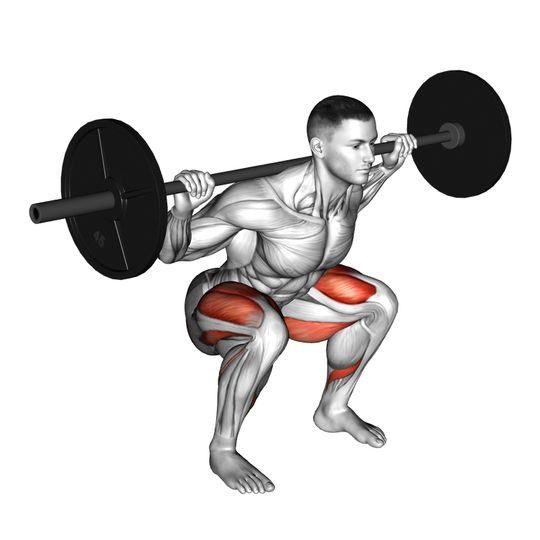
The leg press is the exercise people reach for when they want to train legs hard without the squat: no bar on the back, no balance, no bracing, and a sled you can stack with more plates than you will ever squat. The barbell squat is the opposite — the hardest leg exercise to learn, the most demanding to recover from, and the one that builds the most.
Comparing them fairly means separating what they train from how they feel. The leg press trains the quads and glutes with almost nothing else. The squat trains the quads and glutes plus everything that has to hold a barbell upright. Which one belongs in your program depends on whether that extra everything is something you want.
| Factor | Leg Press | Barbell Squat |
|---|---|---|
| Main target | Quads and glutes | Quads, glutes, adductors, back, core |
| Spinal loading | Very low | High |
| Stability and skill | Minimal | Significant |
| Load | Highest in the gym, not comparable | Your heaviest free-weight leg lift |
| Fatigue per set | Low | High |
| Best for | Volume, beginners, training around a bad back | Strength, athleticism, total lower-body mass |
Leg Press vs Barbell Squat: muscles worked#
Leg Press
- Primary: Quads, Glutes
- Secondary: Hamstrings, Adductors, Calves
Barbell Squat
- Primary: Quads, Glutes
- Secondary: Hamstrings, Adductors, Lower back, Abs, Calves
Muscles worked#
The leg press is a quad and glute exercise, with the adductors and hamstrings assisting depending on foot placement. High feet bring more glute and hamstring; low feet bring more quad; wide feet bring the adductors in. What it does not train is anything above the hips — the back is on a pad and the core has no job.
The squat trains the same quads and glutes and adds the spinal erectors, the entire core, and the upper back holding the bar. The hamstrings and adductors work harder to control the hips, and the whole system has to coordinate to keep the bar over the middle of the foot. That extra muscle is why the squat builds more overall size and strength per set.
The numbers are not comparable#
Most people leg press two to three times what they squat, and the gap says nothing about relative leg strength. On a 45-degree sled you lift only part of the plate weight against gravity, the range of motion is shorter, and nothing has to be stabilised. A 300 kg leg press and a 120 kg squat can belong to the same legs.
This matters when you swap one for the other. Lifters who move from leg pressing to squatting are often shocked at how little they can squat; the leg press had been hiding the fact that stability, bracing, and the upper back were untrained. Treat the leg press number as a number for the leg press only.
Spinal loading and safety#
The leg press is the leg exercise for a spine that needs a break. The back is supported, the load goes through the legs, and the only real risk is letting the hips lift off the pad at the bottom under a heavy sled, which rounds the lumbar spine. Set the safety stops and stop the descent before the tailbone lifts.
The squat loads the spine directly and trains it to handle load — a genuine benefit for anyone who wants a strong back — but it is also why the squat is the first exercise to go when the back is unhappy. Learning to brace well is not optional, and technique errors under a heavy bar cost more than they do on a machine.
Can the leg press replace squats?#
For quad and glute size, largely yes. Studies comparing the two find similar lower-body muscle growth when volume and effort are matched. Physique-focused lifters who do not care about a squat number can build excellent legs on the leg press, hack squat, and lunges.
For strength, athleticism, and carryover to anything outside the gym, no. The squat trains balance, bracing, and total-body coordination that a machine cannot. Most well-designed programs use the squat as the main lift in the 5–8 range and the leg press as a second exercise for 10–15 reps of volume the spine does not have to pay for.
The verdict#
The squat is the better exercise if you want strength, athletic development, or the most muscle per set. It is harder to learn and harder to recover from, and that is the price of everything it builds.
The leg press is the better tool for adding quad and glute volume without fatigue, for beginners who have not learned to squat yet, and for training legs while a back recovers. Squat first, leg press second is the layout most leg days should follow — and the leg press can carry the whole day when the squat has to sit out.
Frequently asked questions#
Is the leg press as good as squats?
For building quad and glute size, close to it — matched-volume studies show similar growth. For strength, balance, core, and carryover to sport or daily life, no. The squat trains far more than the legs. They are best used together rather than as substitutes.
Why can I leg press so much more than I squat?
Because the leg press removes stability, shortens the range, and on an angled sled only lifts part of the plate weight against gravity. A leg press that is two or three times your squat is normal and does not mean your legs are stronger than your squat suggests.
Can I skip squats and just do leg press?
If your goal is leg size and you have no interest in a squat number, yes — pair it with a hack squat or lunge for depth and a hip hinge for hamstrings. If your goal includes strength or athleticism, keep the squat and use the leg press as the second exercise.
Is the leg press safer than squats?
For the spine, yes: the back is supported and the load stays in the legs. The one thing to avoid is letting the hips lift off the pad at the bottom, which rounds the lower back under heavy load. Squats are not dangerous either, but they punish poor bracing and technique more.
Should I do leg press before or after squats?
After. Squats need the most freshness and coordination, so they go first in the 5–8 rep range. The leg press follows for 10–15 reps to add volume without much extra fatigue. On days when you are not squatting, the leg press can lead.