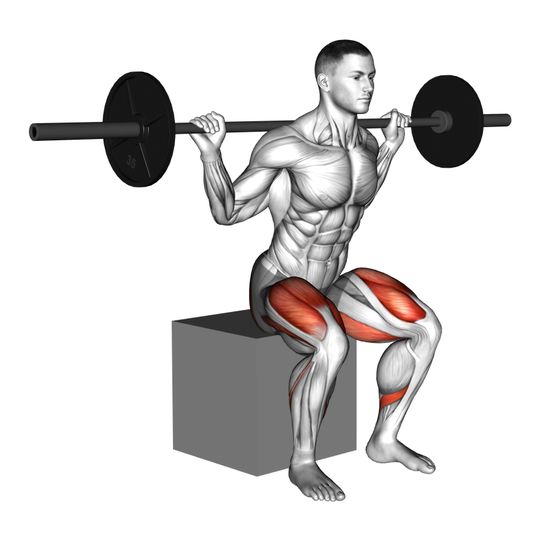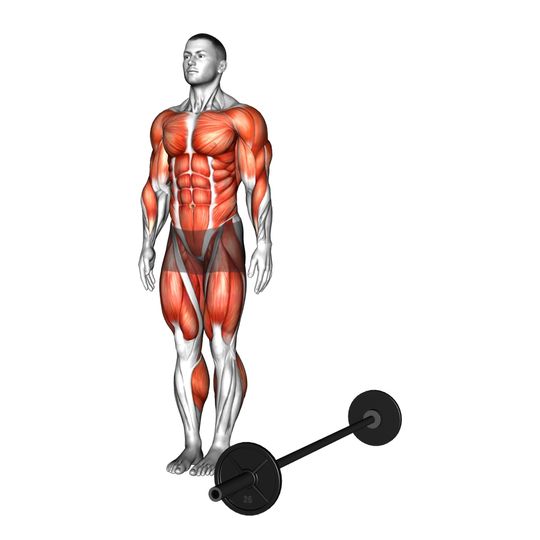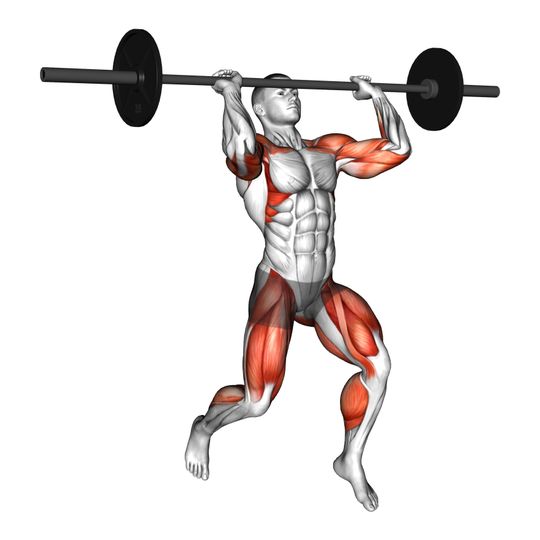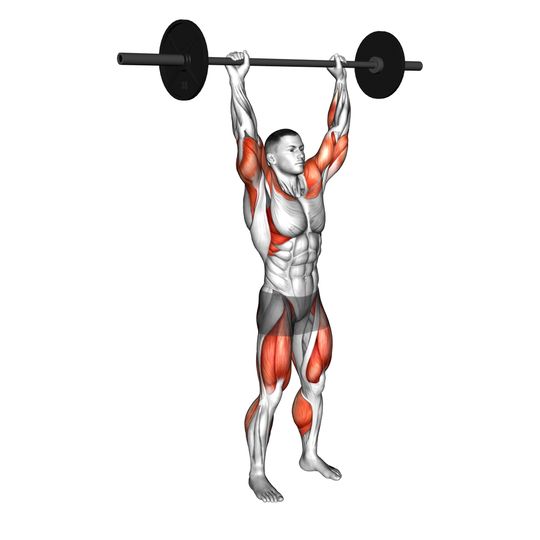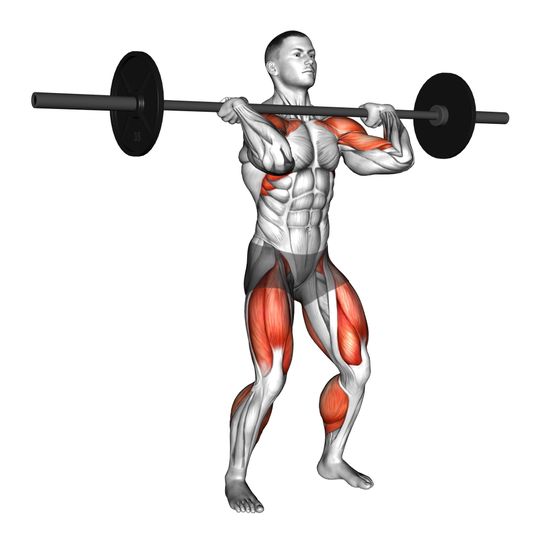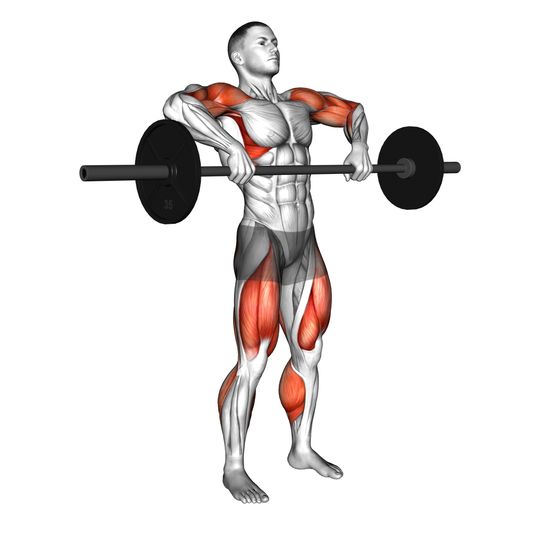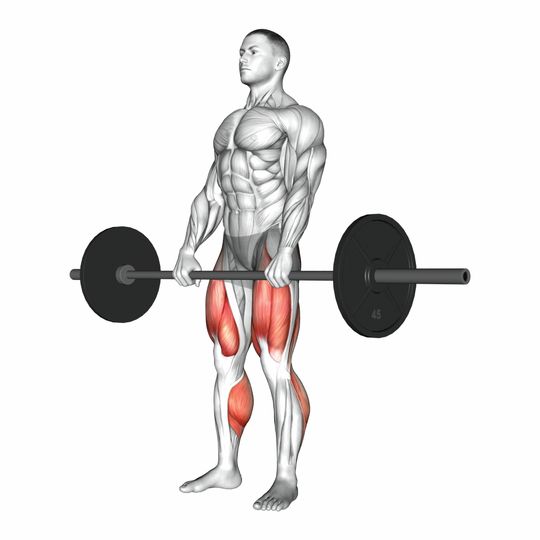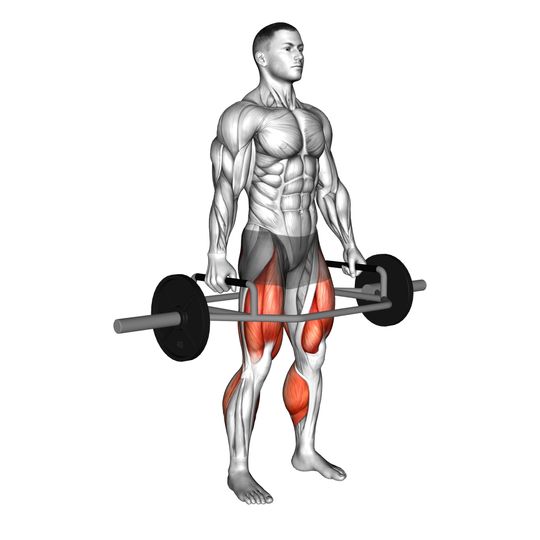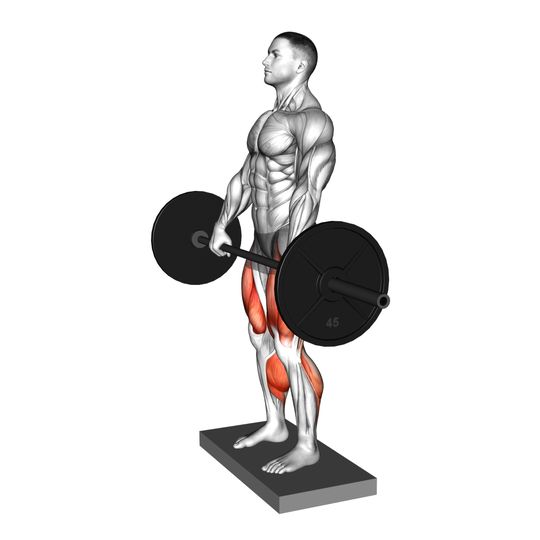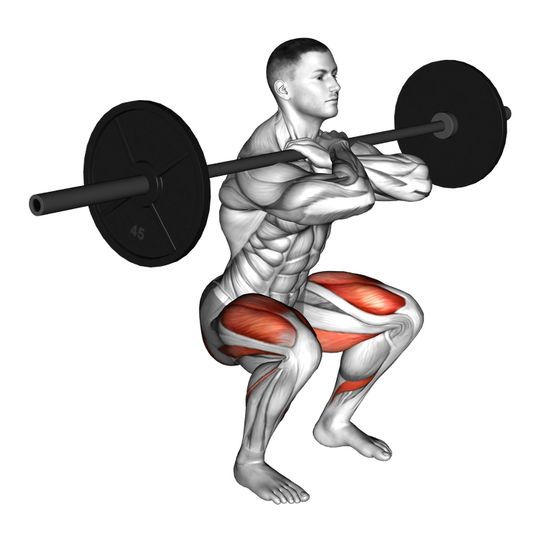


An explosive barbell pulling movement that uses rapid hip and knee extension to drive the bar upward and develops the hips, legs, and upper back.
How to do the Snatch Pull#
- Stand with the bar over your midfoot, take a wide grip, lower your hips, lift your chest, and keep a neutral spine.
- Initiate the lift by extending your hips and knees while maintaining the same torso angle and keeping your arms straight.
- When the bar reaches about mid-thigh, forcefully extend hips, knees, and ankles to accelerate the bar upward without using your arms to lift it.
- Allow your torso to come to full extension as the bar rises, then control the descent of the bar back to mid-thigh.
- Lower the bar to the floor under control and reset your starting position for the next rep.
Muscles worked#
- Primary: Glutes (Gluteus Maximus), Quads (Quadriceps Femoris), Traps (Trapezius)
- Secondary: Hamstrings (Biceps Femoris, Semitendinosus & Semimembranosus), Lower back (Erector Spinae), Upper back (Rhomboids & Middle Trapezius), Calves (Gastrocnemius & Soleus), Forearms (Forearm Flexors & Extensors (incl. Brachioradialis))
Common mistakes#
- Bending the elbows during the pull.
- Changing the torso angle by letting the hips rise too soon.
- Trying to lift the bar with the arms instead of using hip/leg drive.
- Leaving the feet or jumping off the floor during the second pull.