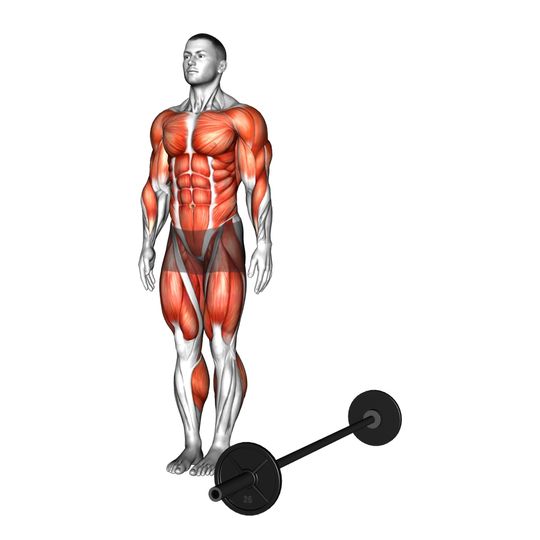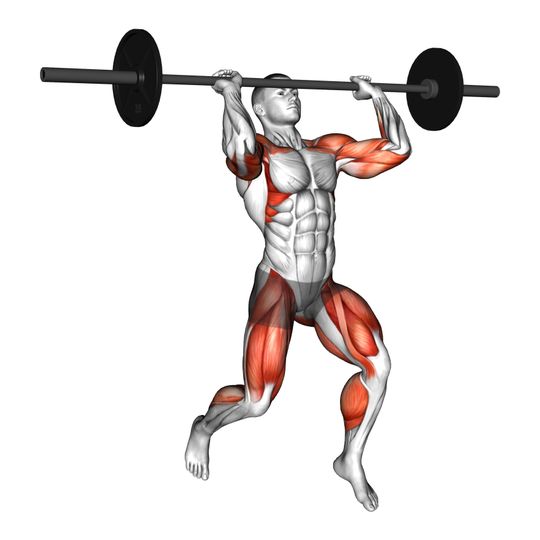


Walking Lunge

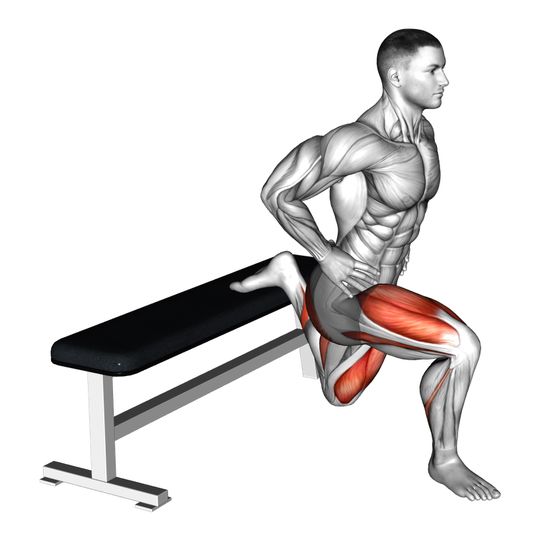
Step forward into a walking lunge, lowering your body to load the quadriceps while the glutes and hamstrings assist.

How to do the Walking Lunge#

  1. Stand tall with feet hip-width apart and brace your core.
  2. Take a controlled long step forward and plant the front foot.
  3. Bend both knees to lower until the front thigh is about parallel to the floor and the back knee nears the ground.
  4. Keep an upright torso and drive through the front heel to bring the rear leg forward into the next step.
  5. Continue stepping forward for the desired distance or repetitions while keeping a steady, controlled pace.

Muscles worked#

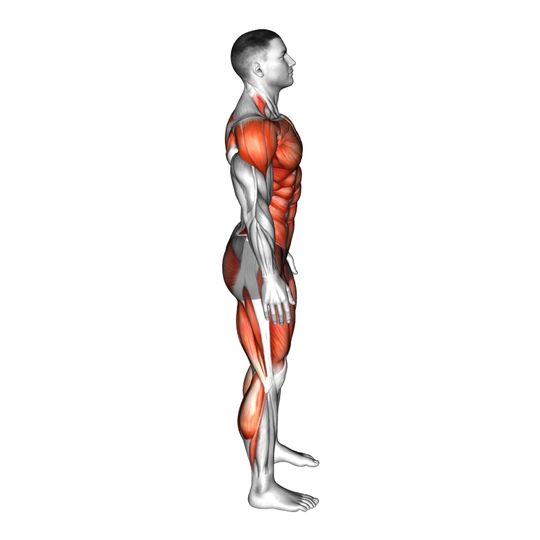
  • Primary: Quads (Quadriceps Femoris), Glutes (Gluteus Maximus)
  • Secondary: Hamstrings (Biceps Femoris, Semitendinosus & Semimembranosus), Adductors (Adductor Magnus, Longus & Brevis (Hip Adductors)), Calves (Gastrocnemius & Soleus), Abs (Rectus Abdominis)

Common mistakes#

Track the Walking Lunge in Gript: your previous sets in view while you train, records detected automatically, and an estimated 1RM chart from every hard set.

Download on the App StoreGet it on Google Play
4.7 average ratingLoved worldwide

You're already in Gript

Everything on this page is also available inside the app — this article opens from Help, and the calculators live under Tools.

Frequently asked questions#

What muscles does the Walking Lunge work?

The Walking Lunge primarily works the quads, glutes. The hamstrings, adductors, calves, abs assist as secondary muscles — they stabilise the movement and take over when the main target fatigues. If you feel it mostly in the hamstrings, adductors, calves, abs, lighten the load and slow the lowering phase.

What equipment do I need for the Walking Lunge?

None. The Walking Lunge is a bodyweight exercise, so all you need is enough space to move through the full range of motion.

Is the Walking Lunge suitable for beginners?

Not as one of your first exercises. The Walking Lunge is rated intermediate, so it suits lifters who already have a few months of consistent training behind them. Build the pattern on an easier variation first, then come back to it.

What are good alternatives to the Walking Lunge?

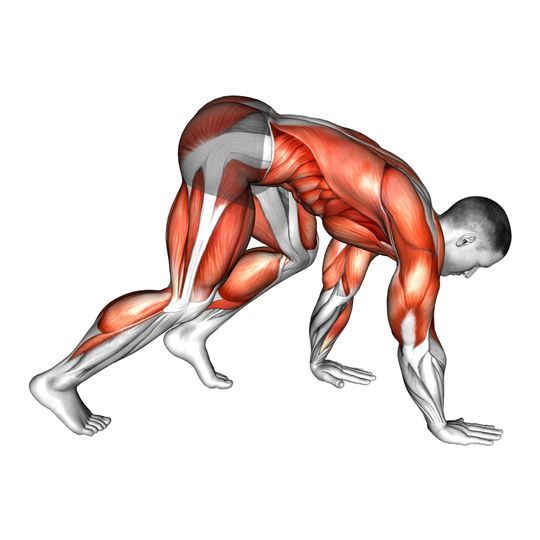
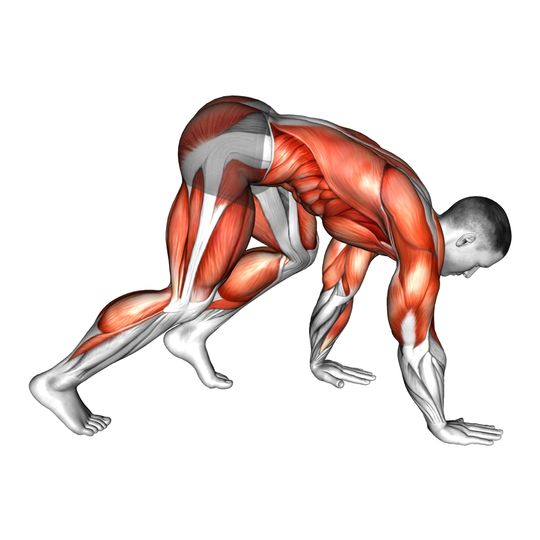
Aerobics, Bear Crawl, Bear Crawl Hold all train the same primary muscles as the Walking Lunge. Pick whichever one matches the equipment in front of you.