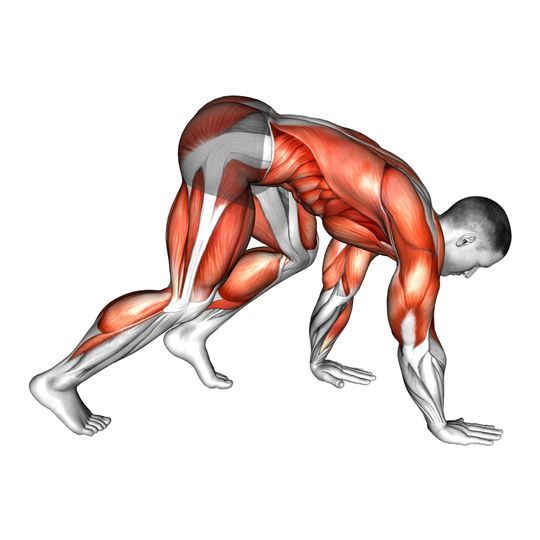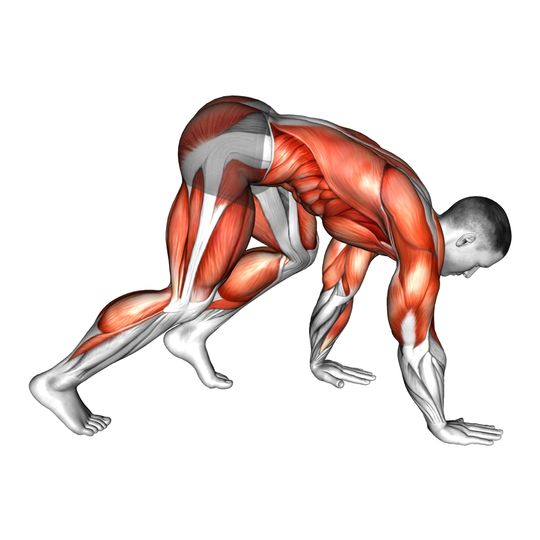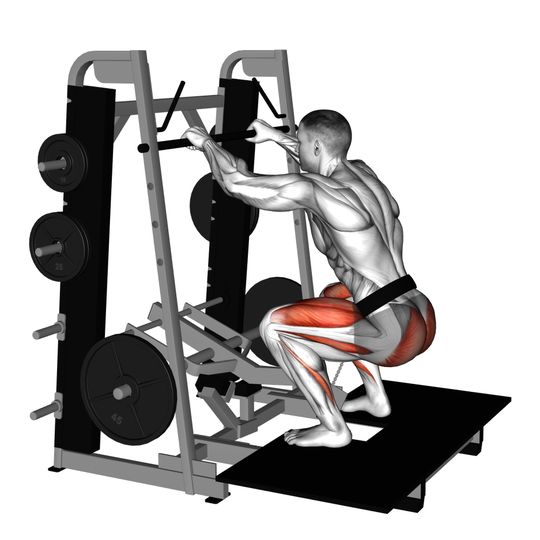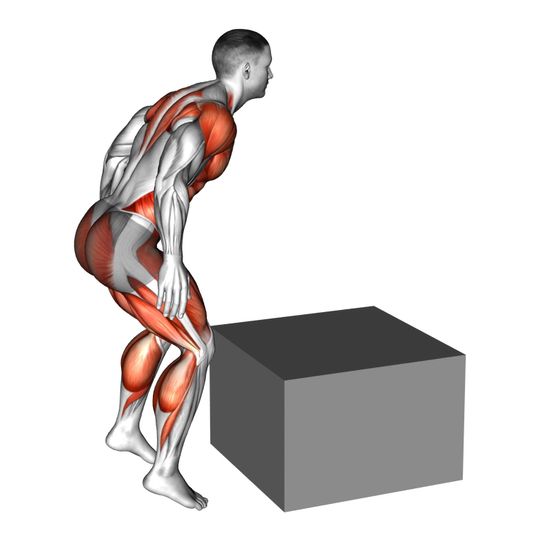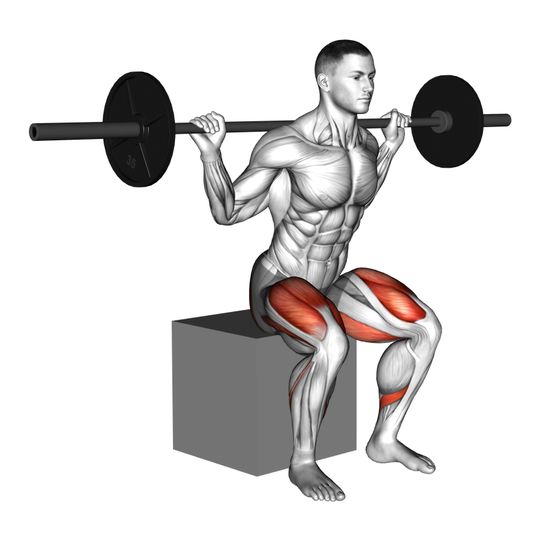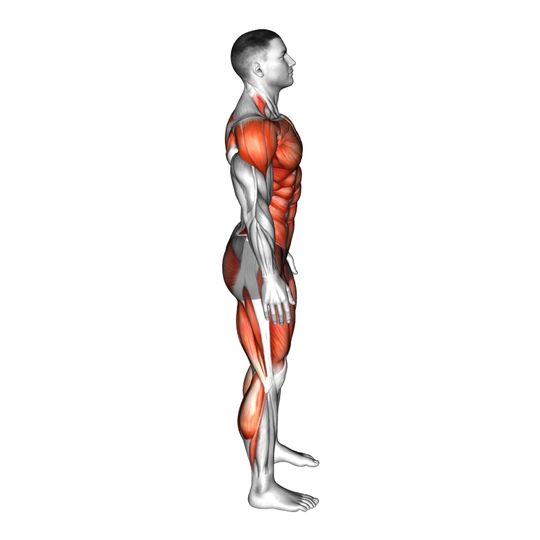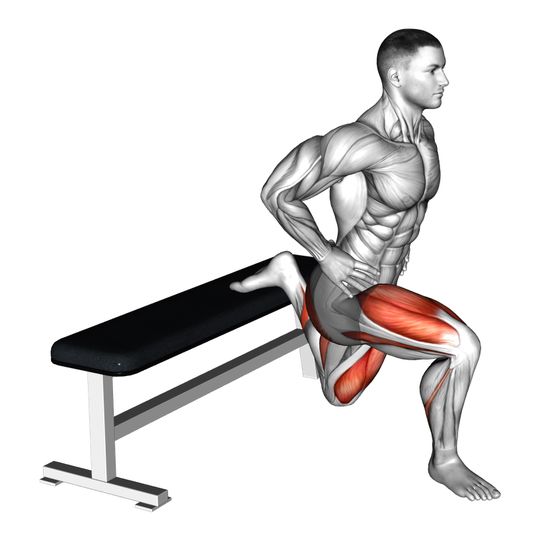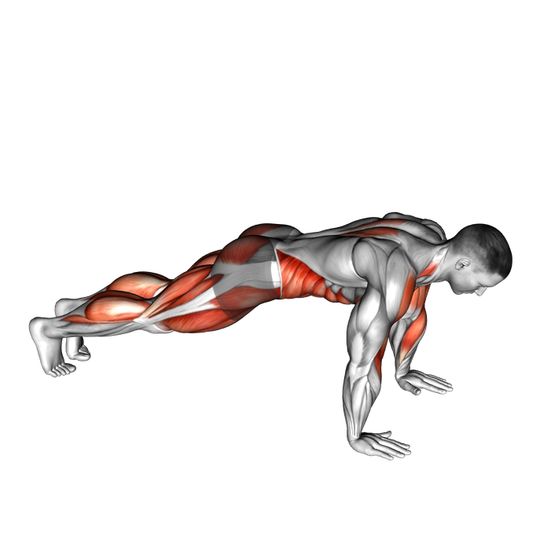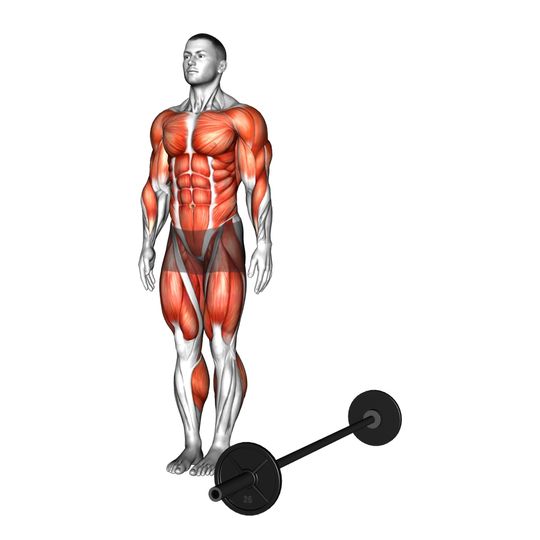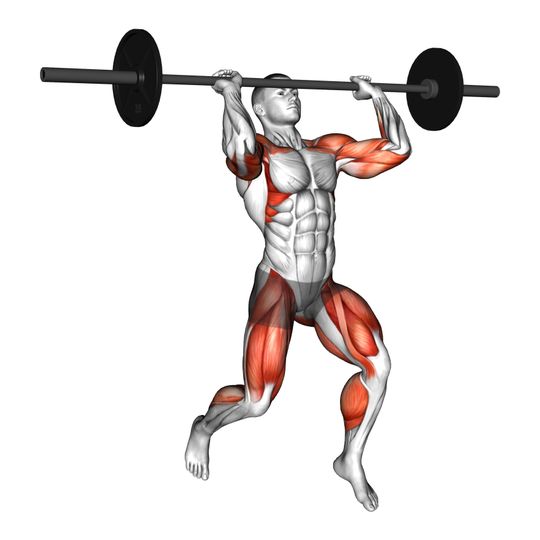


A deep lateral single-leg squat that shifts the hips to one side to load the working leg, primarily stressing the gluteus maximus, gluteus medius, and quadriceps.
How to do the Cossack Squat#
- Stand with a wide stance and toes pointing forward or slightly outward.
- Shift your hips to one side and bend the knee of that leg while keeping the opposite leg extended.
- Sit back into the bent knee with your chest upright and spine neutral, keeping weight through the heel and mid-foot of the working leg.
- Pause at the bottom, then drive through the heel of the bent leg to return to the starting position.
- Repeat for the prescribed reps, then switch sides.
Muscles worked#
The Cossack squat is a deep single-leg squat to the side, and the bent leg does the lifting. The quads and glutes of the working leg lower you into a full-depth squat and drive you back up, with the gluteus medius on the outside of the hip working hard to keep the knee tracking over the foot as the hips shift sideways. It is as deep as a pistol squat but with the other leg on the floor for balance, so most people can load the bottom position much more comfortably.
The adductors of the straight leg get a long, loaded stretch at the bottom, and the adductors of the bent leg help pull you back to the middle. The hamstrings and calves stabilise the knee and ankle, and the abs and obliques keep the torso upright as the weight shifts. Expect the inner thigh of the straight leg and the glute of the working leg to be the sorest the next day.
- Primary: Quads (Quadriceps Femoris), Glutes (Gluteus Maximus), Adductors (Adductor Magnus, Longus & Brevis (Hip Adductors))
- Secondary: Abductors (Gluteus Medius & Minimus (Hip Abductors)), Calves (Gastrocnemius & Soleus), Hamstrings (Biceps Femoris, Semitendinosus & Semimembranosus), Abs (Rectus Abdominis)
Common mistakes#
- Letting the bent-knee heel lift off the floor.
- Rounding or collapsing the torso instead of keeping a neutral spine.
- Allowing the bent knee to cave inward past the toes.
- Bending the opposite leg instead of keeping it extended.
- Shifting weight onto the straight leg instead of loading the working leg.
Why it works#
Almost all leg training happens in a straight line, and the Cossack squat is one of the few exercises that loads the legs and hips sideways. That builds the adductors, gluteus medius, and hip rotators that keep the knees healthy in squats and lunges and that field sport athletes rely on for cutting and changing direction. It fills a gap squats, deadlifts, and lunges leave open.
It also improves mobility while building strength. The deep position stretches the adductors, groin, and ankles under load, which is more effective than static stretching for opening up a wide-stance squat or a sumo deadlift. It needs no equipment and loads easily with a kettlebell at the chest, so it fits warm-ups, home training, and leg days.
Sets, reps and setup#
Two to three sets of 6-10 reps per side with 60-90 seconds of rest, once or twice a week. Alternate sides or finish one side first; either works. Move slowly, with a two to three second descent and a brief pause at the bottom, and treat it as a controlled mobility and strength drill rather than a place to push heavy weight.
- Setup
- Take a stance well wider than the shoulders with the toes forward or slightly out. Shift the hips to one side and sit down over that heel as deep as you can, letting the other leg straighten with the heel down and the toes pulled up. Keep the chest up, then drive back to the middle and repeat to the other side.
- Progression
- Hands free first, then a light counterweight held in front for balance, then a goblet-held kettlebell of 8-24 kilos. Depth before load: add weight only when you reach the bottom with the heel down and the torso upright. If the heel lifts or the knee caves, narrow the stance or hold a post until the ankle and hip open up.
Variations#
- Lateral Lunge Stepping out to the side and back rather than staying in a wide stance, shallower with more hip hinge.
- Lateral Squat A fixed wide stance with a partial-depth side shift, an easier entry point before full Cossack depth.
- Goblet Squat Two-legged squat with the weight at the chest, the loading method that transfers to a weighted Cossack.
- Assisted Pistol Squat Full-depth single-leg squat with support, the next step for lifters who want the other leg off the floor.
Cossack squat vs lateral lunge#
The lateral lunge steps out to the side from standing, loads the working leg with the hips pushed back like a partial squat, and steps back in. The depth is moderate, the movement is quicker, and it is easy to load heavily with dumbbells, which makes it the better choice for athletes who want lateral strength and power without spending time in the bottom position.
The Cossack squat stays in a wide stance and sits all the way down over one heel while the other leg straightens. The depth is far greater and the adductor stretch much stronger, so it is the better exercise for mobility and end-range strength. Start with the lateral lunge and add Cossack squats as the hips open up.
Common questions#
What muscles does the Cossack squat work?
The quads and glutes of the bent leg do the work, with the gluteus medius keeping the knee tracking. The adductors of the straight leg are stretched under load, and the hamstrings, calves, and core stabilise the movement.
Are Cossack squats good for mobility?
Yes, they are one of the most effective loaded mobility drills for the hips, adductors, and ankles. Because you strengthen the muscles while stretching them, the range you gain tends to stick better than it does from static stretching.
Should the heel stay down in a Cossack squat?
Yes, on the working leg. If it lifts, the ankle does not yet have the range for that depth, so stop a little higher or hold a support until it improves. The straight leg heel also stays down with the toes pointing up.
Cossack squat or lateral lunge, which is better?
The lateral lunge for heavier loading and athletic power, the Cossack squat for depth, mobility, and end-range strength. If you are stiff, start with the lunge; if you want to open the hips and adductors, work toward the Cossack.