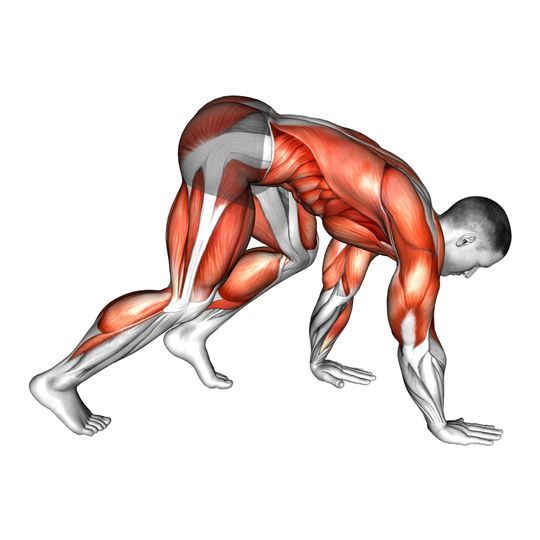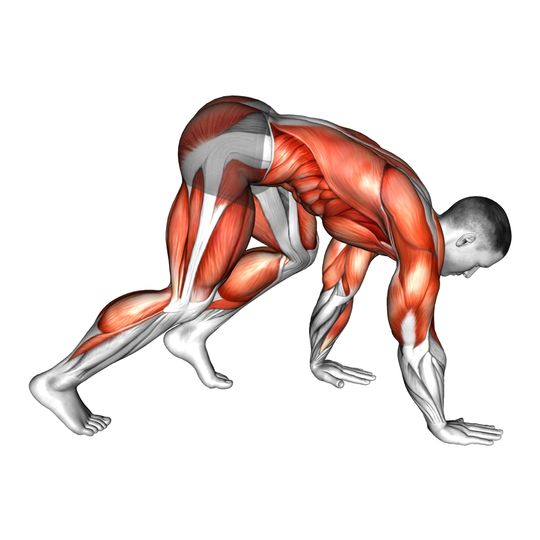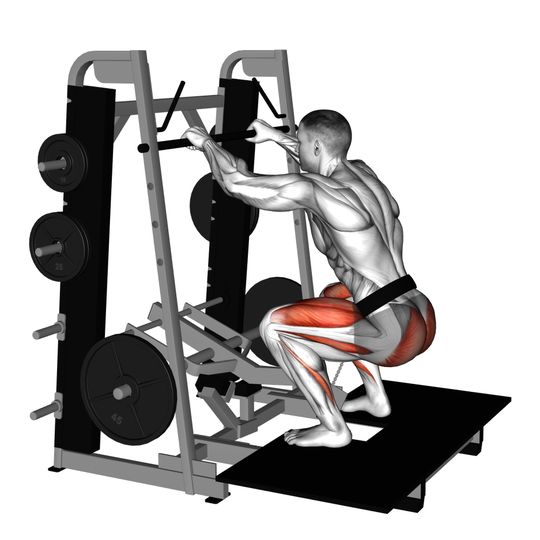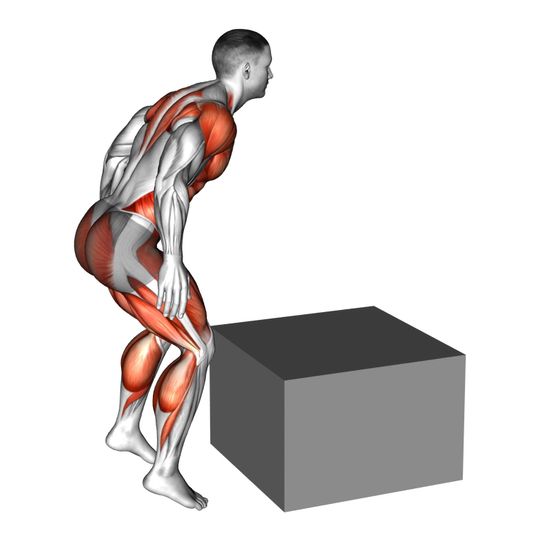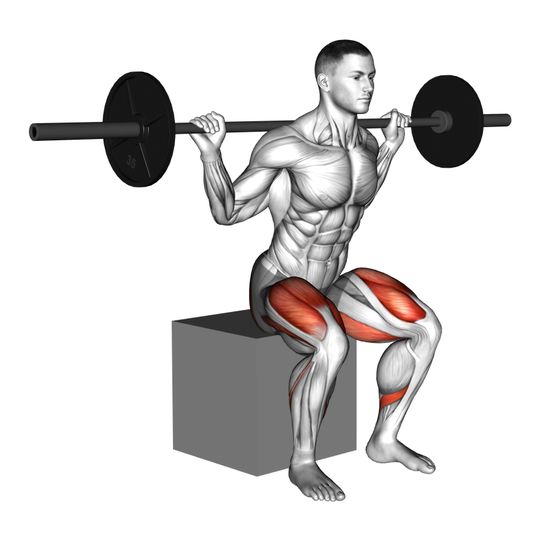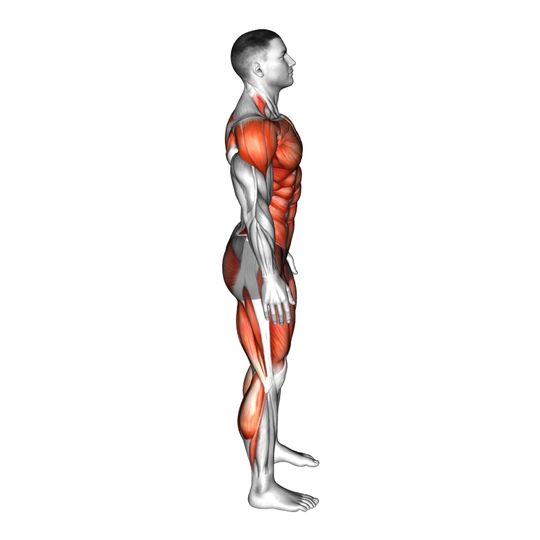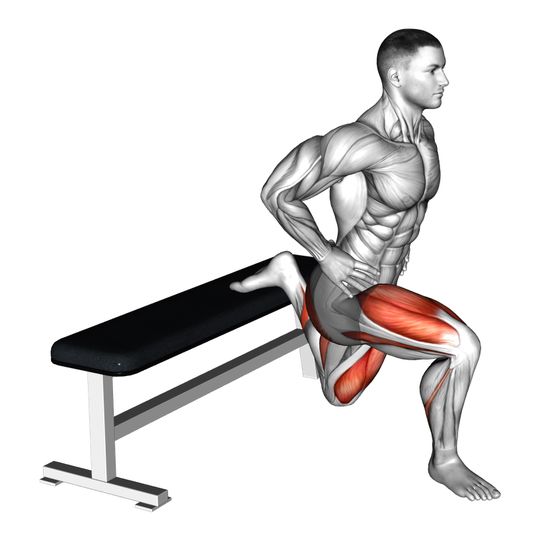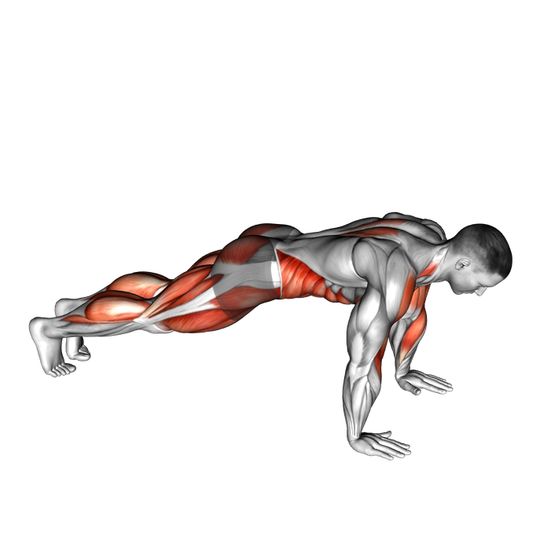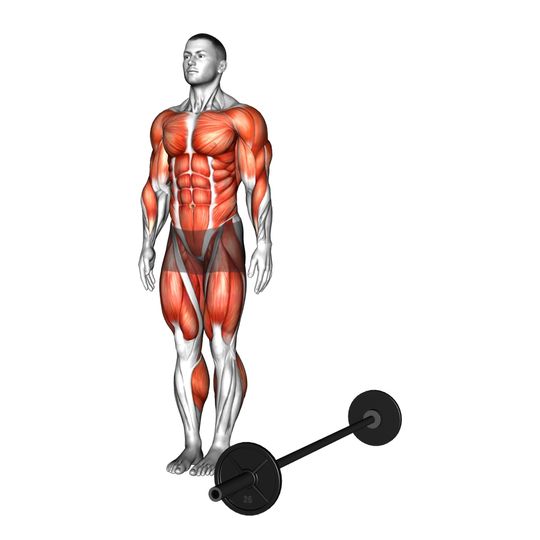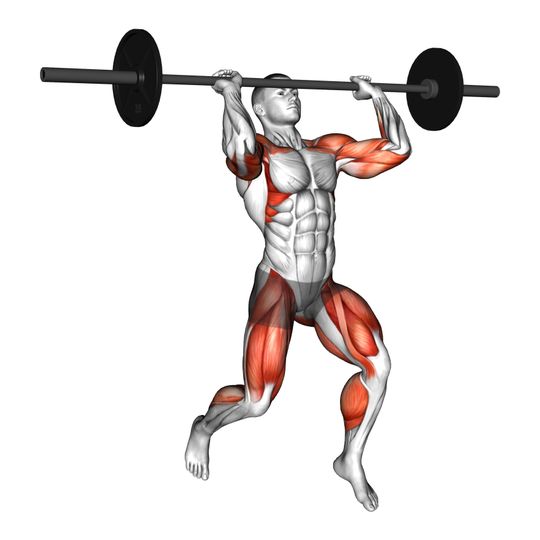


Step out to the side and sit back into a single-leg lunge, moving through the hip and knee. The exercise primarily loads the quadriceps while also engaging the glutes and hamstrings.
How to do the Lateral Lunge#
- Stand tall with feet about hip-width and brace your core.
- Take a wide step to the side and shift your weight onto that foot.
- Push your hips back and bend the stepping knee until the thigh is near parallel while keeping the other leg mostly straight.
- Keep the bent knee tracking over the toes and maintain an upright chest.
- Drive through the heel of the working leg to return to the start and repeat on the opposite side.
Muscles worked#
The lateral lunge loads the stepping leg like a single-leg squat and stretches the other leg like a groin stretch, at the same time. On the working side the quads control the knee bend and drive you back up, the glutes, including the glute medius on the outside of the hip, take the hip flexion and keep the knee from caving, and the adductors of the inner thigh work hard as the hip sits back and out. That inner thigh load is what most forward lunges miss entirely.
The straight trailing leg is not resting: its adductors are lengthening under tension and its abductors and glute med stabilise the pelvis so it does not tip. The hamstrings assist hip extension on the way up, the calves stabilise the ankle as you land wide, and the obliques keep the torso from folding sideways. Expect the inner thighs to be sore the first few times, even if you squat regularly.
- Primary: Quads (Quadriceps Femoris), Glutes (Gluteus Maximus), Adductors (Adductor Magnus, Longus & Brevis (Hip Adductors))
- Secondary: Hamstrings (Biceps Femoris, Semitendinosus & Semimembranosus), Abductors (Gluteus Medius & Minimus (Hip Abductors)), Calves (Gastrocnemius & Soleus), Abs (Rectus Abdominis)
Common mistakes#
- Allowing the knee to collapse inward.
- Shifting weight onto the toes instead of the heel.
- Leaning the torso forward or rounding the lower back.
- Stepping too narrowly or too far, which disrupts balance.
Why it works#
Almost everything in a typical leg program happens in one plane: squats, deadlifts, lunges, and leg presses all move straight up and down. The lateral lunge is one of the few loaded movements that trains the hips side to side, which is how they actually work in field sports, on the ski slope, and every time you step off a curb awkwardly. It builds strong adductors and glute med, and both are common weak links behind knee pain and groin strains.
It also improves hip mobility while loading it. The trailing leg gets a long adductor stretch on every rep, and because the stretch happens with the muscles working rather than relaxing, the range you gain sticks. Bodyweight sets slot into a warm-up; holding a dumbbell or kettlebell turns it into a serious unilateral leg exercise with almost no equipment.
Sets, reps and setup#
Three sets of 8-12 reps per side with 60-90 seconds of rest, once or twice a week. Bodyweight sets of ten per side work as a warm-up before squats. As a strength exercise, hold a weight and stay at 8-10 reps per side; past twelve the limiting factor becomes balance and the hip stops being the target.
- Setup
- Stand tall, step directly sideways so the feet land wide and both point forward, then sit the hips back and down over the stepping foot with the shin near vertical and the other leg straight. Keep the chest up and the weight in the heel, push hard through that foot to return to standing in one movement, and do all reps on one side before switching.
- Progression
- Start with bodyweight and a shorter step, then step wider as the adductors loosen. Add a dumbbell held goblet style at the chest, then a pair held at the sides, then a kettlebell in the hand opposite the working leg for an extra anti-rotation demand. Slowing the descent to three seconds is a good progression before adding more weight.
Variations#
- Cossack Squat Sits all the way down to a deep side squat with the trailing toes pointed up, for far more range and mobility work.
- Lateral Squat Keeps the feet planted in a wide stance and shifts side to side, which removes the stepping and lets you focus on the hip.
- Dumbbell Curtsy Lunge Steps back and across the body instead of out to the side, biasing the glute med and the outside of the hip.
- Reverse Lunge The sagittal plane counterpart, stepping backward with a more quad and glute focus and no adductor stretch.
- Lateral Band Walks Trains the same glute med and hip stabilisers with a band and very low load, useful as a warm-up or for knee rehab.
Lateral lunge vs Cossack squat#
The lateral lunge stops with the working thigh around parallel and the trailing foot flat, so the range is moderate and most people can load it with a weight straight away. It is the better choice for building strength in the adductors and glutes and for anyone whose hips are not yet mobile enough to sit deep.
The Cossack squat drops all the way down until the hamstring rests on the calf, with the trailing heel on the floor and toes pointing up. It demands far more hip, ankle, and adductor mobility, and most lifters use it unloaded or with a light counterbalance. Use the Cossack to build range and the lateral lunge to load it.
Common questions#
What muscles do lateral lunges work?
The quads and glutes of the stepping leg do the squatting work, the adductors of both inner thighs work hard as the hips sit out to the side, and the glute med on the outside of the hip keeps the knee tracking. The hamstrings, calves, and obliques stabilise.
Are lateral lunges good for the inner thighs?
Yes, they are one of the best loaded movements for the adductors. The working leg contracts them to control the descent and the straight leg stretches them under tension, which is why the inner thighs are usually sore after the first session.
How wide should you step in a lateral lunge?
Wide enough that the stepping shin stays close to vertical when you sit back, usually a step of one to one and a half times your hip width. If the knee drifts well past the toes, the step is too short; if you cannot keep the trailing foot flat, it is too long.
Should the toes point out during a side lunge?
Keep both feet pointing forward. Turning the stepping foot out changes the movement into a partial Cossack squat and takes load off the adductors; the trailing foot should stay flat with the toes forward so the stretch stays in the inner thigh.
Why do my knees hurt during lateral lunges?
The knee is usually drifting forward or collapsing inward because the hips are not sitting back far enough. Step wider, push the hips back before the knee bends, keep the weight in the heel, and shorten the depth until the knee tracks over the middle of the foot.